
L. Louise Lucas Indicted, Virginia Senator Faces Federal Racketeering, Marijuana Conspiracy and Money Laundering Charges
By Israr Ahmad, Legal Content Researcher | Published and last updated: October 22, 2026 (breaking news, will be updated as the case develops)
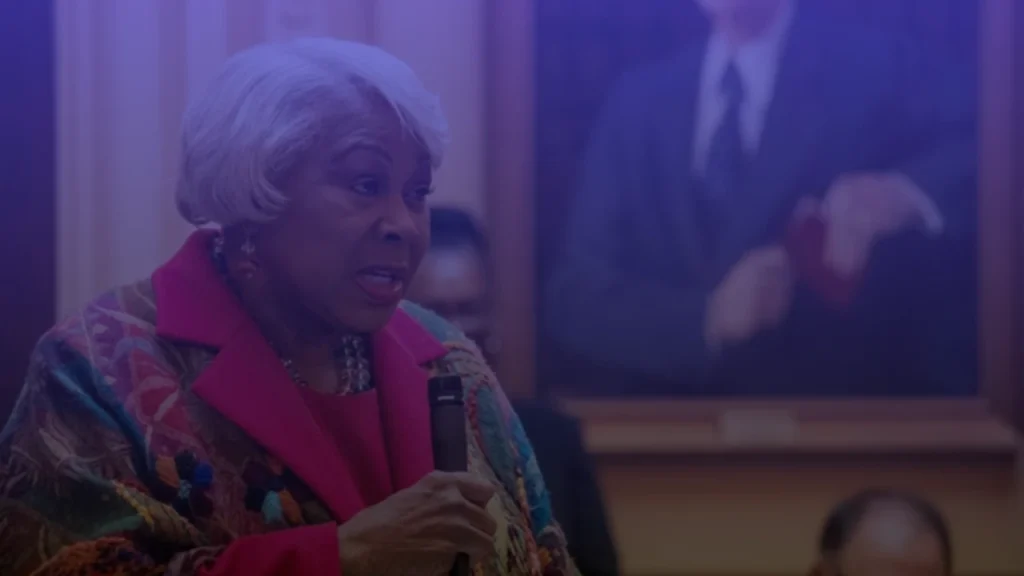
Virginia state Sen. Lillie Louise Lucas, 82, of Portsmouth, was indicted in the U.S. District Court for the Eastern District of Virginia in an eight-count federal case that names seven defendants. The Department of Justice announced the indictment on October 22, 2026, and says Lucas led a criminal enterprise it calls the “Lucas Enterprise.” Lucas faces five of the eight counts: racketeering conspiracy, conspiracy to distribute marijuana, conspiracy to launder money, conspiracy to commit honest services fraud, and maintaining a drug-involved premises. A Justice Department spokesperson said she self-surrendered.
Everything in the indictment is an allegation. Lucas is presumed innocent, and the government must prove each count beyond a reasonable doubt.
L. Louise Lucas Indictment: Quick Facts
| Detail | What the record shows |
| Defendant | Lillie Louise Lucas, 82, Portsmouth, Virginia |
| Office | Virginia state senator (D-Portsmouth); president pro tempore since 2020; chair of the Senate Finance and Appropriations Committee |
| Court | U.S. District Court, Eastern District of Virginia (45-page indictment) |
| Announced | October 22, 2026 |
| Defendants | Seven in total; eight counts in the indictment |
| Lucas’s five counts | Count 1 racketeering conspiracy; Count 2 conspiracy to distribute and possess with intent to distribute marijuana; Count 3 conspiracy to launder money; Count 4 conspiracy to commit honest services fraud; Count 5 maintaining a drug-involved premises |
| Alleged scale | Five-year scheme worth an estimated $4.5 million (FBI Director Kash Patel); acquisition and distribution of 100 kilograms or more of marijuana (DOJ) |
| Businesses named | VA Freedom Life, The Cannabis Outlet and The CBD Shoppe |
| Prosecutors | Assistant U.S. Attorneys Eric M. Hurt and Brian J. Samuels, Eastern District of Virginia |
| DOJ press release | No. 26-1246 |
| Status | Self-surrendered; initial appearance before a federal magistrate judge was scheduled for the afternoon of October 22. The outcome, release conditions and case number were not confirmed at the time of writing |
Who Is L. Louise Lucas, the Virginia Senate President Pro Tempore?
According to the Justice Department, Lucas was elected to the Senate of Virginia in 1991 and has served as president pro tempore since 2020. She chairs the Senate Finance and Appropriations Committee, which handles the state budget, tax policy and state spending. She has long supported marijuana legalization in Virginia, including through legislation, and she played a central role in the 2025 to 2026 push for mid-decade congressional redistricting. Her seat is not on the ballot this year.
Supporting legalization is not a crime. The case turns on what prosecutors say she and others did, not on her policy positions.
What Does the Justice Department Say the Lucas Enterprise Did?
The Justice Department’s October 22, 2026 press release lays out these allegations:
- Leadership of the Lucas Enterprise. Lucas allegedly led a group of associates and family members, including her two daughters and her grandson. She allegedly approved and directed its activities, including arranging the acquisition and distribution of 100 kilograms or more of marijuana and supervising the laundering of the proceeds.
- The businesses. Carlton Upton Jr., 54, of Chesapeake, was Lucas’s business partner in VA Freedom Life, described as an umbrella for The CBD Shoppe and The Cannabis Outlet beginning in 2019. In 2021, Lucas and her daughter Lisa Lucas-Burke opened The Cannabis Outlet in Portsmouth. Lucas’s other daughter, Theresa Lucas-Lamb, and Lucas-Lamb’s son, Ryan Eichelberger, allegedly acquired marijuana, supervised its distribution and managed The Cannabis Outlet.
- The ethics disclosure. On February 1, 2022, Lucas listed herself as President and CEO of VA Freedom Life on her Virginia Conflict of Interest and Ethics Advisory General Assembly Statement of Economic Interests form.
- The $750,000 shell company. In August 2022, Lucas allegedly paid $750,000 for a 100% stake in a business that was the shell holding company for a co-conspirator’s expected Virginia recreational marijuana license. She allegedly did not report that interest on her required Statements of Economic Interests.
- The alleged bribery payment. Lucas allegedly met the co-conspirator in her office at the Capitol complex to receive a partial repayment, and spoke with other officials, including legislators, about the co-conspirator’s qualification for a recreational license, which allegedly depended on a bribery payment to Lucas.
- Use of office. Prosecutors allege she used her position to shield the enterprise from criminal scrutiny and to influence legislation that would benefit it.
- The EIDL loan. In April 2020, Upton allegedly made materially false attestations on an Economic Injury Disaster Loan application for VA Freedom Life, which was funded at $11,800.
Press reports of the indictment also say Lucas told an unindicted co-conspirator on a recorded call that a recreational license was a last chance at “generational wealth.” Her words are quoted in press coverage of the charging document, not in the DOJ release.
Who Are the Other Six Defendants in the Lucas Indictment?
Reporting on the indictment names Lisa Lucas-Burke, Theresa Lucas-Lamb, Ryan Eichelberger, Carlton Upton Jr., Prince Albert William Hudson III and Tameka Johnson. Each defendant is charged only with the counts that apply to them. Lucas is reported to face Counts 1 through 5. The firearms and wire-fraud counts described in the DOJ release are not among the five counts reported against her.
Related article: Brian Sguros Arrested, Florida Officer Accused of Taking a Dead Man’s Home and Identity
When Did the Lucas Investigation Become Public?
| Date | Event |
| 2019 | Per the indictment, Lucas and Upton begin VA Freedom Life, the umbrella for The CBD Shoppe and The Cannabis Outlet |
| April 2020 | Upton allegedly makes false attestations on a VA Freedom Life EIDL application (funded at $11,800) |
| 2021 | Lucas and Lisa Lucas-Burke open The Cannabis Outlet in Portsmouth |
| February 1, 2022 | Lucas lists herself as President and CEO of VA Freedom Life on her Statement of Economic Interests |
| August 2022 | Alleged $750,000 payment for 100% of a shell company holding a co-conspirator’s expected license |
| May 6, 2026 | FBI executes search warrants at The Cannabis Outlet and The CBD Shoppe; agents recover marijuana and firearms at both |
| October 22, 2026 | Indictment announced; Lucas self-surrenders |
| July 1, 2027 | Scheduled start of licensed retail marijuana sales in Virginia |
The Justice Department describes the investigation as years-long. The May 6 searches did not establish wrongdoing. They were a step in the investigation that preceded the indictment.
Which Federal Laws Apply to the Lucas Racketeering, Marijuana and Money Laundering Charges?
The Justice Department describes the charge categories. The federal statutes below are the provisions that govern those categories. Check the indictment’s text before treating any citation as the exact statute charged.
What Is RICO Conspiracy Under 18 U.S.C. § 1962(d)?
The Racketeer Influenced and Corrupt Organizations Act (RICO), 18 U.S.C. §§ 1961 to 1968, targets an enterprise and a pattern of racketeering activity. Section 1962(d) makes it a crime to conspire to violate the substantive RICO provisions. Qualifying racketeering acts can include certain drug offenses, money laundering and honest services fraud. Under Salinas v. United States, 522 U.S. 52 (1997), a conspirator does not have to personally commit the predicate acts, but must agree that someone in the enterprise will. The statutory maximum is generally 20 years under 18 U.S.C. § 1963(a), and RICO also carries forfeiture of enterprise-related property.
What Is Conspiracy to Distribute Marijuana Under 21 U.S.C. §§ 841 and 846?
Section 841 prohibits knowingly or intentionally distributing, or possessing with intent to distribute, a controlled substance. Section 846 covers attempts and conspiracies. Penalties depend on the quantity. For 100 kilograms or more of marijuana, 21 U.S.C. § 841(b)(1)(B)(vii) carries a mandatory minimum of 5 years and a maximum of 40 years. The DOJ release alleges “100 kilograms or more,” but the exact subsection charged should be confirmed from the indictment.
What Is Maintaining a Drug-Involved Premises Under 21 U.S.C. § 856?
Section 856(a)(1) makes it unlawful to knowingly open, lease, rent, use or maintain a place for the purpose of manufacturing, distributing or using a controlled substance. The maximum penalty is up to 20 years. The government’s reported theory ties this count to the two storefronts searched on May 6, 2026.
What Is Money Laundering Conspiracy Under 18 U.S.C. § 1956(h)?
Section 1956 punishes financial transactions involving proceeds of specified unlawful activity when done to promote that activity or to conceal the nature, source, location, ownership or control of the proceeds. Subsection (h) covers conspiracies to commit those offenses, with the same penalties as the target offense, up to 20 years. Prosecutors must show the defendant knew the money was criminal proceeds. Depositing business revenue is not enough by itself.
What Is Honest Services Fraud Under 18 U.S.C. §§ 1343, 1346 and 1349?
Honest services fraud extends the wire fraud statute to schemes that deprive the public of the intangible right to honest services. In Skilling v. United States, 561 U.S. 358 (2010), the Supreme Court limited the doctrine to bribery and kickback schemes. Conspiracy is charged under § 1349, with a maximum penalty of 20 years. For a public official, the government generally must prove a quid pro quo: something of value in exchange for an official act. In McDonnell v. United States, 579 U.S. 550 (2016), the Court read “official act” narrowly, so arranging a meeting or making a call does not automatically qualify. Expect the defense to raise this issue if the bribery theory is tested.
Why Is the Federal Program Bribery Statute (18 U.S.C. § 666) Not in the Reported Counts?
Section 666 covers bribery involving agents of organizations that receive more than $10,000 in federal funds. Neither the DOJ release nor press summaries of the five counts against Lucas cite it, so this article does not treat it as charged.
What Other Counts Are in the Indictment?
The DOJ release lists possession of firearms in furtherance of drug trafficking (18 U.S.C. § 924(c) is the usual statute for that offense) and wire fraud among the eight counts. Reports tie the wire fraud theory to the EIDL application attributed to Upton. These are not among the five counts reported against Lucas.
Does Virginia’s Ethics Law Come Into Play?
The Statement of Economic Interests allegations concern disclosure duties under Virginia’s General Assembly Conflicts of Interests Act (Va. Code § 30-100 et seq.). The DOJ release presents the unreported $750,000 interest as part of the factual allegations. It does not identify a separate state ethics charge, and a federal indictment does not itself create one.
Does Virginia Marijuana Legalization or Federal Rescheduling Affect the Lucas Case?
Both matter, but neither is a defense on its face.
Virginia law. Virginia legalized adult possession of up to 1 ounce and home cultivation of up to four plants in 2021 without creating a retail market. Legislation tied to House Bill 30 in 2026 establishes licensed retail sales, which the Virginia Cannabis Control Authority (CCA) says may begin July 1, 2027. The CCA’s timeline calls for adopting regulations and starting some license applications by February 1, 2027, and issuing initial licenses by May 1, 2027. Retail stores are capped at 350 licenses. Until retail sales start, selling marijuana commercially is not authorized under Virginia’s retail framework.
Federal law. Federal law applies independently of state law under the Controlled Substances Act. On April 22, 2026, the DEA issued a final order moving two categories from Schedule I to Schedule III: FDA-approved drug products containing marijuana, and marijuana covered by a qualifying state medical marijuana license. Recreational, or adult-use, marijuana remains in Schedule I under that order. A separate DEA hearing on moving all marijuana to Schedule III was held across June and July 2026, and a law-firm review dated September 24, 2026 reports that the government has asked the administrative law judge to recommend the broader move. That proceeding had not been finalized in the sources reviewed.
Whether any product or license status applies to the conduct alleged against Lucas is a fact-specific question the indictment and trial will have to answer. Rescheduling is also not the same as authorizing unlicensed distribution.
Can the Federal Government Prosecute a Virginia State Senator Over Legislative Conduct?
Yes, in principle. The Constitution’s Speech or Debate Clause protects members of Congress, not state legislators. In United States v. Gillock, 445 U.S. 360 (1980), the Supreme Court declined to recognize a federal evidentiary privilege that would shield state legislators from federal criminal prosecution. Lucas’s defense may still challenge how prosecutors link her official acts to a bribery agreement, as discussed above under McDonnell.
What Happens Next in United States v. Lucas?
- Initial appearance and detention. A defendant appears before a magistrate judge, who addresses release. Under the Bail Reform Act, 18 U.S.C. § 3142, a rebuttable presumption of detention can apply to drug offenses with a maximum penalty of ten years or more. Lucas’s release conditions were not confirmed at the time of writing.
- Arraignment and plea. Defendants enter pleas to the charges.
- Speedy Trial Act. 18 U.S.C. § 3161 generally sets a 70-day trial clock, but complex multi-defendant cases routinely receive exclusions and continuances. The Eastern District of Virginia has a reputation for moving quickly.
- Discovery and motions. Expect fights over the sufficiency of the bribery allegations, the government’s recordings and the search warrants executed on May 6.
- Trial, plea or dismissal. Any outcome is possible. A guilty plea or conviction is the only way the allegations become findings.
- Forfeiture. Federal law allows forfeiture of proceeds and property tied to drug and racketeering offenses (for example, 18 U.S.C. § 1963 and 21 U.S.C. § 853). Whether the indictment seeks specific property should be confirmed from the charging document.
Does Lucas Have to Leave the Virginia Senate?
An indictment does not remove a legislator. Article IV, Section 7 of the Virginia Constitution lets each house expel a member with the concurrence of two-thirds of its elected members. Any change to her leadership posts, committee chairmanship or membership would be a decision for the Senate under its own rules. A felony conviction would raise separate questions under Virginia law about holding office, which would have to be checked against the Code of Virginia if the case reaches that stage.
What Have Lucas and the Government Said?
Attorney General Todd Blanche said the charges show a public servant who put her financial interests ahead of the people she was elected to serve. Blanche also said the case is not politically motivated, according to NBC News. Lucas said the full weight of the federal government has been used against an 82-year-old great-grandmother. Lucas is a prominent critic of President Trump and was central to Virginia’s redistricting push. Neither side’s characterization is a legal finding. The court will decide the case on the evidence.
Related Reading on AllAboutLawyer.com
- Drake Stake Gambling Lawsuit, Drake Hit With Federal RICO Lawsuit Over Stake Gambling The Shocking Allegations shows how a civil RICO claim differs from a criminal racketeering prosecution. It is unrelated to Lucas.
- United States vs. Southern Poverty Law Center Federal Fraud Indictment Lawsuit, Full Case Breakdown explains how an indictment differs from a conviction in another federal fraud case. It has no bearing on the Lucas evidence.
Frequently Asked Questions About the L. Louise Lucas Federal Indictment
What is L. Louise Lucas charged with?
She faces five of eight counts: racketeering conspiracy, conspiracy to distribute and possess with intent to distribute marijuana, conspiracy to launder money, conspiracy to commit honest services fraud, and maintaining a drug-involved premises.
Who else was indicted with Lucas?
Six other defendants: Lisa Lucas-Burke, Theresa Lucas-Lamb, Ryan Eichelberger, Carlton Upton Jr., Prince Albert William Hudson III and Tameka Johnson, according to reporting on the indictment.
How much marijuana and money does the Justice Department allege?
DOJ alleges the acquisition and distribution of 100 kilograms or more of marijuana, and FBI Director Kash Patel described a five-year scheme worth an estimated $4.5 million.
What did the May 6, 2026 FBI searches involve?
The FBI executed search warrants at The Cannabis Outlet and The CBD Shoppe and recovered marijuana and firearms at both locations, according to DOJ.
Did Lucas allegedly hide the $750,000 shell company payment?
Prosecutors allege she paid $750,000 in August 2022 for 100% of a shell holding company tied to a co-conspirator’s expected recreational marijuana license and did not report it on her Statements of Economic Interests. That is an allegation, not a finding.
Is Lucas guilty because she was indicted?
No. An indictment is a formal accusation. She is presumed innocent until proven guilty beyond a reasonable doubt, unless she pleads guilty.
Is marijuana legal in Virginia?
Adult possession and limited home cultivation have been legal under Virginia law since 2021. Licensed retail sales are scheduled to start July 1, 2027. Federal law still treats adult-use marijuana as a Schedule I substance, even after the DEA’s April 22, 2026 order moved certain medical and FDA-approved marijuana products to Schedule III.
What is the maximum prison term for the charges against Lucas?
Statutory maximums are generally 20 years for RICO conspiracy, money laundering conspiracy, honest services fraud conspiracy and maintaining a drug-involved premises, and up to 40 years for marijuana trafficking of 100 kilograms or more, with a 5-year mandatory minimum, if that subsection applies. These are legal ceilings, not predictions. Actual sentences depend on guilt, the Sentencing Guidelines and judicial discretion.
Can the Virginia Senate expel Lucas?
Yes. The Virginia Constitution (Article IV, Section 7) allows each house to expel a member with a two-thirds vote of its elected members. Nothing in the sources reviewed showed that the Senate has taken that step.
Where can I read the official case record?
The Department of Justice press release (No. 26-1246) and the Eastern District of Virginia docket on PACER are the primary sources. The case number was not confirmed at the time of writing.
Official Sources and Legal References
- U.S. Department of Justice, Office of Public Affairs, Virginia State Senator Indicted for Leading a Criminal Marijuana Distribution Enterprise, Press Release No. 26-1246 (Oct. 22, 2026): https://www.justice.gov/opa/pr/virginia-state-senator-indicted-leading-criminal-marijuana-distribution-enterprise
- Virginia Cannabis Control Authority, Retail Marijuana Market (timeline and licensing): https://cca.virginia.gov/retailmarijuanamarket
- CBS News, Feds charge L. Louise Lucas, powerful Virginia Democrat, in alleged drug scheme (Oct. 22, 2026), for the five counts reported against Lucas and the initial appearance: https://www.cbsnews.com/news/l-louise-lucas-charged-indictment-arrested-virginia/
- FOX 5 DC, Virginia state Sen. L. Louise Lucas charged with drug trafficking and money laundering: DOJ (Oct. 22, 2026), for the count-by-count list: https://www.fox5dc.com/news/virginia-state-sen-l-louise-lucas-charged-drug-trafficking-money-laundering-doj
- CNN, Virginia state Sen. L. Louise Lucas indicted on drug and money laundering charges (Oct. 22, 2026): https://www.cnn.com/2026/10/22/politics/va-senator-louise-lucas-indictment
- Taft Law, DEA Reschedules FDA-Approved and State-Licensed Medical Marijuana to Schedule III (April 2026): https://www.taftlaw.com/news-events/law-bulletins/dea-reschedules-fda-approved-and-state-licensed-medical-marijuana-to-schedule-iii/
- Morgan Lewis, Post-DEA Hearing, Broader Marijuana Rescheduling Questions Remain (Sept. 24, 2026): https://www.morganlewis.com/pubs/2026/09/high-time-for-a-change-post-dea-hearing-broader-marijuana-rescheduling-questions-remain
- Statutes and cases: 18 U.S.C. §§ 1343, 1346, 1349, 1956(h), 1961 to 1968, 3142, 3161; 21 U.S.C. §§ 841, 846, 853, 856; Va. Const. art. IV, § 7; Va. Code § 30-100 et seq.; Salinas v. United States, 522 U.S. 52 (1997); Skilling v. United States, 561 U.S. 358 (2010); McDonnell v. United States, 579 U.S. 550 (2016); United States v. Gillock, 445 U.S. 360 (1980).
This article is general legal information, not legal advice. Allegations are unproven unless and until established in court.
Researched and written by Israr Ahmad, legal content researcher and founder of AllAboutLawyer.com. All facts verified against the official U.S. Department of Justice press release (No. 26-1246), the Virginia Cannabis Control Authority retail market page, and the DEA rescheduling order as described by Taft Law and Morgan Lewis, as of October 22, 2026. Last Updated: October 22, 2026.
About the Author
Israr Ahmad is a legal content researcher with 4+ years of experience covering class action settlements and consumer rights cases. He has researched and published coverage of 2,500+ settlements using verified court records, settlement administrator filings, and government sources. Learn more about Israr.