
Is Abortion Legal in South Korea? Yes — but with major caveats
Yes — but with major caveats. Abortion is no longer a crime in South Korea, but it exists in a legal gray zone that leaves many women struggling to access safe care. Here is a full, plain-English breakdown of where things actually stand right now.
Abortion in South Korea was decriminalized, effective January 1, 2021, by a 2019 order of the Constitutional Court of Korea. It is currently legal throughout pregnancy, as no new law has been enacted — meaning there are no gestational limits or other restrictions written into statute.
In practice, however, the picture is far more complicated. Abortion is decriminalized but not formally regulated, which means doctors are uncertain of their legal exposure, abortion pills remain banned, and many hospitals refuse to perform procedures. Women can get an abortion in South Korea, but accessing one takes significantly more effort than the legal status suggests.
How South Korea Got Here: The Full History
1953–2020: Abortion Was Illegal
Before the 2019 decision, abortion had been illegal since 1953. Pregnant people undergoing an abortion risked a prison sentence of up to a year, or a fine of up to 2 million won (approximately $1,850). Healthcare workers providing abortions faced up to two years in prison.
The only exceptions to the ban were for cases of rape or incest, pregnancies likely to jeopardize the woman’s health, or situations in which the woman or her spouse had certain hereditary or communicable diseases. Married women needed their spouse’s permission to undergo the procedure.
Despite this ban, abortions were common. The laws were rarely enforced, and in practice abortions were widely available. But the laws created a feeling of fear and stigma around abortion, preventing healthcare providers and their patients from talking openly about their experiences.
Related article: CVS Caremark Promised to Lower Your Drug Costs. A New Lawsuit Says It Was Secretly Taking Kickbacks Instead
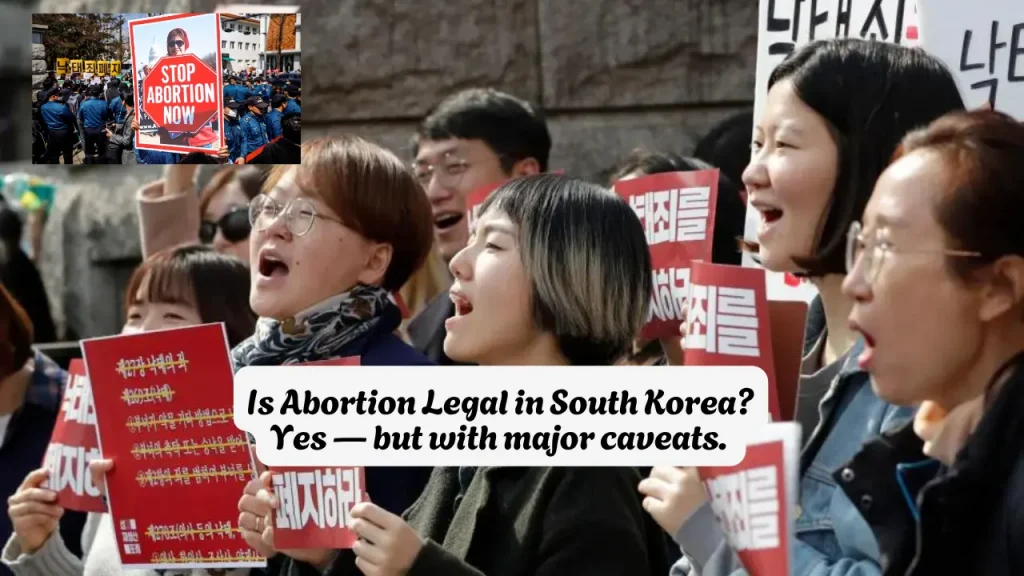
April 2019: The Constitutional Court Rules the Ban Unconstitutional
In April 2019, South Korea’s Constitutional Court ruled that making abortion a criminal offense was unconstitutional and ordered the legislature to revise the laws by the end of 2020. Seven out of nine judges agreed. The court said women should have up to 22 weeks into their pregnancy to make a decision — enough time, the judges wrote, to allow “sufficient time to make and carry out a holistic decision.”
January 1, 2021: Decriminalization Takes Effect — Without New Laws
The National Assembly failed to pass replacement legislation before the December 31, 2020 deadline. As a result, the revision bills failed to pass before the deadline, technically nullifying abortion as a criminal offense on January 1, 2021. Abortion became decriminalized not because lawmakers acted, but because they did not.
This is the root of South Korea’s current problem. Abortion is no longer a crime, but there is no law governing when, where, or how it can be performed.
What the Law Actually Says Today
The current situation is this: the old criminal ban is gone, but no replacement framework has been passed.
Despite 17 proposed bills in the National Assembly to allow safe abortions, discussions have stalled with no progress. Without new laws clarifying the situation, women cannot legally be provided with any abortion services — such as affordable procedures or safe abortion pills — in a clearly regulated way.
As of January 2026, five abortion-related bills had been introduced in the National Assembly, all in the second half of 2025, according to parliamentary records. Three were proposed by lawmakers from the ruling Democratic Party of Korea and two by the main opposition People Power Party. All five cite the need to end legal confusion, but significant differences remain over gestational limits and penalties.
The legislative deadlock has left doctors and patients without clear guidance on what constitutes lawful abortion care, raising concerns over safety, accountability, and access to regulated medical services.
What This Means in Practice
Surgical abortions are available but hard to find. Procedures such as vacuum aspiration are performed at private OB-GYN clinics in major cities, particularly Seoul. A survey by the Korean Women’s Development Institute between 2019 and 2024 found that 42.3 percent of respondents who sought abortion services reported difficulty finding a medical institution, while 21.2 percent visited between three and nine clinics before receiving care.
The cost is high and insurance does not cover it. According to a 2025 paper by the Korean Women’s Development Institute, the cost of abortion surgery has continued to climb, with 40 percent of patients reporting they paid over 1 million won (approximately $718). National health insurance does not cover abortion procedures.
Abortion pills are banned. While surgical abortion is now technically legal, abortion medication — which offers a safe, affordable, and effective way to terminate a pregnancy in its early stages — is not available, underscoring the difficulty women in South Korea still face in exercising their reproductive rights. Mifepristone and misoprostol, both on the World Health Organization’s list of essential medicines, have not been approved by South Korea’s Ministry of Food and Drug Safety.
Women are left to scour online forums or underground markets to buy smuggled drugs at exorbitant prices, raising risks of counterfeit pills and severe health complications. For minors, low-income individuals, and those living outside cities, the barriers are even higher.
Doctors face uncertainty. Although the abortion crime provision has lost effect, its incomplete removal from the Criminal Act has left doctors concerned about potential legal liability. This discourages medical institutions from offering safe and lawful procedures, ultimately deterring patients from seeking care, according to the Korean Women Lawyers Association.
Gestational Limits: What Actually Applies
Because no new legislation has passed, there are technically no statutory gestational limits. In practice, however, most clinics follow informal guidelines:
- Up to approximately 12–14 weeks — surgical procedures are widely available at private clinics
- Up to 24 weeks — procedures in cases involving rape, incest, fetal abnormality, or risk to the mother’s health, which are the carve-outs that remain referenced in the existing Maternal and Child Health Act
- Beyond 24 weeks — abortions past 24 weeks are banned in many jurisdictions or reserved for very exceptional cases, and South Korea’s lack of law in this area has created significant controversy
No spousal consent, parental consent, mandatory counseling, or waiting period is legally required under the current decriminalized framework.
Are Abortion Pills Legal in South Korea?
No. Despite international recognition of mifepristone’s safety — the WHO has included it on its list of essential medicines since 2005 — the pill is banned in South Korea. Health authorities have argued that regulatory and legal frameworks must come first.
In May 2024, a South Korean court rejected an appeal by Women on Web, a nonprofit organization that provides abortion pills by mail, to unblock its website. The Korea Communications Standards Commission had blocked the website in 2019, claiming it violated the country’s Pharmaceutical Affairs Act.
As the Lee Jae Myung administration recently included the legalization of abortion medication in its five-year national policy agenda, expectations are rising that it could finally get legal recognition. Health Minister Chung Eun-kyung has also stated that the government will review the introduction of abortion drugs. However, no approval has been granted as of April 2026.
Public Opinion
A 2024 report by Pew Research Center revealed that 69 percent of South Korea’s citizens believed that abortion should be legal in all or most cases. Public support for access has grown steadily, even as legislative progress has stalled.
Quick Reference Summary
| Question | Answer |
| Is abortion a crime in South Korea? | No — decriminalized since January 1, 2021 |
| Is there a formal abortion law? | No — the National Assembly has not passed one |
| Are there gestational limits by law? | No statutory limits; clinics typically follow 14–24 week informal guidelines |
| Are abortion pills legal? | No — mifepristone and misoprostol are not approved |
| Is spousal or parental consent required? | No |
| Does insurance cover abortion? | No — procedures are fully out of pocket |
| Can foreigners access abortion in South Korea? | Yes — the same informal access applies regardless of residency or nationality |
| Is legislation being considered? | Yes — five bills were introduced in the National Assembly in 2025, none passed as of April 2026 |
The Bottom Line
South Korea’s abortion situation is best described as decriminalized but unregulated. The criminal prohibition is gone, but the government has not replaced it with a clear legal framework that ensures safe, affordable, and consistent access. Women can obtain surgical abortions at private clinics — particularly in Seoul — but finding a willing provider, paying out of pocket, and navigating a system without clear rules remains a significant burden. Abortion pills, widely considered the safest and most accessible option globally, remain illegal. Legislation to fix all of this has been debated for years and, as of early 2026, is still pending.
Last Updated: April 4, 2026
Disclaimer: This article is for informational purposes only and does not constitute legal or medical advice. Laws and regulations change. For advice regarding a specific situation, consult a qualified legal or medical professional in South Korea.
About the Author
Israr Ahmad is a legal content researcher with 4+ years of experience covering class action settlements and consumer rights cases. He has researched and published coverage of 2,500+ settlements using verified court records, settlement administrator filings, and government sources. Learn more about Israr.