
Jan. 6 Officers Harry Dunn and Daniel Hodges Sue to Block Trump’s $1.8B Anti-Weaponization Fund Are Police Who Defended the Capitol Now at Greater Risk?
Prepared by the AllAboutLawyer.com Editorial Team and reviewed for factual accuracy against official court records, the U.S. Department of Justice press release, and CNN, NBC News, and CNBC reporting. Last Updated: May 20, 2026.
Two officers who physically defended the U.S. Capitol on January 6, 2021, filed a federal lawsuit in the U.S. District Court for the District of Columbia on May 20, 2026, seeking to block the Trump administration’s $1.776 billion Anti-Weaponization Fund before it pays out a single dollar to individuals who participated in the Capitol riot.
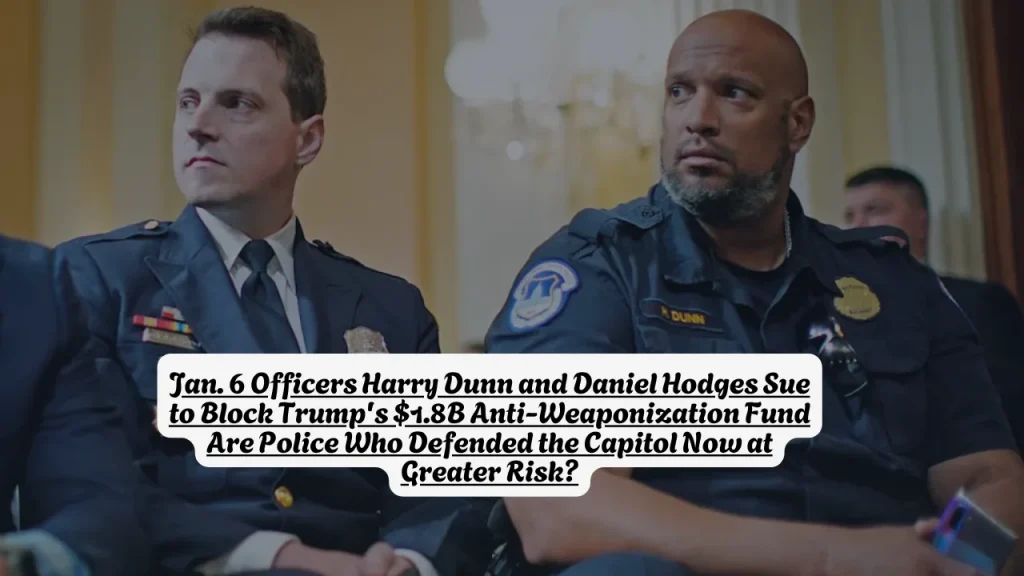
The plaintiffs are Harry Dunn, a retired U.S. Capitol Police officer, and Daniel Hodges, an active officer of the Washington, D.C. Metropolitan Police Department. Both men were on the Capitol grounds when a mob of Trump supporters stormed the building in a failed effort to stop Congress from certifying Joe Biden’s 2020 presidential election victory.
The lawsuit asks a federal judge to declare the administration’s fund unlawful and issue an order blocking officials from implementing it, while requiring any payments already made to be reversed.
Quick Facts: Dunn and Hodges v. Trump, Anti-Weaponization Fund Lawsuit
| Field | Detail |
| Lawsuit Filed | May 20, 2026 |
| Plaintiffs | Harry Dunn (ret. U.S. Capitol Police), Daniel Hodges (D.C. MPD) |
| Defendants | President Donald J. Trump, Acting AG Todd Blanche, Treasury Secretary Scott Bessent |
| Alleged Violation | 14th Amendment, Administrative Procedure Act, federal appropriations law |
| Fund Being Challenged | DOJ Anti-Weaponization Fund ($1.776 billion) |
| Current Court Stage | Complaint filed — no ruling yet |
| Court & Jurisdiction | U.S. District Court, District of Columbia |
| Lead Counsel | Brendan Ballou, Public Integrity Project |
| Next Hearing Date | TBD — no hearing has been scheduled as of this writing |
| Official Case Website | TBD — not yet established by the court |
| Last Updated | May 20, 2026 |
What Is the Anti-Weaponization Fund Lawsuit About? Dunn et al. v. Trump et al., U.S. District Court, D.C.
The U.S. Department of Justice formally announced the Anti-Weaponization Fund on May 18, 2026, as part of a settlement of President Trump’s $10 billion lawsuit against the Internal Revenue Service over the leak of his tax returns. Under the settlement terms, Trump, his sons Donald Trump Jr. and Eric Trump, and the Trump Organization agreed to dismiss the IRS lawsuit in exchange for the fund’s creation.
Acting Attorney General Todd Blanche — Trump’s former personal criminal defense lawyer — announced that the fund would “provide a systematic process to hear and redress claims of others who suffered weaponization and lawfare.” Dunn and Hodges argue this framing is a cover for something far more dangerous. Their complaint describes the fund as “the most brazen act of presidential corruption this century” — a taxpayer-funded mechanism to compensate the very rioters, Proud Boys, and paramilitary groups who beat them on January 6.
The officers allege the fund violates the 14th Amendment, which bars the government from paying debts “incurred in aid of insurrection or rebellion against the United States.” They also argue that Acting AG Blanche violated the Administrative Procedure Act by creating the fund without following required rulemaking procedures, and that the underlying settlement was never properly authorized because the attorney general cannot legally certify that a $1.776 billion payment to Trump personally was “in the interest of the United States.”
Related article: Jan. 6 Officers Harry Dunn and Daniel Hodges Sue to Block Trump’s $1.8B Anti-Weaponization Fund Are Police Who Defended the Capitol Now at Greater Risk?
This case sits at the center of a broader debate about government accountability and consumer rights under law. If you follow cases involving government overreach and civil liberties, our coverage of the Jan. 6 Capitol riot excessive force class action provides important context on how courts are treating competing Jan. 6 litigation from both sides.
Are You Part of the Dunn and Hodges Class Action Lawsuit?
This is not a class action lawsuit — it is a civil lawsuit filed by two named plaintiffs. There is no class of consumers or claimants to join. However, the outcome directly affects the public in specific ways.
You are directly affected by this lawsuit if you fall into one of these categories:
- You are a law enforcement officer who defended the Capitol on January 6 and face ongoing personal safety risks if rioters receive taxpayer-funded payments
- You are a January 6 conviction defendant or pardon recipient whose eligibility for Anti-Weaponization Fund payments may be blocked if this lawsuit succeeds
- You are a U.S. taxpayer — the $1.776 billion at issue comes from federal Treasury funds
You are NOT a direct party to this lawsuit if you are a general member of the public with no connection to January 6, law enforcement, or the fund’s eligibility criteria.
Dunn and Hodges have both faced ongoing harassment from January 6 participants and received death threats, including from right-wing activist Ivan Raiklin, who named them on a public “retribution list.” Their lawsuit argues that paying rioters through the fund would only intensify those threats.
What Are Dunn and Hodges Seeking in This Lawsuit?
The plaintiffs are not seeking money for themselves. They are asking the federal court in Washington, D.C., to declare the Anti-Weaponization Fund unlawful, issue an injunction blocking officials from taking steps to implement it, and require that any payments already disbursed be clawed back.
The lawsuit argues that allowing the fund to operate would “directly finance the violent operations of rioters, paramilitaries, and their supporters” — and that groups like the Proud Boys would use the money to arm and equip themselves for future violence against the officers and others like them.
The fund is scheduled to operate through December 2028, and the settlement also permanently ended IRS audits and inquiries into the Trump family. The officers argue that neither outcome serves a legitimate public interest.
No compensation is available through this lawsuit for members of the public. No claim form exists. This is active civil litigation challenging a government fund — not a consumer settlement.
What Should You Do If You Were Affected by the Anti-Weaponization Fund Decision?
Most people reading this are not direct parties to this lawsuit and do not need to take immediate legal action. Here is what makes sense depending on your situation:
- If you are a January 6 officer or law enforcement member with safety concerns related to potential fund payments, consult a civil rights or employment attorney about your options
- If you are a January 6 defendant or pardon recipient hoping to file a claim with the Anti-Weaponization Fund, monitor the DOJ’s official announcement page at justice.gov — no application process has opened yet
- If you want to track this lawsuit, monitor the U.S. District Court for the District of Columbia’s public docket for filings in Dunn et al. v. Trump et al.
- Save any records connecting you to the events of January 6, the fund’s formation, or any threats or safety concerns you can document — these may become relevant depending on how the case develops
A free legal consultation with a consumer rights lawyer or civil rights attorney can help you understand how this litigation may touch your specific situation.
Dunn and Hodges Lawsuit Timeline
| Milestone | Date |
| Trump files $10B lawsuit against IRS | Early 2026 |
| DOJ-IRS settlement announced; Anti-Weaponization Fund created | May 18, 2026 |
| Dunn and Hodges file federal lawsuit to block the fund | May 20, 2026 |
| Class certification motion | TBD — not applicable; this is not a class action |
| Next scheduled hearing | TBD — no hearing date set as of May 20, 2026 |
| Expected injunction ruling | TBD — depends on court scheduling |
| Expected settlement or resolution | TBD — this case was filed today; outcome is unknown |
Frequently Asked Questions
Is there a class action lawsuit against the Anti-Weaponization Fund?
No. Dunn and Hodges filed a civil lawsuit — not a class action — in the U.S. District Court in Washington, D.C., on May 20, 2026. They are the only two plaintiffs. The case challenges the legality of the fund under the 14th Amendment and the Administrative Procedure Act.
Do I need to do anything right now to be included in this lawsuit?
No. This is not a class action with open membership. The two named plaintiffs — Harry Dunn and Daniel Hodges — brought this case on their own behalf. You cannot join it as a plaintiff.
Can I file a claim with the Anti-Weaponization Fund right now?
As of this writing, the DOJ has not announced when applications will open, what the eligibility criteria are, or whether there will be a payout cap. Check the official DOJ press release at justice.gov for updates.
When will a ruling come in the Dunn and Hodges case?
TBD — the complaint was filed today, May 20, 2026, and no hearing date has been set. Federal injunction motions in D.C. can move quickly if the court finds urgency, but no timeline has been established.
Can I file my own lawsuit challenging the Anti-Weaponization Fund?
Potentially, depending on your standing to sue. The Administrative Procedure Act, which Dunn and Hodges cite, allows individuals with a direct legal injury to challenge government decision-making. Consult a class action lawsuit attorney or civil rights lawyer to evaluate whether you have a viable claim.
Is the Anti-Weaponization Fund legal?
That is the central question before the federal court. Dunn and Hodges argue the fund violates the 14th Amendment’s prohibition on paying debts incurred in aid of insurrection, and that the settlement was not lawfully authorized under federal appropriations statutes. No court has ruled on the merits yet.
How will I know if this lawsuit succeeds?
Monitor the U.S. District Court for the District of Columbia’s public docket and reputable legal news sources such as Reuters or Law360. If a preliminary injunction is granted, it would halt all fund payments immediately while the case proceeds.
Does the fund’s creation affect the safety of January 6 officers?
Dunn and Hodges argue directly that it does — that rewarding rioters signals to “past and potential future perpetrators of violence against Dunn and Hodges that they need not fear prosecution” and will encourage further threats against them.
Sources & References
- U.S. Department of Justice Press Release — Anti-Weaponization Fund Announcement, May 18, 2026: justice.gov
- Trump v. Internal Revenue Service — Settlement Agreement (DOJ official document): justice.gov
- CNN Politics — Police officers who defended US Capitol on January 6 sue to stop Trump’s ‘anti-weaponization’ fund, May 20, 2026: cnn.com
Disclaimer: This article is for informational purposes only and does not constitute legal advice. Legal claims and outcomes depend on specific facts and applicable law. For advice regarding your particular situation, consult a qualified attorney.
About the Author
Israr Ahmad is a legal content researcher with 4+ years of experience covering class action settlements and consumer rights cases. He has researched and published coverage of 2,500+ settlements using verified court records, settlement administrator filings, and government sources. Learn more about Israr.