
Gorsuch, Kavanaugh and Barrett Warn About America’s Founding Freedoms, Can Constitutional Rights Be Lost Without an Amendment?
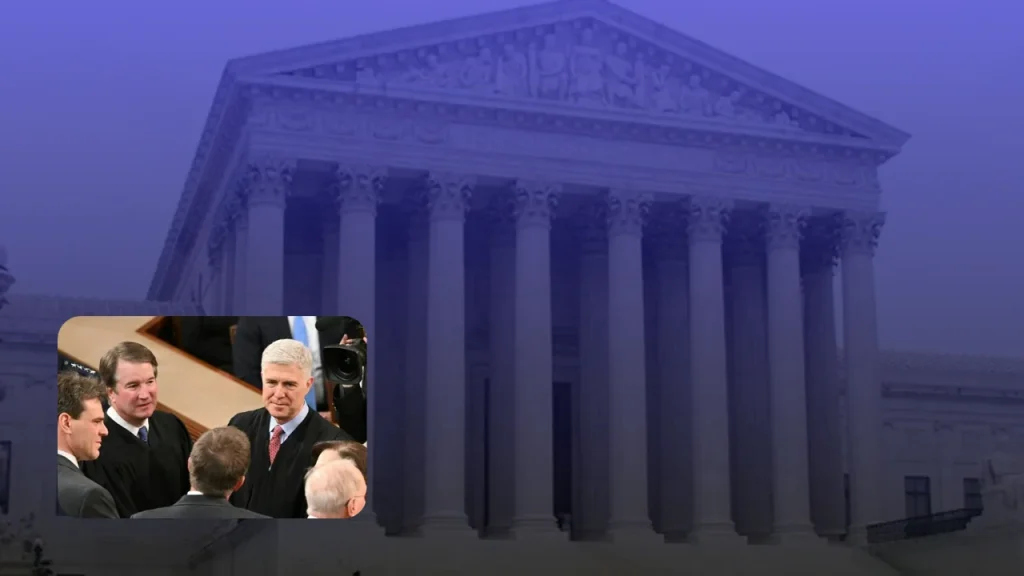
Supreme Court Justices Neil Gorsuch, Brett Kavanaugh and Amy Coney Barrett have each urged Americans to study the country’s history and take part in self-government as the United States marks the 250th anniversary of the Declaration of Independence. Their remarks came in separate interviews filmed by the Federalist Society for its National Lawyers Convention, themed “250 Years of American Exceptionalism,” and first reported by Fox News Digital on November 11, 2026.
The message was about civic knowledge and participation. The justices did not announce a ruling, a policy change or any plan to cut back a constitutional right. But their warning raises a question many readers ask: can constitutional protections weaken even when the Constitution’s text never changes? The short answer is yes, and this article explains how.
Justices’ November 2026 Remarks: Key Facts
| Question | Verified information |
| Justices interviewed | Neil Gorsuch, Brett Kavanaugh, Amy Coney Barrett |
| Who filmed the interviews | Federalist Society |
| First reported | November 11, 2026 (Fox News Digital) |
| Event | Federalist Society 2026 National Lawyers Convention |
| Convention theme | 250 Years of American Exceptionalism |
| Central message | Civic education, constitutional history and active citizenship |
| Appointed by | President Donald Trump, in his first term (all three) |
| Court ruling issued? | No |
| Constitutional rights changed? | No |
| Key legal distinction | Constitutional text vs. Supreme Court precedent vs. available remedies |
What Did Justice Neil Gorsuch Say About American Freedoms?
Gorsuch compared the freedoms Americans enjoy to air or water: they feel natural, but they were historically rare. He said the ideas in the Declaration, that all people are created equal and have rights that come from God rather than government, were not the norm in 1776. He argued the Declaration and the Constitution survive only because each generation chooses them again, and he cited Daniel Webster’s observation about how long it took to build a system like America’s.
This is a statement about political philosophy and history. It does not claim that any specific right has been taken away. Gorsuch has made similar points about civic literacy in connection with his 2026 children’s book on the Declaration, Heroes of 1776.
What Did Justice Brett Kavanaugh Say About Civic Education?
Kavanaugh said the education system is essential to preserving and improving the republic over the next 250 years. He called for teaching American history, the country’s values, why it exists, how it has been preserved and how it has improved, including through the constitutional amendment process.
His reference to improvement through amendments matters legally. Article V is the only route to change the Constitution’s text, and it has been used 27 times.
What Did Justice Amy Coney Barrett Say About Citizen Participation?
Barrett said, “We’re not passive observers in the American project.” She pointed to the Declaration’s closing pledge of the signers’ lives, fortunes and sacred honor, and said the same spirit of commitment is needed today.
Her point concerns citizenship, not any particular political position. It does not tell readers to support a party, a judge or an interpretation of the Constitution.
What Did Justice Sonia Sotomayor Say at Mount Vernon?
Justice Sonia Sotomayor spoke at a separate event at George Washington’s Mount Vernon on November 7, 2026 and voiced concern that some democratic norms may have been lost, while also expressing confidence that American democracy can continue. Her remarks were her own public assessment. They were not a Supreme Court finding, and they are not connected to the Federalist Society interviews.
Justices can speak publicly on civic education. The Supreme Court’s Code of Conduct for Justices, adopted November 13, 2023, addresses extrajudicial activities, and justices have long spoken at events like these. Their comments do not show how they would vote on any pending case.
Can the Supreme Court Take Away a Constitutional Right Without an Amendment?
The Court cannot rewrite the Constitution’s text with an ordinary opinion. It can change how the text is interpreted, and that can change what rights people can enforce.
| Source of protection | How it can change |
| Constitutional text | Only through Article V (two-thirds of Congress or a convention, then ratification by three-fourths of the states) |
| Supreme Court precedent | By later Supreme Court decisions overruling or narrowing earlier ones |
| Federal statutes | By Congress, within constitutional limits |
| Executive and agency action | By lawful action, subject to judicial review |
Courts decide constitutional cases under the power of judicial review established in Marbury v. Madison, 5 U.S. (1 Cranch) 137 (1803). Under stare decisis, courts generally follow earlier decisions for stability, but not always. Overruling has gone in more than one direction:
- Brown v. Board of Education, 347 U.S. 483 (1954): Rejected “separate but equal” in public schools, overruling the reasoning of Plessy v. Ferguson (1896) in that setting.
- West Virginia State Board of Education v. Barnette, 319 U.S. 624 (1943): Overruled Minersville School District v. Gobitis and protected students from compelled flag salutes.
- Dobbs v. Jackson Women’s Health Organization, 597 U.S. 215 (2022): Overruled Roe v. Wade, 410 U.S. 113 (1973), and Planned Parenthood v. Casey, 505 U.S. 833 (1992).
- Janus v. AFSCME, 585 U.S. 878 (2018): Overruled Abood v. Detroit Board of Education on public-sector union fees.
- Ramos v. Louisiana, 590 U.S. 83 (2020): Required unanimous juries in serious state criminal trials and discussed when precedent should be overruled.
- Loper Bright Enterprises v. Raimondo, 603 U.S. 369 (2024): Overruled Chevron deference, which changed how courts review agency interpretations of statutes.
These cases show the pattern: the Constitution’s words stay the same, but the Court’s reading of them changes. Whether any particular precedent is at risk is a separate question that depends on its facts, arguments and the Court’s makeup.
What Happened to the Constitutional Right Recognized in Roe v. Wade?
Roe recognized a constitutional protection for abortion in 1973, and Casey reaffirmed its core in 1992 while changing the framework. On June 24, 2022, Dobbs held that the Constitution does not confer a right to abortion and returned the regulation of abortion to elected lawmakers, subject to other legal limits.
The Fourteenth Amendment was not changed. The majority said the earlier cases lacked adequate constitutional support, and the dissenters said overruling them withdrew a protection people had relied on. Supporters and critics of Dobbs disagree sharply about the result. For this article’s purposes, it shows that a right recognized by precedent can lose that recognition without an amendment. It does not mean any other recognized right is about to be overruled.
Can the Court Change How a Right Applies Without Overruling a Case?
Yes. The Court can change the test used to decide a case. In New York State Rifle & Pistol Association v. Bruen, 597 U.S. 1 (2022), for example, the Court rejected the means-end scrutiny that lower courts had used in Second Amendment cases and required that firearm regulations be consistent with the nation’s historical tradition. The Second Amendment’s words did not change, but the standard for evaluating laws did. The same kind of shift happens in other areas, and it can expand or narrow protections depending on the case.
Do First Amendment Rights to Speech, Religion and Protest Still Apply?
The First Amendment expressly protects freedom of speech, religion and the press, the right to assemble peaceably and the right to petition the government. An ordinary statute cannot repeal those guarantees.
Courts still decide how the protections apply in specific situations:
- Criticism of officials: Political criticism, including harsh and unpopular speech, is strongly protected. See New York Times Co. v. Sullivan, 376 U.S. 254 (1964).
- Incitement: Speech is unprotected only when directed to inciting imminent lawless action and likely to produce it. Brandenburg v. Ohio, 395 U.S. 444 (1969).
- True threats: Unprotected, but the government must show the speaker had some subjective understanding of the threatening nature of the statements, at least recklessness. Counterman v. Colorado, 600 U.S. 66 (2023).
- Government pressure on speech: Officials may not coerce private parties to suppress disfavored speech. NRA v. Vullo, 602 U.S. 175 (2024). But the Court has also required clear proof of causation and standing in these cases. See Murthy v. Missouri, 603 U.S. 43 (2024).
- Students and public employees: Public school students keep First Amendment rights under Tinker v. Des Moines, 393 U.S. 503 (1969), subject to limits.
A recent example is the case of a community college student who won preliminary relief in federal court after claiming the school restricted him following criticism of college officials. That ruling did not decide every issue in the case. Read Richard Riordan Lane Community College Lawsuit, Judge Orders College to Let Student Return After First Amendment Challenge.
Does the First Amendment limit private companies?
Generally not. The First Amendment restricts government action, not private employers or online platforms. See Manhattan Community Access Corp. v. Halleck, 587 U.S. 802 (2019), and Moody v. NetChoice, LLC, 603 U.S. 707 (2024), which recognized that a platform’s content moderation can itself be protected editorial activity. The Court’s state-action cases go back to the Civil Rights Cases, 109 U.S. 3 (1883). Other laws or contracts may apply to private conduct, and government involvement can change the analysis.
Can You Have a Constitutional Right but No Way to Sue?
Yes. A right and a remedy are different things. If a federal officer violates the Fourth Amendment, whether the person can recover damages depends on separate law.
- 42 U.S.C. § 1983: Lets people sue state and local officials for constitutional violations. It does not apply to federal officers.
- Bivens v. Six Unknown Named Agents, 403 U.S. 388 (1971): Recognized a damages claim against federal agents for a Fourth Amendment violation. The Court has since limited it. See Ziglar v. Abbasi, 582 U.S. 120 (2017), and Egbert v. Boule, 596 U.S. 482 (2022).
- Qualified immunity: Protects officials unless they violated clearly established law. Harlow v. Fitzgerald, 457 U.S. 800 (1982); Pearson v. Callahan, 555 U.S. 223 (2009).
- Federal Tort Claims Act, 28 U.S.C. § 1346(b): Allows some damages claims against the United States under state tort law, with exceptions.
- Injunctions: Ex parte Young, 209 U.S. 123 (1908), allows suits to stop ongoing violations of federal law by state officials.
- Standing: TransUnion LLC v. Ramirez, 594 U.S. 413 (2021), requires a concrete injury.
The Supreme Court heard argument on November 9, 2026 in Nielsen v. Watanabe, No. 25-417, a case about when people can sue federal officials for damages over alleged constitutional violations. No decision had been issued as of November 12. See Nielsen v. Watanabe, Could the Supreme Court Make It Harder to Sue Federal Agents Like ICE?.
A right can stay legally recognized while the ways of enforcing it become narrower.
Can Congress or the President Override the Constitution?
Congress: It can pass, amend and repeal statutes within its powers, but cannot override the Constitution by statute. Article V requires two-thirds of both houses (or a convention called by two-thirds of the states) to propose an amendment, and ratification by three-fourths of the states. A simple majority cannot repeal the First Amendment.
The president: The president signs and vetoes bills, directs the executive branch and nominates judges with Senate confirmation. The president cannot rewrite the Constitution, and executive orders remain subject to judicial review. In Youngstown Sheet & Tube Co. v. Sawyer, 343 U.S. 579 (1952), the Court held that the president lacked authority to seize steel mills without statutory or constitutional support. The Court has also addressed the scope of presidential immunity in Trump v. United States, 603 U.S. 593 (2024), which was a ruling about criminal liability for official acts, not a power to suspend rights.
Suspension of habeas corpus: The Constitution allows suspension of the writ only in cases of rebellion or invasion when public safety requires it (Article I, Section 9, Clause 2), and the Court has said detainees keep access to habeas review. See Ex parte Milligan, 71 U.S. 2 (1866), and Boumediene v. Bush, 553 U.S. 723 (2008).
What Limits Exist on the Supreme Court Itself?
The Court is bound by Article III, by the cases-and-controversies requirement and by its own precedent, though not absolutely. Justices hold office during good behavior (Article III, Section 1) and can be removed only by impeachment (Article II, Section 4). The number of justices is set by statute, 28 U.S.C. § 1, which currently provides for nine. Congress can change that by law and can set the Court’s budget and some procedures, but it cannot tell justices how to vote in a case.
Federal recusal law, 28 U.S.C. § 455, applies to justices, and the Code of Conduct adopted in 2023 provides ethics guidelines, although it has no formal enforcement mechanism.
Can Congress Investigate Federal Officials?
Congress can investigate in support of its legislative functions, subject to the limits explained in Can a Member of Congress Be Searched or Investigated? Speech or Debate Clause and Rayburn Explained. That power covers how agencies operate and how money is spent. It does not extend to directing a judge’s ruling in a pending case.
Why Does the Declaration of Independence Matter If It Is Not the Constitution?
The Declaration was adopted July 4, 1776. It announced the separation from Great Britain and stated principles of equality, liberty and government by consent. The Constitution was drafted in 1787, and the Bill of Rights was ratified on December 15, 1791.
The two documents are not legally interchangeable. The Declaration states founding principles but is not generally treated as a source of enforceable individual claims. Courts apply the Constitution and statutes. For example, the Fourteenth Amendment’s Equal Protection Clause (1868) is what courts enforce, not the Declaration’s statement about equality. And the early republic excluded many people from political participation. Later amendments (the Thirteenth, Fourteenth, Fifteenth, Nineteenth and Twenty-Sixth), legislation and court decisions addressed many of those exclusions. Knowing that history is part of the civic education the justices called for.
The Fourteenth Amendment also matters for another reason: through “selective incorporation,” the Court has applied most Bill of Rights protections to the states. See McDonald v. City of Chicago, 561 U.S. 742 (2010).
What Can Americans Do to Protect Their Constitutional Rights?
Civic education cannot make every government action lawful. But it helps people spot when a right may be involved and how to get help.
- Identify the right. Free speech, religious exercise, search and seizure, due process or equal protection?
- Identify who acted. A government official or a private party? That decides whether a constitutional claim is available.
- Preserve evidence. Keep notices, emails, recordings and orders.
- Check deadlines. Civil-rights claims and administrative complaints have strict filing periods. Section 1983 claims borrow the state’s personal-injury limitations period.
- Use the right channel. Options include administrative complaints, requests for an injunction or a lawsuit.
- Talk to a lawyer. Immunity rules and the available remedy depend on the defendant and the facts.
Beyond litigation, people can attend public hearings, contact elected representatives, follow pending legislation and vote. None of that requires a particular political affiliation.
Are the Justices Saying American Democracy Is Ending?
No. The November 11 interviews, as reported, stressed education, history and responsibility. They did not predict a legal outcome or say rights were about to be suspended. Sotomayor’s separate remarks expressed a different level of concern. Justices can disagree on interpretation and institutions while agreeing that civic knowledge matters.
Timeline: Key Dates in the Supreme Court and American Freedoms
| Date | Development |
| July 4, 1776 | Declaration of Independence adopted |
| 1787 | Constitution drafted |
| December 15, 1791 | Bill of Rights ratified |
| 1803 | Marbury v. Madison establishes judicial review |
| 1868 | Fourteenth Amendment ratified |
| 1954 | Brown v. Board of Education decided |
| June 24, 2022 | Dobbs overrules Roe and Casey |
| November 13, 2023 | Supreme Court adopts its Code of Conduct |
| November 7, 2026 | Sotomayor speaks at Mount Vernon |
| November 9, 2026 | Nielsen v. Watanabe argued |
| November 11, 2026 | Federalist Society interviews with Gorsuch, Kavanaugh and Barrett reported |
Frequently Asked Questions
Did Supreme Court justices warn Americans about losing their freedoms?
Gorsuch, Kavanaugh and Barrett urged Americans to learn their history and take part in self-government. They did not announce that any right was about to be suspended.
Which justices gave the Federalist Society interviews?
Neil Gorsuch, Brett Kavanaugh and Amy Coney Barrett, all appointed by President Trump in his first term.
What did Justice Barrett say?
She said Americans are participants, not passive observers, in the American project, and pointed to the Declaration’s closing pledge.
What did Justice Kavanaugh say?
He said education is fundamental to preserving and improving the republic over the next 250 years.
What did Justice Gorsuch say?
He said freedoms that seem natural were historically rare and that each generation must choose to keep them.
Can the Supreme Court overturn a constitutional right?
It can overrule earlier decisions that recognized a right. It cannot change the Constitution’s text.
Can constitutional rights change without an amendment?
Their scope can. Dobbs, Bruen and Brown are examples of the Court changing how the Constitution is read.
Can Congress eliminate the First Amendment?
No, not by ordinary legislation. Only an Article V amendment can change the text.
Can the president suspend free speech?
No. The president has no general power to suspend the First Amendment, and executive actions can be challenged in court.
Can I sue if a government official violates my rights?
Possibly. State and local officials can be sued under § 1983, but suits against federal officials are narrower after Egbert, and qualified immunity may apply.
Is the First Amendment a limit on private companies?
Generally no. It limits government action.
How many justices are on the Supreme Court?
Nine, as set by 28 U.S.C. § 1.
The Bottom Line: What Protects American Freedoms?
Rights come from several layers: the Constitution’s text, the Court’s interpretations, statutes, and the remedies available to enforce them. Each layer can change, but at different speeds and through different processes. Amendments are hardest to enact, court decisions can shift more quickly, and remedies can narrow without any change to the underlying right. Americans do not need a constitutional amendment for a Supreme Court decision to change what a right means in practice.
That is why the justices’ call for civic education matters, whatever one thinks of their rulings. People who understand how rights are created, interpreted and enforced are better able to defend them.
Primary Sources and Legal References
- Fox News: FIRST ON FOX, Supreme Court justices confront what it will take to keep America’s founding freedoms alive
- RedState: Supreme Court Justices, Americans Must Know History and How Government Works
- Federalist Society: 2026 National Lawyers Convention
- Federalist Society: America at 250
- George Washington’s Mount Vernon: 2026 George Washington Symposium
- U.S. Supreme Court: Current Justices
- National Archives: The Bill of Rights
- National Archives: The Constitution
- Dobbs v. Jackson Women’s Health Organization, 597 U.S. 215 (2022)
- U.S. Supreme Court: Oral Arguments
- Marbury v. Madison, 5 U.S. (1 Cranch) 137 (1803); Brown v. Board of Education, 347 U.S. 483 (1954); Bivens, 403 U.S. 388 (1971); Egbert v. Boule, 596 U.S. 482 (2022); TransUnion LLC v. Ramirez, 594 U.S. 413 (2021)
Disclaimer: This article is general U.S. constitutional information, not legal advice. Remedies depend on the facts, the defendant and current law.
Researched and written by Israr Ahmad, legal content researcher and founder of AllAboutLawyer.com. All facts verified against Fox News and RedState reporting on the Federalist Society interviews, the text of the Constitution and the cited Supreme Court opinions, as of November 12, 2026. Last Updated: November 12, 2026.
About the Author
Israr Ahmad is a legal content researcher with 4+ years of experience covering class action settlements and consumer rights cases. He has researched and published coverage of 2,500+ settlements using verified court records, settlement administrator filings, and government sources. Learn more about Israr.