
DHS Shutdown of 2026, Senate Funding Bill, Congressional Deadlock, and What It Means for TSA and Secret Service Workers
This article covers an active, ongoing legislative dispute. Information is based on official congressional records, White House communications, and verified reporting from CNBC, Government Executive, Fox News, and CBS News. This page will be updated as the situation develops.
The Department of Homeland Security has been partially shut down since February 14, 2026 — making it one of the longest funding lapses for a single federal agency in U.S. history. With Congress at an impasse over immigration enforcement funding, there is no quick end to the lapse on the horizon, and emergency funds used to keep workers paid are nearly gone. The shutdown affects roughly 280,000 federal employees across agencies including the TSA, Secret Service, Coast Guard, FEMA, and CISA.
Quick Facts
| Field | Detail |
| Agency Affected | Department of Homeland Security (DHS) |
| Shutdown Start Date | February 14, 2026 |
| Duration as of April 30, 2026 | 75 days |
| Workers Affected | Approximately 280,000 DHS personnel |
| Agencies at Risk | TSA, Secret Service, Coast Guard, FEMA, CISA |
| Emergency Pay Fund Status | DHS Secretary Markwayne Mullin says payroll costs exceed $1.6 billion every two weeks and emergency funds are running out in early May |
| Senate Action | Senate passed a partial DHS funding bill twice — most recently by unanimous voice vote |
| House Action | House has not voted on the Senate bill; passed its own 60-day continuing resolution |
| Key Sticking Point | Funding for ICE and Customs and Border Protection (CBP) |
| Next Paycheck Risk Date | DHS workers could miss a paycheck beginning May 22 without congressional action |
| Last Updated | April 30, 2026 |
How Did the DHS Shutdown Start?
The shutdown began because of disagreements over ICE and CBP reforms. Following the fatal shootings of two U.S. citizens by federal agents in Minneapolis in January 2026, Congress agreed to separate DHS funding from a larger spending bill to allow time to negotiate changes to immigration enforcement practices. Those negotiations collapsed, and DHS funding lapsed on February 14 with no deal reached.
Democrats demanded policy changes — including better identification requirements for federal agents and greater use of judicial warrants — before they would vote to fund the department. Republicans refused any bill that conditioned immigration enforcement on Democratic policy demands. The result was a full funding lapse that has now lasted 75 days.
What Has Congress Done Since?
The Senate acted first. In late March, the Senate passed a bill by voice vote that would fund all of DHS except ICE and parts of CBP, reopening TSA, the Secret Service, FEMA, the Coast Guard, and other agencies while leaving immigration enforcement funding to be handled separately. The Senate passed this bill a second time — both times unanimously.
The House refused to take it up. House Republicans said that passage of a budget reconciliation bill to fund ICE and CBP was a precondition to voting on any bill to fund the rest of DHS. That two-step strategy stalled as internal Republican disagreements slowed every piece of pending legislation.
Late on April 29, the House passed its own measure — a 60-day continuing resolution that would fund all of DHS including ICE at current levels through May 22. But the Senate had already passed its own bill the same night and left for recess. Senate Minority Leader Chuck Schumer called the House’s 60-day offer “dead on arrival” in the upper chamber.
What Is Speaker Johnson’s Position?
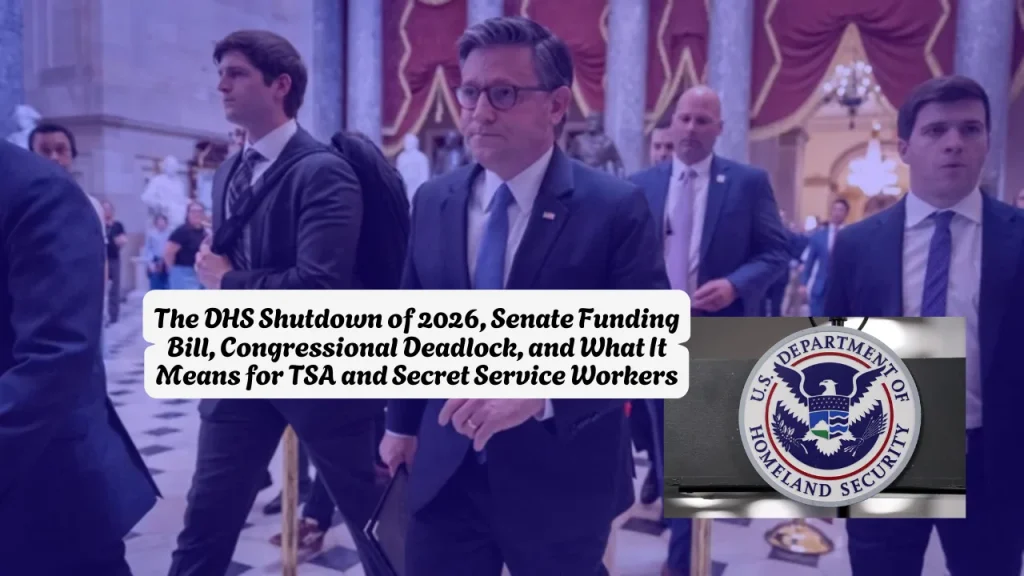
House Speaker Mike Johnson told reporters on Monday that the Senate-passed bill would need to be changed before the House could pass it, arguing it has “problematic language” that would “orphan” immigration enforcement agencies — leaving ICE and Border Patrol without funding while the rest of DHS reopened.
That position put Johnson in direct conflict with both his Senate Republican colleagues and the White House. The White House sent a memo to House Republicans demanding that Johnson pass the Senate’s bill as written, warning that remaining DHS funding would soon dry up. “It is imperative that Congress immediately fund DHS and its critical operations to protect the homeland,” the memo stated.
Senate Minority Leader Schumer said Democrats don’t know what changes Johnson is proposing. “They’re just stuck,” Schumer told reporters. Any substantive change to the Senate bill would require the bill to go back to the Senate for another vote — further delaying a resolution.
Related article: FISA Section 702 Renewal, DHS Shutdown, and the House’s Chaotic Day Full Explainer
What Is at Risk for Federal Workers?
The most immediate danger is to the paychecks of 280,000 DHS employees. Earlier in April, the Trump administration issued a memo authorizing payment of DHS workers using $10 billion from an emergency fund provided in the One Big Beautiful Bill Act. But that fund is now nearly exhausted, and without congressional action, workers could miss paychecks starting May 22.
More than 1,000 TSA officers have quit since the shutdown began, according to Airlines for America, the trade group for U.S. airlines, which called on Congress to fund the agency immediately. At the start of the shutdown in February, long security lines at major airports created visible chaos for travelers when TSA workers went weeks without pay.
The shutdown also drew attention after a more alarming incident. The Secret Service — which operates without full-year funding under the shutdown — stopped an alleged gunman at the White House Correspondents’ Dinner on April 25, prompting President Trump to demand that DHS funding be resolved quickly.
What Happens Next?
Both chambers are scheduled to take a weeklong recess starting May 1, leaving a very narrow window before the emergency pay fund runs out. If the House and Senate cannot agree on a single bill before that recess, DHS workers face another stretch without guaranteed paychecks.
Senate Republicans are pursuing a longer-term solution through budget reconciliation — a process that allows certain spending bills to pass with a simple majority, bypassing the 60-vote Senate filibuster threshold. That bill would provide $70 billion for ICE and CBP for three years, through the remainder of Trump’s term. But passing a reconciliation bill takes months, and it would not reopen the rest of DHS immediately.
Senate Majority Leader John Thune said he is working with House GOP leaders to find a path forward but acknowledged it will take “heavy involvement of the White House” to resolve the standoff.
Frequently Asked Questions
Why has DHS been shut down for 75 days?
The shutdown began on February 14, 2026, after Congress failed to agree on DHS funding. The sticking point is whether to fund ICE and CBP — immigration enforcement agencies — alongside the rest of the department, and whether any funding bill should include reforms to federal immigration enforcement practices.
Is TSA still operating during the shutdown?
Yes — TSA has continued working, but without guaranteed pay. Workers have been paid through an emergency executive order fund, but that fund is expected to run out in early May, putting future TSA paychecks at risk.
What did the Senate pass?
The Senate unanimously passed a bill on two occasions that would fund all of DHS except ICE and Border Patrol, covering agencies including TSA, the Secret Service, FEMA, the Coast Guard, and CISA.
Why hasn’t the House voted on the Senate bill?
House Republicans have conditioned their support for reopening the rest of DHS on first passing a reconciliation bill that separately funds ICE and CBP. Speaker Johnson has also said the Senate bill would need to be changed before the House could pass it.
What does “reconciliation” mean in this context?
Budget reconciliation is a congressional procedure that allows spending-related bills to pass the Senate with a simple majority — rather than the 60 votes normally required to overcome a filibuster. Republicans hold 53 Senate seats, so reconciliation lets them fund immigration enforcement without any Democratic votes.
When could workers miss their next paycheck?
Without congressional action, DHS personnel are at risk of missing a paycheck beginning May 22, 2026, when the current emergency funding is expected to run out.
What does the White House want?
The White House has urged the House to pass the Senate’s bill as written, warning that DHS will soon run out of funds and that critical operations are at risk. The Trump administration is caught between supporting immigration enforcement priorities and the practical need to pay the Secret Service, TSA, and other agencies.
Sources & References
- CNBC: cnbc.com
- Government Executive: govexec.com
- House Appropriations Committee (Democratic): democrats-appropriations.house.gov
Prepared by the AllAboutLawyer.com Editorial Team and reviewed for factual accuracy against official congressional records and verified public sources on April 30, 2026. Last Updated: April 30, 2026
Disclaimer: This article is for informational purposes only and does not constitute legal advice. For information about your rights as a federal employee during a government shutdown, consult a qualified employment attorney or contact your agency’s human resources office.
About the Author
Israr Ahmad is a legal content researcher with 4+ years of experience covering class action settlements and consumer rights cases. He has researched and published coverage of 2,500+ settlements using verified court records, settlement administrator filings, and government sources. Learn more about Israr.