
Denver Detective Jamie Major Resigns After Alleged DUI Hit-and-Run in City SUV, Charges, Laws and Who Pays
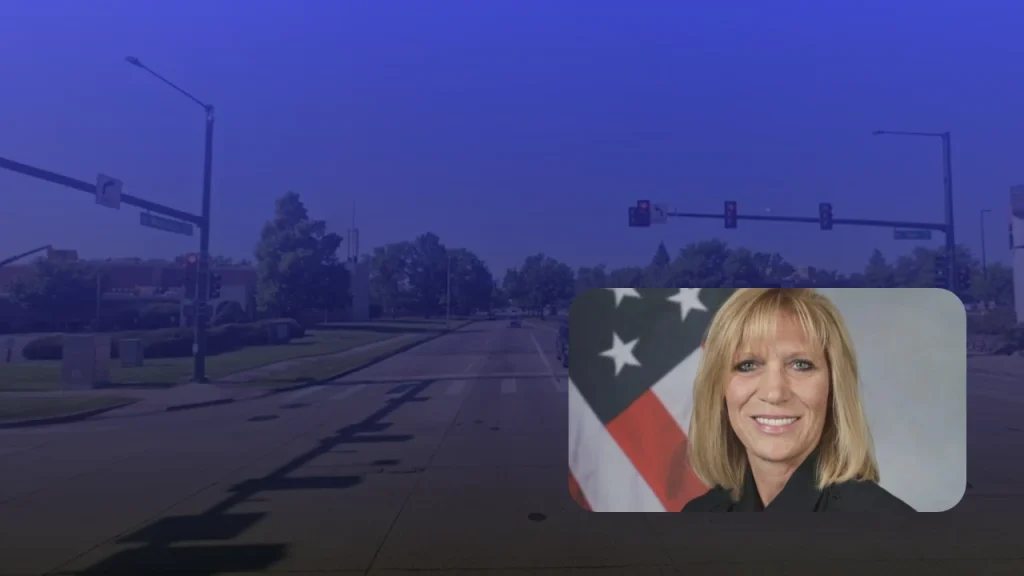
DENVER, Colorado — Jamie Major, a 26-year veteran Denver Police Department detective, resigned on November 2, 2026, after prosecutors charged her with driving under the influence, leaving the scene of an accident, failing to report an accident and careless driving. The charges come from an August 28, 2026 crash involving an unmarked, city-issued 2024 Chevrolet Tahoe in Arapahoe County’s Holly Hills neighborhood.
Investigators say Major, 61, hit a parked car, kept driving for about a mile on three tires and a bare metal wheel rim, and was stopped by Arapahoe County deputies near East Yale Avenue and South Monaco Parkway. Deputies drew their guns because they thought the unmarked SUV might be stolen.
Denver police demoted Major, and she resigned while an internal investigation was still open. Her criminal case is pending, and her arraignment is set for December 14, 2026. Major has not been convicted. She is presumed innocent unless and until the prosecution proves the charges in court.
Beyond the DUI allegations, the case raises three questions people are searching for: why a detective was driving a taxpayer-funded SUV, who pays for the damage, and what it means that an officer can resign before an internal investigation ends. This article answers each one using the public record, and it says clearly where the answer is not yet known.
Denver Detective Jamie Major DUI Case: Quick Facts
| Detail | Confirmed or reported information |
| Accused | Jamie Major, 61 |
| Former employer | Denver Police Department, about 26 years |
| Incident date | August 28, 2026, about 10:30 p.m. |
| Crash location | Holly Hills neighborhood, Arapahoe County, Colorado |
| Vehicle | Unmarked 2024 Chevrolet Tahoe owned by the City of Denver, a take-home vehicle with a police radio, light bar and DPD safety vest |
| What allegedly happened | Struck a parked car, drove away, and continued about one mile on a bare rim |
| Where she was stopped | Near East Yale Avenue and South Monaco Parkway |
| Charges | DUI, leaving the scene of an accident, failing to report an accident, careless driving |
| Agencies involved | Arapahoe County Sheriff’s Office (roadside stop); Colorado State Patrol (crash investigation); Denver Police Department (employment and internal affairs) |
| Department action | Demoted, then resigned November 2, 2026 |
| Next court date | Arraignment, December 14, 2026 |
| Major’s attorney | William Khoury Dillon |
| Conviction | None |
| Blood alcohol test result | None publicly reported |
| Civil lawsuit or settlement | None independently verified |
| Main source | CBS Colorado investigation (November 20, 2026), citing sheriff’s office and State Patrol reports |
What Happened During the August 28 Holly Hills Crash?
According to Arapahoe County Sheriff’s Office and Colorado State Patrol reports described by CBS Colorado, here is how the night unfolded:
| Stage | What the reports describe |
| The crash, about 10:30 p.m. | The Tahoe struck a parked car in Holly Hills. The parked car was reportedly totaled, and the Tahoe lost its right front tire. |
| Neighbors respond | Neighbors ran outside after a loud bang that one described as sounding like a dumpster being dropped. A nearby doorbell camera recorded the SUV pulling away without stopping. |
| A resident follows | One neighbor’s husband, an Army veteran, followed the SUV in his own car so other drivers would be warned while deputies responded. |
| The stop | The Tahoe traveled about one mile on three tires and a bare rim. Deputies used a “pinch” maneuver, blocking the SUV with their vehicles, because it was a danger to everyone on the road. |
| The gunpoint removal | Deputies wrote that they suspected the unmarked SUV might be stolen and that the driver did not stop, so two of them drew their weapons and removed the driver. |
| Field observations | Deputies wrote that Major was out of uniform, wearing only one sandal, smelled of alcohol and had trouble standing. They reported a full bottle of alcohol inside the SUV. Major identified herself as a Denver police detective. |
These details come from investigative reports, not from a court ruling. A court has not decided any of them.
A neighbor told CBS Colorado that nobody should be above the law, including the people who enforce it. The neighbors’ main complaint was that ordinary residents ended up chasing a police vehicle.
Was Anyone Hurt in the Holly Hills Crash?
The reporting describes major property damage but does not report any injury or death. That matters because Colorado treats a crash with injuries very differently from one with only property damage. Nothing public supports calling this a fatal crash or a felony injury case.
What Evidence Do Investigators Say They Have?
Deputies reported the smell of alcohol, trouble standing, one sandal, the damaged SUV and a full bottle of alcohol in the vehicle. No blood alcohol or breath test result has been publicly reported. A bottle in a car does not prove the driver drank from it or was impaired. The prosecution still has to prove each charge beyond a reasonable doubt.
What Charges Does Jamie Major Face in Arapahoe County?
| Charge | Colorado law | What the prosecution generally must show |
| Driving under the influence (DUI) | C.R.S. § 42-4-1301 | The driver was under the influence of alcohol or drugs, or had a blood alcohol level at or above the legal limit |
| Leaving the scene of an accident | Colorado’s leaving-the-scene laws, C.R.S. § 42-4-1601 and following | The driver did not stop and provide the information the law requires |
| Failing to report an accident | Colorado’s accident-reporting laws, C.R.S. § 42-4-1601 and following | The driver did not notify the police or the car’s owner as required |
| Careless driving | C.R.S. § 42-4-1402 | The driver drove without reasonable care for the road and other people |
The exact subsections charged should be checked against the actual charging documents, which this article’s sources did not include.
How Does Colorado Define DUI?
Colorado has two levels. DUI means driving while “substantially incapable” of driving safely because of alcohol or drugs, or with a blood alcohol content of 0.08 or higher. DWAI (driving while ability impaired) is a lesser offense, with a blood alcohol content of 0.05 or higher or any impairment to the slightest degree.
A prosecutor does not need a test result at or above 0.08. Observations by deputies, driving behavior and other admissible evidence can also be used. A first-offense DUI is generally a misdemeanor. Possible penalties include jail, fines, public service and a driver’s license revocation, but the actual outcome depends on the court, the evidence and the person’s record.
What Happens If You Hit a Parked Car and Leave?
A driver who hits an unattended vehicle and causes damage must stop and try to find the owner, or leave a written note with their name and address. Leaving without doing that can be a misdemeanor traffic offense. Colorado law treats crashes with injuries or deaths much more seriously.
Why Was a Denver Detective Driving a City-Owned Tahoe?
CBS Colorado reported that the Tahoe was a take-home vehicle provided by the City of Denver. Police departments give take-home cars to some officers so they can respond quickly, but that does not mean the car can be used for anything.
What Do Denver’s City Vehicle Rules Say?
- Fiscal Accountability Rule 10.5 (City Business Vehicle Use): City vehicles are for official city business unless an employee is specifically authorized otherwise, and driving one under the influence of alcohol or drugs is prohibited.
- Fiscal Accountability Rule 10.6 (Take-Home Vehicles and Carpooling): Sets out who may take a city vehicle home and under what conditions.
- Motor Vehicle Safety Standard: Covers safe driving and employee responsibilities.
An employee can be disciplined for breaking these policies even if a criminal case ends without a conviction.
Was Major on Duty or Using the Tahoe for Personal Reasons?
That is not publicly known. The reports do not say why she was driving at 10:30 p.m. It could have been an authorized commute, a work call, a personal errand or something else. The answer matters for policy violations, insurance and whether the city can be held responsible.
Did Denver Police Fire Jamie Major?
No. The department demoted her, and she resigned on November 2, 2026, while the internal investigation was still going. A resignation is not a firing. It ends her employment, but it does not end the criminal case or erase what was found or alleged.
Can a Police Officer Resign During an Internal Affairs Investigation?
Yes. Resigning does not dismiss criminal charges. It also does not necessarily stop other bodies from reviewing the conduct or considering whether the officer should keep her state certification. Whether the internal investigation reached a final finding has not been made public. It would be wrong to say she was cleared, and equally wrong to say every allegation was proven.
Will Jamie Major Lose Her Police Certification?
Not automatically. Colorado peace officers are certified through the state’s Peace Officer Standards and Training (POST) system. Certain convictions and misconduct findings can lead to losing certification, but an arrest or misdemeanor charge alone does not. No public decision on Major’s certification has been reported. A police department that considers hiring her later could be required to review her employment and discipline history.
Could Jamie Major’s Past Detective Cases Be Affected?
This is a separate legal issue. Detectives write reports and testify in court. When an officer faces allegations that bear on honesty or credibility, prosecutors may have to tell defense lawyers about it. That duty comes from the U.S. Supreme Court cases Brady v. Maryland and Giglio v. United States, along with Colorado’s discovery rules.
An impaired-driving charge does not automatically cancel any past conviction. Prosecutors look at whether the information is relevant and material in a specific case. Allegations of dishonesty or false reports raise bigger concerns than one allegation of impaired driving. No one has announced that cases involving Major are being reopened or overturned.
Who Pays for the Damage From the City SUV Crash?
There are two separate questions: who paid to repair the city’s Tahoe, and who is legally responsible for the neighbor’s parked car.
The Tahoe. Denver’s Department of Public Safety told CBS Colorado the SUV was repaired and returned to service. It declined to provide photos of the damage. The city has not said what the repairs cost or who paid, whether insurance, city funds or Major herself. Saying that taxpayers paid a specific amount would be a guess.
The parked car. The owner could try to recover repair costs or the car’s value, plus towing and other legally recoverable losses, from the driver. They would need to prove fault and the amount of the loss. Their own auto insurance might pay first, subject to the deductible, and the insurer might then seek repayment from the responsible party.
Can the Neighbor Sue the City of Denver?
Possibly, but owning the vehicle is not enough. The Colorado Governmental Immunity Act generally protects public entities from lawsuits. It has an exception for injuries caused by a public employee operating a government-owned motor vehicle in the course of employment (C.R.S. § 24-10-106). So the key question is whether Major was acting within the scope of her job that night. A work trip could lead to a different result than a personal trip. No court has ruled on the city’s responsibility.
What Is the Deadline to File a Claim Against the City?
For many claims against a public entity or its employees, Colorado law requires written notice within 182 days of discovering the injury (C.R.S. § 24-10-109). Counting from August 28, 2026, that is roughly late February 2027. This is not the same as reporting the crash to police or telling an insurance company. Anyone considering a claim should speak to a lawyer soon instead of assuming the normal car-accident deadline applies.
For general guidance after a collision, see Hit and Run Accident What to Do Right Now and How to Get Paid When the Driver Is Gone.
What Happened to the Damaged Denver Police SUV, and Why Does It Matter?
The city repaired the Tahoe and put it back in service. That does not show evidence was destroyed. But the public does not know whether investigators kept photos, inspection records or damaged parts before the repair. Those records could matter in the criminal case, an insurance claim or a later lawsuit.
Why Did Colorado State Patrol Lead the Investigation?
Arapahoe County deputies made the roadside stop, and the Colorado State Patrol led the crash investigation. Denver police handled the employment and discipline side. Using an outside agency can help separate the investigation from the accused officer’s own department. It does not by itself show the investigation was fair or unfair.
For another Colorado case where an investigation led to separate legal consequences, read Lakewood Shooting Officer Killed, 3 Wounded On RTD Bus. That incident is unrelated to Major’s case.
Why Hasn’t the Colorado State Patrol Released the Crash Video?
The State Patrol declined to release dash camera or body camera video, saying the prosecution is ongoing. Colorado’s Criminal Justice Records Act (C.R.S. § 24-72-301 and following) controls access to many law enforcement records, and different rules can apply to arrest records, investigative files, body camera footage and employment records. A pending case does not make everything secret forever. Records requests may need to go to each agency separately, such as the Arapahoe County Sheriff’s Office and the State Patrol. Nobody has found that officials unlawfully withheld anything.
Are Police Officers Subject to the Same DUI Laws as Other Colorado Drivers?
Yes. Colorado’s DUI laws have no exception for police officers. An officer can face criminal charges, license penalties and court-ordered consequences like anyone else. Workplace discipline is separate from the criminal case.
For a comparison involving another legal professional and repeated DUI cases, see Colorado Lawyer Jailed for DUI at Own Sentencing Hearing | Ethics Breached, Career in Jeopardy Highlights Addiction Struggles. That is a different case and does not suggest what will happen to Major.
What Has Jamie Major’s Attorney Said?
Her attorney, William Khoury Dillon, declined to discuss the allegations in detail. He said the defense is waiting for the criminal justice process to play out. That is not an admission. She has not pleaded guilty, and no verdict or sentence exists.
What Happens at Jamie Major’s December 14 Arraignment?
An arraignment is the first formal court hearing in many criminal cases. The judge tells the person the charges, and she can enter a plea. It is not a trial. Later steps could include pretrial motions, evidence disputes, plea negotiations or a trial. Nobody should assume a conviction, a sentence or a dismissal before the court acts.
What Questions Are Still Unanswered in the Jamie Major Case?
- Was Major on duty or off duty? The reports say the Tahoe was a take-home vehicle but not why she was driving it.
- Was personal use allowed? Denver’s rules restrict city vehicle use, but whether this trip followed them has not been established.
- Who paid for the Tahoe repair? The amount and source are unknown.
- Was there an alcohol test? No result has been publicly reported.
- Did the internal investigation finish? Major resigned while it was open, and no final finding is public.
- Will prosecutors review her old cases? No review has been announced.
- Has the car owner filed a claim? No lawsuit or settlement has been verified.
These are fair public-accountability questions. Open questions are not proof of a cover-up.
Frequently Asked Questions About the Denver Detective DUI Case
Who is the Denver detective accused of DUI and hit-and-run?
Jamie Major, 61, a former Denver Police Department detective with about 26 years of service.
When did the alleged crash happen?
August 28, 2026, at about 10:30 p.m. in Holly Hills, Arapahoe County.
Was Jamie Major driving a police vehicle?
Yes. Investigators say it was an unmarked, city-provided 2024 Chevrolet Tahoe used as a take-home vehicle.
Did Jamie Major resign from Denver Police?
Yes, on November 2, 2026, after being demoted and while an internal investigation was still open.
Did deputies stop her at gunpoint?
According to the sheriff’s reports described by CBS Colorado, deputies drew their guns because they thought the unmarked, damaged SUV might be stolen.
What criminal charges were filed?
DUI, leaving the scene of an accident, failing to report an accident and careless driving.
Did anyone die or get hurt?
No death or injury has been reported. The reporting describes damage to a parked car.
Has Jamie Major been convicted?
No. Her arraignment is scheduled for December 14, 2026.
Does resigning end the criminal case?
No. Quitting a job does not dismiss criminal charges.
Can the City of Denver be sued?
Possibly, depending on whether Major was acting in the course of her employment and whether Colorado’s governmental immunity law allows the claim.
Will taxpayers pay for the damage?
That has not been publicly established.
Was there a blood alcohol test?
No result has been publicly reported.
What is the deadline to file a claim against the city?
For many claims against a public entity, written notice is required within 182 days of discovering the injury. Talk to a lawyer promptly.
Bottom Line: What the Jamie Major Case Means for Denver
The allegations are serious: a suspected impaired driver in a city police SUV, a crash with a parked car and a drive of about a mile on a bare rim before deputies stopped her. But they are still allegations. The case is pending, Major resigned on November 2 after a demotion, and she is due in court on December 14.
The most important unanswered question is whether Major was using the Tahoe for work or for personal travel. That could affect whether Denver can be held responsible. Other open issues are the internal investigation’s outcome, the repair costs, any alcohol test result and whether civil claims follow.
This article gives general Colorado criminal-law and civil-liability information, not legal advice. The accused is presumed innocent unless proven guilty in court.
Primary Sources and Official References
- CBS Colorado — Denver police detective accused of DUI hit-and-run was driving city-issued SUV, sheriff’s report says
- Colorado General Assembly — 2026 Colorado Revised Statutes, Title 42
- Denver — Fiscal Accountability Rule 10.5, City Business Vehicle Use
- Denver — Fiscal Accountability Rule 10.6, Take-Home Vehicles
- Denver — Motor Vehicle Safety Standard
- Colorado Revised Statutes § 24-10-106 — Governmental Immunity and Motor Vehicles
- Colorado Revised Statutes § 24-10-109 — Notice Required for Government Claims
- Denver District Attorney — Brady Disclosure Policy
- Colorado State Patrol — Official Website
- Arapahoe County Sheriff’s Office — Official Website
Researched and written by Israr Ahmad, legal content researcher and founder of AllAboutLawyer.com. All facts verified against CBS Colorado’s investigation citing Arapahoe County Sheriff’s Office and Colorado State Patrol reports, the Denver city vehicle rules and the Colorado statutes cited, as of November 23, 2026. Last Updated: November 23, 2026.
About the Author
Israr Ahmad is a legal content researcher with 4+ years of experience covering class action settlements and consumer rights cases. He has researched and published coverage of 2,500+ settlements using verified court records, settlement administrator filings, and government sources. Learn more about Israr.