
Hit and Run Accident What to Do Right Now and How to Get Paid When the Driver Is Gone
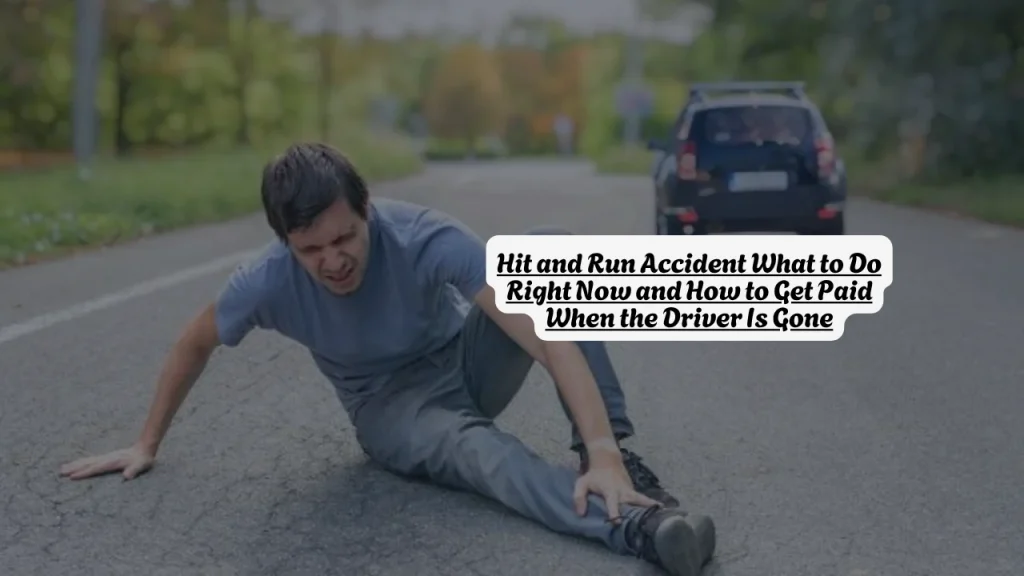
The other driver just took off. You’re sitting there shaken, maybe hurt, watching taillights disappear. It feels like you just lost your only shot at getting paid. You haven’t. Most hit and run victims can still recover full compensation — through their own insurance, through the legal system, or both — even when the driver is never found. What happens in the next few hours decides how strong that case becomes.
How Common Hit and Run Accidents Are — and Why the Driver Getting Away Doesn’t End Your Case
You are far from alone in this.
New research from the AAA Foundation for Traffic Safety published in March 2026 found that 15% of all police-reported crashes in 2023 involved a driver who fled the scene — the highest percentage recorded in any recent year. That works out to roughly one hit and run every 43 seconds across the United States.
One in four pedestrians killed in crashes in 2023 were hit by a driver who fled the scene. The problem is getting worse, not better.
Here is the part most victims don’t know: the law was built for exactly this situation. When the at-fault driver flees, state law allows hit and run victims to seek compensation through their own Uninsured Motorist coverage. The driver running does not erase your right to money. It just changes which door you walk through to get it.
The AllAboutLawyer.com guide on how lawsuit settlements work covers what to expect once a claim is filed and moving.
What to Do Immediately After a Hit and Run Accident — Steps That Protect Your Claim
The first 30 minutes after a hit and run are your most important evidence-gathering window. Every step below either builds your case or gives an insurance company a reason to reduce your payout.
Step 1 — Stay at the scene and get safe. Resist the urge to follow the driver who fled. Chasing them may leave you liable for leaving the scene of an accident yourself. Pull to a safe location, turn on your hazard lights, and check yourself and any passengers for injuries.
Step 2 — Call 911 immediately. Do this even if the damage looks minor. Call law enforcement right away — even if the accident happened in a parking lot. A police report is often required or strongly recommended for hit and run insurance claims. Reporting the accident promptly helps preserve evidence and may be necessary to qualify for certain uninsured motorist benefits.
Step 3 — Write down everything you remember about the vehicle. Note the color, make, model, any part of the license plate, the direction the driver fled, and any distinguishing features — dents, stickers, roof racks, anything. Do this before the adrenaline fades and the details go with it.
Step 4 — Photograph everything at the scene. Your vehicle damage, skid marks, debris, road conditions, traffic signs, and the surrounding area. Gather contact information from any witnesses and ask nearby storefronts whether they have security cameras that may have captured the accident.
Step 5 — Seek medical attention the same day. You should see a doctor even for small injuries — adrenaline can hide major damage that only becomes apparent hours or days later. A gap between the accident and your first medical visit is one of the first things an insurance adjuster will use to question the severity of your injuries.
Step 6 — Report to your insurance company promptly. Hit and run accidents often require reporting to your insurer within 24 hours. Check your specific policy — missing this window can cost you coverage even when you did nothing wrong.
If your injuries are serious or you are unsure how to handle the claim, speaking with a personal injury attorney near you immediately — most offer a free legal consultation — can prevent costly mistakes in those first critical hours.
Related article: Hurt in an Uber or Lyft Accident Who Actually Pays Your Medical Bills?
How Uninsured Motorist Coverage Pays You After a Hit and Run — Even With No Driver Found
This is the coverage that was built for exactly your situation.
Uninsured motorist insurance covers hit and run accidents in most states. A driver who flees is treated legally the same as a driver with no insurance — meaning your own Uninsured Motorist coverage steps in to pay for what the at-fault driver should have covered.
There are two types that matter here:
Uninsured Motorist Bodily Injury (UMBI) — covers injuries suffered in an accident caused by an uninsured driver, including hit and run scenarios where drivers are treated as uninsured, depending on the state. This pays your medical bills, lost wages, and pain and suffering up to your policy limit.
Uninsured Motorist Property Damage (UMPD) — covers damage to your vehicle. However, in states like California and Illinois, drivers cannot use UMPD to repair or replace their vehicle if the at-fault driver is unidentified. In those states, you must file a claim under collision coverage if you have it.
Medical payments coverage and personal injury protection apply regardless of who is at fault, so they can be used in a hit and run. If you carry either of these, they can cover immediate medical costs while the UM claim is being processed.
One critical rule: some states require physical contact between your vehicle and the hit and run vehicle for UMPD coverage to apply. If a car forced you off the road but never touched your car, coverage may not apply depending on your state.
You can learn more about how compensation is structured — including what counts as taxable — in AllAboutLawyer.com’s guide on whether lawsuit settlements are taxable.
What If the Hit and Run Driver Is Found Later — Can You Sue Them Directly?
Yes — and the path to compensation gets significantly stronger if law enforcement identifies the driver.
If the police locate the driver who fled the scene, you can file a personal injury lawsuit directly against them. This allows you to seek compensation from their liability insurance — and your legal team can manage the transition from a claim against your own policy to a case against the offender.
Keep in mind that only about 10% of hit and runs are solved, due to insufficient police resources and lack of evidence. That number rises when victims provide detailed vehicle descriptions, witness information, and nearby camera footage — which is exactly why the steps immediately after the accident matter so much.
Drivers who flee the scene are between two and nine times more likely to have been intoxicated at the time of the crash. That matters legally: a drunk driver who causes your injuries and then flees faces both criminal charges and civil liability — and both can work in your favor when calculating damages.
If you want to understand how real hit and run and personal injury cases have played out for victims, AllAboutLawyer.com’s lawsuits section covers current cases including large accident settlements.
A personal injury attorney can also help you push law enforcement to conduct a more thorough investigation — which is particularly valuable in the first 48 hours while evidence is still fresh.
Deadlines That Can Kill a Hit and Run Claim — What to File and When
Two separate clocks start ticking the moment the other driver disappears. Miss either one and you could lose coverage or your right to sue — regardless of how strong your case is.
The police report clock moves fastest. Some states require you to report the hit and run collision to law enforcement within 24 hours to allow for an investigation — and failure to report can result in no compensation under your uninsured motorist policy. Even in states with longer windows, reporting same-day while details are fresh dramatically improves the quality of any investigation.
The insurance reporting clock is set by your individual policy. Insurance claim deadlines are entirely separate from lawsuit deadlines. Your policy requires you to report accidents “promptly” — which is much shorter than the lawsuit deadline. Most policies require prompt notice of an accident. Reporting the claim as soon as possible helps avoid coverage disputes. Check your policy document today if you haven’t already.
The lawsuit clock — the statute of limitations for a personal injury lawsuit — varies by state. Most states set it at two to three years from the date of the accident. Filing an insurance claim does not pause or extend your lawsuit deadline. Even if you are actively negotiating with an insurance company, you must still file a lawsuit before the deadline to protect your legal rights.
If the driver is unidentified and your UM claim is being handled, speak with a personal injury attorney before that lawsuit window closes — even if the claim feels like it is moving forward.
Frequently Asked Questions About Hit and Run Accident Claims
What is the deadline to file a hit and run claim with my insurance company?
Hit and run accidents often require reporting to your insurer within 24 hours — much shorter than the lawsuit deadline. Check your specific policy language immediately. Missing the insurance reporting window can result in a denied claim even when you did everything else right. Call your insurer the same day as the accident whenever possible.
How long does a hit and run insurance claim take to resolve in the United States?
Most uninsured motorist claims from hit and run accidents resolve in 30 to 90 days for straightforward property damage cases. Injury claims — which involve medical records, lost wage documentation, and pain and suffering — typically take 3 to 12 months. Cases that go to litigation can take longer. The single biggest delay is incomplete documentation in the first days after the accident.
Do I need a lawyer to file a hit and run uninsured motorist claim — or can I do it myself?
You can file directly with your own insurance company without an attorney. However, your insurer has the same incentive to minimize your payout as any other insurance company — even on your own policy. Adjusters look for ways to reduce a claimant’s compensation. A lawyer challenges these tactics, negotiates fair settlements, and ensures the claim is based on facts, not strategy. Most personal injury attorneys work on a contingency fee basis — no upfront cost — so there is no financial barrier to getting representation.
Can I still get compensation from a hit and run if I don’t have uninsured motorist coverage?
If you don’t have collision or uninsured motorist property damage coverage, your car’s physical damages won’t be covered in a hit and run. Your only path for compensation will be finding the driver who caused the accident. For injuries, medical payments or PIP coverage — if you carry it — can cover immediate costs. This is why UM coverage is one of the most valuable additions to any auto policy.
What if the hit and run driver is found — does my UM claim automatically convert to a lawsuit against them?
Not automatically, but yes — if the driver is identified, you can pursue them directly. An attorney can help manage the transition from a claim against your own UM policy to a personal injury lawsuit against the at-fault driver and their liability insurer. If the driver has no insurance, your UM coverage may still be the better path even after identification.
What damages can I recover in a hit and run uninsured motorist claim?
Uninsured motorist coverage allows you to collect damages for medical costs, lost wages, car repair bills, pain and suffering, and other losses. The cap is your policy’s UM coverage limit — which is why carrying adequate UM limits matters far more than most drivers realize until they actually need it.
Can a hit and run victim sue if the at-fault driver is found to have been drunk?
Yes — and a drunk driver who fled adds significantly to your case. Intoxication combined with leaving the scene can support claims for punitive damages in addition to standard compensation for damages. A personal injury attorney can advise you on whether your state allows punitive damages in hit and run cases and how to document the alcohol component properly.
Legal Terms Used in Hit and Run Accident Claims
Hit and Run: An accident where the at-fault driver leaves the scene without stopping to exchange information or provide aid. Leaving the scene is a criminal offense in every state — ranging from a misdemeanor for property damage to a felony for injury or death.
Uninsured Motorist Coverage (UM): Insurance you carry on your own policy that pays for your injuries and damages when the at-fault driver has no insurance — or, in most states, when they flee and cannot be identified.
Uninsured Motorist Bodily Injury (UMBI): The portion of UM coverage that pays for your medical bills, lost wages, and pain and suffering. This is the most important coverage in a hit and run injury claim.
Uninsured Motorist Property Damage (UMPD): The portion that pays to repair or replace your vehicle. Some states exclude this coverage when the hit and run driver is never identified — check your state’s rules.
Collision Coverage: Optional coverage that pays for damage to your vehicle regardless of fault. In states where UMPD doesn’t apply to unidentified drivers, collision coverage is the backup.
PIP / Medical Payments Coverage: Coverage that pays medical bills immediately after a crash regardless of fault. Useful for covering initial care while a UM claim is being investigated.
Statute of Limitations: The legal deadline to file a personal injury lawsuit. In most states, it is two to three years from the accident date. Missing it permanently ends your right to sue.
Contingency Fee: Your personal injury attorney gets paid only if you win — a percentage of what they recover for you. No upfront cost, no hourly billing.
You now know that a driver fleeing the scene does not end your case — it changes the path you take to get paid. Your uninsured motorist coverage exists for exactly this situation, the police report you file in the first hours is the foundation of your entire claim, and the deadlines that follow move faster than most people expect. If you were hurt in a hit and run and aren’t sure whether your coverage is enough or whether you have a viable claim, visit AllAboutLawyer.com to connect with a personal injury attorney — under the laws of your state — who can review what happened and tell you exactly what your options are. Most consultations are free and there is no obligation.
Prepared by the AllAboutLawyer.com Editorial Team and reviewed for factual accuracy against official government and court sources on May 31, 2026. Last Updated: May 31, 2026
This article is for informational purposes only and does not constitute legal advice. Laws vary by state and individual circumstances differ. For advice about your specific situation, consult a qualified attorney licensed in your state.