
Clarence Thomas Issues First Amendment Warning, Why the Supreme Court Rejected California Doctors’ Lawsuit
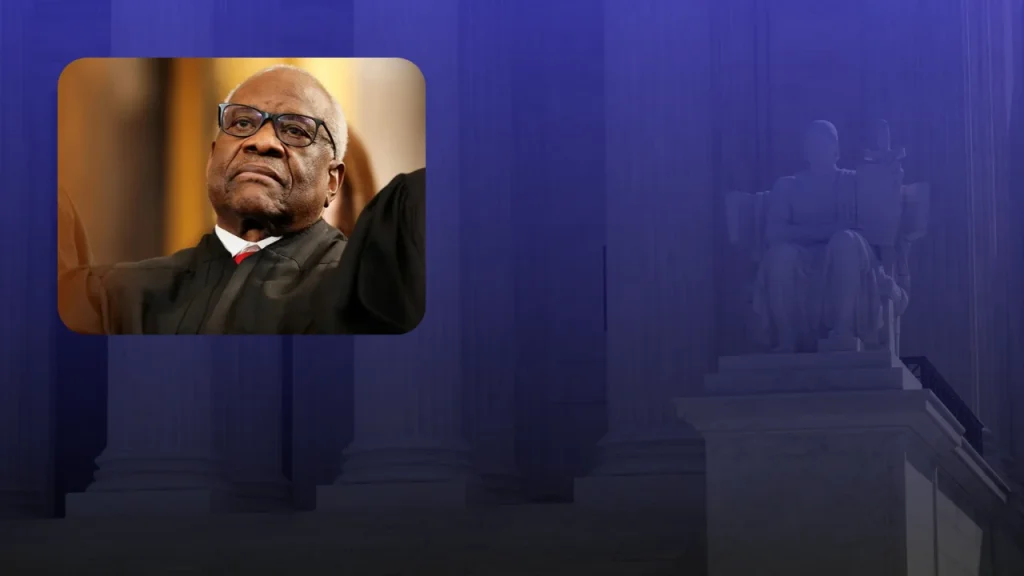
On November 16, 2026, the U.S. Supreme Court declined to hear Khatibi v. Yip, No. 25-1240, a challenge to California’s requirement that continuing medical education (CME) courses cover implicit bias. Justice Clarence Thomas, joined by Justice Samuel Alito, dissented from the denial in a nine-page opinion. He warned that the Ninth Circuit “fundamentally” misunderstood when speech counts as the government’s own, and he suggested the Court should revisit its government-speech test.
The Supreme Court did not strike down California’s law, and it did not uphold it. A denial of certiorari is not a ruling on the merits. The Ninth Circuit’s judgment stays in place, and Thomas’s dissent has no binding force.
Clarence Thomas First Amendment Warning: Quick Facts
| Question | Verified answer |
| Supreme Court case | Khatibi v. Yip, No. 25-1240 |
| Supreme Court action | Petition for certiorari denied, November 16, 2026 |
| Justice who wrote the dissent | Clarence Thomas (nine pages) |
| Justice who joined Thomas | Samuel Alito |
| Plaintiffs | Dr. Azadeh Khatibi and Do No Harm |
| Defendants | Medical Board of California officials |
| Challenged law | California Assembly Bill 241 (2019) |
| Challenged provision | Business and Professions Code § 2190.1(d)(1) |
| Ninth Circuit case | Khatibi v. Hawkins, No. 24-3108, 145 F.4th 1139 (9th Cir. 2025) |
| Constitutional issue | First Amendment compelled speech vs. government speech |
| Current result | California’s requirement remains in effect |
| Settlement or compensation | None |
Source: U.S. Supreme Court docket No. 25-1240 and the Ninth Circuit’s published opinion and rehearing order.
Why Did Justice Clarence Thomas Issue a First Amendment Warning in Khatibi v. Yip?
Thomas’s core concern is that a state can strip private speech of First Amendment protection simply by regulating a profession heavily enough. The First Amendment generally bars governments from forcing people to deliver government-chosen messages. Governments, though, may decide what they say. The whole case turns on which side of that line California’s CME program falls.
California won in the lower courts by arguing that approved CME is government speech. Thomas disagreed and argued the problem may lie in the Supreme Court’s own test from Shurtleff v. Boston. His dissent also calls the topic “so-called implicit bias,” a phrase that signals how skeptical he is of the state’s premise.
His wider fear is that the Ninth Circuit’s reasoning could be stretched to other licensed professions. The Ninth Circuit itself said its holding covers California’s approved CME program, not every regulated profession.
What California Law Started the Khatibi v. Yip Lawsuit?
The dispute began with Assembly Bill 241, signed by Governor Gavin Newsom on October 2, 2019. It added an implicit-bias requirement to California’s physician CME rules. The physician provision, Business and Professions Code § 2190.1(d)(1), took effect for qualifying courses on January 1, 2022.
California generally requires licensed physicians to complete 50 hours of approved CME every two years. Under AB 241, covered courses must also include implicit-bias content.
What Must California CME Courses Teach Under § 2190.1(e)?
Covered courses must address at least one of two approaches:
- Examples of how implicit bias can affect physicians’ perceptions and treatment decisions, contributing to disparities in health outcomes.
- Strategies for addressing how unintended biases in decision-making may contribute to healthcare disparities.
There is no separate 50-hour implicit-bias class. The requirement is that covered courses include the subject. The statute also contains exceptions for some course types, so providers should check the text of § 2190.1 for their specific course.
Who Filed Khatibi v. Yip, and What Did Dr. Azadeh Khatibi and Do No Harm Argue?
Dr. Azadeh Khatibi, a California ophthalmologist who teaches CME courses, sued with Do No Harm, a Virginia nonprofit. They argued California was compelling private instructors to present a government-preferred message on a disputed topic. They did not challenge the state’s power to license doctors or require CME. Their challenge targeted the content mandate for course instructors.
The case was brought on behalf of the plaintiffs by the Pacific Legal Foundation, which describes the case on its own site as a petition to restore free speech in medical training.
What Happened in Khatibi v. Hawkins at the District Court and Ninth Circuit?
| Date | Development |
| 2023 | Lawsuit filed in the Central District of California (No. 2:23-cv-06195) |
| May 2, 2024 | District court dismissed the claims |
| July 2025 | Ninth Circuit panel affirmed in Khatibi v. Hawkins, 145 F.4th 1139 |
| December 29, 2025 | Ninth Circuit denied panel rehearing and rehearing en banc |
| August 12, 2026 | California filed its brief opposing Supreme Court review |
| November 16, 2026 | Supreme Court denied certiorari; Thomas dissented, joined by Alito |
Why Did the Ninth Circuit Call California CME Government Speech?
The panel applied Shurtleff v. Boston and concluded that California’s approved CME program is government speech, so the First Amendment’s compelled-speech limits did not apply the way the plaintiffs argued. It stressed California’s long history of regulating medical licensing and approved education.
Why Did Judge VanDyke Dissent From the Ninth Circuit’s Rehearing Denial?
Judge Lawrence VanDyke, joined by Judges Bumatay and Tung, dissented from the denial of rehearing en banc. They argued the panel misread the Supreme Court’s government-speech precedent. The full court declined to rehear the case.
Why Did the Supreme Court Deny Review in Khatibi v. Yip?
The Court issued a one-line docket order: “Petition DENIED.” No majority opinion explains why. Four justices must vote to grant review, and only Thomas and Alito publicly noted they would have heard the case.
A denial of certiorari does not endorse the lower court’s reasoning and sets no national precedent. It simply leaves the Ninth Circuit’s judgment standing.
Which First Amendment Laws and Supreme Court Cases Matter in Khatibi v. Yip?
West Virginia State Board of Education v. Barnette (1943)
In Barnette, 319 U.S. 624 (1943), the Court held that public-school students could not be compelled to salute the flag. It is a foundation for the rule against forcing people to affirm government-chosen messages.
Shurtleff v. Boston (2022)
Shurtleff v. Boston, 596 U.S. 243 (2022), is the central precedent. The Court asked whether Boston’s flag program was government or private speech and looked at three things: the history of the expression, whether the public would see the government or a private party as the speaker, and how much control the government exercised. Thomas argued the Ninth Circuit leaned too heavily on state regulation, and he questioned whether this test protects private speakers well enough.
Matal v. Tam (2017)
In Matal v. Tam, 582 U.S. 218 (2017), the Court held that registered trademarks are private speech, not government speech, even though the government runs the registration system. Government involvement alone did not make the government the speaker.
Pleasant Grove City v. Summum, Walker, and Johanns
The Court found government speech in permanent park monuments (Pleasant Grove City v. Summum, 555 U.S. 460 (2009)), state specialty license plates (Walker v. Texas Division, Sons of Confederate Veterans, 576 U.S. 200 (2015)), and government-supervised beef advertising (Johanns v. Livestock Marketing Association, 544 U.S. 550 (2005)).
NIFLA v. Becerra (2018)
National Institute of Family and Life Advocates v. Becerra, 585 U.S. 755 (2018), rejected the idea that professional speech automatically gets lower First Amendment protection. It does not by itself decide how government-speech doctrine applies to California’s CME program.
What Did California Argue Against Review in Khatibi v. Yip?
In its August 12, 2026 brief in opposition, California argued that:
- The state has long regulated medical education to protect patients, and deciding which courses earn license-renewal credit is part of that role.
- The statute leaves instructors flexibility in how they cover the topic.
- The Ninth Circuit’s ruling is limited to California’s approved CME program.
California’s broader worry is that treating every content standard in professional education as compelled private speech would destabilize licensing systems.
What Does the Khatibi v. Yip Denial Mean for California Doctors Today?
The requirement stays in place. California physicians must still meet license-renewal rules, generally 50 hours of approved CME every two years. Instructors and providers offering covered courses for California CME credit should follow § 2190.1 and check with their accrediting organization.
The denial does not require any doctor to personally agree with the state’s view on implicit bias, and it does not stop physicians from debating the research outside accredited courses. Doctors with compliance questions can consult the Medical Board of California’s continuing medical education guidance.
Does the Supreme Court’s Khatibi v. Yip Denial Change Free Speech Rights Nationwide?
Not directly. The Court issued no nationwide ruling. The Ninth Circuit’s decision is appellate precedent in its own territory and addresses California’s CME system. Other states have different statutes and may face different challenges.
Thomas’s dissent may still shape future cases. He signaled that another government-speech dispute could give him and Alito a chance to revisit Shurtleff. Lawyers in related litigation can be expected to cite it.
Other First Amendment fights over government power and private speech are playing out elsewhere. Google, Meta and TikTok Sue California, Will Social Media Feeds Be Restricted for Children Under 16? looks at whether a state can regulate how platforms select and display content. Pitt Professors Join NIH Putative Class Action Alleging Scientific Research Censorship covers allegations that government funding policies restrict scientific expression. For a public-education example, see Richard Riordan Lane Community College Lawsuit, Judge Orders College to Let Student Return After First Amendment Challenge. These are separate cases with different legal questions.
What Happens Next in Khatibi v. Yip After the Supreme Court Denial?
This petition is over. There will be no oral argument or merits ruling in Khatibi v. Yip. California’s implicit-bias CME requirement remains in effect under § 2190.1. A future lawsuit with different facts or a different state program could raise related questions, but it would not automatically change this outcome. The Supreme Court could revisit government-speech doctrine if it later agrees to hear another case.
There is no class action settlement, compensation fund, or claims process tied to this case.
Frequently Asked Questions About Clarence Thomas’s First Amendment Warning in Khatibi v. Yip
What did Justice Clarence Thomas warn about on November 16, 2026?
He warned that treating heavily regulated, privately delivered education as government speech could let states compel private instructors to deliver state-preferred messages without normal First Amendment review.
Which California law did Justice Thomas criticize in Khatibi v. Yip?
He criticized how courts treated the implicit-bias requirement in Business and Professions Code § 2190.1(d)(1), added by Assembly Bill 241.
Did the Supreme Court overturn California’s implicit-bias CME requirement?
No. It denied review. The requirement remains in effect.
Which justice joined Justice Thomas’s dissent in Khatibi v. Yip?
Justice Samuel Alito joined Thomas’s dissent.
Did the Supreme Court rule California’s implicit-bias training constitutional?
No. The Court did not reach the merits. The Ninth Circuit’s ruling in Khatibi v. Hawkins stands.
Can California physicians refuse the implicit-bias content required by § 2190.1?
Physicians must still meet California’s approved CME requirements. Personal disagreement with the content does not exempt a covered course.
Could the Khatibi v. Yip dissent affect attorneys, teachers, or therapists?
Not automatically. Thomas argued the Ninth Circuit’s reasoning could raise constitutional concerns if extended to other licensed professions, but the Ninth Circuit limited its holding to California’s CME program.
Is Khatibi v. Yip a class action settlement?
No. It is a constitutional challenge to a state medical education requirement. There is no settlement fund, claim form, or deadline.
The Bottom Line on Clarence Thomas’s Khatibi v. Yip Dissent
Thomas’s warning rests on one idea: a state’s power to license a profession does not automatically give it power to control the private speech of the people in it. California says its implicit-bias requirement is a legitimate part of state-supervised medical training. Thomas and Alito believe the Ninth Circuit let regulation override the First Amendment rights of private instructors. The Supreme Court chose not to settle that disagreement, so California’s rule stays in place and the larger question may return in a future case.
Primary Sources and Official Court Records
- U.S. Supreme Court docket, Khatibi v. Yip, No. 25-1240
- Justice Thomas’s dissent from denial of certiorari, Khatibi v. Yip (CourtListener)
- Ninth Circuit order denying rehearing en banc, Khatibi v. Hawkins, No. 24-3108 (December 29, 2025)
- California Legislature, Assembly Bill 241
- Medical Board of California, Continuing Medical Education requirements
Disclaimer: AllAboutLawyer.com provides legal information, not legal advice or representation. Consult the Medical Board of California, your CME accreditor, or a qualified attorney about your own obligations.
Researched and written by Israr Ahmad, legal content researcher and founder of AllAboutLawyer.com. All facts verified against the U.S. Supreme Court docket and Justice Thomas’s dissent, the Ninth Circuit’s published opinion and rehearing order, and the text of California Assembly Bill 241, as of November 17, 2026. Last Updated: November 17, 2026.
About the Author
Israr Ahmad is a legal content researcher with 4+ years of experience covering class action settlements and consumer rights cases. He has researched and published coverage of 2,500+ settlements using verified court records, settlement administrator filings, and government sources. Learn more about Israr.