
Louisville Pays Chelsey Nelson Photography $800K First Amendment Settlement, What the Fairness Ordinance Case Means for Creative Professionals
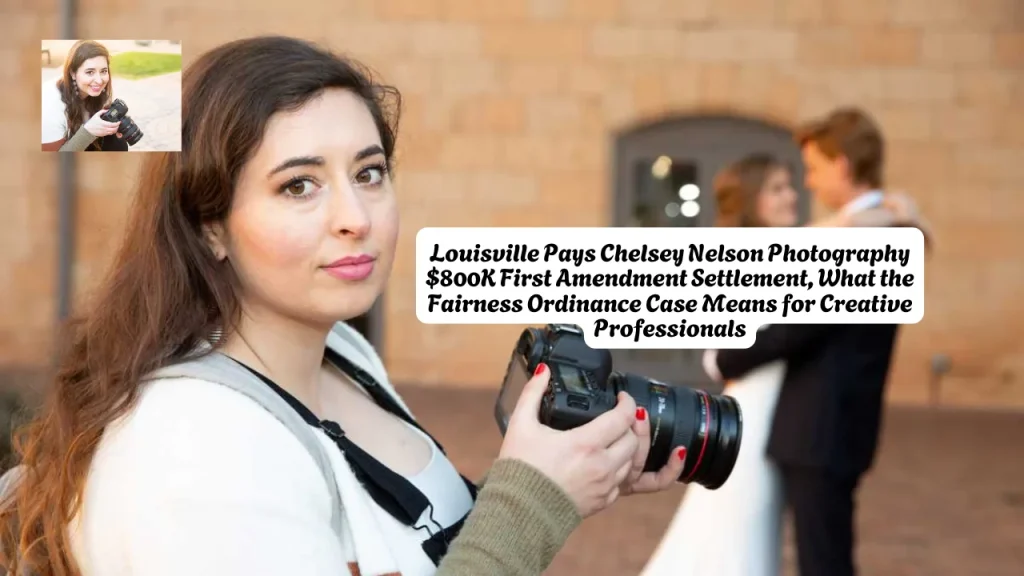
Louisville, Kentucky has agreed to pay $800,000 in attorneys’ fees to settle a First Amendment lawsuit brought by Christian wedding photographer Chelsey Nelson against the city’s Louisville-Jefferson County Metro Government. Nelson filed the lawsuit in 2019, arguing Louisville’s Fairness Ordinance could force her to create photographs and blogs celebrating same-sex marriages that conflicted with her religious beliefs, and barred her from even stating on her own website that she would not photograph such ceremonies. The case ran nearly six years before the city agreed to settle. Louisville’s Fairness Ordinance remains in effect.
| Field | Detail |
| Case Name | Chelsey Nelson Photography v. Louisville-Jefferson County Metro Government |
| Court | U.S. District Court, Western District of Kentucky, Louisville Division |
| Filed | 2019 |
| Settlement Filed | March 25, 2026 |
| Settlement Amount | $800,000 (attorneys’ fees) |
| Plaintiff | Chelsey Nelson, Chelsey Nelson Photography |
| Defendant | Louisville-Jefferson County Metro Government |
| Law at Issue | Louisville Fairness Ordinance (public accommodations nondiscrimination) |
| Legal Representation | Alliance Defending Freedom (ADF) |
| Key Precedent | 303 Creative LLC v. Elenis (U.S. Supreme Court, 2023) |
| Ordinance Status | Remains in effect — not struck down |
What Louisville’s Fairness Ordinance Actually Required — and Why Nelson Sued
Louisville’s Fairness Ordinance prohibits discrimination in public accommodations, including a provision that bars businesses from denying goods and services to members of protected classes — which includes same-sex couples. A second provision barred business owners from publicly stating they would not serve same-sex couples, or from publishing anything that could make a person feel unwelcome based on sexual orientation or gender identity.
Nelson said city authorities told her she could not post her biblically based views on marriage and sexuality on her website, and could not even tell prospective clients which ceremonies she was and was not willing to photograph — exposing her to fines up to $10,000 if reported.
Alliance Defending Freedom filed the lawsuit on Nelson’s behalf in 2019, arguing Louisville’s law threatened to compel Nelson to create photographs and blogs celebrating a message about marriage she did not believe and prohibited her from expressing her views about marriage on her studio’s website.
How the 303 Creative Supreme Court Ruling Shaped Nelson’s Win
The legal turning point for Nelson came not in Louisville, but in Washington D.C. The lawsuit relied heavily on the U.S. Supreme Court’s 2023 ruling in 303 Creative v. Elenis, in which a Colorado website designer successfully argued that a state law requiring her to serve same-sex couples violated her First Amendment right against compelled speech.
A federal court applied that precedent directly to Nelson’s case in a September 30, 2025 ruling, finding the First Amendment barred Louisville from enforcing its ordinance against Nelson — specifically its prohibition on her stating her views on marriage or declining to participate in same-sex wedding ceremonies.
The court awarded Nelson $1 in damages and found the ordinance unlawfully restricted her ability to publicly state she would not photograph same-sex weddings. The $800,000 settlement announced in March 2026 covers the attorneys’ fees accumulated over nearly six years of litigation — a standard outcome in civil rights cases where a plaintiff prevails against a government defendant.
What the $800,000 Settlement Does — and Does Not — Change
This settlement resolves the lawsuit and compensates Nelson for her legal costs. It does not strike down or amend Louisville’s Fairness Ordinance.
City officials confirmed the settlement ends the litigation but leaves the ordinance intact. Louisville Mayor Craig Greenberg’s press secretary stated the city remains committed to fully enforcing the Fairness Ordinance, which bans discrimination against LGBTQ+ people.
What the settlement does establish — building on 303 Creative — is that government officials cannot force creative professionals to produce expressive work that contradicts their beliefs. A separate federal court approved a $225,000 settlement in a parallel case involving Christian photographer Emilee Carpenter of New York, who challenged similar state laws. The pattern of outcomes signals courts are consistently applying 303 Creative to creative service providers beyond website designers.
Related article: Bradford Teaching Hospitals NHS Trust Pays £4.6M After Baby Discharged Too Soon from BRI Suffered Lifelong Brain Damage
What This Case Means for Photographers, Artists, and Other Creative Professionals
The Nelson case sits at the intersection of two competing legal principles that courts across the country are still working through: government authority to prohibit discrimination in public accommodations versus First Amendment protection against compelled speech.
Courts draw a distinction between refusing to serve someone because of who they are versus declining to create a specific type of expressive content. A bakery refusing to sell any cake to a gay customer differs legally from a photographer declining to create custom content celebrating an event that conflicts with their beliefs. The 303 Creative precedent and the Nelson ruling both fall into the second category — compelled expressive content — rather than outright service refusal.
Nelson herself said she is grateful to continue photographing consistent with her religious beliefs and wants to ensure all artists in Louisville can do the same. Alliance Defending Freedom framed the outcome as a broader warning to municipalities. ADF Senior Counsel Bryan Neihart said the settlement should teach Louisville that violating the U.S. Constitution can be expensive.
The Fairness Ordinance’s core nondiscrimination protections for LGBTQ+ people remain in force. What Louisville can no longer do — under the court’s September 2025 ruling — is apply those provisions to compel a photographer to create expressive content or to silence her from stating her editorial policies on her own website.
Key Dates in Chelsey Nelson Photography v. Louisville-Jefferson County Metro Government
| Milestone | Date |
| Chelsey Nelson files lawsuit against Louisville | 2019 |
| U.S. Supreme Court decides 303 Creative v. Elenis | June 2023 |
| Federal court rules in Nelson’s favor | September 30, 2025 |
| Court awards Nelson $1 in damages | September 30, 2025 |
| Settlement filed in U.S. District Court, W.D. Kentucky | March 25, 2026 |
| Louisville agrees to pay $800,000 in attorneys’ fees | March 25, 2026 |
Frequently Asked Questions
Did Chelsey Nelson win money because Louisville discriminated against her?
Not in the traditional sense. The court awarded Nelson $1 in nominal damages for the First Amendment violation. The $800,000 covers her attorneys’ fees — a standard outcome in civil rights litigation when a plaintiff prevails against a government defendant. Federal law allows prevailing parties to recover legal costs in constitutional cases.
Does this settlement mean Louisville’s Fairness Ordinance is no longer valid?
No. Louisville officials confirmed the settlement ends the legal dispute but does not change the Fairness Ordinance, which still bans discrimination against LGBTQ+ people. What the court ruling narrowed is how far the ordinance can extend into compelling expressive, creative work from artists and photographers.
Can other photographers now refuse to shoot same-sex weddings based on this case?
The Nelson ruling and the 303 Creative precedent together establish that the government cannot compel a creative professional to produce expressive content — such as custom photography or written blogs — that contradicts their religious or personal beliefs. This does not give businesses a blanket right to refuse service to any LGBTQ+ person in all circumstances. The legal line between expressive services and general public accommodations continues to be contested in courts nationwide.
Who paid the $800,000 — the city or Louisville taxpayers?
Louisville taxpayers funded the $800,000 settlement. The payment comes from the city’s legal budget, which draws from public funds.
What is Alliance Defending Freedom and why did they take this case?
Alliance Defending Freedom (ADF) is a conservative Christian legal organization that litigates religious liberty and free speech cases nationwide. ADF filed the lawsuit on Nelson’s behalf in 2019 and represented her through the nearly six-year legal battle. They also represented the plaintiff in 303 Creative v. Elenis.
Is this the only case like this in the country?
No. A federal court approved a $225,000 settlement in a case involving New York photographer Emilee Carpenter, who challenged state laws she said required her to express messages about same-sex marriage that violated her beliefs. Multiple similar cases are active or pending in other states, all shaped by the 303 Creative ruling.
Sources & References
- U.S. District Court, Western District of Kentucky — Case Docket: Chelsey Nelson Photography v. Louisville-Jefferson County Metro Government (filed 2019)
- U.S. Supreme Court — 303 Creative LLC v. Elenis, 600 U.S. 570 (2023): supremecourt.gov
- Fox News Digital original reporting (March 25, 2026): foxnews.com/media/louisville-pay-800k-after-christian-photographer-beats-law-forcing-her-shoot-same-sex-weddings
Last Updated: March 28, 2026
Disclaimer: This article is for informational purposes only and does not constitute legal advice. Legal outcomes depend on specific facts and applicable law. For advice regarding a particular situation, consult a qualified attorney.
About the Author
Israr Ahmad is a legal content researcher with 4+ years of experience covering class action settlements and consumer rights cases. He has researched and published coverage of 2,500+ settlements using verified court records, settlement administrator filings, and government sources. Learn more about Israr.