
Bradford Teaching Hospitals NHS Trust Pays £4.6M After Baby Discharged Too Soon from BRI Suffered Lifelong Brain Damage
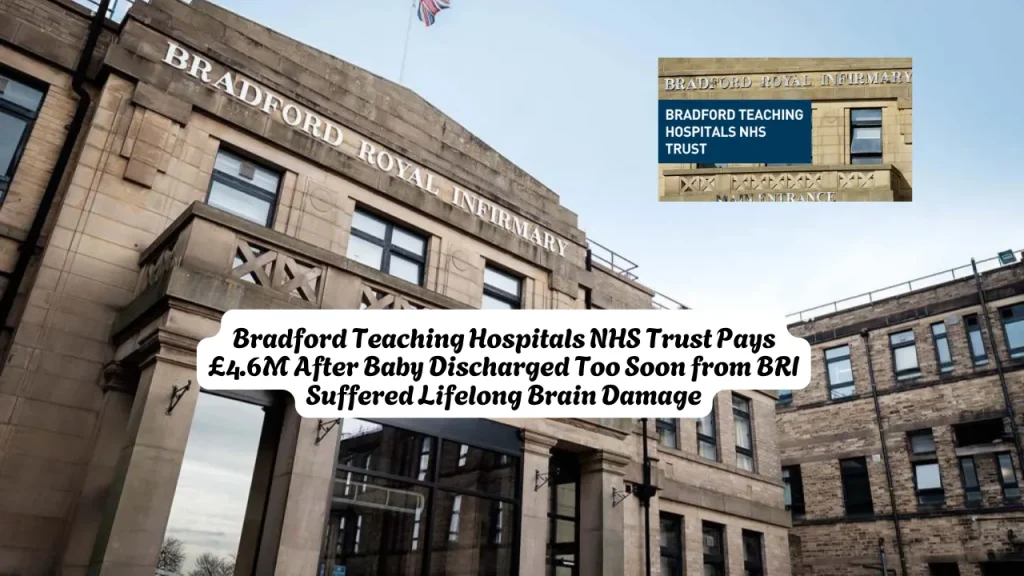
Bradford Teaching Hospitals NHS Foundation Trust has agreed to pay £4.6 million to settle a clinical negligence claim on behalf of a boy who suffered a severe hypoglycaemic brain injury shortly after birth at Bradford Royal Infirmary. The settlement was approved by HHJ Mark Gargan, sitting as a Judge of the High Court, on Monday, March 23, 2026 — what would have been the first day of a scheduled seven-day trial. The child, protected by an anonymity order, lives with profound and permanent disabilities. The Trust disputed liability throughout.
| Field | Detail |
| Hospital | Bradford Royal Infirmary (BRI) |
| NHS Trust | Bradford Teaching Hospitals NHS Foundation Trust |
| Settlement Amount | £4.6 million (lump sum) |
| Approved By | HHJ Mark Gargan, sitting as High Court Judge |
| Approval Date | March 23, 2026 |
| Injury Type | Severe hypoglycaemic brain injury — shortly after birth |
| Claimant’s Condition | Global developmental delay, drug-resistant epilepsy, microcephaly, GMFCS Level 5 neurodisability, non-verbal, doubly incontinent, gastrostomy fed |
| Claimant’s Solicitors | Anna Sari and Roisin Hulme — Morrish Solicitors |
| Counsel | Hylton Armstrong (Parklane Plowden Chambers), led by Henry Pitchers KC |
| Court | Leeds District Registry |
| Trust’s Response | Welcomed court approval, hopes settlement helps family |
Why the Family Sued Bradford Teaching Hospitals — and What the Trust Disputed
The central issue was whether the baby should have been discharged home shortly after birth. The family’s position was that he was not breastfeeding properly and should not have been sent home. Had he remained in hospital, he would have received IV dextrose — which would have prevented the brain injury.
Bradford Teaching Hospitals NHS Foundation Trust rejected that argument entirely. The Trust maintained there were no concerns with the baby’s feeding, that the discharge decision was clinically reasonable, and that the deterioration happened after discharge in a way that could not have been avoided.
The claim was strongly contested, with liability firmly disputed throughout. Expert evidence spanned midwifery, neuroradiology, neonatology, endocrinology, and paediatric neurology — and disagreements between some experts added further complexity to an already difficult case.
The Lifelong Consequences the £4.6 Million Settlement Is Designed to Address
The child lives with global developmental delay, drug-resistant epilepsy, microcephaly, lack of visual function, and the most severe level of neurodisability — classified as GMFCS Level 5. He is non-verbal, doubly incontinent, and fully gastrostomy fed.
The settlement will enable the family to secure essential specialist care, therapy, equipment, and appropriate accommodation to meet the child’s lifelong needs. His mother has already identified a suitable adapted single-storey property to ensure his needs can be safely met.
A £4.6 million lump sum in cases of this severity is structured to cover a lifetime of 24-hour specialist care, adapted housing, assistive equipment, physiotherapy, occupational therapy, and the other costs that accumulate across decades when a child requires full-time support from infancy. Ahead of the approval hearing, an expedited Court of Protection application was also made by EMG Solicitors to appoint deputies to manage the settlement funds on the child’s behalf.
Related article: Sen. Schiff Says ABC and CBS Will Face Congressional Investigation Over Trump Settlements Here’s What the $31 Million in Payouts Actually Covered
What the Judge Said About Why the Settlement Should Be Approved
Approving settlements on behalf of children requires a judge to independently assess whether the amount genuinely serves the child’s best interests — it is not simply a matter of both sides agreeing. HHJ Mark Gargan was clear about why £4.6 million met that test here.
The judge said the settlement gives the family “a real opportunity to provide for the Claimant’s care in the future to enable him to have the best quality of life open to him,” and noted that refusing the offer “could leave him in a difficult situation indeed.”
That judicial reasoning carries weight: the judge was acknowledging both the strength of the settlement figure and the genuine risk of going to trial and potentially receiving less — or nothing — given how fiercely the Trust had contested liability throughout proceedings.
How Morrish Solicitors Built the Case Against BRI Over Years of Litigation
The case was led by Anna Sari, Partner and Head of Clinical Negligence at Morrish Solicitors, with support from Associate Solicitor Roisin Hulme. They worked alongside Hylton Armstrong of Parklane Plowden Chambers, led by Henry Pitchers KC, over many years of litigation.
A settlement was ultimately reached at a second Joint Settlement Meeting — meaning the first such meeting did not resolve the dispute and a further round of negotiations was needed before the Trust agreed to the £4.6 million lump sum.
Anna Sari said the case was “by no means straightforward” and paid tribute to the child’s mother: “My client has fought tirelessly for many years to secure justice for her child, despite the Trust’s continued refusal to accept fault. The emotional burden she has carried through this process has been immense and her perseverance is a testament to her strength as a devoted mum.”
Key Dates in the Bradford Royal Infirmary Clinical Negligence Case
| Milestone | Date |
| Baby born and discharged from Bradford Royal Infirmary | TBD (several years prior to 2026) |
| Hypoglycaemic brain injury occurs following discharge | Shortly after birth |
| Clinical negligence claim issued — Leeds District Registry | TBD |
| First Joint Settlement Meeting (inconclusive) | TBD |
| Seven-day trial scheduled to begin | March 23, 2026 |
| Second Joint Settlement Meeting — £4.6M agreed | Before March 23, 2026 |
| Court of Protection deputies appointed (EMG Solicitors) | Before March 23, 2026 |
| HHJ Mark Gargan approves settlement | March 23, 2026 |
Frequently Asked Questions
What is a hypoglycaemic brain injury in a newborn?
Hypoglycaemia means dangerously low blood sugar. In a newborn who is not feeding adequately, glucose levels can drop to a point where the brain is starved of energy. If not treated promptly — typically with IV dextrose in hospital — the resulting injury can cause permanent brain damage. The severity depends on how low levels drop and how long the condition goes untreated.
Why did Bradford Teaching Hospitals NHS Trust dispute liability for so long?
The Trust’s position throughout was that there were no concerns with the baby’s feeding at the point of discharge, that the decision to send him home was clinically reasonable, and that the deterioration occurred after discharge in a way that could not have been foreseen or prevented. Disputes of this kind are common in clinical negligence cases where the harm occurs after a patient has left hospital, because establishing the causal link between the discharge decision and the subsequent injury requires extensive expert evidence.
Does the £4.6 million settlement mean Bradford Royal Infirmary admitted fault?
Not necessarily. Bradford Teaching Hospitals NHS Foundation Trust said it was “pleased that the court has approved the settlement” and hoped it would help the family “as much as possible” — standard NHS language that does not constitute an admission of liability. Many NHS clinical negligence cases settle without a formal admission. The settlement ends the litigation; it does not produce a judicial finding of negligence.
What is GMFCS Level 5 — the boy’s level of disability?
The Gross Motor Function Classification System (GMFCS) is a five-level scale used to describe the physical abilities of children with neurological conditions. Level 5 — the most severe level — means the child has no ability to maintain head or trunk posture against gravity, requires full assistance for all movement and positioning, and cannot independently sit, stand, or walk. Combined with the boy’s other conditions — epilepsy, visual impairment, non-verbal communication, and gastrostomy feeding — it describes a child who requires full-time specialist care for every aspect of daily life.
Why did a Court of Protection application need to be made?
When a child receives a large personal injury settlement in England and Wales, the courts require someone to be formally appointed to manage the funds on their behalf — particularly when, as here, the child will lack capacity to manage money throughout their life. An expedited Court of Protection application was made by EMG Solicitors to appoint deputies before the settlement approval hearing.
Can other families pursue Bradford Teaching Hospitals NHS Trust for birth injuries at BRI?
This settlement applies only to this child’s individual case. Families who believe their child suffered a birth injury or newborn injury due to NHS negligence should seek independent legal advice from a solicitor specialising in clinical negligence. Time limits apply under the Limitation Act 1980 — though different rules cover cases involving children.
Sources & References
- Telegraph & Argus original reporting (March 27, 2026): thetelegraphandargus.co.uk
- Morrish Solicitors — clinical negligence department: morrishsolicitors.com
- Bradford Teaching Hospitals NHS Foundation Trust: bradfordhospitals.nhs.uk
- Parklane Plowden Chambers (Henry Pitchers KC, Hylton Armstrong): parklaneplowden.co.uk
Last Updated: March 28, 2026
Disclaimer: This article is for informational purposes only and does not constitute legal advice. Clinical negligence claims depend on specific facts, medical evidence, and applicable law. If you believe you or a family member has been affected by NHS negligence, consult a qualified solicitor specialising in clinical negligence.
About the Author
Israr Ahmad is a legal content researcher with 4+ years of experience covering class action settlements and consumer rights cases. He has researched and published coverage of 2,500+ settlements using verified court records, settlement administrator filings, and government sources. Learn more about Israr.