
Mississippi Plane Crash, 6 Dead Including 2 Children Near Horn Island, What Caused the Cessna 210 to Crash?
All six people aboard a single-engine Cessna 210 that crashed off the Mississippi Gulf Coast on Tuesday, November 24, 2026 are dead, the U.S. Coast Guard confirmed. They were four adults and two boys, reportedly ages 8 and 10.
Divers from the Mississippi Department of Marine Resources found the victims inside the submerged fuselage about two miles northeast of Horn Island, near Pascagoula. The Coast Guard ended the search early Wednesday, November 25.
The plane left New Orleans, Louisiana, headed for Fort Myers, Florida, and was descending at roughly 10,000 feet per minute when air traffic control lost contact. The cause is unknown, and officials had not publicly named the six victims as of November 25, 2026. The National Transportation Safety Board (NTSB) is leading the investigation with the Federal Aviation Administration (FAA).
Horn Island Plane Crash: Latest Confirmed Details
| Detail | Information |
| Date | Tuesday, November 24, 2026 |
| Contact lost | About 3:45 p.m. Central (4:45 p.m. ET), per the Coast Guard notification |
| Location | About 2 miles northeast of Horn Island, near Pascagoula, Mississippi |
| Aircraft | Cessna 210 Centurion, reported as a 210L built in 1972 |
| Reported registration | N29002 |
| Route | New Orleans Lakefront Airport, LA to Page Field, Fort Myers, FL |
| Aboard | Six: four adults and two boys, reportedly ages 8 and 10 |
| Survivors | None |
| Reported descent rate | About 10,000 feet per minute (Coast Guard); up to about 18,000 per CNN’s tracking data |
| Search agencies | U.S. Coast Guard, Mississippi Department of Marine Resources and partners |
| Investigators | NTSB (lead) with the FAA |
| Cause | Not determined |
| Lawsuit or compensation fund | None publicly identified |
Who Were the Victims of the Mississippi Plane Crash?
The Coast Guard confirmed four adults and two children were aboard. Its spokesperson described the children as boys aged eight and ten. Officials have not released the names of the pilot or passengers, and they have not said whether everyone was from one family, where they lived or why they were flying.
The crash came two days before Thanksgiving, but no one has confirmed a holiday trip. Identification and family notification fall to the coroner or medical examiner, so treat any names circulating on social media as unconfirmed.
What Happened to the Plane Near Horn Island?
The Cessna took off from New Orleans Lakefront Airport on Tuesday afternoon, bound for Page Field in Fort Myers. Around 3:45 p.m. Central, air traffic authorities lost contact, and the FAA reported the aircraft had been descending rapidly. Flight-tracking data reportedly showed it reaching about 8,800 feet before the steep drop.
Searchers found debris, three life jackets and a life raft near Horn Island. Divers then located all six occupants inside the fuselage late Tuesday, and the Coast Guard concluded the search early Wednesday. Coast Guard Commander Trevor Blount and Mississippi Department of Marine Resources Executive Director Joe Spraggins both offered condolences to the families.
Horn Island is an undeveloped barrier island in the Gulf Islands National Seashore, reachable only by boat. The plane lies underwater, so the wreckage will need marine salvage before NTSB teardown can start.
Why Did the Mississippi Plane Crash?
Investigators have not said. The descent rate shows the plane lost altitude very fast, but it does not show why.
| Possible explanation | Official status |
| Engine failure | Not confirmed |
| Mechanical malfunction | Not confirmed |
| Structural failure | Not confirmed |
| Severe weather | Not established as a cause |
| Pilot incapacitation | Not confirmed |
| Loss of aircraft control | Underlying circumstances undetermined |
| Fuel exhaustion | Not confirmed |
| Midair collision | No verified evidence |
Investigators need the wreckage, flight data, maintenance records and communications before they can name a probable cause. A fast descent is not proof of pilot error, engine failure or a defective aircraft.
What Does a 10,000-Feet-Per-Minute Descent Mean?
A normal controlled descent in a small single-engine plane is usually a few hundred to about 1,000 feet per minute. A rate of 10,000 feet per minute is about 114 miles per hour straight down. It describes how fast the plane was losing altitude, not its forward speed or its impact speed.
| Descent rate | Altitude lost in one minute |
| 500 feet per minute | 500 feet |
| 1,000 feet per minute | 1,000 feet |
| 2,000 feet per minute | 2,000 feet |
| Reported in this crash | 10,000 feet |
Why Do Some Reports Say 18,000 Feet Per Minute?
CNN reported that public Flightradar24 data showed a rate near 18,000 feet per minute during the last recorded stretch. That does not necessarily contradict the Coast Guard’s figure. The two numbers can come from different data sources and time intervals, and public tracking data has gaps and errors. Neither number tells us what caused the crash.
Raw radar numbers alone can fit several scenarios, including spatial disorientation, a stall or spin, flight-control or structural failure, an engine emergency or pilot incapacitation. Only physical evidence can sort those out.
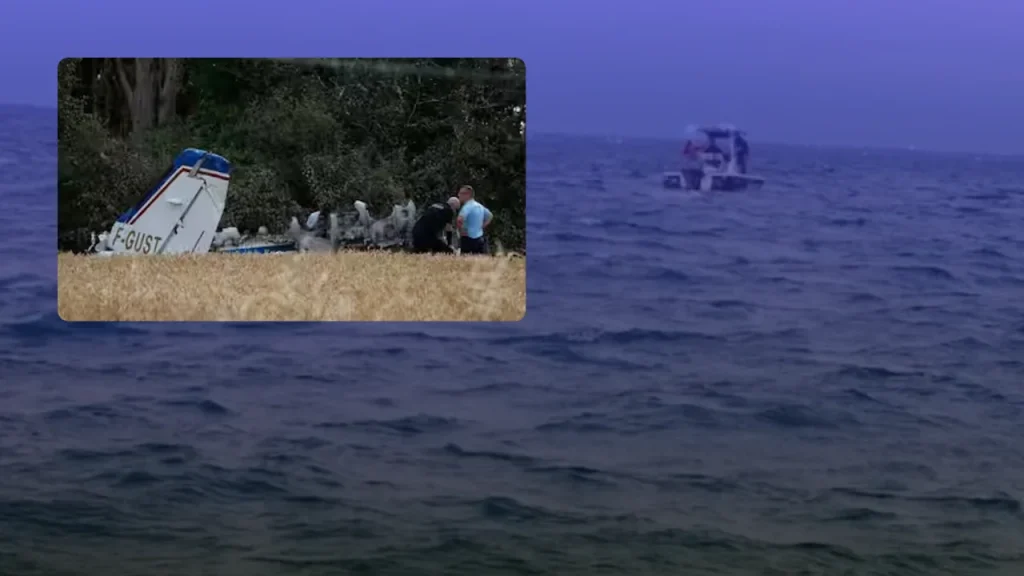
What Kind of Plane Crashed Near Horn Island?
The Cessna 210 Centurion is a single-engine, high-wing plane with retractable landing gear, widely used for personal and business travel. Reports identify this one as a 1972 Cessna 210L, so it was about 54 years old. Age alone does not mean an aircraft was unsafe, because older planes can fly legally when they meet inspection and airworthiness rules. No evidence so far links the plane’s age to the crash.
Was This a Commercial Passenger Flight?
Reports describe a small general aviation flight, not a scheduled airline flight. Officials have not said whether anyone paid for the trip or whether it was a charter. That matters because different federal rules, insurance and legal duties apply to private and commercial flights.
What Will the NTSB Investigate?
The NTSB looks for the probable cause and for safety lessons. It does not decide who is legally at fault.
| Evidence | What it can show |
| Wreckage | Mechanical or structural problems |
| Engine and propeller | Power loss or abnormalities |
| Maintenance records | Inspection and repair history |
| Flight tracking data | Flight path and altitude changes |
| Air traffic control audio | Emergency calls and communications |
| Weather information | Conditions along the route |
| Pilot records | Qualifications, experience and medical information |
| Loading information | Weight and balance |
Did the Plane Have a Black Box?
Not known yet. Small general aviation planes are not required to carry the cockpit voice and flight data recorders that airliners have. Investigators can still use radar records, GPS devices, electronic flight instruments and air traffic control recordings.
When Will We Know What Caused the Mississippi Plane Crash?
The NTSB says a preliminary report on a general aviation accident usually comes within about two weeks. It lists early facts and does not assign a cause. Final reports on general aviation crashes commonly take 12 to 24 months.
| Stage | What to expect |
| Wreckage recovery | Salvage and evidence collection |
| Preliminary report | Early verified facts, about two weeks |
| Technical analysis | Engine, records and data review |
| Final report | Probable cause and safety recommendations |
These are the NTSB’s general timelines, not set dates for this case. You can follow the case in the NTSB CAROL database.
Which Federal Aviation Rules Apply to the Cessna 210 Crash?
Depending on how the flight was operated, these rules may matter:
| Regulation | What it requires |
| 14 CFR § 91.7 | Aircraft must be airworthy |
| 14 CFR § 91.103 | Preflight planning |
| 14 CFR § 91.9 | Operating within the aircraft’s limitations |
| 14 CFR § 91.13 | No careless or reckless operation |
| 14 CFR § 91.403 | Owner or operator responsible for airworthiness |
| 14 CFR § 91.409 | Required inspections |
| 14 CFR Part 39 | Airworthiness directives |
No violation of any of these has been publicly identified in this crash.
Could the Victims’ Families File Wrongful Death Lawsuits?
Possibly, depending on the evidence. A wrongful death claim can follow a crash when negligence, defective equipment, poor maintenance or other misconduct helped cause the deaths. In aviation cases, the parties that could be involved include operators, maintenance providers and component makers. A crash alone does not show anyone was negligent.
As of November 25, 2026, no wrongful death lawsuit, compensation fund or settlement tied to the Horn Island crash has been identified.
Mississippi Wrongful Death Law
Mississippi Code § 11-7-13 allows wrongful death actions when a death results from another’s wrongful act, including negligence and certain defective-product claims. Damages can include funeral costs, lost financial support and other recognized losses. The plane left Louisiana, was headed to Florida and fell in waters off Mississippi, so working out which state’s law applies may take legal analysis.
Could Federal Maritime Law Apply?
The Death on the High Seas Act, 46 U.S.C. § 30302, gives a wrongful death remedy for deaths caused by wrongful acts more than three nautical miles from the U.S. shore. A separate provision, 46 U.S.C. § 30307, treats commercial aviation accidents differently. Whether either applies depends on the exact crash location and how the flight was classified. “About two miles from Horn Island” does not settle it, and if maritime law applies, available damages and eligible beneficiaries can differ from state law.
Can Cessna Be Sued If the Plane Was Built in 1972?
The General Aviation Revitalization Act of 1994 (GARA) sets an 18-year statute of repose for many claims against manufacturers of general aviation aircraft and parts. There are exceptions, including a fresh period for certain replacement parts and exceptions for misconduct involving safety information given to the FAA. GARA does not automatically protect maintenance shops or operators. Because this plane was reportedly built in 1972, GARA could matter if investigators ever find a manufacturing defect. None has been established.
Does the NTSB Decide Who Pays Compensation?
No. The NTSB runs safety investigations. It does not assign civil liability, award damages or set insurance payouts. Under 49 U.S.C. § 1154(b), NTSB board reports generally cannot be used as evidence in a civil damages case, though underlying factual evidence may be available under normal evidence rules.
A probable-cause finding and a court’s liability finding are separate things. Families do not have to wait for the final NTSB report to get legal advice, since filing deadlines can run while the investigation continues.
Resources for Families Affected by the Horn Island Plane Crash
The NTSB’s Transportation Disaster Assistance Division supports families after general aviation accidents. It can share investigation updates, point families to local authorities, help with questions about personal belongings and connect them with short-term emotional support through its American Red Cross partnership. These services provide information and help, not financial compensation.
| Resource | Contact |
| NTSB Transportation Disaster Assistance | 800-683-9369 |
| Direct line | 202-314-6185 |
| [email protected] | |
| Family assistance page | NTSB aviation accident assistance |
| Investigation database | NTSB CAROL |
Official victim information comes only from local and state authorities and the Coast Guard. Be wary of unverified fundraising links and websites that claim to have names.
Horn Island Plane Crash FAQ
Did anyone survive the Mississippi plane crash?
No. The Coast Guard confirmed that divers found all six occupants.
Who were the two children on the plane?
Two boys, reportedly ages 8 and 10. Their names have not been officially released.
What caused the Mississippi plane crash?
It has not been determined. The NTSB investigation is just beginning.
Was it engine failure?
Engine failure has not been established.
Did the plane crash into the Gulf of Mexico?
Yes, in waters near Horn Island off Pascagoula, Mississippi.
Was the pilot responsible?
No finding of pilot error or responsibility has been announced.
Has anyone filed a Mississippi plane crash lawsuit?
None had been identified as of November 25, 2026.
When will the victims’ names be released?
There is no announced schedule. Authorities usually finish identification and family notification first.
Sources
- U.S. Coast Guard, Coast Guard, partner agencies conclude search for 6 near Horn Island, November 25, 2026.
- WLOX, Four adults and two children killed in plane crash near Horn Island.
- CNN, No survivors after plane crashes near Mississippi’s Horn Island.
- Associated Press, Mississippi plane crash kills six, including two children.
- NTSB, Aviation accident investigations and family assistance.
- 14 CFR Part 91.
- Mississippi Code § 11-7-13.
- Death on the High Seas Act, 46 U.S.C. Chapter 303.
- 49 U.S.C. § 1154.
- General Aviation Revitalization Act, notes to 49 U.S.C. § 40101.
This article is for informational purposes only and does not constitute legal advice. Laws vary by state and individual circumstances differ. For advice about your specific situation, consult a qualified attorney. The investigation is ongoing, and no party has been found legally responsible.
Researched and written by Israr Ahmad, legal content researcher and founder of AllAboutLawyer.com. All facts verified against U.S. Coast Guard, WLOX, CNN and Associated Press reporting, NTSB guidance and the federal statutes cited below, as of November 25, 2026. Last Updated: November 25, 2026.
About the Author
Israr Ahmad is a legal content researcher with 4+ years of experience covering class action settlements and consumer rights cases. He has researched and published coverage of 2,500+ settlements using verified court records, settlement administrator filings, and government sources. Learn more about Israr.