
Bob Lee Murder Case, Why Nima Momeni Got 16 Years to Life, What Happened, and the Family’s Wrongful Death Lawsuit
Nima Momeni, the technology consultant convicted of killing Cash App founder Bob Lee, was sentenced to 16 years to life in California state prison on November 10, 2026. That came nearly three years and seven months after Lee was fatally stabbed beneath the San Francisco–Oakland Bay Bridge.
San Francisco Superior Court Judge Alexandra Gordon imposed the sentence after denying Momeni’s motion for a new trial. The term is 15 years to life for second-degree murder, plus one year for personally using a deadly weapon. Momeni, reported to be 42, has been in custody since his arrest nine days after the April 4, 2023 killing. His attorneys have said they plan to appeal.
The case drew national attention as a high-profile tech-world killing that became tied up in debates about crime, drugs and public safety in San Francisco. The sentencing does not end the litigation. Lee’s family is pursuing a separate wrongful-death lawsuit, and the defense appeal is still ahead.
Readers want to know several things. What led to the confrontation? What evidence convinced the jury? Why did jurors reject self-defense but not convict Momeni of first-degree murder? Could he ever be released? Why did Lee’s family file a civil suit? This article answers all of them.
Bob Lee Murder Case: Key Facts About Nima Momeni’s Conviction and Sentence
| Detail | Verified information |
| Victim | Robert Harold “Bob” Lee, 43 |
| Known for | Co-creating Cash App; former Square executive; chief product officer at MobileCoin |
| Date of killing | April 4, 2023 |
| Location | Rincon Hill/East Cut neighborhood near the Bay Bridge, San Francisco, California |
| Convicted person | Nima Momeni, technology consultant (Emeryville, California) |
| Arrest date | April 13, 2023 |
| Criminal court | San Francisco County Superior Court |
| Criminal court reference | 23005500 |
| Conviction | Second-degree murder, Penal Code § 187(a) |
| Weapon finding | Personal use of a deadly weapon, Penal Code § 12022(b)(1) |
| Verdict date | December 17, 2024 (after seven days of jury deliberation) |
| Sentencing judge | Alexandra Gordon |
| Sentencing date | November 10, 2026 |
| Prison sentence | 16 years to life (15 to life plus 1 year) |
| New-trial motion | Denied November 10, 2026 |
| Appeal | Defense attorneys announced plans to appeal |
| Civil lawsuit | Wrongful death, survival, conspiracy and related claims |
| Civil lawsuit status | Reported ongoing; no final damages award verified |
| Public settlement or claim form | None |
Important distinction: The murder prosecution is a criminal case brought by the State of California. Lee’s family’s wrongful-death lawsuit is a separate civil proceeding seeking compensation and other remedies.
Who Was Bob Lee, the Cash App Founder Killed in San Francisco?
Bob Lee was 43 when he died. He was a well-known technology executive who co-created Cash App, the mobile payment service, while working at Square (now Block). He later served as chief product officer at the cryptocurrency company MobileCoin.
He had recently moved to Miami and was visiting the San Francisco Bay Area. He left behind two children, Dagny and Scout. Family and colleagues remembered him as charismatic and energetic.
What Happened to Bob Lee on April 3–4, 2023?
In the early hours of April 4, 2023, Lee was stabbed three times near the foot of the Bay Bridge in San Francisco’s Rincon Hill neighborhood. One chest wound penetrated his heart.
He managed to call 911, left a trail of blood and tried to get help before collapsing. He was taken to a hospital and died there. Autopsy findings showed alcohol, cocaine and ketamine in his system.
Lee and Momeni were acquaintances. Their movements that night became central to the prosecution’s case.
The hours before the stabbing
April 3, 2023 — Earlier gathering. Lee spent time with friends and acquaintances in San Francisco, including at a gathering involving Momeni’s sister, Khazar Momeni (also referred to as Khazar Elyassnia). During the proceedings, Khazar described an incident involving drug use and an alleged sexual assault by an acquaintance, Jeremy Boivin. Her allegations became central to the prosecution’s explanation of the conflict. Those allegations should not be confused with a criminal finding that Boivin committed sexual assault.
April 4, about 12:39 a.m. — Millennium Tower. According to allegations in the family’s civil complaint, surveillance footage showed Lee arriving at the Millennium Tower condominium building where Khazar Momeni lived. Nima Momeni was also at the residence.
About 1:58 a.m. — Lee and Momeni leave together. Surveillance footage showed both men leaving the building and getting into Momeni’s white BMW Z4.
Around 2 a.m. — The drive toward the Bay Bridge. Momeni drove Lee to an isolated part of Main Street near the Bay Bridge. Prosecutors argued the location was deliberately chosen. The defense disputed the prosecution’s account of what happened there.
Shortly afterward — The stabbing. Lee suffered three knife wounds. Surveillance evidence captured parts of the confrontation and Lee’s movements afterward.
About 2:30–2:35 a.m. — Emergency response. Lee called 911 while severely injured. Video showed him moving along the street, seeking help and eventually collapsing. San Francisco police responded to the 300 block of Main Street at about 2:35 a.m.
The San Francisco District Attorney confirmed these emergency-response details in its April 13, 2023 charging announcement. Momeni was arrested that day at his Emeryville loft and charged with murder, with a special allegation of using a knife.
Why Did Nima Momeni Kill Bob Lee? The Prosecution’s Motive Theory
The central disputed question at trial was why the confrontation became fatal.
Prosecutors argued that Momeni was enraged over an alleged sexual assault involving his sister and blamed Lee for his connection to the man accused of assaulting her.
According to the prosecution, Khazar Momeni had been at a gathering involving drugs, including GHB. She later reported being sexually assaulted while incapacitated. Lee had partied with her and had introduced her to a drug dealer, Jeremy Boivin. Momeni was described as highly protective of his sister, and prosecutors said he confronted Lee about what happened and then attacked him.
They portrayed Momeni as an angry brother who took a kitchen paring knife from his sister’s apartment, drove Lee to the secluded spot under the bridge, stabbed him, discarded the knife nearby and left. The prosecution presented the killing as intentional. The jury ultimately rejected first-degree murder, which requires premeditation.
What Nima Momeni said happened: the self-defense claim
Momeni testified in his own defense in November 2024. He said Lee, who was on a multi-day drug binge and unstable, attacked him with the knife.
According to Momeni, the confrontation escalated after he made what he called a “bad joke” suggesting that if it were his last night in town he would spend it with family rather than going to a strip club. He said Lee became enraged and pulled the knife. Momeni, a lifelong martial-arts practitioner, said he redirected it in the struggle. He maintained he did not realize how severe Lee’s injuries were.
The defense argued that Lee’s drug use made him unpredictable and aggressive. It challenged aspects of the forensic evidence and offered an alternative reading of the interactions and the video. The jury rejected the self-defense claim.
Was the alleged sexual assault of Khazar Momeni proven?
No. The reported assault was an allegation discussed during the murder trial, not a judicial finding that the alleged assailant committed the offense.
The second-degree murder verdict established Momeni’s criminal responsibility for Lee’s death. It did not conclusively establish every detail of the prosecution’s proposed motive. It also did not independently determine the truth of the sexual-assault allegation.
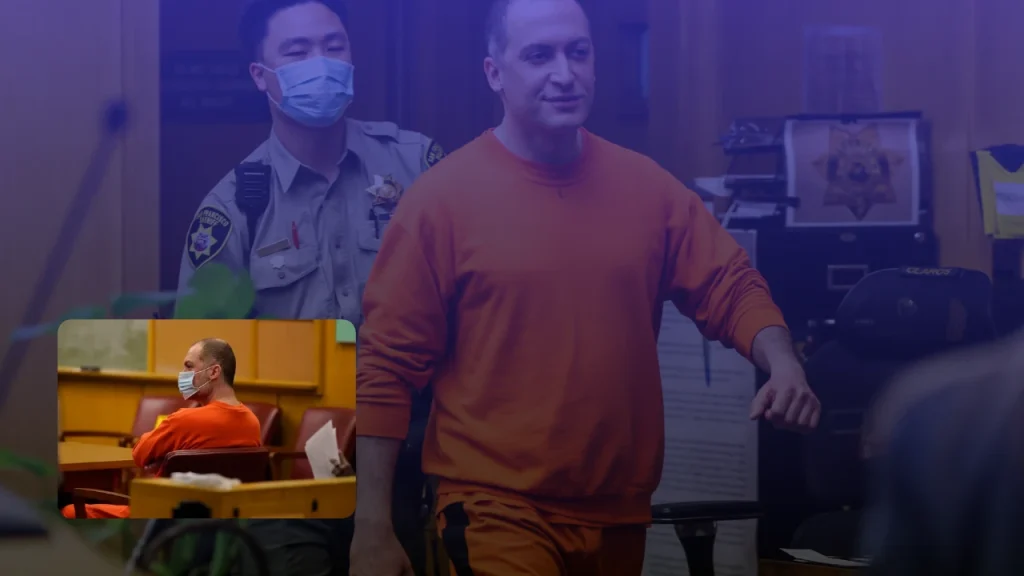
What Evidence Convicted Nima Momeni of Killing Bob Lee?
Prosecutors relied on surveillance footage, forensic analysis, witness testimony, digital communications and Momeni’s actions after the stabbing. The trial ran about two months, starting in mid-October 2024. Testimony came from family members on both sides (including Khazar Momeni), friends, investigators and Momeni himself.
1. DNA evidence on the knife in the Bob Lee case
During closing arguments, prosecutors stated that about 99% of the DNA mixture on the knife handle was attributable to Momeni, and about 98% of the DNA mixture on the blade was attributable to Lee. Put simply, only Momeni’s DNA was found on the handle and Lee’s DNA was on the blade.
The prosecution argued this was inconsistent with Momeni’s description of Lee holding the knife during the confrontation. The defense challenged the reliability and interpretation of the testing, including how much testing was done on the weapon.
2. Surveillance footage of Lee and Momeni
Security footage showed the two men together, including leaving the Millennium Tower and moving near the Bay Bridge. Prosecutors argued the footage supported their account of Momeni advancing toward Lee and then disposing of the knife. The defense disputed what could reliably be concluded from distant, grainy recordings.
3. Text messages and phone communications
Investigators examined communications involving Momeni, Lee, Khazar Momeni and others. Prosecutors said the messages helped establish the conflict involving Khazar and challenged parts of Momeni’s account. The defense argued some communications were taken out of context.
4. Momeni’s actions after the stabbing
Prosecutors emphasized that Momeni left without calling authorities or getting medical help for Lee. They also questioned his later communications and statements. The location where the knife was discarded was also part of the prosecution’s case.
5. Medical findings and Lee’s 911 call
The evidence established three stab wounds, including a fatal wound to the heart. Lee’s 911 call and his movements afterward were also part of the record. The prosecution argued the nature and location of the wounds contradicted a defensive struggle. The defense challenged that interpretation.
The jury accepted the prosecution’s case enough to convict Momeni of second-degree murder. It declined to convict him of first-degree murder.
Why Was Nima Momeni Convicted of Second-Degree Murder Instead of First-Degree Murder in California?
California law distinguishes first- and second-degree murder. Under California Penal Code §§ 187, 188 and 189, murder generally requires an unlawful killing with malice aforethought.
- Express malice involves an intent to kill.
- Implied malice involves conduct done with conscious disregard for human life (§ 188).
- First-degree murder (§ 189) includes certain specified killings and willful, deliberate, premeditated murder. The jury is instructed on this under CALCRIM No. 521.
- Second-degree murder generally covers murder that does not meet the extra requirements for first degree. The jury is instructed on malice under CALCRIM No. 520.
On December 17, 2024, after seven days of deliberations, jurors found Momeni guilty of second-degree murder. They also found true the allegation that he personally used a deadly weapon.
The verdict meant the prosecution proved murder beyond a reasonable doubt. The jury did not find first-degree murder (premeditation) proven. It did not mean the killing was accidental or legally justified. A second-degree verdict also does not necessarily establish that the defendant specifically intended to kill, because California recognizes murder based on implied malice.
Why Did the Jury Reject Nima Momeni’s Self-Defense Claim?
California recognizes lawful self-defense, including deadly force in narrow circumstances. The statutory basis includes Penal Code §§ 197 and 198, and the principles appear in jury instructions CALCRIM No. 505 (justifiable homicide: self-defense or defense of another) and CALCRIM No. 3470 (right to self-defense).
A person claiming self-defense generally must have reasonably believed that they faced imminent danger of death or great bodily injury. They must also have reasonably believed immediate deadly force was necessary, and used no more force than reasonably necessary. The prosecution must disprove legally supported self-defense beyond a reasonable doubt.
Momeni testified that Lee attacked first with a knife. Prosecutors disputed that account using the DNA findings, the surveillance footage, witness testimony and Momeni’s conduct afterward. A murder verdict is inconsistent with the jury accepting complete self-defense.
Could imperfect self-defense have reduced Momeni’s charge to manslaughter?
Potentially, if the legal requirements and supporting evidence were established. Under California law, an actual but unreasonable belief that deadly force was necessary can, in some circumstances, reduce murder to voluntary manslaughter under Penal Code § 192(a). This is called imperfect self-defense and is addressed in CALCRIM No. 571.
Imperfect self-defense does not produce an acquittal. It negates the malice required for murder. The second-degree murder verdict means the jury did not resolve the case in Momeni’s favor on a theory that would eliminate murder liability.
Why Did Judge Alexandra Gordon Sentence Nima Momeni to 16 Years to Life?
| California law | Application |
| Penal Code § 187(a) | Defines murder |
| Penal Code §§ 188–189 | Establish malice and murder degrees |
| Penal Code § 190(a) | Generally imposes 15 years to life for second-degree murder |
| Penal Code § 12022(b)(1) | Adds one consecutive year for personal use of a deadly or dangerous weapon in a qualifying felony |
Judge Gordon imposed:
- 15 years to life for second-degree murder.
- One additional consecutive year for the deadly-weapon enhancement.
Total: 16 years to life in state prison. This is an indeterminate life sentence, not a fixed 16-year sentence.
Does 16 years to life mean Nima Momeni will be released after 16 years?
No. The minimum term only determines when he may first be considered for parole. Reaching that point does not mean release.
- Parole hearings. Under Penal Code § 3041, the Board of Parole Hearings considers indeterminate-term prisoners at their minimum eligible parole date. Release depends on a finding about current public-safety risk, and it looks at the circumstances of the offense, institutional conduct and other factors.
- Denials. If parole is denied, Penal Code § 3041.5 lets the Board set the next hearing for a later date within statutory limits.
- Credits. The court credited Momeni for actual time already spent in custody under Penal Code § 2900.5. Under Penal Code § 2933.2, a person convicted of murder generally cannot earn conduct or work-time credit that reduces the sentence. Murder is also listed as a violent felony under Penal Code § 667.5(c). The exact parole-eligibility date comes from the official sentence calculation by the California Department of Corrections and Rehabilitation.
Momeni could remain incarcerated beyond the minimum term, potentially for life.
Will Nima Momeni be on parole or probation after prison?
No probation was granted at sentencing. If he is ever released, his supervision would be parole, not probation. Under Penal Code § 3000.1, a person sentenced to life for second-degree murder is subject to a parole period of the remainder of their life. The person becomes eligible for discharge after five continuous years on parole unless the Board retains them on parole for good cause.
What Happened at the November 10, 2026 Sentencing Hearing?
The hearing included emotional statements from Lee’s family, comments from Momeni’s relatives, arguments over his request for a new trial and a statement from Momeni himself. Victim-impact statements are a right under Penal Code § 1191.1 and Marsy’s Law (California Constitution, Article I, § 28(b)).
Scout Lee, Bob Lee’s daughter, addressed the court
Scout Lee was 14 when her father died. She spoke about losing both her father and the relationship they would never get to continue, and about the effect on her childhood and future. Her remarks showed that the case involved a parent whose children will grow up without him.
Oliver Lee, Bob Lee’s brother, criticized Momeni
Oliver Lee addressed the court about his brother’s death and the family’s experience during the long trial. He accused Momeni of misrepresenting events while testifying. The family said Momeni had not genuinely accepted responsibility.
Momeni and his mother addressed the court
Momeni’s mother spoke at the hearing. Momeni told the court he regretted the suffering of both families. He continued to maintain that his understanding of the confrontation differed from the prosecution’s version. His statement was not an unqualified admission that he deliberately murdered Lee.
Judge Gordon denied the new-trial motion
Before imposing sentence, Gordon denied the defense’s new-trial motion in a lengthy ruling. Sentencing had been delayed by post-conviction litigation, including a September 2026 round of new-trial proceedings.
Why Was Nima Momeni’s Request for a New Trial Denied?
After the December 2024 conviction, the defense raised several challenges. They included claims under the Racial Justice Act and a later motion for a new trial alleging ineffective assistance of counsel, prosecutorial misconduct and juror misconduct. These are the main legal frameworks behind those claims:
- Penal Code § 1181 lists the grounds on which a court may grant a new trial. They include jury misconduct, verdicts contrary to law or evidence, and legal error.
- California Racial Justice Act, Penal Code § 745. It prohibits the State from seeking or obtaining a conviction or imposing a sentence on the basis of race, ethnicity or national origin. Momeni’s team raised concerns about alleged prejudice related to his Iranian background and language used during the trial.
- Ineffective assistance of counsel. This claim arises under the Sixth Amendment and Strickland v. Washington (1984) 466 U.S. 668. It requires showing deficient performance by counsel and resulting prejudice.
- Prosecutorial misconduct. This claim rests on due process principles under the Fourteenth Amendment and California law.
- Evidence challenges. The defense also challenged a police recording showing Momeni making movements that prosecutors characterized as relevant to the stabbing.
Judge Gordon rejected the arguments, including claims that the proceedings were unfair enough to require a retrial. A denied new-trial motion does not necessarily stop an appellate court from later reviewing properly preserved legal issues.
Can Nima Momeni Appeal His Murder Conviction in California?
Yes. His attorneys announced plans to appeal after the November 10, 2026 sentencing. A defendant has a right to appeal a judgment of conviction under Penal Code § 1237.
Possible appellate issues include legal error at trial, improper admission or exclusion of evidence, or violations of the defense’s rights. An appeal is not a second trial. Appellate judges generally review the written record under the relevant standards of review. They do not replace the jury’s view of disputed testimony with their own.
Under California Rules of Court, Rule 8.308, a criminal defendant generally has 60 days after judgment to file a notice of appeal, subject to exceptions. A successful appeal could produce a new proceeding, an altered judgment or another legally authorized remedy. As of November 11, 2026, defense counsel had publicly stated an intention to appeal, but no appellate proceeding or outcome had been established.
Bob Lee Wrongful Death Lawsuit: Why Is His Family Suing Nima Momeni’s Relatives and Others After the Murder Conviction?
The criminal case is one part of the litigation arising from Lee’s death.
On March 28, 2025, Lee’s family filed a civil complaint in San Francisco Superior Court seeking damages from Momeni and several other defendants. The original complaint identified the plaintiffs as:
- The estate of Robert Harold Lee, represented by Timothy Oliver Lee.
- Lee’s son, Dagny Lee.
- Lee’s daughter, Scout Lee, represented in the original filing by guardian ad litem Krista Lee.
The defendants named in the original complaint included Nima Momeni, Khazar Momeni, Dino Elyassnia, Mahnaz Tayarani, Securitas Security Services USA, and several entities associated with the Portside II condominium property. Reporting describes the suit as alleging that Momeni’s sister and mother helped cover up aspects of the crime.
The original pleading raised negligence/survival, wrongful-death, aiding-and-abetting, conspiracy, intentional-infliction-of-emotional-distress and invasion-of-privacy claims. These are civil allegations. Including them in a complaint does not establish that any defendant is liable.
For a broader explanation of the legal process, see What Is a Wrongful Death Lawsuit? Everything Families Need to Know.
What does Bob Lee’s family allege against Momeni’s relatives?
The family alleges that certain relatives took part in misconduct connected to the fatal incident and the later handling of evidence. The original complaint included allegations about the vehicle involved, electronic communications and other potential evidence.
These claims are separate from Momeni’s criminal conviction. Being related to a person convicted of murder does not, by itself, create civil liability. A plaintiff must establish a legal basis, supported by evidence, for each person’s own conduct.
What does the Lee family allege about the leaked surveillance footage?
Another part of the civil dispute concerns video showing Lee in the moments after he was stabbed. The family alleges that security-related defendants, including Securitas Security Services USA and entities tied to the Portside II property, improperly disclosed distressing footage that later appeared in news coverage. The complaint alleges the footage traumatized Lee’s children.
The dispute raises questions about privacy (including the right to privacy in Article I, § 1 of the California Constitution and the common-law invasion-of-privacy torts), newsworthiness, and whether the disclosure is independently actionable. These issues differ from disputes over whether police records must be made public. For comparison, another reported case, Josh Jacobs Lawsuit, Packers Running Back Sues to Block Release of Police Video and Evidence in Wisconsin Battery Case, involves different parties and Wisconsin public-records law.
Other civil actions related to Nima Momeni
Reporting around the sentencing also said Momeni pursued separate civil actions related to media coverage. The reviewed records did not provide details of those actions, so their status has not been independently verified.
Did a judge allow the Lee family’s civil lawsuit to proceed?
At least in substantial part, yes. During 2025 proceedings, San Francisco Superior Court Judge Harold Kahn rejected certain attempts to dismiss claims in the family’s amended civil complaint. Those rulings allowed contested issues to move past an early pleading challenge.
They were not findings that the relatives or security-related defendants committed the alleged misconduct. The case was still described as ongoing in reporting around the November 2026 sentencing. A final civil judgment, damages award or settlement resolving all claims has not been independently verified.
What California Laws Apply to the Bob Lee Civil Lawsuit?
Code of Civil Procedure § 377.60 — Wrongful death. Qualifying surviving family members, or a personal representative acting for them, can seek compensation for a death caused by another person’s wrongful act or neglect. These damages belong to the heirs and compensate their own losses, such as lost support, household services and companionship. They do not include the decedent’s own pain and suffering.
Code of Civil Procedure § 377.61 — Wrongful death damages. A court may award damages that are just under all the circumstances. Wrongful-death damages are separate from the survival damages in § 377.34.
Code of Civil Procedure § 377.30 — Survival actions. The decedent’s personal representative or successor in interest can pursue claims that belonged to the person who died.
Code of Civil Procedure § 377.34 — Survival damages. Survival damages are generally limited to losses the decedent sustained before death. Under SB 447, a temporary provision allowed recovery of the decedent’s pre-death pain, suffering or disfigurement in actions filed on or after January 1, 2022 and before January 1, 2026. That provision expired on January 1, 2026, and cases filed from that date onward are limited to economic survival damages. Because the Lee family filed on March 28, 2025, this survival claim falls inside the window when pain-and-suffering damages were available. Punitive damages the decedent could have recovered remain possible only in the rare cases where the law authorizes them.
Code of Civil Procedure § 335.1 — Filing deadline. California generally imposes a two-year limitation period for personal injury and wrongful-death claims, subject to exceptions. Lee died on April 4, 2023, and the original complaint was filed in March 2025, within two years.
Code of Civil Procedure § 340.3 — Claims against convicted felons. In an action for damages based on the defendant’s commission of a felony for which the defendant was convicted, the filing period can run until one year after judgment is pronounced. This provision concerns claims against the convicted person. It does not extend deadlines against other defendants.
Civil Code § 3294 — Punitive damages. Punitive damages require clear and convincing evidence of malice, oppression or fraud. Whether they are available depends on the claim and the defendant.
Civil Code § 1431.2 (Proposition 51). When several defendants share fault, each is generally liable for non-economic damages only in proportion to their own percentage of fault. This matters in a suit with multiple defendants.
Penal Code § 1202.4 and California Constitution Article I, § 28(b)(13) — Criminal restitution. A criminal court must order a convicted defendant to pay restitution for qualifying crime-related economic losses. Criminal restitution does not replace every category of recovery in a civil lawsuit.
Other principles of California law on intentional wrongdoing, aiding and abetting, conspiracy, causation, privacy and emotional distress may apply depending on the particular claims.
How Much Money Is Bob Lee’s Family Seeking in the Wrongful Death Lawsuit?
The original civil complaint did not establish a specific overall dollar amount as an awarded recovery. It sought several categories of damages, including economic losses tied to Lee’s death and other damages permitted by law. Potential issues include lost financial support, loss of companionship, recoverable expenses and claims belonging to the estate.
The value of a wrongful-death case is not set by the deceased person’s wealth or public profile. A court must apply the damages rules to the evidence.
For a separate example of how California wrongful-death awards can be shaped by statutory limits, see Arthur Park Wrongful Death Verdict, Jury Awards $9.25 Million Over Deaths of Demi Dominguez and Her Newborn. That medical-malpractice case involves different claims and damages rules.
There is no verified public Bob Lee settlement fund, class-action settlement, claim form or application deadline. The civil action concerns specific plaintiffs and defendants. It is not a compensation program open to Cash App users.
Could Nima Momeni’s Murder Conviction Help the Lee Family Win the Civil Case?
A criminal conviction can have important effects in related civil litigation.
- Evidence Code § 1300 allows a judgment of conviction for a felony to be used as evidence of facts essential to the judgment.
- Under California case law such as Teitelbaum Furs, Inc. v. Dominion Insurance Co. (1962) 58 Cal.2d 601, a criminal conviction after trial can, in appropriate circumstances, bar the convicted person from relitigating issues decided against them (collateral estoppel).
- Criminal guilt must be proven beyond a reasonable doubt. Civil claims generally use the lower preponderance-of-the-evidence standard.
- Each element of each civil cause of action must still be proven.
- Momeni’s conviction does not automatically establish that his relatives or other defendants committed separate wrongful acts.
- The effect of the conviction on particular civil issues can depend on procedural status, including the pending appeal, and on the evidence and preclusion rules.
The criminal sentence and any civil damages are separate legal consequences.
Bob Lee Murder Case Timeline: 2023–2026
| Date | Event |
| April 3–4, 2023 | Lee and Momeni spend the night together after a gathering at Khazar Momeni’s Millennium Tower apartment |
| April 4, 2023 | Bob Lee is stabbed near the Bay Bridge in San Francisco and later dies at a hospital |
| April 13, 2023 | Police arrest Nima Momeni in Emeryville; the DA announces a murder charge |
| 2023 | Criminal case proceeds through pretrial hearings |
| Mid-October 2024 | Murder trial begins |
| November 2024 | Momeni testifies in his own defense |
| December 17, 2024 | Jury convicts Momeni of second-degree murder after seven days of deliberation and finds the deadly-weapon allegation true |
| March 28, 2025 | Lee’s family files a separate civil complaint |
| 2025 | Civil court allows contested portions of the family’s litigation to proceed |
| 2025–2026 | Momeni’s defense pursues post-verdict challenges, including Racial Justice Act claims |
| September 2026 | Further new-trial proceedings are reported |
| November 10, 2026 | Judge Gordon denies a new trial and imposes 16 years to life |
| November 10, 2026 | Defense attorneys announce plans to appeal |
| November 11, 2026 | Civil litigation remains reported as ongoing; appellate outcome unresolved |
Frequently Asked Questions About Nima Momeni and the Bob Lee Murder Case
Who killed Cash App founder Bob Lee?
Nima Momeni was convicted of second-degree murder in December 2024 for the fatal stabbing of Bob Lee. He was sentenced to 16 years to life on November 10, 2026.
Who is Nima Momeni?
Momeni is a technology consultant who lived in Emeryville, California. He knew Lee through social connections involving his sister, Khazar Momeni.
Where was Bob Lee killed?
Lee was stabbed near Main Street in the Rincon Hill/East Cut area of San Francisco, close to the Bay Bridge, in the early morning of April 4, 2023.
Was Bob Lee’s death a random street attack?
No. Investigators established that Lee and Momeni knew one another. The prosecution tied the fatal encounter to a personal dispute, not a random attack by a stranger.
Why did Nima Momeni allegedly kill Bob Lee?
Prosecutors argued Momeni blamed Lee over circumstances involving his sister’s alleged drugging and sexual assault. Momeni disputed that motive and said he acted in self-defense after Lee attacked him.
Did Nima Momeni plead guilty?
No. He contested the charge, went to trial and was convicted by a jury.
Why was Nima Momeni not convicted of first-degree murder?
The jury found second-degree murder instead. It did not find the extra requirements for first-degree murder, such as premeditation, proven beyond a reasonable doubt.
Is Nima Momeni serving a life sentence?
Yes. He received an indeterminate sentence of 16 years to life. Parole may eventually be considered under California law, but release is not guaranteed.
Will Nima Momeni get time off his sentence for good behavior?
Generally no. Under Penal Code § 2933.2, a person convicted of murder cannot earn credits that reduce the sentence. He receives credit for actual days in custody under Penal Code § 2900.5.
Will Nima Momeni be on parole for life if released?
Yes, in general. Under Penal Code § 3000.1, a life term for second-degree murder carries lifetime parole, with eligibility for discharge after five continuous years on parole unless the Board retains him for good cause.
Could Nima Momeni receive a new trial?
His trial-court request was denied on November 10, 2026. His lawyers intend to appeal, and any further relief depends on future legal proceedings.
Did the jury find that Bob Lee attacked Momeni first?
No. The murder verdict rejected a complete self-defense justification. It should not be treated as a detailed finding resolving every disputed movement or statement during the confrontation.
Was Khazar Momeni criminally convicted in connection with Bob Lee’s death?
The reviewed records do not establish such a conviction. She was named as a defendant in the separate civil lawsuit, where the family’s claims against her are distinct from her brother’s criminal case.
Can Bob Lee’s family sue Nima Momeni even though he was convicted?
Yes. The criminal case and the civil case are separate. Penal Code restitution and a civil wrongful-death and survival action serve different purposes, and Code of Civil Procedure § 340.3 can extend the filing period for claims against a convicted felon.
Is there a Bob Lee class-action settlement?
No verified class-action settlement or public claims program exists in connection with Lee’s murder. The family’s litigation is a separate civil action.
What happens next in the Bob Lee case?
The next developments to watch are any filed criminal appeal, appellate rulings, further orders on restitution, and the progress of the family’s civil lawsuit.
What the Bob Lee Case Means
The sentencing of Nima Momeni closes the main criminal chapter in one of San Francisco’s most closely followed murder prosecutions. It came more than three and a half years after the stabbing. A jury found that he criminally killed Bob Lee and rejected the justification offered by the defense. The judge imposed a life sentence with a 16-year minimum term, subject to sentencing and parole rules.
Important legal questions remain. Momeni’s attorneys can challenge the conviction on appeal, while the Lee family continues to pursue accountability and possible compensation through civil litigation. The facts established at trial form the legal foundation for the conviction and sentence under California’s second-degree murder and weapons-enhancement provisions. No outcome can restore what Lee’s family and friends lost, and a prison term or damages award cannot measure it.
The case shows how one killing can produce several legal proceedings with different purposes, standards of proof and possible outcomes.
Primary Documents and Sources
- San Francisco District Attorney — April 13, 2023, Murder Charge Announcement — Official charges, arrest information, statutory references and criminal court number.
- San Francisco District Attorney — December 17, 2024, Conviction Announcement — Official confirmation of the second-degree murder conviction and deadly-weapon finding.
- Bob Lee Family — Original Wrongful-Death Complaint (PDF) — Primary pleading identifying plaintiffs, defendants, allegations and causes of action. The complaint is an allegation document, not a court finding.
- Courthouse News Service — Judge Advances Civil Suit — Civil pleading challenges and court rulings.
- Associated Press — November 10, 2026 Sentencing Report — Sentence, trial outcome, family statements and planned appeal.
- SFGATE — November 10, 2026 Sentencing Hearing — Reporting from the sentencing hearing and the ruling on the new-trial request.
- California Penal Code § 190 and § 12022 — Murder penalties and the deadly-weapon enhancement.
- California Code of Civil Procedure § 377.60 — Wrongful-death standing and civil claims.
- California Rules of Court, Rule 8.308 — Criminal appeal deadlines.
- California Victim Compensation Board — Restitution — Criminal restitution rules and distinctions.
Disclaimer: AllAboutLawyer.com is an independent legal-information website, not a law firm. This article is general legal information, not legal advice. Allegations in civil complaints remain allegations unless established by a court or other verified outcome.
Researched and written by Israr Ahmad, legal content researcher and founder of AllAboutLawyer.com. All facts verified against the San Francisco District Attorney’s official announcements, the family’s civil complaint, California statutes and court-rules text, and the AP and SFGATE sentencing reports, as of November 11, 2026. Last Updated: November 11, 2026.
About the Author
Israr Ahmad is a legal content researcher with 4+ years of experience covering class action settlements and consumer rights cases. He has researched and published coverage of 2,500+ settlements using verified court records, settlement administrator filings, and government sources. Learn more about Israr.