
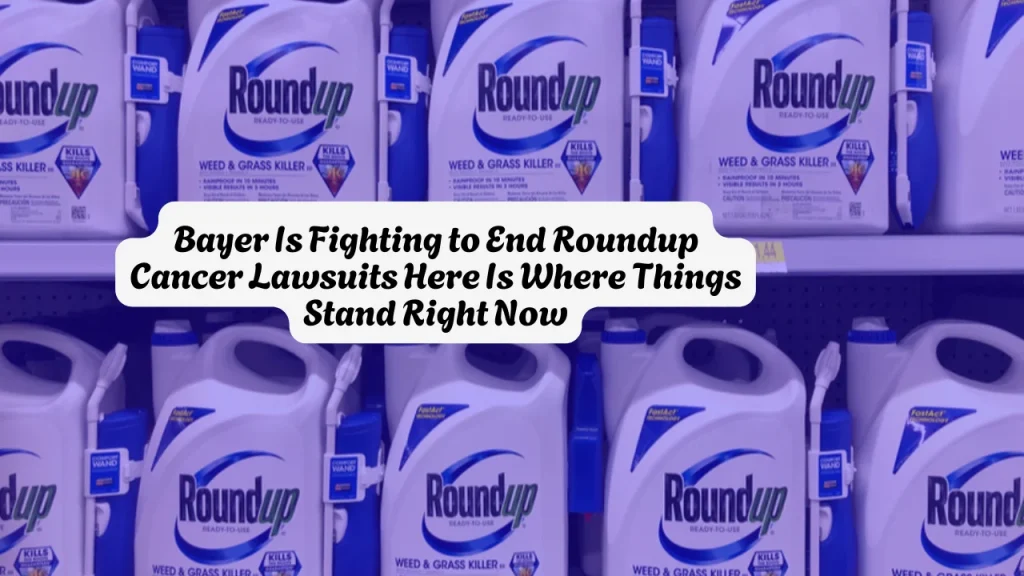
Bayer Is Fighting to End Roundup Cancer Lawsuits Here Is Where Things Stand Right Now
Bayer, which acquired Monsanto in 2018, has faced more than 100,000 claims in state courts that glyphosate — the active ingredient in the weed killer Roundup — caused cancer. If you used Roundup for years and later developed a serious illness, this case is directly about you.
| Field | Detail |
| Lawsuit Filed | Multiple cases; ongoing since 2018 acquisition |
| Defendant | Bayer AG / Monsanto Company |
| Alleged Violation | Failure to warn consumers of cancer risk; Federal Insecticide, Fungicide and Rodenticide Act (FIFRA) |
| Who Is Affected | Anyone exposed to Roundup/glyphosate who developed non-Hodgkin lymphoma |
| Current Court Stage | U.S. Supreme Court oral arguments heard April 27, 2026 |
| Court & Jurisdiction | Monsanto v. Durnell; U.S. Supreme Court |
| Lead Law Firm | Multiple plaintiff firms nationwide |
| Next Hearing Date | Supreme Court ruling expected by end of June 2026 |
| Official Case Website | bayer.com/en/managing-the-roundup-litigation |
| Last Updated | April 30, 2026 |
What Is the Bayer Roundup Lawsuit About? Monsanto v. Durnell
For decades, Monsanto sold Roundup — the most widely used weed killer in the United States — without warning consumers it might cause cancer. The World Health Organization’s International Agency for Research on Cancer classified glyphosate as “probably carcinogenic to humans” in 2015, and lawsuits began flooding in shortly after.
The case before the Supreme Court stems from a lawsuit filed by John Durnell, who served as the “spray guy” for a neighborhood association in St. Louis for about 20 years — killing weeds at local parks without protective equipment. He was diagnosed with non-Hodgkin lymphoma, a rare and often aggressive blood cancer, and attributed it to his decades of Roundup exposure beginning in 1996.
Bayer acquired Roundup as part of its $63 billion purchase of Monsanto in 2018 and inherited all the litigation that came with it. The core legal question is whether the EPA’s approval of Roundup’s label — without a cancer warning — shields Bayer from being held accountable under state consumer protection laws. If the Supreme Court sides with Bayer, it could effectively end thousands of active lawsuits.
This is a consumer rights lawyer battleground that goes far beyond one case. Consumers and advocacy groups warn that a ruling in Bayer’s favor would strip everyday people of their right to sue for product harm — even when a company knew the risks and said nothing.
Are You Part of the Bayer Roundup Class Action Lawsuit?
If you used Roundup regularly and later received a cancer diagnosis, here is how to know if this litigation may include you.
You may be part of this class if:
- You used Roundup or other glyphosate-based herbicides for at least three years and approximately 40 or more hours over your lifetime
- You were diagnosed with non-Hodgkin lymphoma or a related subtype
- You are within your state’s statute of limitations for filing a claim
- You have medical records confirming your diagnosis and can document your exposure to Roundup
You are likely NOT included if:
- Your cancer diagnosis is unrelated to non-Hodgkin lymphoma or blood cancers
- You had only brief, one-time exposure to Roundup products
- Your statute of limitations has already expired — speak with an attorney immediately if you are unsure
If you think you qualify, save every record you have: purchase receipts, medical records, any employer records showing pesticide use, and photos if available. Do not wait to gather this documentation.
Related article: Campbell’s Microwavable Soup Class Action Lawsuit, Are You Part of This Case?
What Are Roundup Plaintiffs Seeking in This Lawsuit?
Plaintiffs are seeking compensation for damages including medical costs, lost income, and pain and suffering caused by cancer they say Roundup caused. Courts have awarded large sums to individual plaintiffs — and juries have repeatedly sided with victims when they see how Monsanto handled internal safety concerns.
A Missouri appellate court on May 27, 2025, affirmed a $611 million verdict against Monsanto, holding the company accountable for exposing consumers to Roundup. A jury in the Barnes trial in Georgia reached a verdict of $2.1 billion against the company in March 2025, including $2 billion in punitive damages.
In February 2026, Bayer proposed a $7.25 billion class settlement to resolve current and future claims alleging that Roundup caused non-Hodgkin lymphoma. A judge granted preliminary approval in March 2026, but final approval will not be decided until July 2026. That proposed settlement would pay up to $165,000 per claim depending on the victim’s exposure, disease, and age, and would be distributed over up to 21 years.
No legal settlement payout is guaranteed yet, and the Supreme Court ruling could reshape everything.
What Should You Do If You Were Affected by Roundup?
Most class members do not need to take action right now. However, the steps below protect your rights regardless of which direction the Supreme Court rules.
- Document your exposure. Write down every product you used, how often, and for how long. Save any purchase receipts or employer records.
- Gather your medical records. Get a copy of your non-Hodgkin lymphoma diagnosis and treatment history.
- Consult a class action lawsuit attorney or consumer rights lawyer. A free legal consultation with an attorney who handles Roundup cases will tell you exactly where you stand. Do not wait — statutes of limitations vary by state.
- Monitor the Supreme Court ruling. A decision is expected by end of June 2026. This ruling will determine whether existing lawsuits survive or whether Bayer escapes liability through federal preemption.
- Watch the proposed $7.25 billion settlement. If you were diagnosed with non-Hodgkin lymphoma before February 17, 2026, you may qualify. Final court approval is expected in July 2026.
Bayer Roundup Lawsuit Timeline
| Milestone | Date |
| WHO classifies glyphosate as probable carcinogen | 2015 |
| Bayer acquires Monsanto | 2018 |
| John Durnell files lawsuit in Missouri | 2019 |
| Bayer petitions Supreme Court for review | April 4, 2025 |
| Missouri Court of Appeals upholds $611M verdict | May 27, 2025 |
| Georgia jury awards $2.1 billion against Monsanto | March 21, 2025 |
| U.S. Supreme Court agrees to hear Monsanto v. Durnell | January 16, 2026 |
| Bayer proposes $7.25B class settlement | February 17, 2026 |
| Preliminary settlement approval granted | March 4, 2026 |
| Supreme Court oral arguments | April 27, 2026 |
| Supreme Court ruling expected | By end of June 2026 |
| Final settlement approval hearing | July 2026 |
Frequently Asked Questions
Is there a class action lawsuit against Bayer and Monsanto over Roundup?
Yes. Bayer has paid out billions of dollars in settlements to people who claim they developed non-Hodgkin lymphoma from exposure to glyphosate herbicides, and the company is still wrestling with more than 60,000 additional lawsuits.
Do I need to do anything right now to be included?
Not necessarily. Most people affected by Roundup are automatically considered potential class members. However, you should consult an attorney now to protect your individual rights before any Supreme Court ruling changes the legal landscape.
When will a settlement be reached in the Bayer Roundup case?
A proposed $7.25 billion settlement received preliminary approval in March 2026 from a Missouri court. Final approval is scheduled for July 2026. The Supreme Court ruling, expected by end of June, could also affect how this plays out.
Can I file my own lawsuit against Bayer instead of joining the class?
Yes. Individual lawsuits are still active. Speaking with a class action lawsuit attorney will help you decide whether joining the class or pursuing your own case gives you a better outcome.
How will I know if the Bayer Roundup lawsuit settles?
Monitor the official Bayer litigation page at bayer.com/en/managing-the-roundup-litigation and check back here for updates. If a settlement is finalized, eligible claimants will receive notice through the settlement administrator.
Why is Bayer pushing for laws to block future lawsuits?
Bayer is leading a group called the Modern Ag Alliance, pushing bills in multiple states that would grant chemical companies total immunity from lawsuits brought under federal misbranding violations — stripping consumers of their right to hold pesticide companies accountable. This is separate from the Supreme Court case but part of the same broader strategy.
What does the Supreme Court ruling mean for me?
A ruling in Bayer’s favor would largely bring the Roundup litigation to an end, with billions of dollars at stake. A ruling against Bayer would confirm that victims can continue to hold the company accountable in state courts regardless of EPA approval.
Sources & References
- Bayer AG — Official Roundup Litigation Page: bayer.com/en/managing-the-roundup-litigation
- U.S. Supreme Court — Monsanto v. Durnell docket
- Reuters — Supreme Court oral arguments coverage, April 27, 2026
- Pesticide Action Network — State immunity bill tracking, 2025
Disclaimer: This article is for informational purposes only and does not constitute legal advice. Legal claims and outcomes depend on specific facts and applicable law. For advice regarding a particular situation, consult a qualified attorney.
Prepared by the AllAboutLawyer.com Editorial Team and reviewed for factual accuracy against official court records and publicly available litigation sources on April 30, 2026. Last Updated: April 30, 2026
About the Author
Israr Ahmad is a legal content researcher with 4+ years of experience covering class action settlements and consumer rights cases. He has researched and published coverage of 2,500+ settlements using verified court records, settlement administrator filings, and government sources. Learn more about Israr.