
Campbell’s Microwavable Soup Class Action Lawsuit, Are You Part of This Case?
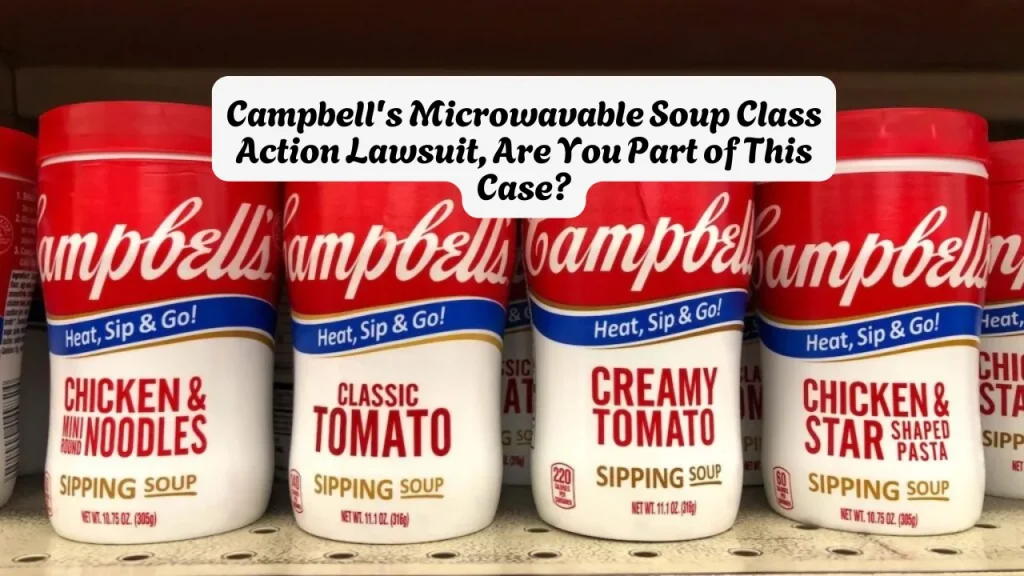
A proposed class action lawsuit alleges Campbell’s microwavable soups cannot be safely heated in a microwave as advertised, given that the products’ polypropylene containers and lids release dangerous microplastics into the soup when exposed to heat. If you have ever grabbed one of those portable Campbell’s soup cups and popped it in the microwave at work, school, or home, this lawsuit may directly affect you. The case is currently in the early litigation phase — no settlement has been reached and no claim form exists yet.
Quick Facts
| Field | Detail |
| Lawsuit Filed | April 2026 |
| Defendant | The Campbell’s Co. |
| Alleged Violation | False advertising; breach of warranty; unjust enrichment; violations of California consumer protection law |
| Who Is Affected | U.S. residents who purchased Campbell’s Microwavable Soup products for personal or household use |
| Current Court Stage | Active — complaint filed; class certification not yet sought |
| Court & Jurisdiction | U.S. District Court for the Northern District of California |
| Lead Plaintiff | Margaret Peggi Louise Garvey |
| Next Hearing Date | TBD — no scheduling order yet confirmed |
| Official Case Website | TBD — no official case site established as of April 30, 2026 |
| Last Updated | April 30, 2026 |
What Is the Campbell’s Lawsuit About? Garvey v. The Campbell’s Co., No. 3:26-cv-03097
Every time someone microwaved a Campbell’s soup cup, they may have been getting more than broth and noodles. According to the complaint, the polypropylene plastic used in Campbell’s soup packaging can release millions of microplastic particles when exposed to high temperatures, even over short periods of time — particularly during microwave heating. Microplastics are tiny plastic fragments under five millimeters in size that form when plastics break down, including under heat.
The suit cites research suggesting that food packaging made from plastics like polypropylene can contribute to microplastic ingestion when heated, due to the material’s tendency to break down and leach particles into food. The complaint also cites studies linking microplastic exposure to a range of health concerns. Garvey argues Campbell’s is aware of the risks of microplastics and yet still chooses to conceal them and affirmatively represent its products as safe to microwave.
The legal claims filed in the U.S. District Court for the Northern District of California include false advertising, breach of warranty, unjust enrichment, and violations of California’s consumer protection statutes — specifically the California Consumers Legal Remedies Act and Unfair Competition Law. These laws prohibit companies from deceiving consumers about the nature or safety of a product.
Are You Part of the Campbell’s Class Action Lawsuit?
Here is how to know whether this lawsuit includes you. The class definitions in the complaint are still subject to court review, but based on what was filed, you may have a connection to this case.
You may be part of this class if:
- You purchased Campbell’s Microwavable Soup products — such as Campbell’s Chunky, Well Yes!, or other cup-style soup products designed for microwave use
- You bought them for personal, family, or household use — not for resale or commercial purposes
- You heated the product in its original container using a microwave, as the labeling and instructions direct you to do
- You live in the United States — the complaint seeks a nationwide class, with a California subclass also named
You are likely NOT included if:
- You never microwaved the product in its original container
- You purchased Campbell’s products in traditional cans (not microwavable cup format)
- You purchased for commercial or business use
The complaint looks to represent all U.S. residents who purchased Campbell’s Microwavable Soup for personal, family, or household purposes within the applicable statute of limitations period. The exact cutoff dates for the class period are TBD — they have not been finalized by the court.
Related article: United States vs. Cedric Reid & Advance Tax Group Tax Fraud Lawsuit, Full Case Breakdown
What Are Campbell’s Plaintiffs Seeking in This Lawsuit?
This is not a payout section — no money is available yet and no claim form exists. What the plaintiff is asking the court to do is significant, though. Garvey demands a jury trial and requests declaratory and injunctive relief and an award of compensatory, statutory, punitive, and treble damages for herself and all class members.
Declaratory relief means the court would formally declare that Campbell’s conduct was unlawful. Injunctive relief means the court could order Campbell’s to change its labeling and marketing — potentially removing “microwavable” claims or adding safety warnings. Treble damages means a court could multiply actual damages by three as a penalty for willful misconduct.
The 66-page complaint contends that Campbell’s misled millions of consumers by failing to disclose the potential risks associated with microwaving its portable soup products, prioritizing profits over customers’ health and safety. No specific dollar amount has been claimed in the complaint — the final damages figure, if any, would be determined through litigation or a negotiated settlement.
What Should You Do If You Were Affected by Campbell’s?
You do not need to do anything right now to preserve your place in this lawsuit. Most class members are automatically included if the court certifies the class — you do not sign up or register at this stage. Here are the practical steps to take right now:
- Save your receipts or purchase records if you have them — store loyalty card history, Amazon order history, or grocery app records can document your purchases
- Note which products you bought and approximately when — even rough estimates help establish your connection to the class period
- Do not throw away any packaging if you still have it — physical evidence of the product can be relevant
- Monitor the case docket at PACER under Case No. 3:26-cv-03097 in the Northern District of California for scheduling updates
- Consult a consumer rights lawyer if you believe you experienced a specific, individual harm beyond the class claim — a private attorney can advise whether pursuing a separate legal claim makes more sense for your situation
Do not pay anyone to “join” this lawsuit. Legitimate class action participation costs you nothing.
Campbell’s Class Action Lawsuit Timeline
| Milestone | Date |
| Complaint Filed | April 2026 |
| Campbell’s Response Due | TBD — defendants have not yet been served or responded as of April 30, 2026 |
| Class Certification Motion | TBD — typically filed months to over a year after complaint |
| Last Major Court Ruling | TBD — no rulings issued yet |
| Next Scheduled Hearing | TBD — no scheduling order entered as of April 30, 2026 |
| Expected Settlement Timeline | TBD — case is in earliest stages; class action false advertising cases typically take 2–4 years to resolve |
Frequently Asked Questions
1. Is there a class action lawsuit against Campbell’s for microwavable soup?
Yes. Plaintiff Margaret Peggi Louise Garvey filed a class action lawsuit against The Campbell’s Co. in California federal court alleging that Campbell’s falsely advertises its microwavable soup products as safe to heat in the microwave. The case is Case No. 3:26-cv-03097 in the Northern District of California.
2. Do I need to do anything right now to be included?
No. If the court certifies this as a class action, most qualifying purchasers are included automatically. You do not register or sign up at this stage. Save purchase records and monitor the docket for future updates.
3. When will a settlement be reached in the Campbell’s case?
TBD — no settlement has been proposed and the case was just filed in April 2026. Class action false advertising lawsuits typically take two to four years before a settlement is reached, if one happens at all. This page will be updated when any resolution is announced.
4. Can I file my own lawsuit against Campbell’s instead?
Yes, you have the right to pursue an individual claim instead of participating in the class action. The complaint alleges Campbell’s violated California consumer protection laws and is liable for breach of warranty and unjust enrichment. A consumer rights lawyer can help you evaluate whether an individual claim makes sense given your specific circumstances.
5. How will I know if the Campbell’s lawsuit settles?
If a settlement is reached, the court will require direct notice to class members — typically by email or mail — and will publish settlement details publicly. Watching the PACER docket for Case No. 3:26-cv-03097 is the most reliable way to stay informed. This article will also be updated when any settlement is announced.
6. What specific products are involved in this lawsuit?
The complaint targets Campbell’s Microwavable Soup products — the portable cup-style products marketed and labeled for direct microwave use. The complaint specifically challenges the polypropylene plastic containers and lids used in these products. Traditional canned Campbell’s soup is not named in this complaint.
7. Has Campbell’s responded to the lawsuit?
TBD — as of April 30, 2026, the case is newly filed and Campbell’s has not yet filed a public response with the court.
8. Are microplastics in food packaging a proven health risk?
The complaint cites numerous studies linking microplastic exposure to adverse health effects including hormonal disruption, reproductive issues, lung and liver damage, cardiovascular complications, and cancer, and states that microplastics can bioaccumulate in the body over time. These are allegations cited in the complaint — the scientific debate over microplastics and human health is ongoing, and no court has ruled on the evidence in this specific case.
Sources & References
- Court Docket (Primary Source): Garvey v. The Campbell’s Co., Case No. 3:26-cv-03097, U.S. District Court for the Northern District of California — available via PACER
- DOJ / FTC: No agency action related to this specific case confirmed as of April 30, 2026
Prepared by the AllAboutLawyer.com Editorial Team and reviewed for factual accuracy against the case complaint filed in the U.S. District Court for the Northern District of California on April 30, 2026. Last Updated: April 30, 2026
Disclaimer: This article is for informational purposes only and does not constitute legal advice. Legal claims and outcomes depend on specific facts and applicable law. Allegations described in this article have not been proven in court. For advice regarding a particular situation, consult a qualified attorney.
About the Author
Israr Ahmad is a legal content researcher with 4+ years of experience covering class action settlements and consumer rights cases. He has researched and published coverage of 2,500+ settlements using verified court records, settlement administrator filings, and government sources. Learn more about Israr.