
Bank Outage Today, Why Chase, Bank of America and Wells Fargo Customers Reported Problems on November 16, 2026
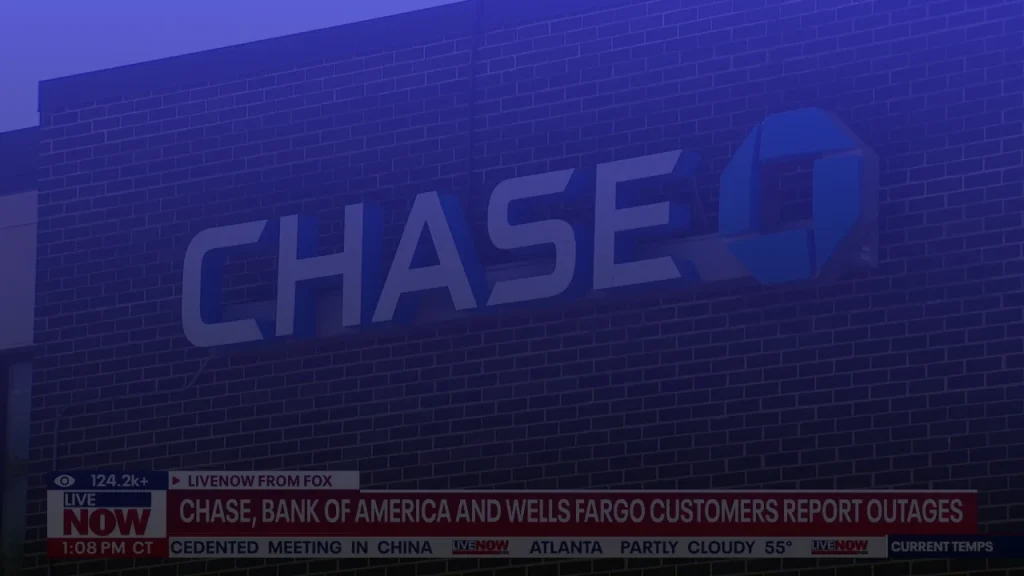
On Monday, November 16, 2026, thousands of customers reported problems with online banking and payments at JPMorgan Chase, Bank of America, Wells Fargo, U.S. Bank, Truist and Zelle. JPMorgan Chase said a software bug in its internal hardware systems caused the problem, that it was not a cyberattack, and that it was not a nationwide banking-system failure. Customers kept access to their funds, though some services were slow or unavailable.
Because banks send payments to one another, a problem at one very large bank can delay transfers at others, even when those banks’ own systems are working. No widespread loss of customer deposits has been established. A full bank-issued all-clear covering every delayed transaction had not been verified at the time of writing.
Bank Outage November 16, 2026: Quick Facts
| Question | Latest verified information |
| When did problems begin? | Monday, November 16, 2026, with complaints climbing after about 9 a.m. ET |
| Bank confirming a cause | JPMorgan Chase |
| Confirmed cause | Software bug in internal (on-premises) hardware systems |
| Cyberattack confirmed? | No. Chase said it was not a cyberattack |
| Banks and services with customer reports | Chase, Bank of America, Wells Fargo, U.S. Bank, Truist, Zelle |
| Zelle’s position | Zelle’s network was operating; delays involved participating banks |
| Money lost? | No widespread loss of customer deposits established |
| Fully resolved? | No comprehensive official all-clear verified |
| Consumer protections | Electronic Fund Transfer Act (15 U.S.C. § 1693 et seq.) and Regulation E (12 CFR Part 1005) |
Which Banks Were Down? Chase, Bank of America, Wells Fargo, U.S. Bank and Zelle
Downdetector, which counts user-submitted problem reports, showed spikes at several banks around 2 p.m. ET on November 16. Chase drew roughly 4,800 to more than 5,000 reports depending on the tally, Bank of America drew more than 1,000 and up to about 1,500, and Wells Fargo and U.S. Bank each topped 1,000 in later counts. Zelle also saw hundreds of reports.
These are reports, not verified counts of affected customers.
| Bank or service | What customers reported | Official response |
| Chase / JPMorgan | Login errors, missing balances, transaction delays | Confirmed an internal software bug |
| Bank of America | Login and transaction problems | Did not confirm a systemwide outage |
| Wells Fargo | Online banking unavailable | Reported to have confirmed online banking outages, with ATMs and branches available |
| U.S. Bank | Transfer problems | Reported its own systems were not directly affected |
| Truist | Elevated complaints | Separate cause not established |
| Zelle | Delayed or failed transfers | Said its network was working; attributed delays to a Chase issue |
Some customers signing in to Chase saw a message saying some services were unavailable. The statuses above describe November 16, not live availability on November 17.
Why Were Banks Down? JPMorgan Chase’s Software Bug Explained
JPMorgan Chase said the problem was a software bug involving on-premises hardware. That slowed its ability to process some transactions. Chase is the largest bank in the United States and carries the largest share of Zelle payments, so a delay there can hold up transfers sent to customers of other banks. The evidence reported so far does not show that every bank suffered the same independent failure.
The outage came days after a separate Microsoft 365 outage that disrupted Outlook, Teams and Copilot. No verified evidence links the two events.
Is Chase Still Down on November 17, 2026?
Chase said it was working to restore normal processing and expected to fix the issue by the end of November 16. Outage trackers showing fewer complaints do not prove that every deposit, transfer or bill payment has cleared. Check your own account through the official app or website at Chase, or use the number on the back of your card. Outage-report pages such as Chase on Downdetector show complaint trends only.
Why Isn’t Zelle Working? What to Do If a Zelle Payment Is Pending
Zelle said its own network was functioning, and the problems involved transactions passing through affected banks. Zelle does not hold your money. Your bank does.
- Check the payment status in your bank’s official app or website.
- Do not resend the same amount while it is pending. If the first payment later processes, you may pay twice.
- If money left your account but the recipient did not get it, ask the sending bank to trace it.
A delayed payment from a technical problem is different from a fraudulent transfer. For fraud, read Zelle Fraud Lawsuit 2026, CFPB Dropped the Case What Happened, Who Picked It Up, and What Victims Can Do Now. That case is unrelated to this outage.
Is Your Money Safe During the Chase and Bank of America Outage?
A temporary online banking outage does not mean a bank has failed. Under the Federal Deposit Insurance Act, 12 U.S.C. § 1811 et seq., the FDIC insures eligible deposits at insured banks up to $250,000 per depositor, per insured bank, for each account ownership category. That protects against bank failure. It is not a payout program for app outages, mistaken payments or fraud. Nothing reported so far shows the November 16 disruption involved insolvency.
What Should You Do If Chase, Wells Fargo or Your Bank Is Not Working?
- Confirm through official channels. Use your bank’s app, website or the number on your card, not social media claims.
- Use another way to reach your money, such as an ATM, branch or phone banking, if those channels are working.
- Save evidence. Record dates, amounts, error messages and screenshots of pending or failed transactions.
- Check scheduled payments and direct deposits. If rent, a loan or a utility bill is at risk, contact the payee before the due date.
- Ask for fee reversals. The CFPB advises asking your bank to reverse fees caused by an outage, such as overdraft or late fees. A refund is not automatic.
- Watch for scams. Criminals send fake “account restoration” texts and emails during outages. Never share passwords or one-time codes with someone who contacts you unprompted.
Can You Get a Refund for Late or Overdraft Fees Caused by the Bank Outage?
Possibly. Say you scheduled a $1,500 rent payment, an online banking error delayed it, and your landlord charged a $75 late fee. Keep your payment history and screenshots, then contact both the bank and the landlord. Whether you are reimbursed depends on the facts, the law and your account agreement. An outage alone does not guarantee compensation.
What Federal Laws Protect Customers During a Bank Outage?
Electronic Fund Transfer Act (EFTA), 15 U.S.C. § 1693 et seq.
The EFTA covers consumer electronic transfers, including errors and dispute procedures. Two provisions are especially relevant to an outage:
- 15 U.S.C. § 1693h: a financial institution can be liable for damages caused by its failure to complete an electronic transfer on time and in the correct amount under the account terms, subject to statutory exceptions, such as certain technical malfunctions the consumer knew about when starting the transfer.
- 15 U.S.C. § 1693j: if a system malfunction prevents a consumer-initiated electronic transfer to a payee that agreed to accept payment that way, the consumer’s obligation to that payee is generally suspended until the malfunction is repaired, and finance or other charges are generally not imposed during that period. Check the statute’s exact terms and how it applies to your payment.
An outage alone does not automatically mean the bank broke the law. The statute’s protections turn on the facts of each transaction.
Regulation E, 12 CFR § 1005.11
Regulation E requires banks to investigate qualifying electronic transfer errors. Consumers generally must report an error within 60 days after the bank sends the statement showing it. The bank generally must investigate within 10 business days, or up to 45 days in some cases subject to provisional-credit rules. Not every delayed transfer qualifies.
Can You Sue Over a Bank Outage?
Under 15 U.S.C. § 1693m, a bank that violates the EFTA can owe actual damages, statutory damages in some individual actions, and attorney fees to a prevailing consumer. But a temporary service interruption does not by itself create liability. Claims would depend on losses, the account agreement and any arbitration clause. No class action over this specific outage was verified, and no settlement or claim form exists.
For related cases, see Bank of America $2 Million Settlement, Who Qualifies for Denied Unauthorized Debit Card and ATM Disputes? and Chase Class Action Lawsuits 2026, Multiple Active Cases Target Credit Card Fees, Interest Rate Fixing, Data Breaches, And ERISA Violations. Those are separate from the November 16 incident.
Will Regulators Review the Chase Outage?
Federal banking agencies’ computer-security incident notification rule requires banks to notify their primary federal regulator as soon as possible, and no later than 36 hours, after determining that a “notification incident” has occurred. Whether this incident met that definition has not been publicly stated. You can file a complaint with the CFPB at no cost if your bank does not resolve a problem.
Frequently Asked Questions About the Chase, Bank of America and Wells Fargo Outage
Are banks down right now?
Several institutions saw elevated complaints starting November 16. Chase confirmed an internal issue, and others said their own systems worked. Check your bank’s official notices for live status.
Why was Chase down?
JPMorgan Chase attributed it to a software bug in its internal hardware systems.
Was the Chase outage a cyberattack?
Chase said it was not a cyberattack.
Is Zelle down?
Zelle said its network was operating. Transfers involving affected banks could still be delayed.
Is my money safe at Chase?
Chase said customers kept access to their funds, and FDIC insurance protects eligible deposits if an insured bank fails.
Can I get overdraft or late fees refunded?
You can ask. The CFPB advises requesting reversals of outage-related fees. Refunds are not automatic.
Should I send a Zelle payment again if it is pending?
No. Check the status first, to avoid a duplicate payment.
The Bottom Line on the November 16, 2026 Bank Outage
The disruption centered on a confirmed software bug at JPMorgan Chase that slowed payments across several banks and Zelle. The evidence does not show a cyberattack, a nationwide banking collapse or lost deposits. If you were affected, confirm your transactions cleared, avoid duplicate payments, keep records and ask your bank about any fees. This article will be updated if Chase confirms full restoration or announces fee relief.
Official Sources and Reporting References
- JPMorgan Chase official website
- CFPB: What happens if my bank or credit union has an outage?
- CFPB: Regulation E, 12 CFR § 1005.11
- CFPB: Submit a complaint
- FDIC: Deposit insurance
- Associated Press: bank outage at Chase, Wells Fargo and Truist
Reporting notes: Report counts come from Downdetector as cited by news outlets and are user-submitted, not verified customer counts. Bank statements are as reported by the Associated Press and other news outlets on November 16, 2026.
Disclaimer: AllAboutLawyer.com provides legal information, not legal or financial advice. For account-specific issues, contact your bank or a qualified consumer-protection attorney.
Researched and written by Israr Ahmad, legal content researcher and founder of AllAboutLawyer.com. All facts verified against the Associated Press and other news reports of JPMorgan Chase’s statements, CFPB guidance, the Electronic Fund Transfer Act and Regulation E, as of November 17, 2026. Last Updated: November 17, 2026.
About the Author
Israr Ahmad is a legal content researcher with 4+ years of experience covering class action settlements and consumer rights cases. He has researched and published coverage of 2,500+ settlements using verified court records, settlement administrator filings, and government sources. Learn more about Israr.