
Anthony Rivers III, 15, Arrested in Tallahassee Shooting Near FAMU That Injured 12, Charges and Florida Law Explained
Anthony Rivers III, a 15-year-old, was arrested on Sunday, October 25, 2026, in connection with a shooting near Florida A&M University in Tallahassee that injured 12 people after the school’s homecoming football game. The Tallahassee Police Department (TPD) says he faces 11 counts of attempted second-degree murder and one count of possession of a firearm by a delinquent.
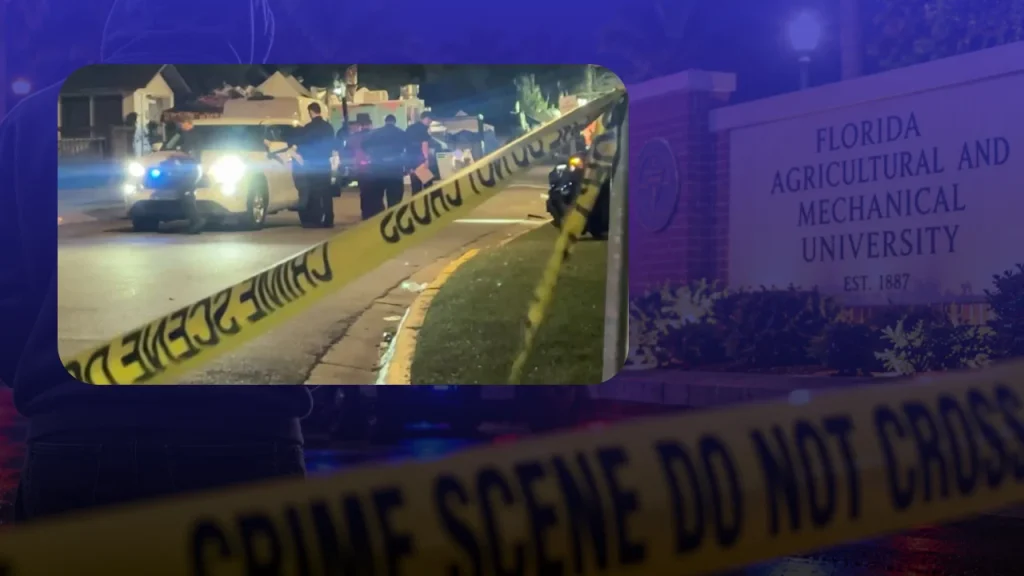
The gunfire broke out at about 8 p.m. on Saturday, October 24, near Perry and Manatee streets, close to Bragg Memorial Stadium. Eleven people were hit by bullets. A twelfth person hurt an ankle while running away. Six of the 12 were juveniles and six were adults, according to TPD’s first release. No deaths had been reported as of the department’s October 26 update.
Important legal point: These are charges, not convictions. Rivers is presumed innocent. Police have not said whether he will be prosecuted in juvenile court or adult court, and the formal charging documents had not been made public in the sources reviewed.
Anthony Rivers III Shooting Case: Quick Facts
| Detail | What is confirmed |
| Person arrested | Anthony Rivers III, age 15 |
| Arrest date | Sunday, October 25, 2026 |
| Shooting date and time | Saturday, October 24, 2026, about 8 p.m. |
| Location | Near Perry and Manatee streets, Tallahassee, Florida (off campus, near Bragg Memorial Stadium) |
| Investigating agency | Tallahassee Police Department, Violent Crimes Unit |
| Prosecuting office | Second Judicial Circuit State Attorney’s Office (State Attorney Jack Campbell was consulted) |
| People injured | 12 total: 11 by gunfire, 1 ankle injury while fleeing |
| Victims by age group | 6 adults and 6 juveniles |
| Condition of victims (Oct. 24 report) | At least 3 serious injuries; 9 stable |
| Charges reported by police | 11 counts of attempted second-degree murder; possession of a firearm by a delinquent |
| Deaths reported | None as of October 26 |
| Police account of motive | Preliminary: a physical fight between people who knew each other came first; no victim appears to have been the intended target |
| Adult prosecution confirmed? | No |
| Case outcome | No plea, verdict or final ruling reported |
| Investigation status | Open; more arrests possible |
| Police tip line | 850-891-4610 (Crime Solvers: 850-574-TIPS) |
The primary source for these facts is the Tallahassee Police Department’s updated news release.
What Happened in the Tallahassee Shooting Near FAMU?
TPD’s original release said shots were fired just before 8 p.m. on Saturday near the intersection of Perry and Manatee streets. Officers gave aid to injured people before the scene was fully secured, and some carried victims to safety and drove them to the hospital, according to Chief Lawrence Revell.
The shooting happened on homecoming weekend, near Bragg Memorial Stadium. FAMU President Marva Johnson said in a video statement that the incident did not take place on campus and that TPD is leading the investigation, according to WFSU Public Media. The university said counseling would be available to students.
Being near a stadium full of homecoming crowds does not mean the event, the school or its students were targeted. Police have said only that, based on preliminary findings, a physical altercation happened before the shots and that the dispute involved people who knew one another. The department also said information is preliminary and may change.
Why Was Anthony Rivers III Arrested?
According to TPD, detectives arrested Rivers on Sunday, October 25, after consulting with State Attorney Jack Campbell. The department credited a large volume of tips and digital evidence from the public. Detectives from the Violent Crimes Unit had worked overnight reviewing digital evidence and leads, per the Sunday update.
TPD has not released the evidence it relies on, the weapon involved, or how each of the 11 counts maps to a specific victim. It is reasonable to note that 11 people were struck by gunfire and 11 counts were filed, but police have not spelled out that link, so it should not be treated as confirmed.
Anyone with photos, video or information can call 850-891-4610 or use TPD’s online evidence submission portal.
What Does Attempted Second-Degree Murder Mean Under Florida Law?
Florida’s second-degree murder law, Florida Statutes § 782.04, covers an unlawful killing caused by an act that is imminently dangerous to another and shows a depraved mind without regard for human life, without a premeditated design to kill a particular person. Premeditation is not required.
Under Florida Statutes § 777.04, a criminal attempt generally means an act toward committing an offense that is not completed. That is why prosecutors can charge attempted murder even when no one died. Whether the facts here fit that definition is for the court to decide.
How serious is the penalty?
Attempted second-degree murder is generally treated as a second-degree felony, which carries up to 15 years in prison. Firearm use changes that sharply under Florida’s “10-20-Life” law, Florida Statutes § 775.087:
- A felony committed with a firearm can be reclassified one degree higher for sentencing, which makes attempted second-degree murder a first-degree felony with a 30-year maximum.
- Actually discharging the firearm carries a mandatory minimum of 20 years.
- Discharging it and causing great bodily harm carries a mandatory minimum of 25 years to life.
These enhancements apply only if the prosecution proves the firearm findings, and they apply to sentences in adult court. They are possible exposure, not a prediction of what will happen to Rivers. Each count is also charged separately.
What Does “Possession of a Firearm by a Delinquent” Mean?
Florida Statutes § 790.23 makes it unlawful to have a firearm or ammunition if the person has been found in Florida courts to have committed a delinquent act that would be a felony for an adult and is under 24. A violation is a second-degree felony.
This matters because the charge, as worded by police, suggests a prior juvenile adjudication. Police have not said what that history is, and nothing about it has been confirmed. The exact basis for the charge should be checked against the charging document when it is available.
Will Anthony Rivers III Be Tried as an Adult?
Not confirmed. A serious charge does not automatically move a 15-year-old to adult court in Florida.
Under Florida Statutes § 985.557, a state attorney has discretion to file an adult-court information against a child who was 14 or 15 at the time of the offense, when the state attorney decides the public interest requires adult sanctions and the charge is for a listed offense. Murder and attempted murder are on that list, as is using or attempting to use a firearm during a felony. The statute does not make adult filing mandatory for 14- and 15-year-olds. It is the prosecutor’s call.
If a child is prosecuted as an adult and found guilty, the court can still choose juvenile sanctions in some cases under Florida Statutes § 985.565. So the court track and the sentence are separate questions.
Another Florida case shows how the adult-court question can play out: Teen Charged as Adult in Hialeah Aquabella Shooting, Michael Isaac Delgado, 17, Held Without Bond. It is a different case with different facts, and it does not predict what prosecutors will do here.
What Happens Next in a Florida Juvenile Case?
If Rivers is held in juvenile detention, Florida law generally requires a detention hearing within 24 hours. That hearing decides whether continued detention is justified, not whether he is guilty. See Florida Statutes § 985.255.
From there, the path depends on the State Attorney’s decision:
- Juvenile court: The case proceeds under Florida’s delinquency laws, and a judge decides on adjudication and disposition.
- Adult court: The case moves to the criminal division, where a jury trial and adult sentencing rules, including 10-20-Life, can apply.
As of October 26, the sources reviewed showed no plea, no detention ruling and no transfer decision.
Possible Defense Issues
The facts below are general and are not statements about what Rivers’ lawyers will argue. In shootings involving crowds, defense lawyers commonly look at:
- Identification. Whether witnesses, video and digital evidence reliably identify one shooter in a chaotic scene.
- Number of shooters. Whether more than one person fired, which affects whose bullets struck whom.
- Ballistics and chain of custody. Whether recovered casings and fragments are tied to a specific firearm and handled properly.
- Intent and mental state. Whether the evidence supports the “depraved mind” element for each count.
Prosecutors carry the burden of proof on every element of every count.
What Do We Know About the Victims?
Twelve people were injured, including six juveniles. TPD said on October 24 that at least three people had serious injuries and nine were stable. Those conditions may have changed. Police have not released a full victim list, and this article does not name any victims.
Could There Be Civil Lawsuits After the Shooting?
A criminal case and a civil case are separate. A criminal case asks whether a defendant committed an offense. A civil case asks whether someone is legally responsible for an injury and owes compensation.
No civil lawsuit, settlement, victim compensation fund or public claim form tied to this shooting was verified in the sources reviewed, so there is no basis to tell anyone that a settlement is available. Any possible claim would depend on facts not yet disclosed, plus causation, legal duty and defenses. People hurt in the shooting, or their families, should keep medical and billing records and talk to a licensed Florida attorney about their own situation.
For a different example of how civil liability can arise from a shooting, see Illinois Lawyers Secure $1.06 Million Settlement for Lauer Family After Fatal Shooting. The facts and state law there are different and say nothing about the Tallahassee case.
What Is Still Unknown?
- What evidence connects Rivers to the shooting, and what each of the 11 counts alleges.
- The full sequence of events from the fight to the gunfire.
- Where the firearm came from and who had it beforehand.
- Whether the State Attorney will seek adult prosecution.
- Whether other suspects will be arrested.
- The current medical condition of all 12 people hurt.
- Whether a court has made a detention ruling or Rivers has entered a plea.
Claims on social media that are not supported by police, court records or credible reporting should not be treated as fact. This article will be updated as official information changes.
Sources and Legal Authorities
- Tallahassee Police Department: Shooting Near Perry and Manatee Streets, October 26 arrest update
- WFSU Public Media: Investigation into shooting near FAMU’s campus continues as students head back to class (published before the arrest was announced)
- Florida Statutes § 777.04: Attempts, solicitation and conspiracy
- Florida Statutes § 782.04: Murder
- Florida Statutes § 775.087: Possession or use of weapon; aggravated battery; felony reclassification; minimum sentences
- Florida Statutes § 790.23: Felons and delinquents; possession of firearms unlawful
- Florida Statutes § 985.557: Direct filing of an information; discretionary criteria
- Florida Statutes § 985.565: Sentencing powers; procedures; alternatives for juveniles prosecuted as adults
- Florida Statutes § 985.255: Detention criteria; detention hearing
Disclaimer: This article reports on publicly available police statements, news coverage and Florida statutes. The charges are allegations, and the defendant is presumed innocent unless proven guilty in court. It provides general legal information, not legal advice, and does not create an attorney-client relationship. AllAboutLawyer.com is an informational website, not a law firm.
About the Author
Israr Ahmad is a legal content researcher with 4+ years of experience covering class action settlements and consumer rights cases. He has researched and published coverage of 2,500+ settlements using verified court records, settlement administrator filings, and government sources. Learn more about Israr.