
Yella Beezy Found Guilty of Capital Murder in MO3 Killing, Life Without Parole Sentence, $40,000 Murder-for-Hire Evidence and What Happens Next
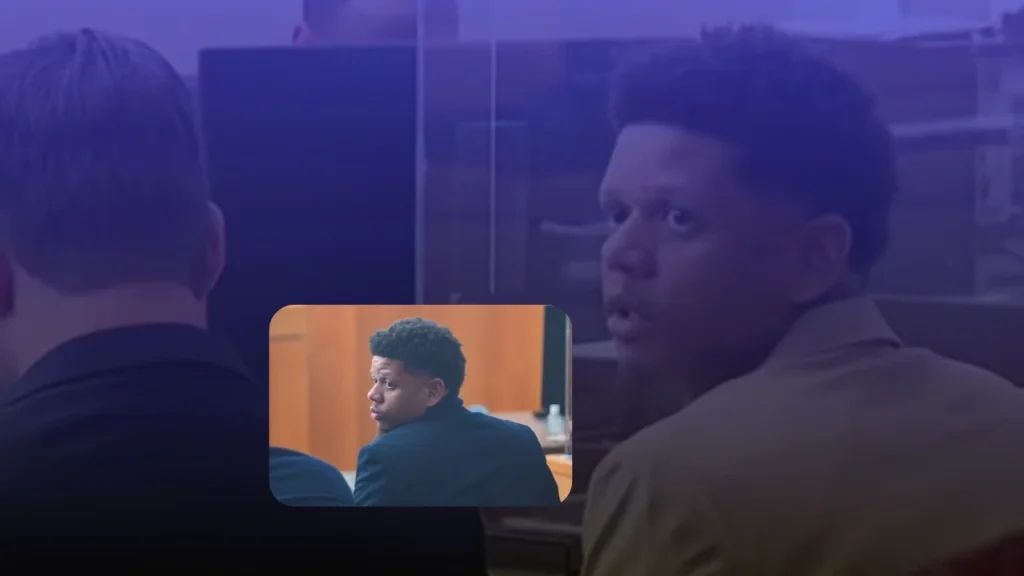
Dallas rapper Yella Beezy, whose legal name is Markies Conway, was found guilty of capital murder on November 11, 2026, for arranging the killing of fellow Dallas rapper MO3 on Interstate 35E six years earlier. A Dallas County jury unanimously convicted the 35-year-old musician of hiring a gunman to carry out the fatal shooting. The verdict came exactly six years to the day after the killing.
Yella Beezy has already been sentenced to life in prison without the possibility of parole. Judge Chika Anyiam imposed the mandatory punishment immediately after the verdict was read. Prosecutors did not seek the death penalty, so Conway was not sentenced to death, and he cannot receive parole under his current sentence. He was handcuffed in the courtroom after the verdict.
Prosecutors argued that Conway paid or promised $40,000 to have MO3 killed after a yearslong feud that began on social media and escalated into violence. His defense maintained that the state’s case rested on circumstantial evidence and speculation and did not prove his involvement beyond a reasonable doubt.
MO3, whose real name was Melvin Noble, was 28 when he was shot and killed on November 11, 2020. Conway’s attorney, Toby Shook, says the defense intends to appeal. Here is what the jury heard, why the case became capital murder under Texas law, and what could happen next.
Yella Beezy Verdict and Sentence: Key Facts
| Case detail | Confirmed information |
| Defendant | Markies Deandre Conway, professionally known as Yella Beezy |
| Age | 35 |
| Victim | Melvin Noble, professionally known as MO3 |
| MO3’s age at death | 28 |
| Murder date | November 11, 2020 |
| Location | Interstate 35E, Dallas, Texas |
| Arrest | March 20, 2025 |
| Charge | Capital murder for remuneration |
| Court | Dallas County criminal court |
| Verdict | Guilty (unanimous), November 11, 2026 |
| Sentencing judge | Judge Chika Anyiam |
| Sentence | Life imprisonment without parole |
| Death penalty sought or imposed? | No |
| Alleged murder-for-hire payment | $40,000 |
| Lead prosecutor | Tommy Adams |
| Defense attorney | Toby Shook |
| Convicted gunman | Kewon Dontrell White (convicted September 4, 2026; life without parole) |
| Third defendant | Devin Brown, charged with capital murder, not yet convicted |
| Appeal | Defense attorney announced plans to appeal |
Why Was Yella Beezy Found Guilty of MO3’s Murder?
Prosecutors presented the killing as a planned murder-for-hire operation rooted in a longstanding conflict between the rappers. They argued Conway had three essential components: a motive, money and people willing to carry out the attack. They alleged he used intermediaries to help locate Noble and to deliver the payment to the gunman.
The state’s case relied on financial records, communications, cellphone-location evidence, video and testimony about the relationships among Conway and the alleged participants.
The alleged $40,000 payment to Kewon White
Prosecutors argued that Conway arranged a $40,000 payment for MO3’s killing. Trial reporting described a $40,000 cash withdrawal by Conway nine days after the shooting. During closing arguments, the state also pointed to Conway’s return to North Texas following a trip, wire transfers, cash recovered during the investigation and communications among people allegedly involved.
The state also presented jewelry-store surveillance showing White with thick stacks of cash, alongside communication records between White, Devin Brown and alleged middleman Jerry Johnson, which prosecutors said showed coordinated payment.
However, a cash withdrawal alone does not prove that money reached a gunman. Its significance depended on the other evidence presented.
The jury convicted Conway of capital murder for remuneration. Under Texas law, that offense can involve payment or a promise of payment, so the prosecution did not necessarily have to prove every dollar physically changed hands.
Video of Yella Beezy and Kewon White together before the killing
Prosecutors presented evidence linking Conway to White, including video of the two together onstage at a Houston concert in the days before the killing. The state offered this to show a connection between the alleged financier and the alleged gunman.
Phone records and alleged coordination
Prosecutors presented communication records involving Conway, alleged middleman Jerry Johnson and gunman Kewon White. During closing arguments, Tommy Adams argued that contacts involving Conway and Johnson were followed by calls to White, and the state described 15 calls between Johnson and White within a relevant period.
Investigators also used cellphone-location analysis and digital communications to reconstruct movements and alleged coordination. The prosecution argued these records showed planning rather than coincidence.
The defense pushed back. FBI Special Agent Taylor Page, who mapped phones associated with Conway, White, Brown and Johnson, acknowledged in testimony that the records showed no direct calls between Conway and White or Brown, and that the contacts ran through Johnson. He also acknowledged that location data could not establish who held a phone or whether people shared a vehicle.
Statements about revenge
Prosecutors pointed to the ongoing rivalry, including statements by Conway about seeking revenge, such as his reported phrase about wanting to “get his lick back.” Prosecutor Tommy Adams described the killing as a coordinated act driven by ego and a desire for retaliation.
Who the state said played which role
According to trial coverage, a witness identified Conway and Devarius Moore as financiers, Jerry Johnson as the coordinator, Devin Brown as the spotter and Kewon White as the shooter. These were the state’s allegations and testimony. They are not separate judicial findings against anyone other than the defendants who have been convicted.
Testimony about the shooting
Witnesses described the November 2020 attack on the Dallas freeway, including the gunman pursuing MO3, the gunfire and efforts to help the wounded rapper. Prosecutors also relied on testimony from a witness who said White had discussed the shooting and problems involving payment.
The defense challenged the credibility and interpretation of this testimony. The verdict establishes that jurors found Conway guilty beyond a reasonable doubt, but it does not turn every allegation or interpretation advanced at trial into a separate judicial finding.
What Happened to MO3 on November 11, 2020?
MO3 was driving on Interstate 35E in south Dallas around midday when another vehicle pulled alongside his. According to investigators and trial testimony, Kewon White emerged with a firearm and pursued Noble. Noble left his vehicle and tried to escape on foot along the busy interstate while the gunman fired repeatedly.
Prosecutors said White wore a mask and fired more than 40 rounds from an AK-47-style pistol. MO3 was struck multiple times and later died at a hospital. A bystander in another vehicle was also wounded but survived.
The daylight shooting on a busy freeway drew widespread attention because it endangered other motorists and involved a well-known Dallas musician. Noble was 28 years old. He was known for songs including “Errybody” and his collaboration with Boosie Badazz.
What Was the Motive Behind MO3’s Murder?
Prosecutors said the killing arose from an escalating feud between Conway and Noble that stretched back several years, beginning on social media and escalating into violence. The state highlighted hostility between the musicians and statements suggesting a desire for retaliation.
Was the killing connected to Yella Beezy’s 2018 shooting?
That was part of the prosecution’s motive theory. In October 2018, Conway survived a drive-by shooting on the Sam Rayburn Tollway in Lewisville, Texas, after gunfire struck his vehicle. He suffered multiple gunshot wounds but survived.
During the MO3 trial, prosecutors compared the circumstances of that attack with the November 2020 freeway killing. They also presented an interview in which Conway discussed retaliation. The prosecution argued these details supported its theory of revenge.
But the verdict does not establish that MO3 was responsible for the 2018 shooting of Yella Beezy. Responsibility for that earlier attack should not be presented as proven. The precise origins of the dispute and every personal motivation behind the killing were not independently established by the verdict.
A yearslong feud can supply a motive theory, but prosecutors still had to prove the charged murder-for-hire offense beyond a reasonable doubt.
What Did Yella Beezy’s Defense Argue During the Trial?
Conway pleaded not guilty and denied involvement. His attorneys argued that prosecutors had assembled a circumstantial case without proving he ordered or financed the murder. They challenged the interpretation of the cash withdrawal, the phone contacts and Conway’s associations with the others involved, and they questioned whether the state had proven the murder-for-hire allegation beyond a reasonable doubt.
The defense also accused investigators of focusing too narrowly on Conway and drawing conclusions from assumptions. It stressed that the phone records showed no direct calls between Conway and White, and that location data could not show who was holding a phone.
One important witness was Dallas rapper Jose Bodega, whose legal name is Theodore Thomas. According to trial reporting, Thomas had previously described a feud between Conway and Noble during grand jury proceedings. At trial, he challenged his earlier statements, and prosecutors were permitted to question him as a hostile witness.
The defense argued that conflicting testimony and uncertainty surrounding the evidence created reasonable doubt. Texas law allows a criminal conviction based on circumstantial evidence when the complete evidence establishes guilt beyond a reasonable doubt. The jury rejected the defense’s position and returned a unanimous guilty verdict.
Afterward, Toby Shook expressed disappointment with the verdict and said the legal fight would continue through an appeal.
Why Did Yella Beezy Receive Life Without Parole Instead of the Death Penalty?
The sentence is based on Texas capital-murder law.
Under Texas Penal Code § 19.03(a)(3), a person commits capital murder if he intentionally commits murder for remuneration or the promise of remuneration, or employs another person to commit murder for remuneration or the promise of remuneration. This is why Conway could be convicted even though prosecutors identified another man as the person who physically shot MO3.
Texas laws that apply to the Yella Beezy murder-for-hire conviction
- Texas Penal Code § 19.02 (Murder): Defines the underlying offense of murder. Capital murder under § 19.03 builds on it.
- Texas Penal Code § 19.03(a)(3): Covers murder for remuneration and employing another person to commit murder for remuneration or the promise of remuneration.
- Texas Penal Code § 19.03(b): Classifies capital murder as a capital felony, the most serious category of offense in Texas.
- Texas Penal Code § 7.01 and § 7.02(a)(2): Texas’s party-liability rules. A person is criminally responsible for an offense committed by another’s conduct if, acting with intent to promote or assist the offense, he solicits, encourages, directs, aids or attempts to aid the other person. This is the broader rule behind holding someone responsible for a killing carried out by another.
- Texas Penal Code § 12.31(a)(2): Sets the punishment for a capital felony when the state does not seek the death penalty: life imprisonment without parole.
- Texas Code of Criminal Procedure Article 37.071: Governs sentencing procedure in capital cases, including the separate punishment phase used when the state seeks death.
- Texas Government Code § 508.145(b): Makes an inmate serving a life sentence under Penal Code § 12.31(a)(2) for a capital felony ineligible for release on parole.
In Conway’s case, the murder-for-remuneration provision directly addresses the conduct alleged by prosecutors.
Why the sentence was mandatory
Under Texas Penal Code § 12.31(a)(2), when the state does not seek the death penalty in a capital case, the only available punishment is life imprisonment without parole. Because prosecutors did not pursue death against Conway, the judge had no discretion to choose a term of years, and no separate punishment phase was needed to choose between life and death. The jury’s capital-murder verdict triggered the mandatory sentence.
Life without parole means there is no ordinary parole eligibility after 20, 30 or 40 years. Release would require a separate lawful basis, such as a successful challenge to the conviction or another extraordinary form of relief.
Burden of proof and the unanimous jury
Texas law presumes every defendant innocent until the state proves guilt beyond a reasonable doubt. See Texas Penal Code § 2.01 and Texas Code of Criminal Procedure Article 38.03. A felony verdict in Texas must be returned by a unanimous jury of twelve under Texas Code of Criminal Procedure Article 36.29(a) and Article 37.02. Conway’s jury returned a unanimous verdict.
Circumstantial evidence, accomplice testimony and hostile witnesses
Three legal rules mattered in a case built heavily on circumstantial evidence and on witnesses with connections to the alleged plot:
- Circumstantial evidence: Texas courts treat circumstantial and direct evidence as equally probative, and a conviction can rest on circumstantial evidence alone if the cumulative force of the evidence proves guilt beyond a reasonable doubt. See Hooper v. State, 214 S.W.3d 9 (Tex. Crim. App. 2007).
- Sufficiency review: On appeal, courts ask whether, viewing the evidence in the light most favorable to the verdict, any rational juror could have found each element beyond a reasonable doubt. See Jackson v. Virginia, 443 U.S. 307 (1979).
- Accomplice-witness rule: Under Texas Code of Criminal Procedure Article 38.14, a conviction cannot rest on an accomplice’s testimony unless other evidence tends to connect the defendant to the offense. Whether any witness at Conway’s trial qualified as an accomplice as a matter of law is a question for the trial record and a possible appellate issue. It is not something this article treats as established.
- Hostile witnesses and prior statements: Texas Rule of Evidence 611(c) allows leading questions of a hostile witness, and Rule 613 governs impeachment with a prior inconsistent statement. These rules bear on the treatment of Theodore Thomas’s testimony.
For comparison, Miguel Salguero-Olivares Found Guilty in Faith Hedgepeth Murder, Sentence, DNA Evidence and North Carolina Laws Explained examines a separate case involving life without parole under North Carolina law.
Who Was Kewon White, and What Happened to Him?
Kewon Dontrell White was identified by prosecutors as the gunman who fatally shot MO3. White was tried separately, and a Dallas County jury found him guilty of capital murder on September 4, 2026, after roughly three hours of deliberation. He received life imprisonment without parole, the mandatory sentence because prosecutors did not seek death.
White was the first person tried in connection with the killing. His conviction preceded Conway’s November verdict and formed part of the broader prosecution of those allegedly responsible. Local reporting also indicates that White’s lawyers sought a new trial over a juror who was allegedly sleeping, and that White has filed an appeal. The cases involved different defendants and required separate proof of each person’s criminal responsibility.
What about Devin Brown and Jerry Johnson?
A third defendant, Devin Brown, has also been charged with capital murder in connection with MO3’s death and has pleaded not guilty. As of November 12, 2026, Brown had not been convicted. Reporting indicated his trial was expected to follow, with one outlet reporting a November 2026 setting that this article could not independently confirm. His status must not be confused with the convictions of Conway and White. Brown remains presumed innocent unless and until the prosecution proves guilt beyond a reasonable doubt.
Prosecutors identified Jerry Johnson as the alleged middleman who coordinated and funneled payments. One draft of this story reported that Johnson also faces charges. The coverage reviewed for this article did not independently confirm his charging status, so readers should check the official Dallas County criminal records for his case. Any claims about people who have not been convicted remain allegations.
Can Yella Beezy Appeal His Capital Murder Conviction?
Yes. Conway’s attorney has publicly announced plans to appeal.
An appeal is not another jury trial, and filing one does not automatically suspend or erase his life sentence. Under Texas law, a defendant has a right to appeal a criminal conviction (Texas Code of Criminal Procedure Article 44.02) and may challenge legal errors affecting the conviction.
Because the death penalty was not imposed, the direct appeal does not go automatically to the Texas Court of Criminal Appeals. The automatic direct appeal to that court under Article 37.071 applies only to death sentences. A life-without-parole conviction is appealed first to the intermediate court of appeals, and the losing side may then ask the Texas Court of Criminal Appeals to review the case through a petition for discretionary review. That review is not automatic.
Potential appellate issues can include:
- Whether evidence was improperly admitted or excluded.
- Whether jury instructions correctly stated the law.
- Whether the evidence was legally sufficient to support the elements of capital murder.
- Whether the accomplice-witness corroboration rule in Article 38.14 was satisfied.
- Whether the defendant’s constitutional rights were violated.
- Whether preserved trial errors require reversal.
These are possible categories of review, not verified grounds already filed by Conway’s attorneys.
How long does Yella Beezy have to appeal?
Texas Rule of Appellate Procedure 26.2(a) generally requires a criminal defendant to file a notice of appeal within 30 days after sentencing. If a timely motion for new trial is filed, the notice-of-appeal deadline generally extends to 90 days after sentencing. A motion for new trial must be filed within 30 days after sentencing under Texas Rule of Appellate Procedure 21.4(a), and the trial court generally must rule on it within 75 days under Rule 21.8.
Because Conway was sentenced on November 11, 2026, the ordinary 30-day period would point to December 11, 2026. If a timely motion for new trial is filed, the extended 90-day period would point to February 9, 2027. Other procedural rules can affect these dates.
If a direct appeal fails, a defendant convicted of a non-death felony may later pursue post-conviction habeas relief under Texas Code of Criminal Procedure Article 11.07, which is limited to specific constitutional and jurisdictional claims.
No completed appellate ruling exists at this stage. An appellate court could uphold the conviction, order further proceedings or grant relief if a legally sufficient error is established.
A useful comparison is Murdaugh Murders and Legal Cases Timeline, Key Events, Civil Lawsuits, and the 2026 New Trial Order, which explains how appellate proceedings can affect an existing murder conviction.
What Happened in Court After the Jury Announced the Verdict in the Yella Beezy Trial?
On November 11, jurors returned a unanimous guilty verdict after deliberating over the evidence following about two weeks of testimony. The verdict arrived on the sixth anniversary of Noble’s killing. Judge Anyiam imposed the mandatory life-without-parole sentence.
Conway was taken into custody and booked into the Dallas County jail. Local reporting indicated he would subsequently be transferred to a state prison. The courtroom reaction was emotional, with people leaving and others crying after the verdict.
Prosecutor Tommy Adams thanked jurors and investigators. Defense attorney Toby Shook expressed disappointment and said the defense believed it had grounds to pursue appellate review. The specific state-prison assignment and any future appellate hearing date had not been confirmed in the reviewed reporting.
The case drew significant attention in the Dallas hip-hop community and beyond because of the prominence of both artists, the brazen daytime highway shooting and the murder-for-hire allegations. The timing of the verdict on the exact anniversary of MO3’s death added to the emotional weight of the proceedings.
Yella Beezy and MO3 Murder Case Timeline
| Date | Event |
| 2017 onward | Prosecutors describe an escalating feud between Conway and Noble, beginning on social media |
| October 2018 | Yella Beezy survives a roadway shooting in Lewisville |
| November 11, 2020 | MO3 is fatally shot on I-35E in Dallas |
| Nine days after the shooting | Prosecutors point to a $40,000 cash withdrawal by Conway |
| March 20, 2025 | Conway is arrested in connection with the killing |
| September 4, 2026 | Kewon White is convicted of capital murder and sentenced to life without parole |
| Late October 2026 | Conway’s capital-murder trial begins |
| November 10, 2026 | Closing arguments conclude |
| November 11, 2026 | Jury finds Conway guilty; judge imposes life without parole |
| November 12, 2026 | Appeal anticipated; no reversal or appellate ruling confirmed |
| December 11, 2026 | Ordinary 30-day deadline for notice of appeal or motion for new trial |
Who Was Yella Beezy Before the MO3 Murder Case?
Yella Beezy emerged from Dallas’s hip-hop scene and gained national attention with his 2017 single “That’s On Me.” His other notable music includes “Bacc At It Again,” featuring Quavo and Gucci Mane. He performed at major events and built a substantial following before his criminal prosecution.
The murder charge brought renewed public scrutiny to his personal history, including the 2018 shooting in which he was injured. However, earlier unrelated arrests or accusations should not be treated as evidence that he committed MO3’s murder. The November 2026 conviction concerns the specific capital-murder charge arising from Noble’s death.
Frequently Asked Questions About Yella Beezy and the MO3 Murder Case
Was Yella Beezy found guilty of killing MO3?
Yes. On November 11, 2026, a Dallas County jury unanimously found Yella Beezy, legally Markies Conway, guilty of capital murder for hiring someone to kill MO3. Prosecutors said Kewon White fired the shots.
What was Yella Beezy’s jail sentence for MO3’s murder?
He was sentenced to life imprisonment without the possibility of parole on November 11, 2026.
Did Yella Beezy get the death penalty?
No. Prosecutors did not seek death, and Texas Penal Code § 12.31(a)(2) makes life without parole the mandatory punishment in that situation.
Why did Yella Beezy allegedly want MO3 dead?
Prosecutors argued the killing resulted from a longstanding feud and a desire for retaliation. The verdict established Conway’s criminal liability for murder for remuneration, but it did not resolve every claim about the feud’s origins.
How much did Yella Beezy allegedly pay for MO3’s murder?
Prosecutors alleged a $40,000 murder-for-hire arrangement and pointed to a $40,000 cash withdrawal nine days after the shooting. Texas Penal Code § 19.03(a)(3) covers payment or a promise of payment. The exact financial transactions should be distinguished from the jury’s guilty verdict.
When was MO3 killed?
MO3 was shot on November 11, 2020, on Interstate 35E in Dallas and later died at a hospital. He was 28.
Who actually shot MO3?
Kewon Dontrell White was convicted of capital murder for the shooting on September 4, 2026, and received life without parole.
Can Yella Beezy ever get out of prison?
Not through ordinary parole under his current sentence. Texas Government Code § 508.145(b) makes inmates serving life without parole for a capital felony ineligible for parole. His defense plans to appeal, but there is no guarantee a conviction or sentence will be changed.
Will Yella Beezy get another trial?
Not automatically. A new trial would require a legally sufficient basis and an appropriate court order.
When is Yella Beezy’s appeal deadline?
Under Texas Rule of Appellate Procedure 26.2(a), the ordinary deadline to file a notice of appeal is 30 days after sentencing, which points to December 11, 2026. A timely motion for new trial extends that deadline to 90 days after sentencing, or February 9, 2027.
Who are Devin Brown and Jerry Johnson in the MO3 murder case?
Prosecutors described Devin Brown as an alleged spotter and Jerry Johnson as an alleged middleman who coordinated payments. Brown is charged with capital murder and has pleaded not guilty. Johnson’s charging status was not independently confirmed in the coverage reviewed for this article.
Is MO3’s murder case completely over?
No. The trials of Conway and White have resulted in convictions, but Conway’s defense plans to appeal, White has filed an appeal, and Devin Brown has not yet been tried. Any future developments, including the status of the remaining defendants, will be handled through the Dallas County courts.
What Happens Next After Yella Beezy’s Guilty Verdict?
The criminal trial has concluded with a capital-murder conviction and a mandatory life-without-parole sentence. The next significant legal development will likely be post-trial motions or an appeal challenging the conviction. Conway’s defense has indicated it intends to keep fighting the case, while prosecutors maintain the evidence supported the jury’s decision. The separate prosecution of Devin Brown also remains unresolved.
For readers following high-profile murder convictions, Bob Lee Murder Case, Why Nima Momeni Got 16 Years to Life, What Happened, and the Family’s Wrongful Death Lawsuit explains another recent sentencing and the difference between trial verdicts and appellate proceedings.
The central outcome in the MO3 case is now clear: six years after the Dallas rapper was killed, Yella Beezy has been convicted of arranging his murder and sentenced to spend the rest of his life in prison without parole, unless a later legal proceeding changes that judgment.
Sources and Texas Legal Authorities
Verdict, sentence and trial reporting
- Associated Press, November 11, 2026: Yella Beezy convicted of hiring gunman who killed MO3
- FOX 4 Dallas, November 11, 2026: Yella Beezy found guilty of capital murder
- FOX 4 Dallas: Closing arguments and trial evidence (Day 11)
- FOX 4 Dallas: Trial coverage (Day 10)
- NBC 5 Dallas-Fort Worth, November 11, 2026: Jury verdict and life sentence
- CBS Texas: Trial coverage
- CBS Texas: Dallas rapper Yella Beezy found guilty of capital murder in the killing of rival artist Mo3
- XXL: Yella Beezy found guilty of capital murder for Mo3’s killing
- TheGrio, September 7, 2026: Kewon White convicted of capital murder in MO3 killing
- AllHipHop, November 4, 2026: Yella Beezy defense challenges MO3 witness’s testimony
- Dallas Morning News trial and verdict coverage
Primary legal authorities
- Texas Penal Code § 19.03: Capital Murder
- Texas Penal Code § 12.31: Capital Felony Punishment
- Texas Penal Code Chapter 7: Criminal Responsibility for Conduct of Another
- Texas Code of Criminal Procedure Article 37.071: Procedure in Capital Cases
- Texas Rules of Appellate Procedure, Rules 21.4, 21.8 and 26.2: motion for new trial and criminal notice-of-appeal deadlines
- Texas Government Code § 508.145 (parole eligibility), Texas Penal Code §§ 2.01, 19.02 and 7.01, Texas Code of Criminal Procedure Articles 11.07, 36.29, 38.03, 38.14 and 44.02, Texas Rules of Evidence 611 and 613
Research note: The trial judgment and any future notice of appeal should be checked against the official Dallas County criminal case record for subsequent developments. Allegations about people who have not been convicted remain allegations.
Legal disclaimer: This article provides general U.S. legal information, not legal advice. A criminal conviction remains subject to applicable post-trial and appellate procedures.
Researched and written by Israr Ahmad, legal content researcher and founder of AllAboutLawyer.com. All facts verified against trial and verdict reporting from FOX 4 Dallas, CBS Texas, TheGrio, XXL and AllHipHop, and the Texas statutes and rules cited above, as of November 12, 2026. Last Updated: November 12, 2026.
About the Author
Israr Ahmad is a legal content researcher with 4+ years of experience covering class action settlements and consumer rights cases. He has researched and published coverage of 2,500+ settlements using verified court records, settlement administrator filings, and government sources. Learn more about Israr.