
Wildfire Survivors May Owe Taxes on Settlements Money Unless Congress Acts Here’s What to Know
Thousands of wildfire survivors across California, Oregon, Colorado, and Hawaii are receiving — or about to receive — settlement payments from utilities blamed for causing fires. But right now, the IRS can tax that money as regular income. A federal tax exemption that protected survivors expired at the end of 2025, and the new bill meant to restore it has not yet passed. Here is what you need to know today.
Quick Facts
| Field | Detail |
| Who Is Affected | Wildfire survivors in CA, OR, CO, HI receiving utility settlements in 2026 |
| Tax Exemption Status | Expired end of 2025 — currently NOT in effect |
| Pending Relief Bill | Approved by House Ways & Means Committee — not yet law |
| Fires Covered (if bill passes) | Federally declared wildfire disasters, 2015–2026 |
| When Relief Would Apply | Payouts received in 2026 and after |
| Current Tax Risk | Up to ~1/3 of settlement could go to federal taxes |
| Other Risks | Loss of income-based benefits (food, healthcare, college aid) |
| Bill Status | Pending full House and Senate vote — timeline uncertain |
Current Status & What Happens Next
- Legislation approved unanimously by the House Ways and Means Committee last month would make wildfire settlement payments from federally declared disasters between 2015 and 2026 non-taxable — applying to payouts received in 2026 and afterward.
- The bill has not yet passed the full House or Senate. A key sponsor told the Associated Press he expects it to ultimately pass, but acknowledged the exact timeline remains uncertain.
- Until the bill becomes law, survivors who accept settlements in 2026 face a real and immediate tax liability on their payouts.
Why Are Wildfire Survivors Suddenly Facing a Tax Bill?
At the end of 2024, wildfire survivors who had waited years for settlements over powerline-ignited fires received major relief from the federal government — they would not have to pay federal income taxes on their damages. But that short-lived Federal Disaster Tax Relief Act expired at the end of 2025.
Congress failed to vote on an extension before recessing, meaning any wildfire-related settlement payments made in 2026 are once again subject to federal income taxes.
That leaves survivors in a painful bind: accept a faster settlement now and hand a large slice to the IRS, or wait and hope Congress acts — while rebuilding stalls.
Related article: Appleton Medical Clinic Medicare Fraud Settlement, What Wisconsin Patients Need to Know
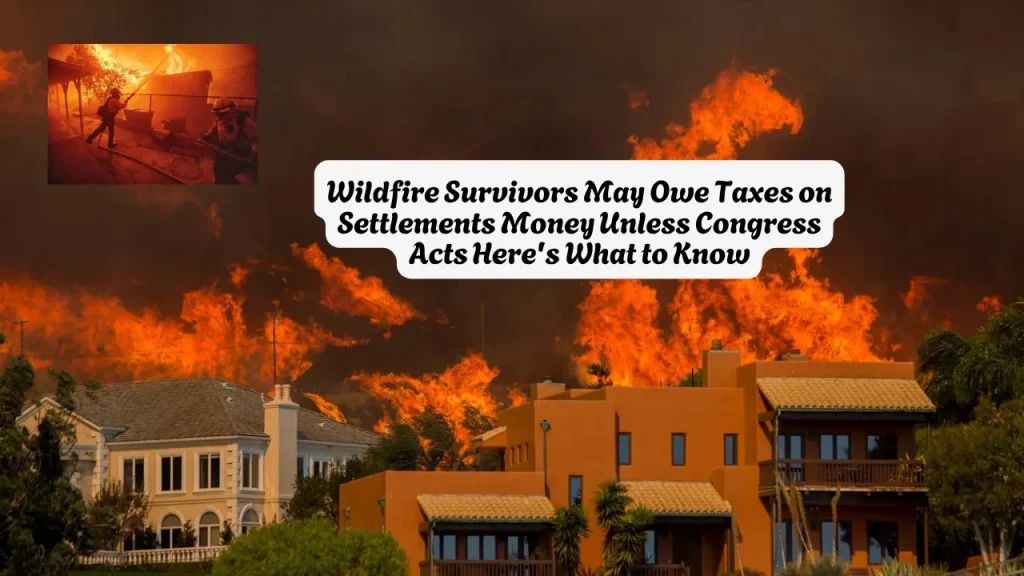
Who Is Affected Right Now?
Thousands of survivors of the 2025 Eaton Fire in Altadena, California have chosen to accept upfront settlements from the utility accused of causing the fire, giving up future litigation in exchange for faster payments to help them rebuild or relocate. But unless Congress passes new legislation, that money could be taxed as income.
The same problem applies to thousands more who are still in active lawsuits against the utility, as well as fire survivors in Colorado, Hawaii, and Oregon.
More than 2,800 households have applied for the Eaton Fire compensation program. Thousands more have joined lawsuits against the utility. An investigation into the Eaton Fire’s cause is still ongoing.
How Much Could Survivors Lose to Taxes?
The financial hit could be severe. The average award that Oregon utility PacifiCorp has paid to survivors of the 2020 Labor Day fires is roughly $5 million. Under federal income tax rates, that means the average fire survivor turns over about one-third of their settlement to the federal government.
For Eaton Fire survivors, the math is just as painful. Community leaders say households simply cannot afford to lose a chunk of their payments to taxes — especially given how expensive it is to rebuild in the affected communities.
The tax hit does not stop there.
The Hidden Risk Most Survivors Don’t Know About
Taxes alone are not the full story. Community advocates worry that survivors could be knocked off income-qualified government benefits — including food assistance, healthcare, and veterans’ support — if their wildfire payments count as income.
Resolving collateral damage to government programs, such as qualifying for college financial aid, is far harder than simply deferring or amending a tax return. As one tax advisor warned: “There’s no way to undo that.”
This makes the tax issue far more than a financial inconvenience. For many survivors, it could mean losing access to essential ongoing support.
What Is Congress Doing About It?
Legislation cleared the House Ways and Means Committee unanimously last month. It would exclude from taxable income all payments related to federally declared wildfire disasters from 2015 through 2026, covering payouts received in 2026 and beyond.
The measure gained bipartisan backing by also extending expanded tax relief for property losses from other federal disasters — an appeal to lawmakers in hurricane-prone states.
A separate Senate bill would apply to any federally declared wildfire disaster after 2015 and would cover compensation for losses, expenses, or damages not already covered by insurance.
But neither bill is law yet. The full House and Senate must still vote.
What States Are Affected?
Survivors in these states face the most immediate exposure:
- California — Eaton Fire (2025), Palisades Fire (2025), and other prior fires
- Oregon — 2020 Labor Day fires (PacifiCorp litigation, ongoing)
- Colorado — federally declared wildfire disaster survivors
- Hawaii — Maui wildfire survivors (2023)
Survivors in any state affected by a federally declared wildfire disaster since 2015 could be impacted.
What Should Wildfire Survivors Do Right Now?
You cannot control whether Congress passes the bill before your settlement closes. But you can take steps to protect yourself:
- Do not assume you are tax-exempt. The exemption is expired. Until a new law passes and is signed, your settlement is potentially taxable.
- Talk to a tax professional before accepting any lump-sum payment. Timing your receipt of funds could matter.
- Ask your attorney whether your settlement agreement has any provision for tax liability reimbursement by the utility.
- Check your eligibility for income-based government programs before and after receiving a payout — document your current enrollment status now.
- Monitor Congress — if the bill passes and is signed into law, it would retroactively apply to 2026 payouts, which could allow you to amend a return.
Frequently Asked Questions
Are wildfire settlement payments taxable in 2026?
Yes, currently. The federal tax exemption that protected wildfire survivors expired at the end of 2025. Congress has not yet passed a replacement law. Until a new bill is signed, settlements received in 2026 are subject to federal income tax.
Which wildfires are covered by the pending tax relief bill?
The pending legislation would cover payments related to federally declared wildfire disasters from 2015 through 2026, applying to payouts received in 2026 and after.
How much of my wildfire settlement could go to taxes?
It depends on your total income for the year. Tax attorneys representing Oregon wildfire survivors estimate that at federal income tax rates, the average survivor could owe about one-third of their payout to the federal government.
Could my settlement payout cost me government benefits?
Yes. If your wildfire settlement counts as income, it could disqualify you from income-based programs including food assistance, healthcare coverage, veterans’ support, and college financial aid.
Should I wait to accept my settlement until Congress passes the bill?
This is a decision only you and your attorney can make. Waiting carries risk — the bill’s timeline is uncertain. Accepting now carries tax risk. A qualified tax attorney or CPA can help you evaluate the best timing for your situation.
Does this affect California state taxes too?
Federal and state taxes are separate. Whether California wildfire survivors owe state taxes depends on their specific tax situation and the state tax law in effect at the time of payment. Consult a California tax professional for your specific situation.
What if the bill passes after I already paid taxes on my settlement?
Tax advisors note that survivors waiting for relief can defer taxes or amend past returns if new legislation passes. However, reversing the impact on income-based benefit programs is far more difficult.
Sources & References
- U.S. Senator Alex Padilla (Official): Bipartisan Bill to Extend Tax Relief for Wildfire Victims
Last Updated: April 20, 2026
Disclaimer: This article is for informational purposes only and does not constitute legal or tax advice. Legal claims and tax outcomes depend on specific facts and applicable law. For advice regarding your particular situation, consult a qualified attorney and a licensed tax professional.
About the Author
Israr Ahmad is a legal content researcher with 4+ years of experience covering class action settlements and consumer rights cases. He has researched and published coverage of 2,500+ settlements using verified court records, settlement administrator filings, and government sources. Learn more about Israr.