
In-N-Out Burger Sued CaliBurger for Copying Its Entire Brand Here’s What Really Happened
When a former In-N-Out manager opened a near-identical burger chain in China, In-N-Out Burger didn’t just take notice — it took legal action. The Irvine, California-based fast-food icon filed a federal trademark infringement lawsuit against CaliBurger LLC and its co-founders, alleging the chain had copied not just menu items but the look, feel, and identity of one of America’s most beloved fast-food brands. The case was filed in the U.S. District Court for the Central District of California and was terminated by January 2012 — just months after filing — suggesting a swift out-of-court settlement.
Quick Case Snapshot
| Field | Details |
| Plaintiff | In-N-Out Burgers, Inc. |
| Defendants | CaliBurger LLC; Jeffrey Li Jue; John C. Miller |
| Court | U.S. District Court, Central District of California |
| Case Number | 8:11-cv-01418 |
| Filing Date | September 14, 2011 |
| Judge | Hon. Andrew J. Guilford (Discovery: Magistrate Judge Marc L. Goldman) |
| Claims Alleged | Trademark infringement; counterfeiting |
| Damages Sought | Not publicly disclosed |
| Current Status | Settled out of court (terminated January 20, 2012) |
What Actually Happened: The Copycat Burger Story
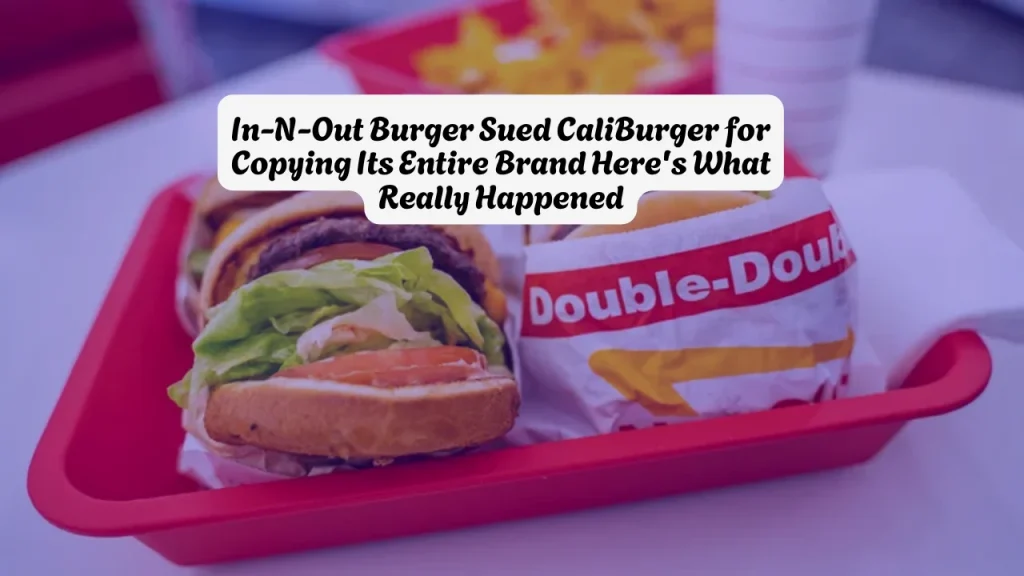
A former manager of In-N-Out opened the first CaliBurger in China in 2012, and In-N-Out immediately sued the company for advertising a “Double-Double” burger and Animal-Style menu items.
CaliBurger’s chef and director of training, Jonathan Wong — a California native — admitted openly: “The model for CaliBurger was In-N-Out.”
In the lawsuit, In-N-Out argued that CaliBurger had crossed the line from inspiration into pure imitation by outright copying menu items, store design, and even the way food was presented. It was not subtle. Right down to the red-and-yellow aesthetic, CaliBurger had lifted most of what In-N-Out was known for.
Though In-N-Out does not have any stores in China, the company chose to aggressively enforce its intellectual property rights abroad. That decision sent a clear signal to the fast-food industry: brand equity built over decades will be defended, even across international borders.
Related article: dLocal Wins Dismissal of Securities Class Action Lawsuit Full Breakdown for DLO Investors
What the Lawsuit Alleged
The complaint, filed September 14, 2011, named CaliBurger LLC along with co-founders Jeffrey Li Jue and John C. Miller as defendants. According to court records and public reporting, In-N-Out alleged trademark infringement and counterfeiting — serious federal claims under the Lanham Act, the primary U.S. law governing trademarks.
CaliBurger’s Shanghai location offered “Double-Doubles” and “Animal Fries,” and the restaurant featured a large screen playing looped videos evoking a California beach aesthetic — clearly drawing from In-N-Out’s deeply rooted California identity.
The core legal theory: consumers encountering CaliBurger — especially in markets where In-N-Out has brand recognition but no physical presence — could be confused into believing the two chains were affiliated or that CaliBurger was an authorized extension of In-N-Out.
How the Case Ended: Settlement and Brand Modifications
The restaurants eventually settled out of court, with CaliBurger modifying its branding and removing all menu items that were clearly In-N-Out duplicates.
After settling, CaliBurger changed “Animal Style” to “Cali Style” on its menu and renamed the “Double-Double” to “Cali Double.”
CaliBurger’s menu and décor were tweaked following the suit, though In-N-Out declined to comment on any specifics related to the settlement terms.
The financial terms of the settlement were never publicly disclosed. No court verdict was issued — meaning the case resolved before any judge or jury determined liability.
CaliBurger Didn’t Disappear — It Pivoted
What makes this story uniquely compelling is what happened after the lawsuit. Rather than folding, CaliBurger reinvented itself.
CaliBurger began experimenting with self-order kiosks that recognize your face and remember your order, large screens where customers can play video games, and robotic kitchen assistants.
In-N-Out boasts over 300 locations across 6 states, while CaliBurger grew to over 40 restaurants in more than a dozen countries. The chain that was once sued for imitation carved out a genuine identity — built, ironically, on the global brand recognition that In-N-Out’s decades of identity-building had created.
Legal Context: Why This Case Matters for Brand Owners
What is trademark infringement? Under the Lanham Act (15 U.S.C. § 1114), a trademark owner can sue any party that uses a mark that is “likely to cause confusion” among consumers about the source, sponsorship, or affiliation of goods or services. Courts look at factors including the similarity of the marks, the proximity of the products, and the sophistication of consumers.
Counterfeiting — the other claim alleged here — is an even more serious charge. It refers to the deliberate copying of a registered mark in a way intended to deceive consumers, and can carry enhanced statutory damages and even criminal penalties in egregious cases.
International trademark enforcement is complex, but U.S. companies can file suits in U.S. federal courts against U.S.-based defendants — such as CaliBurger’s American co-founders and its U.S.-registered LLC — even when the infringing activity occurs abroad. That is precisely what In-N-Out did here.
CaliBurger’s aggressive strategy highlights both the importance of protecting valuable intellectual property and meeting market demands before it’s too late. Companies that fail to register and enforce trademarks internationally risk having imitators fill those market gaps first.
What This Means for the Fast-Food Industry
This case is a textbook example of trade dress and trademark vulnerability in unserved international markets. In-N-Out, despite having no presence in China, held enforceable IP rights in the U.S. — and used American courts to stop American founders from exploiting those rights overseas.
For brand owners, the takeaway is stark: even if you haven’t entered a market yet, someone else may enter as you — and the courts can be your remedy. For entrepreneurs, it is a warning that copying an established brand’s look, feel, menu language, and aesthetic — even in a foreign country — carries real legal risk when the original brand has U.S.-registered intellectual property.
Current Status: Case Closed, Brand Evolved
The case was formally terminated on January 20, 2012 — less than four months after filing — reflecting how quickly both parties reached an agreement. The last known court filing appeared on the docket as recently as August 22, 2015, indicating some post-settlement activity, though the substance of that filing is not publicly detailed.
CaliBurger continues to operate internationally. In-N-Out continues its famously unchanged menu and selective domestic expansion strategy. Both brands still exist — shaped, in part, by this legal confrontation.
Frequently Asked Questions
What did In-N-Out sue CaliBurger for?
In-N-Out filed a federal lawsuit alleging trademark infringement and counterfeiting. The claim was that CaliBurger had copied its menu items (including the “Double-Double” and “Animal Style”), store design, and brand aesthetic closely enough to confuse consumers.
Did In-N-Out win the lawsuit against CaliBurger?
There was no court verdict. The case settled out of court in early 2012. CaliBurger agreed to modify its branding and remove menu items that directly duplicated In-N-Out’s offerings.
What changes did CaliBurger make after the lawsuit?
CaliBurger renamed “Animal Style” to “Cali Style” and “Double-Double” to “Cali Double,” among other menu and décor modifications. Palm tree branding remained but was otherwise differentiated.
How much did CaliBurger pay In-N-Out in the settlement?
Settlement financial terms were never publicly disclosed. In-N-Out declined to comment on the specifics.
Does CaliBurger still exist today?
Yes. CaliBurger pivoted toward a tech-forward brand identity, incorporating robotic kitchen assistants, facial-recognition kiosks, and gaming screens. It expanded to dozens of locations across multiple countries.
Can U.S. companies sue over copying that happens in other countries?
Yes, in certain circumstances. When the defendants are U.S. persons or entities — as was the case with CaliBurger’s American co-founders and U.S.-registered LLC — U.S. courts can exercise jurisdiction even if the infringing acts occurred abroad.
Last Updated: April 20, 2026
This article is for informational purposes only and does not constitute legal advice. Allegations in a complaint are not findings of fact. All parties are presumed innocent unless and until proven otherwise in a court of law.
About the Author
Israr Ahmad is a legal content researcher with 4+ years of experience covering class action settlements and consumer rights cases. He has researched and published coverage of 2,500+ settlements using verified court records, settlement administrator filings, and government sources. Learn more about Israr.