
Why Zohran Mamdani and Letitia James Are Leading Separate Lawsuits Against Trump’s Public Charge Rule — Not One
Two of New York’s most prominent Democrats sued the Trump administration on the same day, in the same courthouse, over the same rule — and they filed two separate cases to do it.
That’s not redundancy. It’s strategy. Here’s who’s suing, why the cases are split apart instead of combined, and what each side brings to a fight that has to move fast: the rule they’re challenging takes effect September 18, 2026.
Quick Facts
| What’s Being Sued Over | DHS’s 2026 public charge rule (91 FR 45324), effective Sept. 18, 2026 |
| Lawsuits Filed | September 14, 2026 |
| Court | U.S. District Court, Southern District of New York |
| Case 1 Lead Plaintiff | New York City, under Mayor Zohran Mamdani |
| Case 1 Co-Plaintiffs | Chicago, San Francisco, Seattle, Santa Clara County, King County, Washington D.C. |
| Case 2 Lead Plaintiff | New York Attorney General Letitia James |
| Case 2 Co-Plaintiffs | 21 other states and D.C. |
| Legal Claim (Both Cases) | Violation of the Administrative Procedure Act, 5 U.S.C. § 706 |
| Case Numbers | UNVERIFIED — not yet published on PACER as of this writing |
| Last Updated | September 15, 2026 |
Two Lawsuits, One Rule — Why File Separately?
New York City, led by Mayor Zohran Mamdani, filed one case joined by Chicago, San Francisco, Seattle, Santa Clara County, King County, and Washington D.C. New York Attorney General Letitia James filed a second, separate case joined by 21 other states and D.C.
Splitting a challenge into a cities-led case and a states-led case isn’t unusual in litigation against federal rules — it gives plaintiffs two shots at standing arguments, two judges who might rule (or get assigned) differently, and two records built around different kinds of harm. Cities can point to direct costs to municipal health and social-service systems. States can point to broader fiscal and administrative impact across entire populations. Both cases were filed in the same court on the same day, and both rely on the same core legal theory: that the rule violates the Administrative Procedure Act.
Who Is Zohran Mamdani, and Why Is NYC Leading This Case?
Mamdani took office as New York City’s mayor on January 1, 2026, becoming the city’s first Muslim mayor and its youngest in generations. Born in Kampala, Uganda, he moved to New York as a child, became a U.S. citizen in 2018, and served in the New York State Assembly before his mayoral run. His campaign centered on affordability — rent freezes, free buses, city-run grocery stores — not immigration policy specifically.
That makes this lawsuit notable: it’s Mamdani stepping into a fight that’s bigger than his campaign platform. City Hall’s own statement framed the stakes in human terms, with Mamdani saying the rule pushes immigrant families away from programs that have kept them fed and healthy for decades. New York City has one of the largest immigrant populations of any U.S. city, which gives the city a direct, practical interest in how broadly this rule gets applied — separate from any state-level political calculation.
Related article: Lloyd’s of London Insurance Settlement, Check If You Qualify Lincoln Adventures, LLC v. Those Certain Underwriters at Lloyd’s, No. 2:08-cv-00235-CCC-ESK
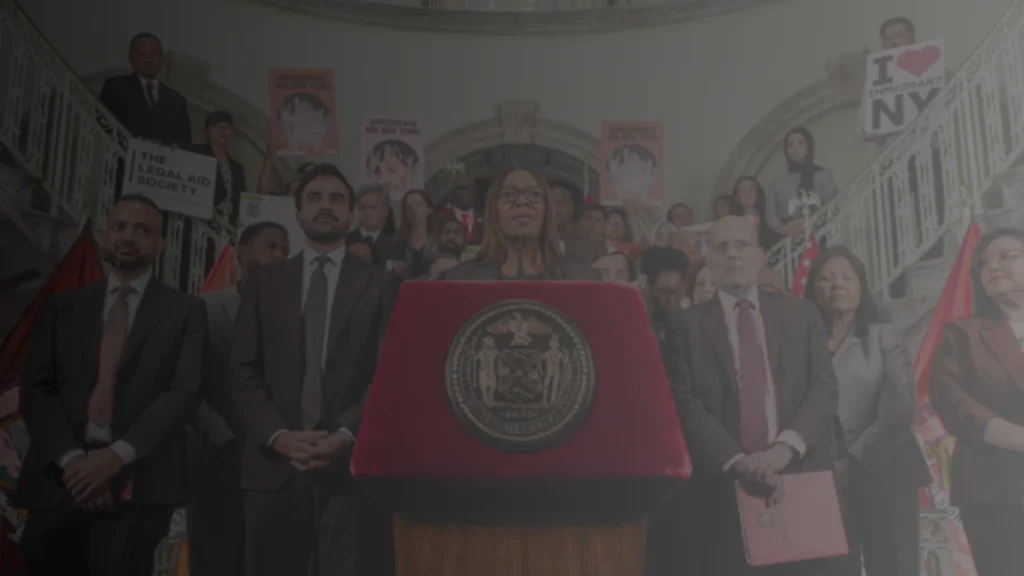
Who Is Letitia James, and Why Does She Have a Separate Case?
James has been New York’s attorney general since 2019 and has built one of the most extensive records of litigation against the Trump administration of any state official in the country. Her office reported filing or joining 15 lawsuits and 22 amicus briefs challenging administration actions within the first 100 days of Trump’s second term alone — covering immigration policy, funding freezes, and other executive actions.
She’s also the attorney general who led the 2022 civil fraud lawsuit against Trump, his adult children, and the Trump Organization over allegedly inflated asset valuations — a case that resulted in a nine-figure judgment against the Trump Organization, which remains under appeal. That history is part of why this new filing draws attention: James and Trump have a long, well-documented adversarial relationship that predates this administration.
For this case specifically, James’s coalition of 21 states plus D.C. gives the lawsuit geographic breadth New York City’s case doesn’t have on its own — a factor that can matter if either case seeks a nationwide injunction rather than one limited to the plaintiff jurisdictions.
What Both Lawsuits Actually Argue
Neither case argues the federal government lacks authority to define “public charge.” Both argue DHS exercised that authority unlawfully — that the rule is arbitrary and capricious under the APA, gives immigration officers too much undefined discretion, and breaks from decades of settled interpretation holding that people who use basic, non-cash public benefits aren’t “primarily dependent” on the government.
That’s the same legal argument that successfully blocked a similar rule during Trump’s first term. In 2019, New York City and a coalition of states — under a different mayor and the same attorney general — won a preliminary injunction in this same courthouse days before that rule’s effective date. It stayed blocked for years before the rule was ultimately withdrawn under the Biden administration. The current plaintiffs are clearly working from the same playbook.
For the practical details buried in the rule itself — which benefits actually count, the new I-485 form deadline with no grace period, and who’s exempt regardless of how the lawsuits turn out — see our full breakdown: Trump’s Public Charge Rule Takes Effect September 18 — What the Lawsuits Won’t Tell You About Your Own Green Card Application.
What Happens Next
The rule takes effect September 18, 2026, unless a judge blocks it first. Given the compressed timeline, expect a request for a temporary restraining order or preliminary injunction to move quickly in both cases — likely the first real signal of how this litigation is headed, well before either case reaches a decision on the merits.
If either judge grants an injunction limited to the plaintiff states and cities rather than a nationwide block, that could create a temporary situation where the rule applies in some parts of the country and not others — something that happened briefly during the 2019 litigation before broader injunctions took hold.
Frequently Asked Questions
Why did New York City and the New York Attorney General file separate lawsuits over the same rule?
Separate filings let each case build its own standing and harm arguments — cities focusing on municipal impact, states on broader fiscal and administrative effects — while both pursue the same core Administrative Procedure Act claim in the same court.
Is this the first time Mamdani or James has sued the Trump administration?
It’s Mamdani’s first major legal action against the administration as mayor. James has filed or joined at least 15 lawsuits against the administration within its first 100 days alone, in addition to a long history of litigation against Trump personally and his businesses dating back to 2019.
Did a similar lawsuit succeed against Trump’s first-term public charge rule?
Yes. In 2019, a coalition led by New York won a preliminary injunction against a similar rule in this same federal court, days before its scheduled effective date. That injunction held for years before the rule was later withdrawn.
Which cities and states are involved in the two lawsuits?
New York City’s case includes Chicago, San Francisco, Seattle, Santa Clara County, King County, and Washington D.C. New York Attorney General Letitia James’s case includes 21 other states plus D.C.
What legal claim are both lawsuits making?
Both argue the rule violates the Administrative Procedure Act because it is arbitrary and capricious and departs from decades of settled interpretation without adequate justification.
When will we know if the rule is blocked?
Watch for a ruling on an emergency injunction request before September 18, 2026, the rule’s scheduled effective date. That ruling will be the first real indicator of how the litigation is trending.
Sources Used in This Article
- New York City Mayor’s Office — “New York City Leads Cities and Counties in Lawsuit Challenging Federal Government’s New Public Charge Rule,” Sept. 14, 2026
- amNewYork — “NYC leads lawsuit challenging Trump admin rule expanding ‘public charge’ test for green cards,” Sept. 14–15, 2026
- Associated Press (via WPRI) — “States, cities sue over Trump rule seeking to deny green cards to immigrants using public benefits,” Sept. 14, 2026
- New York Attorney General’s Office — “Attorney General James Releases Statement on First 100 Days of Trump Administration,” 2025
- Al Jazeera — “Zohran Mamdani sworn in as New York City mayor,” Jan. 1, 2026
- PBS NewsHour — “Who is Letitia James: NY attorney general has long history of taking on powerful targets, including Trump”
This article is for informational purposes only and does not constitute legal advice. Laws and litigation outcomes vary and can change quickly. For advice about your specific immigration situation, consult a qualified immigration attorney. Case numbers for the September 14, 2026 filings were not yet available on public dockets at the time of writing and will be added once verified.
Last Updated: September 15, 2026
About the Author
Israr Ahmad is a legal content researcher with 4+ years of experience covering class action settlements and consumer rights cases. He has researched and published coverage of 2,500+ settlements using verified court records, settlement administrator filings, and government sources. Learn more about Israr.