
Walter Willett, the Mediterranean Diet and Trump’s Harvard Funding Lawsuit, What Happened and Why It Matters
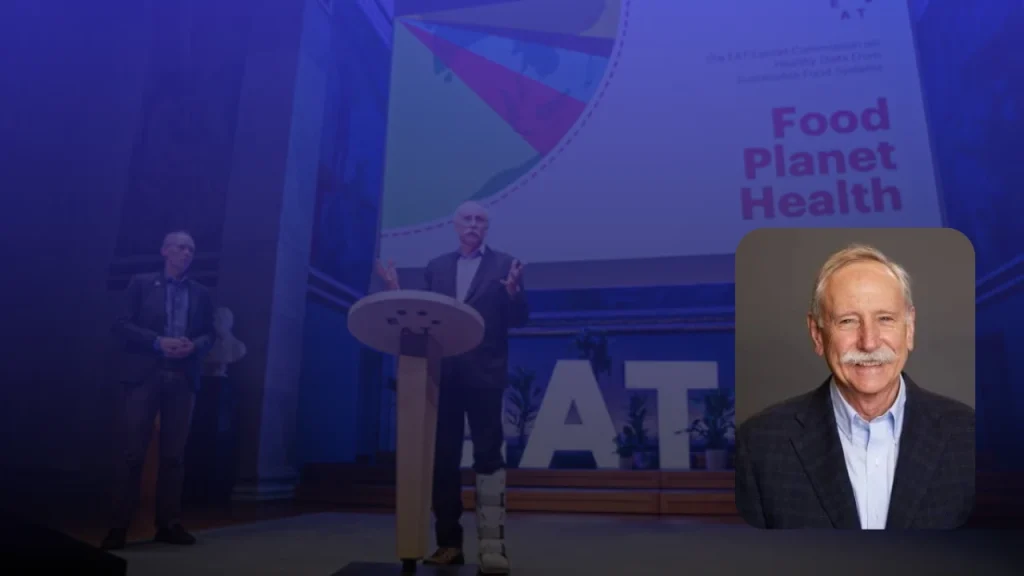
Walter Willett, one of America’s most influential nutrition scientists, was caught in the legal fight between Harvard University and the Trump administration after federal research funding was frozen and terminated in 2025. His work on diet, cancer, cardiovascular disease and women’s health was among the research affected.
On September 3, 2025, U.S. District Judge Allison D. Burroughs ruled that the administration’s Harvard funding actions violated the First Amendment and federal law. The government appealed to the First Circuit, which heard oral argument on October 5, 2026. As of November 26, 2026, no appellate decision has been identified.
Renewed attention to Willett’s experience followed a November 23, 2026 New York Times report. This is not a lawsuit against the Mediterranean diet. It is a constitutional and administrative-law dispute over how far the federal government can go in attaching demands to university research grants.
Quick Facts: Walter Willett and the Harvard Funding Lawsuit
| Detail | What You Need to Know |
| Scientist | Dr. Walter C. Willett, Harvard T.H. Chan School of Public Health |
| Location | Boston and Cambridge, Massachusetts |
| Research areas | Nutrition, cancer, cardiovascular disease, chronic disease prevention |
| Federal demand letter | April 11, 2025 |
| Harvard’s public rejection | April 14, 2025 |
| Initial freeze | $2.2 billion in grants and $60 million in contracts |
| Harvard lawsuit filed | April 21, 2025 |
| Court | U.S. District Court for the District of Massachusetts |
| Case number | 1:25-cv-11048-ADB (related faculty case: 1:25-cv-10910-ADB) |
| Judge | U.S. District Judge Allison D. Burroughs |
| Major ruling | September 3, 2025 |
| Final judgment | October 20, 2025 |
| Appeal | First Circuit, Nos. 25-2230 and 25-2231 |
| Oral argument | October 5, 2026 |
| Current status | Awaiting First Circuit decision |
| Class action settlement or claim form | None |
| Official court documents | Harvard Federal Lawsuits page |
Who Is Walter Willett and Why Does His Nutrition Research Matter?
Dr. Walter C. Willett is a professor of epidemiology and nutrition at Harvard T.H. Chan School of Public Health. His research has contributed to scientific understanding of breast cancer and other cancers, cardiovascular disease, type 2 diabetes, artificial trans fats, Mediterranean-style eating patterns and women’s reproductive health.
He did not invent the traditional Mediterranean diet. His work helped translate research on Mediterranean eating patterns into modern nutrition guidance.
His research on trans fats also fed into federal action. In 2015, the FDA determined that partially hydrogenated oils were no longer generally recognized as safe, with major compliance requirements following in 2018. That history shows how university research can eventually shape regulation and consumer health protections.
Sources: Harvard’s Walter Willett faculty profile and the FDA’s determination on partially hydrogenated oils.
Why Did the Trump Administration Cut Harvard Funding That Affected Willett’s Research?
The cuts came out of a university-wide dispute over campus antisemitism, governance, admissions and academic policy, not out of any finding about Willett or his science.
- Under Executive Order 14188 and a federal antisemitism task force, the administration began reviewing billions of dollars in Harvard funding on March 31, 2025.
- On April 11, 2025, federal officials sent Harvard a letter demanding changes to governance, hiring, admissions and other practices.
- Harvard publicly refused on April 14, 2025, arguing the government was exceeding its lawful authority.
- The government then froze about $2.2 billion in multiyear grants and $60 million in contracts. Further terminations followed in May 2025.
Willett’s research was affected because it depended on federal grants administered through Harvard. No verified evidence shows his grants were cut because of the Mediterranean diet or because officials found his science invalid.
Source: Harvard’s April 14, 2025 statement.
What Happened to the Nurses’ Health Study and the Health Professionals Follow-Up Study?
Two long-running cohort studies tied to Willett were affected. Their value comes from decades of repeated questionnaires and stored biological samples, which cannot be quickly recreated if funding lapses.
Nurses’ Health Study (established 1976). Research from this study has examined breast cancer, heart disease, reproductive health, smoking and nutrition. The original cohort’s main federal grant ended in June 2024, before the 2025 freeze. Funding for later cohorts was affected by the 2025 terminations. According to Harvard’s October 2026 update, research continues through individual grants while study leaders look for additional support. The study has not ended, but its long-term funding remains a concern.
Health Professionals Follow-Up Study (launched 1986). It originally enrolled 51,529 participants. Harvard’s August 27, 2026 update says the 2025 interruptions led to staff layoffs and that main-study funding later returned, though that grant is expected to end in roughly another year.
Restoring money does not undo every consequence. Staff departures, disrupted data collection and uncertainty about future grants can continue after a court steps in.
Sources: Harvard’s Nurses’ Health Study update and Harvard’s Health Professionals Follow-Up Study update.
What Did Harvard Sue the Trump Administration For in Case No. 1:25-cv-11048?
On April 21, 2025, Harvard filed President and Fellows of Harvard College v. U.S. Department of Health and Human Services, et al. A related suit by faculty and academic-worker organizations, including the AAUP, was filed earlier and later merged with Harvard’s case.
Harvard made three core arguments:
- The freeze was unconstitutional retaliation against protected speech and institutional independence.
- Federal officials skipped the procedures Title VI requires before cutting funds.
- The funding decisions lacked adequate legal and factual justification.
The government said it had authority to enforce funding conditions and combat discrimination, and argued the district court lacked jurisdiction to order the relief Harvard sought.
Which Federal Laws Apply to the Harvard Funding Cuts?
| Law or provision | Relevance to the Harvard case |
| First Amendment | Bars government retaliation for protected speech; the unconstitutional conditions doctrine limits demands tied to public benefits |
| Administrative Procedure Act, 5 U.S.C. §§ 702, 704, 706 | Allows courts to set aside arbitrary, unlawful or procedurally defective agency action |
| Title VI, 42 U.S.C. § 2000d | Prohibits discrimination based on race, color or national origin in federally assisted programs |
| 42 U.S.C. § 2000d-1 | Requires specific steps before funds are terminated, including findings, efforts at voluntary compliance and notice to Congress |
| Tucker Act, 28 U.S.C. § 1491 | Governs jurisdiction over certain money and contract claims against the United States |
| 2 C.F.R. § 200.340 | Addresses termination of federal awards |
| Spending Clause and Fifth Amendment due process | Federal funding conditions must be clearly stated and fairly applied |
| Executive Order 14188 | Basis for the task force’s campus antisemitism enforcement push |
First Amendment and the Administrative Procedure Act. Harvard is a private university, but it can invoke constitutional protections against federal action. Agencies may set legitimate rules for how grant money is spent. Using research funding to compel unrelated changes or punish protected speech raises constitutional problems. The APA does not guarantee funding forever. It requires agencies to act within legal limits.
Title VI of the Civil Rights Act of 1964. Title VI covers discrimination involving shared ancestry or ethnic characteristics, which can include certain forms of antisemitism. Federal officials have real authority to investigate and enforce it. The September 2025 ruling did not erase Harvard’s civil rights obligations. It addressed whether officials followed the lawful procedures in 42 U.S.C. § 2000d-1.
The Tucker Act and the court-jurisdiction fight. The government’s appeal now centers on this issue. As reported, a Justice Department attorney told the First Circuit that Judge Burroughs lacked the power to order the administration to pay, even though the money has resumed flowing. Harvard’s lawyer, former solicitor general Paul Clement, argued the ruling only bars terminations that stem from the unlawful retaliation and procedural violations. A separate Supreme Court interim order in NIH v. American Public Health Association (August 21, 2025) let certain grant terminations stand while litigation continued. It did not decide Harvard’s constitutional challenge.
What Did Judge Allison Burroughs Decide on September 3, 2025?
Judge Burroughs found that the freeze and termination actions violated the First Amendment, bypassed Title VI procedures and failed administrative-law requirements. She rejected the government’s principal jurisdictional argument, set aside the challenged actions and restricted further funding decisions based on unconstitutional retaliation or Title VI-noncompliant terminations. Final judgment followed on October 20, 2025.
The ruling does not entitle Harvard to unlimited federal funding. Agencies still control research programs, evaluate applications and enforce valid funding conditions.
Read the September 3, 2025 district court decision.
Harvard Funding Lawsuit Update: Where the First Circuit Appeal Stands in November 2026
The administration appealed in December 2025. Universities, alumni, former officials, hospitals and advocacy groups filed amicus briefs backing Harvard ahead of a July 22, 2026 deadline. The First Circuit heard oral argument on October 5, 2026 (No. 25-2230), and reporting from the hearing described a skeptical panel.
As of November 26, 2026, no decision has been identified. The court could affirm, reverse, modify the relief or send parts back to the district court, and either side could seek further review. Researchers cannot yet treat the dispute as over.
What Other Lawsuits Has the Trump Administration Filed Against Harvard?
Separate cases should not be confused with the funding appeal:
- DHS and international students (May 2025): Judge Burroughs issued emergency relief blocking DHS efforts to strip Harvard’s international student sponsorship, and that ruling also went before the First Circuit.
- DOJ Title VI suit (filed March 20, 2026): dismissed by a federal judge on August 13, 2026.
- DOJ admissions-records suit: dismissed on November 2, 2026, on procedural grounds, without ruling on the underlying admissions practices.
Their outcomes do not resolve the funding appeal.
Related coverage on AllAboutLawyer.com:
- Trump Administration’s Harvard Admissions Lawsuit Dismissed, Why Judge Joun Rejected the Case and What Happens Next
- Harvard Admissions Lawsuit 2026, DOJ Sues Harvard for Refusing to Hand Over Applicant Data Here Is What Is Happening in Lawsuit That Could Reshape Every University in America
- JD Vance Says 9 Universities Face Federal Investigation Over J-1 Visas, What the Law Requires
What Does the New November 2026 Diet and Cancer Research Mean for Willett’s Case?
It is a separate development. On November 25, 2026, researchers published Targeting the Hallmarks of Cancer: A Nutritional Epigenetics Framework for Prevention and Intervention in The Innovation Nutrition. It examines how nutrition-related biological processes may influence mechanisms behind cancer development. Epigenetics concerns changes in gene regulation that do not alter the underlying DNA sequence.
The publisher’s announcement cited research estimating that about 38% of cancer cases worldwide are attributable to potentially modifiable risk factors. That figure covers tobacco, alcohol, excess body weight, infections, pollution and occupational exposures, not diet alone. The framework is not proof that any diet cures cancer, and no link between it and the Harvard lawsuit has been established.
Scientific publication: DOI 10.59717/j.xinn-nutri.2026.100040.
Has Donald Trump Banned the Mediterranean Diet?
No. The Harvard dispute places no legal restriction on what Americans eat. It concerns funding for scientific research, and the cuts do not invalidate previously published nutrition studies.
The National Cancer Institute says no special diet or supplement has been proven to cure cancer, stop its progression or prevent recurrence. Patients should talk to their medical team before making major dietary changes and should not replace prescribed treatment with diet.
Can Americans File a Claim or Sue Over the Federal Research Funding Cuts?
There is no class action settlement, claim form or compensation fund tied to the Harvard funding dispute. Study participants do not automatically become plaintiffs. Researchers, employees or institutions directly harmed by funding decisions may have legal options, but they would need a proper legal basis, standing and jurisdiction. Participants who are concerned should contact the relevant study administrators to ask whether data collection or participation has changed.
Frequently Asked Questions About Walter Willett and the Harvard Funding Lawsuit
Did Walter Willett personally sue Donald Trump?
No personal lawsuit by Willett has been identified. His research was affected by the broader dispute between Harvard and the federal government.
Did Harvard win its federal funding lawsuit against the Trump administration?
Harvard won in the district court on September 3, 2025. The government appealed, and the First Circuit has not yet ruled.
Did Walter Willett lose all of his research funding?
That has not been established. Several programs faced interruptions and some funding returned. The status of every individual grant has not been independently confirmed.
Has the Harvard Nurses’ Health Study ended?
No. Harvard’s October 2026 update says research continues, though sustainable long-term funding remains a concern.
Does the Harvard lawsuit affect cancer patients?
It may affect future research, staffing and discoveries. It does not end anyone’s cancer treatment or health insurance.
Is the Mediterranean diet illegal in the United States?
No. The Harvard litigation imposes no such restriction.
Can I file a claim in the Harvard v. HHS funding lawsuit?
No. There is no consumer claim form, settlement fund or compensation deadline.
What Happens Next in Harvard v. HHS?
The next major event is the First Circuit’s decision. It could shape how universities challenge future grant cancellations and how agencies enforce funding conditions. For Willett and other scientists, the stakes go beyond one grant: whether research built over decades can keep its staff, infrastructure and continuity. The government’s legitimate authority to prevent discrimination must still operate within the limits set by Congress and the courts.
Official Sources and Court Documents
- Harvard University Federal Lawsuits and Court Documents
- Harvard Federal Research Funding Litigation
- Georgetown University Law Center Litigation Tracker: Harvard v. HHS
- 42 U.S.C. § 2000d-1
- Supreme Court Docket: NIH v. American Public Health Association
- Department of Justice: March 2026 Harvard Title VI Lawsuit
- National Cancer Institute: Diets, Supplements and Cancer
- FDA: Trans Fat
Disclaimer: This article offers general legal and public-health information from public records. It is not legal or medical advice. Court proceedings, funding decisions and scientific findings may change.
Researched and written by Israr Ahmad, legal content researcher and founder of AllAboutLawyer.com. All facts verified against the official court records and litigation documents for Case Nos. 1:25-cv-11048 and 25-2230, Harvard University’s official publications and statements, and the official sources listed above, as of November 26, 2026. Last Updated: November 26, 2026.
About the Author
Israr Ahmad is a legal content researcher with 4+ years of experience covering class action settlements and consumer rights cases. He has researched and published coverage of 2,500+ settlements using verified court records, settlement administrator filings, and government sources. Learn more about Israr.