
Walmart Equate Sleep Aid Lawsuit, California Shopper Claims “Non-Habit-Forming” Label Misleads Consumers
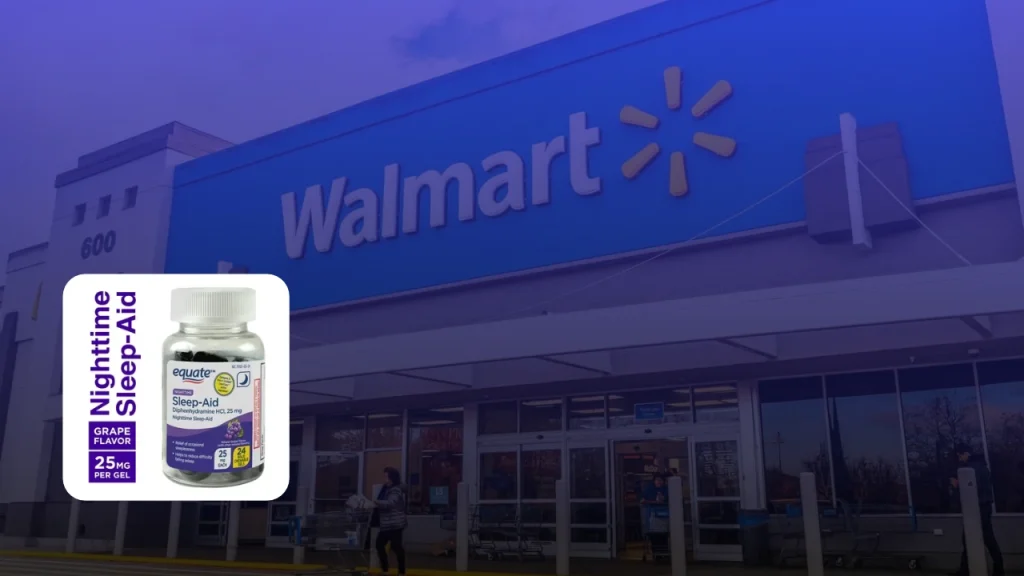
Walmart is facing a proposed class action lawsuit alleging that its Equate Maximum Strength and Nighttime Sleep-Aid products mislead consumers by advertising themselves as “non-habit-forming” despite containing diphenhydramine, an antihistamine that the plaintiff claims can cause tolerance, dependence and habitual use.
The lawsuit, Larsen v. Walmart Inc., was filed on September 29, 2026, in the U.S. District Court for the Central District of California. It received renewed attention following a November 10 report by Top Class Actions.
Plaintiff Bryan Larsen, a California consumer, alleges Walmart knows shoppers prefer sleep aids they believe will not lead to dependence and uses the non-habit-forming claim to encourage purchases.
Larsen says he would not have purchased the products, or would have paid less, had he known about their alleged potential for habitual use.
The lawsuit seeks compensation and changes to Walmart’s marketing on behalf of California consumers who purchased the affected sleep aids during the proposed class period.
Walmart has not been found liable, no class has been certified, and no settlement or claim form is available.
Walmart Equate Sleep Aid Lawsuit: Quick Facts
| Detail | Information |
| Case | Larsen v. Walmart Inc. |
| Case number | 5:26-cv-05753 |
| Filing date | September 29, 2026 (publicly reported November 10, 2026) |
| Court | U.S. District Court, Central District of California, Eastern Division |
| Plaintiff | Bryan Larsen |
| Defendant | Walmart Inc. |
| Plaintiff’s attorneys | Michael D. Braun (Kuzyk Law LLP); Jeffrey I. Carton, Catherine H. Friesen and John P. Kane (Denlea & Carton LLP) |
| Products | Equate Maximum Strength and Nighttime Sleep-Aids |
| Active ingredient | Diphenhydramine hydrochloride |
| Disputed marketing | Non-habit-forming |
| Allegations | False advertising, deceptive marketing, breach of warranty |
| Relief sought | Declaratory and injunctive relief, compensatory damages, restitution, legal fees and costs |
| Jury trial | Demanded |
| Proposed class | California purchasers during the four years before filing |
| Class certified? | No |
| Settlement amount | None announced |
| Claim deadline | None |
Important date note: The complaint was filed on September 29, 2026. The case was reported publicly on November 10, 2026, which is why it appears in news coverage as recent.
What Is the Walmart Equate Sleep Aid Class Action Lawsuit About?
Larsen alleges Walmart falsely reassures shoppers that its Equate sleep aids cannot lead to habitual use.
The complaint states that the products contain diphenhydramine hydrochloride, a sedating antihistamine commonly used in over-the-counter sleep medications.
According to the plaintiff, peer-reviewed research shows that repeated diphenhydramine use can lead to reduced effectiveness, tolerance, withdrawal symptoms and, in some circumstances, dependence and escalated misuse. The complaint alleges the drug engages the brain’s reward pathways.
The lawsuit argues that consumers interpret the non-habit-forming representation as a promise that the medication will not create a pattern of habitual use.
Larsen alleges that Walmart benefits financially from this message because consumers are willing to pay more for products they consider safer alternatives.
The central legal question is whether the label creates a misleading impression about the medication’s potential effects.
Which Equate Sleep Aid Products Are Included?
The complaint identifies two Walmart Equate product lines containing diphenhydramine hydrochloride:
- Equate Maximum Strength Sleep-Aid
- Equate Nighttime Sleep-Aid
The challenged packages prominently advertise the products as non-habit-forming.
Walmart’s Equate Maximum Strength Nighttime Sleep-Aid softgel labeling identifies diphenhydramine hydrochloride, 50 mg per softgel, as its active ingredient.
The lawsuit concerns the specified diphenhydramine products, not every medication or supplement sold under the Equate brand.
Who Is Bryan Larsen, the Plaintiff?
Bryan Larsen is a resident of Victorville, California.
According to the complaint, he regularly purchased Equate Maximum Strength Sleep-Aid products from Walmart stores near his residence over approximately three years.
His most recent purchase was around June 2026.
Larsen claims he read and relied on the non-habit-forming statement when choosing the product.
He alleges that he lost money because the product was not accurately represented.
His lawsuit primarily seeks recovery for alleged economic losses, not compensation for a diagnosed addiction or other personal injury.
Who Represents the Plaintiff?
The complaint lists Michael D. Braun of Kuzyk Law LLP and Jeffrey I. Carton, Catherine H. Friesen and John P. Kane of Denlea & Carton LLP as counsel for Larsen and the proposed class.
Larsen has demanded a jury trial. In consumer class actions of this type, many cases end through dismissal, individual resolution or a class settlement before any trial.
Is Diphenhydramine Really Habit-Forming?
This question is central to the litigation.
Diphenhydramine is a first-generation antihistamine that causes drowsiness by blocking histamine activity.
It is commonly used to relieve occasional sleeplessness.
The plaintiff cites medical and pharmacological literature suggesting that prolonged or repeated use can lead to tolerance, dependence, withdrawal symptoms and misuse.
However, tolerance, dependence and addiction are not identical medical concepts.
Tolerance means a medication becomes less effective with repeated use. Dependence can involve difficulty stopping use or experiencing symptoms after discontinuation. Addiction involves additional patterns of compulsive use despite harm.
The U.S. National Library of Medicine’s MedlinePlus guidance says over-the-counter antihistamine sleep aids are generally not considered addictive but can quickly become less effective as the body becomes accustomed to them.
This distinction is important because Larsen must establish that Walmart’s particular marketing statement is legally misleading, not simply that the medicine can become less effective over time.
The complaint’s scientific claims are allegations. No court has found them to be true in this case, and this article does not establish that Equate sleep aids are addictive.
What does the FDA say?
The FDA’s nighttime sleep-aid monograph, M010, recognizes diphenhydramine hydrochloride and diphenhydramine citrate as permitted active ingredients when products comply with applicable requirements. The earlier regulation for these products appears at 21 C.F.R. Part 338.
The monograph describes nighttime sleep aids as products for occasional sleeplessness.
It also requires a warning advising consumers to consult a doctor if sleeplessness continues for more than two weeks.
The FDA has not issued a finding in the Larsen lawsuit that Walmart’s specific non-habit-forming representation violates federal law.
Should people stop using sleep aids because of this lawsuit?
This article does not give medical advice. A lawsuit’s allegations do not change how a medication should be used. People who use sleep aids regularly, or who have trouble sleeping for more than two weeks, should talk to a doctor or pharmacist about their sleep problems and treatment options.
Related article: Hatch Sound Machine Lawsuit 2026, Parents Allege Rest Go and Hatch Go Put Babies at Risk of Hearing Loss
What California Laws Does the Lawsuit Claim Walmart Violated?
The 28-page complaint asserts six causes of action based on four principal legal theories.
1. California Unfair Competition Law
Business and Professions Code § 17200
Larsen alleges Walmart engaged in unlawful, unfair and fraudulent business practices by marketing the products as non-habit-forming.
He argues the labeling could cause reasonable consumers to purchase a product they otherwise would have avoided.
The UCL allows courts to order restitution and injunctions (§ 17203) and generally carries a four-year statute of limitations (§ 17208), which is the source of the proposed four-year class period. Private plaintiffs cannot recover damages under the UCL itself.
A separate California lawsuit raises similar questions about allegedly misleading Walmart product descriptions. See Walmart Great Value Stevia Lawsuit, 94.44% Erythritol Found in Packets, California Shopper Claims False Advertising.
That proceeding concerns sweetener ingredients rather than sleep medication.
2. California False Advertising Law
Business and Professions Code § 17500
The False Advertising Law prohibits advertising that is untrue or misleading under the applicable statutory requirements.
Larsen claims the disputed labeling conveys a false impression about the risk of habitual sleep-aid use.
The complaint seeks restitution and an order stopping the allegedly deceptive marketing.
3. California Consumers Legal Remedies Act
Civil Code § 1770
The complaint alleges Walmart represented that its products have characteristics or benefits they do not possess.
Larsen seeks injunctive and equitable relief under this theory and states that he intends to pursue additional damages if the statutory notice requirements are satisfied.
Under Civil Code § 1782, a consumer generally must send the defendant written notice at least 30 days before seeking damages under the CLRA, which is why complaints often start with injunctive relief and add damages later. CLRA claims generally must be filed within three years (Civil Code § 1783).
A comparable dispute over product representations is covered in Target Apple Cider Vinegar Gummies Lawsuit, False Advertising Claims Over Acetic Acid Content 2026.
4. Breach of Express Warranty
California Commercial Code § 2313
Larsen argues the non-habit-forming statement constitutes an express warranty about the products’ characteristics.
He alleges Walmart breached that warranty by selling products that can allegedly lead to habitual use.
Whether the statement constitutes an enforceable warranty and whether it was breached remain questions for the court.
California law generally requires a buyer to notify the seller of a breach within a reasonable time (Commercial Code § 2607(3)(A)), and warranty claims generally carry a four-year limitations period (Commercial Code § 2725).
What is the “reasonable consumer” standard?
Under the UCL, FAL and CLRA, courts generally ask whether a significant portion of reasonable consumers would likely be misled by the label. The Ninth Circuit applied this approach in Williams v. Gerber Products Co., 552 F.3d 934 (9th Cir. 2008). Walmart may argue that “non-habit-forming” does not promise that a product can never become less effective or that no one could ever misuse it, while the plaintiff argues the phrase communicates that habitual use is not a concern.
Could Federal Law Prevent This Lawsuit From Proceeding?
Potentially.
The Federal Food, Drug, and Cosmetic Act contains provisions limiting state requirements that differ from federal requirements for over-the-counter medications.
Under 21 U.S.C. § 379r, certain state-law drug-labeling requirements are expressly preempted.
Walmart could argue that the claims improperly seek to impose labeling obligations beyond those established under federal law.
The plaintiff may counter that his claims enforce existing prohibitions against misleading marketing rather than creating additional labeling requirements. Federal law itself treats false or misleading drug labeling as misbranding (21 U.S.C. § 352(a)), and the Federal Trade Commission regulates advertising of over-the-counter drugs under 15 U.S.C. § 45. The FDCA does not allow private lawsuits to enforce it directly (21 U.S.C. § 337(a)), and under Buckman Co. v. Plaintiffs’ Legal Committee, 531 U.S. 341 (2001), claims that exist only because of the FDCA can be preempted. Cases like this one therefore turn on whether the claim is a state-law consumer-protection claim that parallels federal requirements.
Another Walmart Equate lawsuit was dismissed in July 2026
This is an especially relevant development.
On July 28, 2026, a New York court dismissed a separate class action, Scott v. Walmart Inc., involving similar non-habit-forming claims about Equate Maximum Strength Sleep-Aid.
The judge concluded that the plaintiff lacked a sufficiently established economic injury in light of Walmart’s refund policy and that the claims were preempted by federal over-the-counter drug regulations.
That decision is not a ruling in Larsen’s California lawsuit and does not automatically control the federal court.
However, it demonstrates a significant legal obstacle that the new lawsuit may face.
Other Legal Hurdles Larsen May Face
- Standing. In federal court, a plaintiff must show a concrete injury caused by the defendant (Lujan v. Defenders of Wildlife, 504 U.S. 555 (1992)). Walmart may argue that a refund policy means shoppers lost no money, as it did in Scott.
- Equitable relief. In Sonner v. Premier Nutrition Corp., 971 F.3d 834 (9th Cir. 2020), the Ninth Circuit held that a federal court cannot award equitable restitution under California consumer statutes unless the plaintiff lacks an adequate legal remedy. Defendants often use this argument to attack UCL and FAL restitution claims.
- Class certification. Under Federal Rule of Civil Procedure 23, the plaintiff must show common questions, typicality, adequacy and, for damages classes, that common issues predominate. Proving that all California buyers were misled and paid a price premium is often the hardest step.
- Federal jurisdiction. The complaint relies on the Class Action Fairness Act (28 U.S.C. § 1332(d)(2)), which permits certain class actions over $5 million with minimal diversity to be heard in federal court.
Who Qualifies for the Proposed Walmart Equate Class Action?
The complaint proposes a California class covering people who:
- Purchased one of the specified Equate sleep-aid products in California.
- Made the purchase within four years before September 29, 2026.
- Bought the product for personal, family or household use.
- Did not purchase it for resale.
The proposed period therefore reaches back approximately to September 29, 2022.
Consumers do not have to establish that they personally developed addiction or dependence to fit the proposed purchase-based class definition.
However, the court has not certified this class.
Eligibility could change if the complaint is amended or the court approves a narrower definition.
Customers who purchased the products outside California are not included in the current proposed class definition.
How Much Money Is Walmart Being Sued For?
The complaint seeks restitution, compensatory damages where legally available, statutory penalties where applicable, legal fees and court costs.
It also requests orders preventing continued allegedly deceptive advertising and requiring corrective marketing, along with declaratory relief.
The filing asserts that more than $5 million is in controversy for purposes of federal jurisdiction under the Class Action Fairness Act.
That $5 million figure is not an approved settlement fund or a prediction of compensation.
No individual payout has been established.
For another example of a proposed consumer class action challenging product-label accuracy, see Trader Joe’s Probiotic CFU False Advertising Lawsuit Trader Joe’s Said 30 Billion. Lab Tests Found Less Than 9 Billion. Now There’s a Lawsuit. It is separate from the Walmart case.
Has Walmart Responded to the Lawsuit?
No substantive response from Walmart in the California Larsen case was verified in the publicly available docket materials reviewed.
The accessible federal docket confirms the September 29 complaint and initial filing documents, but it was last retrieved on the filing date. More recent filings may be available through PACER.
Walmart has not been found liable in this action.
The retailer may challenge the allegations, dispute the medical interpretation, invoke federal preemption or oppose class certification.
Is There a Walmart Equate Sleep Aid Settlement or Claim Form?
No. As of November 11, 2026:
- No class certification has been verified.
- No settlement has been announced.
- No settlement administrator has been appointed.
- No payout amount has been established.
- No official claim form or claim deadline exists.
Consumers who believe they may fall within the proposed class can preserve receipts, purchase histories, Walmart account records and product packaging.
There is currently no court-approved settlement application to submit.
Be cautious of websites or emails that offer to file a “claim” for this case or ask for payment, bank details or a Social Security number. No official claims process exists, and a real class settlement will be announced through a court-approved notice.
Frequently Asked Questions
Why is Walmart being sued over Equate sleep aids?
A California consumer alleges Walmart deceptively advertises certain diphenhydramine-containing sleep aids as non-habit-forming despite their alleged potential to cause tolerance or dependence.
What is the name and number of the case?
Larsen v. Walmart Inc., Case No. 5:26-cv-05753, U.S. District Court for the Central District of California, Eastern Division.
When was the lawsuit filed?
September 29, 2026. It was reported publicly on November 10, 2026.
Which law firms filed the case?
Kuzyk Law LLP and Denlea & Carton LLP represent the plaintiff.
Are Equate sleep aids being recalled?
No recall connected to the allegations in this lawsuit was verified. A false-advertising complaint is not a product recall.
Does the lawsuit claim the products are unsafe?
It alleges consumers were misled about potential habitual use and related risks. It does not establish that every consumer will develop dependence or that the products are unsafe when used as directed.
Can California Walmart customers join the lawsuit?
They may fall within the proposed class if their purchases satisfy the complaint’s definition, but no class has been certified and there is no current settlement claims process.
Do consumers need proof of addiction?
The proposed class is based on qualifying purchases, not a diagnosis of addiction.
Did a court already dismiss an Equate sleep-aid case?
Yes. A New York court dismissed Scott v. Walmart Inc. in July 2026. The new California case is separate and remains listed as pending.
Has Walmart agreed to pay compensation?
No settlement or compensation agreement has been verified in Larsen v. Walmart Inc.
Is a jury trial scheduled?
Larsen demanded a jury trial, but no trial date has been set, and the case is at an early stage.
What is the deadline to sue over a misleading label in California?
It depends on the claim. The UCL and warranty claims generally carry four-year periods, while the FAL and CLRA generally carry three years. Courts may apply discovery-based rules in some situations. Anyone considering a claim should speak with an attorney promptly.
What Happens Next?
The next significant developments will likely involve Walmart’s response to the complaint, possible motions challenging the claims and the plaintiff’s attempt to obtain class certification.
The court may need to determine whether the non-habit-forming representation is misleading under California law and whether federal drug-labeling rules preempt any of the claims.
For consumers, the key point is that this is a pending false-advertising lawsuit, not an approved refund program.
Walmart has not been found liable, and no compensation is currently available through a settlement.
Laws, Rules and Cases Referenced in This Article
| Authority | What it covers |
| Cal. Bus. & Prof. Code § 17200 et seq. (UCL), §§ 17203, 17208 | Unfair competition; remedies; four-year limitations period |
| Cal. Bus. & Prof. Code § 17500 (FAL) | False advertising |
| Cal. Civ. Code §§ 1770, 1780, 1782, 1783 (CLRA) | Deceptive practices; remedies; 30-day notice; three-year deadline |
| Cal. Com. Code §§ 2313, 2607(3)(A), 2725 | Express warranty; notice of breach; four-year limitations period |
| 21 U.S.C. § 379r | Preemption of state OTC drug-labeling requirements |
| 21 U.S.C. §§ 337(a), 352(a) | No private FDCA lawsuits; misbranding |
| 21 C.F.R. Part 338; FDA OTC Monograph M010 | Nighttime sleep-aid drug requirements |
| 15 U.S.C. § 45 | FTC authority over deceptive advertising |
| 28 U.S.C. § 1332(d)(2) (CAFA) | Federal jurisdiction over large class actions |
| Fed. R. Civ. P. 23 | Class certification requirements |
| Williams v. Gerber Products Co., 552 F.3d 934 (9th Cir. 2008) | Reasonable-consumer standard |
| Sonner v. Premier Nutrition Corp., 971 F.3d 834 (9th Cir. 2020) | Adequate legal remedy requirement for equitable restitution |
| Buckman Co. v. Plaintiffs’ Legal Comm., 531 U.S. 341 (2001) | Preemption of claims that exist only because of the FDCA |
| Lujan v. Defenders of Wildlife, 504 U.S. 555 (1992) | Article III standing |
| Scott v. Walmart Inc., 2026 NY Slip Op 51349(U) | July 2026 dismissal of similar Equate sleep-aid case |
Sources and Court Records
- Original Complaint — Larsen v. Walmart Inc. (PDF) — Filed September 29, 2026; 28-page complaint.
- Federal Court Docket — Larsen v. Walmart Inc. — Case No. 5:26-cv-05753, Central District of California.
- Top Class Actions — Walmart Class Action Lawsuit Claims Equate Sleep Aids Are Habit-Forming — November 10, 2026.
- Scott v. Walmart Inc., 2026 NY Slip Op 51349(U) — July 28, 2026 dismissal of separate Equate labeling lawsuit.
- FDA — OTC Monograph M010, Nighttime Sleep-Aid Drug Products (PDF) — Federal ingredient and labeling requirements.
- DailyMed — Equate Maximum Strength Nighttime Sleep-Aid — Registered drug labeling and active ingredient.
- MedlinePlus — Medicines for Sleep — Government-supported patient guidance regarding OTC sleep medications and tolerance.
Researched and written by Israr Ahmad, legal content researcher and founder of AllAboutLawyer.com. All facts verified against the federal complaint and docket in Larsen v. Walmart Inc., No. 5:26-cv-05753 (C.D. Cal.), the FDA’s OTC Monograph M010, DailyMed product labeling, MedlinePlus and the published New York decision in Scott v. Walmart Inc., as of November 11, 2026. Last Updated: November 11, 2026.
This article is for informational purposes only and does not constitute legal or medical advice. Laws vary by state and individual circumstances differ. For advice about your specific situation, consult a qualified attorney or healthcare provider. AllAboutLawyer.com is an independent legal-information website, not a law firm or medical provider. The lawsuit’s allegations remain unproven, and no court has determined Walmart’s liability in this case.
About the Author
Israr Ahmad is a legal content researcher with 4+ years of experience covering class action settlements and consumer rights cases. He has researched and published coverage of 2,500+ settlements using verified court records, settlement administrator filings, and government sources. Learn more about Israr.