
Hatch Sound Machine Lawsuit 2026, Parents Allege Rest Go and Hatch Go Put Babies at Risk of Hearing Loss
Hatch Baby Inc. is facing a proposed nationwide class action lawsuit alleging that its popular portable infant sound machines, including the Hatch Rest Go and Hatch Go, expose babies to potential hearing damage when operated at excessive volumes, placed too close to their ears or used for extended periods without adequate warnings.
The lawsuit, Ellsworth v. Hatch Baby Inc., was filed on October 30, 2026, in the U.S. District Court for the Northern District of California.
Plaintiff Kristin Ellsworth, a California mother, alleges Hatch knowingly marketed its sound machines as safe sleep aids while failing to adequately disclose risks associated with prolonged noise exposure.
The complaint cites medical research and recommendations from the American Academy of Pediatrics (AAP), which cautions that infant sound machines should be placed away from babies, operated at low volumes and used for limited durations.
Ellsworth claims she would not have purchased the product, or would have paid less, if the alleged risks had been properly disclosed.
The lawsuit seeks financial compensation and corrective action on behalf of consumers who purchased the affected products.
However, the complaint does not allege that Ellsworth’s child suffered hearing loss, and no court has determined that Hatch’s devices caused an injury or violated consumer protection law.
No class has been certified, and no settlement or recall related to these allegations has been announced.
Hatch Sound Machine Lawsuit: Quick Facts
| Detail | Information |
| Case | Ellsworth v. Hatch Baby Inc. |
| Case number | 5:26-cv-12842 |
| Filed | October 30, 2026 |
| Court | U.S. District Court, Northern District of California, San Jose Division |
| Plaintiff | Kristin Ellsworth |
| Defendant | Hatch Baby Inc. |
| Plaintiff’s attorneys | Thomas Wheeler (Tom Wheeler Law); Zachary Arbitman and George Donnelly (Feldman Shepherd Wohlgelernter Tanner Weinstock & Dodig LLP) |
| Products involved | Hatch Rest Go and Hatch Go (the Rest Go is now sold as the Hatch Go) |
| Main allegation | Failure to adequately disclose potential infant hearing-loss risks |
| Plaintiff’s purchase | November 24, 2023, from Amazon |
| Purchase price | Approximately $34.99 |
| Proposed class | Nationwide purchasers, with additional state-based groups |
| Laws cited | California consumer protection, warranty and contract laws |
| Infant injury alleged | No diagnosed hearing injury alleged |
| Relief sought | Damages, restitution, declaratory and injunctive relief (including label and marketing changes), fees and costs |
| Jury trial | Demanded |
| Class certified? | No |
| Settlement | None |
| Recall | None announced in connection with this case |
| Claim form | Not available |
What Is the Hatch Sound Machine Class Action Lawsuit About?
The 45-page complaint alleges that Hatch failed to disclose important information about sound exposure while promoting its portable devices to parents seeking better sleep for their children.
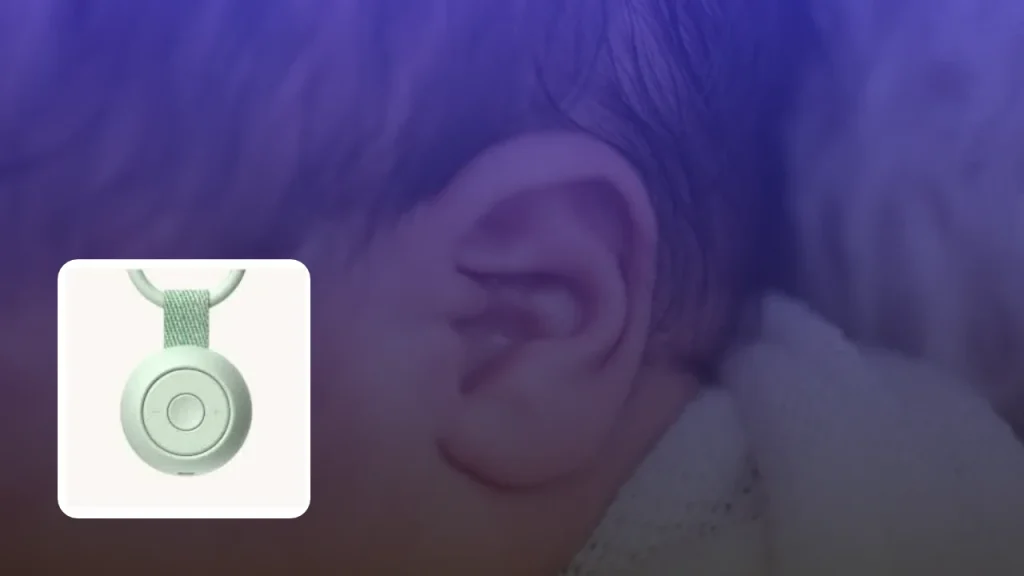
The company markets the Rest Go and Hatch Go as convenient sound machines that can be carried during travel or attached to items such as strollers.
According to Ellsworth, the products’ portable design and marketing encourage parents to operate them near infants, including near cribs, strollers and car seats, and for long periods, including continuous use during sleep.
The lawsuit argues that these circumstances can increase the potential risk of noise-induced hearing damage.
The plaintiff identifies three principal concerns:
- Excessive volume: The devices allegedly can produce sound levels above recommendations intended to protect infants.
- Close placement: Parents may position the machines near babies’ ears, increasing noise exposure.
- Prolonged operation: Continuous use may increase cumulative exposure, particularly during extended sleep periods.
Ellsworth argues that Hatch should have prominently warned consumers about these risks on packaging, labeling and product pages before they purchased the products.
Her complaint seeks compensation for alleged economic losses arising from those omissions.
The lawsuit does not claim that every use of a Hatch sound machine causes immediate or certain injury. It focuses on the alleged failure to disclose a material risk tied to the products’ promoted use patterns, and on the economic harm to consumers who paid for devices they believed were safe for routine infant use.
Which Hatch Sound Machines Are Included?
The lawsuit primarily identifies two portable products.
Hatch Rest Go
The Rest Go is a portable sound machine designed for use during travel and everyday activities.
According to the complaint, Ellsworth purchased one through Amazon on November 24, 2023, for approximately $34.99.
Hatch Go
The Hatch Go is the newer product designation.
The complaint alleges that it is substantially similar, if not identical, to the earlier Rest Go.
Hatch markets the Go as a portable device with multiple soothing sounds and a loop that allows it to be attached to different objects.
The complaint identifies a retail price of approximately $39.99.
Are Hatch Rest, Rest+ or Restore included?
Those products are not specifically identified as the central products in the filed complaint.
The plaintiff reserves the possibility of adding other substantially similar sound machines as litigation progresses.
Owners of different Hatch models should not assume their products are included in the proposed class without a later court-approved definition.
What Does the Lawsuit Say About Infant Hearing Loss?
Ellsworth cites research showing that loud sounds can damage hearing, particularly when exposure occurs close to the ear or continues for extended periods. Infants’ auditory systems are considered particularly sensitive.
One major study, published in Pediatrics in 2014, examined 14 infant sleep machines.
Researchers measured sound output at distances of approximately 12 inches, 40 inches and 80 inches.
At the closest distance, all 14 machines produced maximum sound levels exceeding 50 A-weighted decibels (dBA).
Three machines exceeded 85 dBA at maximum volume.
The researchers concluded that some infant sleep machines could produce sound levels potentially harmful to hearing when used under certain conditions.
Important distinction: The 2014 study did not establish that Hatch Rest Go or Hatch Go devices specifically caused hearing damage. The lawsuit relies on broader scientific research to support its allegations about the products.
What does the American Academy of Pediatrics recommend?
In its 2023 policy statement, Preventing Excessive Noise Exposure in Infants, Children, and Adolescents, the AAP advised parents using infant sleep machines to:
- Place the machine as far from the infant as practical.
- Set the volume as low as possible.
- Limit how long the machine operates.
These recommendations address potential risks from excessive noise exposure generally.
The AAP has not established that every Hatch sound machine is defective or that ordinary use necessarily causes hearing loss.
What do 50 dBA and 85 dBA mean?
The two figures serve different purposes.
| Sound level | Context |
| 50 dBA | Recommended average sound level used in neonatal intensive care settings |
| 85 dBA | Common occupational noise-exposure reference for adult workers over an eight-hour period |
The 85 dBA reference comes from workplace noise guidance for adults. The Occupational Safety and Health Administration’s hearing conservation rule (29 C.F.R. § 1910.95) uses an 85 dBA action level for adult workers over an eight-hour average, and NIOSH recommends an 85 dBA exposure limit. Neither is a limit designed for infants.
The lawsuit argues that occupational limits designed for adults should not be treated as safe-exposure thresholds for infants.
The 50 dBA hospital benchmark also should not be presented as a universal federal legal limit for every consumer sound machine.
Whether the Hatch products violate any applicable mandatory requirement remains disputed.
Related article: Cigna PxDx Class Action Lawsuit 2026, Patients Seek Certification Over Millions of Alleged Automated Insurance Denials
Did Hatch Know About the Potential Hearing Risks?
Ellsworth argues that Hatch was aware of concerns surrounding infant sound machines because the company published a safety article on January 19, 2024.
The article, titled Safe Sleep Sounds: What Parents Should Know, discussed AAP recommendations and earlier research involving sound machines.
The plaintiff alleges that Hatch nevertheless failed to provide sufficiently prominent warnings on product packaging and sales pages.
According to one summary of the complaint, the blog post referenced the 2023 AAP warning but reassured parents that the machines were not inherently unsafe and suggested concern was limited to continuous exposure above 85 decibels. The complaint characterizes that messaging as insufficient.
However, Hatch’s published article also contains specific precautions. Accounts of the article differ in emphasis, so readers should consult the article itself.
It recommends keeping sound machines away from a child’s sleeping area and using lower volume settings.
The company suggests approximately six-and-a-half feet of separation when practical and refers to 50 decibels as a useful target.
Hatch’s separate Go safety instructions also warn parents not to place the device against a baby’s ears or inside a bed or crib.
The central disagreement is therefore not simply whether Hatch has ever published safety advice. It is whether the warnings provided to purchasers were legally adequate and whether the product’s marketing created a misleading impression.
What Has Hatch Said About Sound Machine Safety?
Hatch has published general safety guidance explaining that the sound reaching a baby depends on factors including volume, distance, placement and the surrounding environment.
Its support materials recommend keeping machines away from infants and using low settings.
The company also advises parents to consult their pediatrician about individual concerns.
No lawsuit-specific court response or public statement addressing Ellsworth’s allegations was independently verified in the available records. Available reports indicate Hatch has not yet filed a formal response in the public docket.
Hatch has not been found liable.
Its published safety guidance should not be interpreted as an admission that the products are defective.
Who Is Kristin Ellsworth?
Kristin Ellsworth is a California resident living in Irvine.
She alleges that she purchased a Hatch Rest Go from Amazon in November 2023.
She states that she reviewed Hatch’s website and product materials before buying and saw no hearing-risk warnings, and that she used the device close to her child as the product was intended and advertised to be used.
Ellsworth claims that she relied on Hatch’s representations and the absence of adequate risk disclosures when deciding to purchase the product.
Her complaint alleges that she suffered an economic loss because she paid for a product she would not otherwise have purchased, or would have purchased only at a lower price.
The lawsuit does not identify a diagnosed hearing injury suffered by her child.
This is important because the proposed class action primarily concerns alleged misleading marketing and consumer overpayment rather than compensation for confirmed childhood hearing injuries.
What Laws Does the Hatch Class Action Allege Were Violated?
The complaint contains ten counts addressing consumer protection, warranties, contracts and alleged misleading omissions.
The principal legal theories include:
California Consumers Legal Remedies Act
California Civil Code § 1770
The CLRA prohibits specified deceptive practices in transactions involving consumer goods.
Ellsworth alleges Hatch concealed material safety information that reasonable parents would consider important before purchasing.
The complaint states that a written notice was sent to Hatch on March 20, 2025, demanding corrective action.
Under Civil Code § 1782, a consumer generally must send the defendant written notice at least 30 days before seeking damages under the CLRA, and the defendant then has a chance to correct the problem. CLRA claims generally must be filed within three years (Civil Code § 1783).
California Unfair Competition Law
Business and Professions Code § 17200
This statute addresses unlawful, unfair and fraudulent business practices.
Ellsworth argues that promoting the products without adequate disclosures caused consumers to make purchases they otherwise would have avoided.
The UCL allows restitution and injunctions (§ 17203) and generally carries a four-year limitations period (§ 17208).
California False Advertising Law
Business and Professions Code § 17500
The lawsuit alleges Hatch’s marketing gave consumers a misleading impression concerning product safety and suitability for infant sleep.
Breach of Contract and Warranty
The plaintiff also asserts claims involving:
- Breach of contract.
- Breach of implied contract.
- Breach of implied warranties under California Commercial Code §§ 2314 (merchantability) and 2315 (fitness for a particular purpose).
- Breach of express warranty under § 2313.
- California’s Song-Beverly Consumer Warranty Act (Civil Code § 1790 et seq.).
- Negligent misrepresentation or omission.
- Unjust enrichment, pleaded in the alternative.
These claims generally depend on whether the statements, omissions and alleged risks satisfy the relevant legal requirements.
Ellsworth contends the products were not suitable for their intended use because they allegedly present an undisclosed hearing-loss risk and do not meet applicable scientific and medical guidelines.
The court has not decided whether Hatch violated any of these laws.
For another case involving allegedly undisclosed risks in infant products, see Baby Brezza Lawsuit 2026, Parents Allege Formula Makers Diluted Bottles and Put Babies at Risk.
That lawsuit concerns formula preparation rather than sound exposure.
What Legal Hurdles Could the Hatch Lawsuit Face?
Consumer class actions like this one often face early challenges. Possible issues include:
- Reasonable consumer standard. Under the UCL, FAL and CLRA, courts ask whether a significant portion of reasonable consumers would likely be misled (Williams v. Gerber Products Co., 552 F.3d 934 (9th Cir. 2008)). Hatch may argue its published guidance shows it did not mislead parents.
- Omission claims. In the Ninth Circuit, a failure-to-disclose claim generally must involve a safety issue or a fact related to the product’s central function (Hodsdon v. Mars, Inc., 891 F.3d 857 (9th Cir. 2018)). The plaintiff will likely argue infant hearing safety meets that test.
- Pleading detail. Fraud-based consumer claims must meet the heightened pleading standard of Federal Rule of Civil Procedure 9(b) (Kearns v. Ford Motor Co., 567 F.3d 1120 (9th Cir. 2009)), and Hatch may move to dismiss under Rule 12(b)(6).
- Standing and injury. In federal court, a plaintiff must show a concrete injury (Lujan v. Defenders of Wildlife, 504 U.S. 555 (1992)). Because no hearing loss is alleged, the case rests on economic loss, such as paying for a product the plaintiff says she would not have bought.
- Equitable relief. Under Sonner v. Premier Nutrition Corp., 971 F.3d 834 (9th Cir. 2020), federal courts generally cannot award equitable restitution under California consumer statutes unless the plaintiff lacks an adequate legal remedy.
- Class certification. Under Rule 23, the plaintiff must show common questions, typicality, adequacy and predominance. A nationwide class applying California law can be challenged because other states’ laws differ.
- Federal jurisdiction. Large class actions can be heard in federal court under the Class Action Fairness Act (28 U.S.C. § 1332(d)(2)).
Are Sound Machines Regulated by Federal Safety Rules?
The U.S. Consumer Product Safety Commission (CPSC) regulates consumer products, including children’s products, under the Consumer Product Safety Act (15 U.S.C. § 2051 et seq.). Manufacturers must report certain information about substantial product hazards to the CPSC (15 U.S.C. § 2064(b)), and children’s products generally require third-party testing and a Children’s Product Certificate for applicable safety rules (15 U.S.C. § 2063).
This research did not identify a mandatory federal sound-output standard specific to infant sound machines. Federal toy-safety rules incorporate ASTM F963 (16 C.F.R. Part 1250), which includes sound-level provisions for certain toys, but whether those provisions apply to a sleep sound machine is a legal question the complaint and Hatch may dispute. Readers should not assume the products violate or comply with any specific federal standard based on this lawsuit.
The lack of a specific federal rule does not by itself defeat a state-law consumer claim, but it can shape the preemption, standard-of-care and warning-adequacy arguments.
Who Could Qualify for the Hatch Sound Machine Class Action?
The complaint proposes three overlapping groups.
| Proposed class | Who it would cover |
| Nationwide class | U.S. consumers who purchased the identified machines for personal use, not resale |
| Multi-state class | Qualifying purchasers in 10 specified states |
| California class | Consumers who purchased the machines in California |
The proposed multi-state class covers California, Florida, Illinois, Massachusetts, Michigan, Minnesota, Missouri, New Jersey, New York and Washington.
The proposed definitions apply during the fullest period permitted by applicable law.
There is not yet a court-approved purchase-date cutoff.
Class membership would generally cover purchasers within the applicable statute-of-limitations period who bought the products for personal use rather than resale.
Does a child need to have suffered hearing loss?
No diagnosed injury is required under the purchase-based class definitions proposed in the complaint.
The alleged economic injury is that consumers paid for products without receiving information the plaintiff considers material.
However, buyers are not automatically entitled to compensation.
The court must first determine whether class treatment is appropriate and whether the legal claims succeed.
Is There a Hatch Sound Machine Recall?
No recall connected to this lawsuit has been verified as of November 11, 2026.
The complaint asks the court to order corrective measures that could include notifying purchasers, recalling products or providing replacement devices, as well as changes to labeling, packaging and marketing.
Those requests are proposed remedies, not actions that have already occurred.
A lawsuit does not automatically trigger a recall. Recalls are typically carried out by a company working with the CPSC, or ordered by the agency after an administrative process.
Consumers can check the U.S. Consumer Product Safety Commission for official recall notices.
For another example of the distinction between safety complaints and an official recall, see Millie Moon Diaper Recall 2026, No Official Recall Yet, 600+ Skin Reaction Reports and a Putative Class Action.
What Compensation Is the Plaintiff Seeking?
Ellsworth requests financial and equitable relief, including:
- Compensatory damages.
- Statutory damages where available.
- Punitive or exemplary damages where legally supported.
- Restitution for alleged overpayments.
- Recovery of allegedly unjust gains.
- Attorneys’ fees and costs.
- Declaratory and injunctive relief, including corrective warnings or other court-ordered measures.
The lawsuit does not establish a specific payout for each purchaser.
Any recovery would depend on future proceedings, a judgment or an approved settlement.
Is there a Hatch settlement or claim form?
No.
There is currently no verified settlement fund, payment schedule, settlement administrator or claim deadline.
Parents do not need to submit a settlement claim at this stage.
Be cautious of websites or messages that offer to file a “claim” for this case or ask for payment or financial details. A real class settlement would be announced through a court-approved notice.
What Should Parents Using Hatch Sound Machines Do?
Parents can take precautions consistent with the AAP’s guidance and Hatch’s published instructions.
Keep the device away from a baby’s ears, avoid unnecessarily high volume and limit prolonged use.
Do not place the Hatch Go inside a crib or bed. Hatch’s own safety instructions expressly advise against doing so.
Families concerned about a child’s hearing should consult a pediatrician or pediatric audiologist.
If a child shows signs of hearing difficulty, a medical evaluation is more useful than assuming the sound machine caused the problem.
Independent sound testing of a specific device and consultation with a pediatrician are the most direct ways for families to evaluate their own situation.
Parents who purchased a Rest Go or Hatch Go and wish to preserve records for possible future litigation can retain purchase receipts, model information and order confirmations.
For a separate example of a consumer lawsuit involving a product used by infants, see Graco Slim Spaces Baby Swing Lawsuit, Were You Affected? — Haney v. Graco Children’s Products, No. 1:26-cv-04471.
Hatch Sound Machine Lawsuit Timeline
| Date | Development |
| April 2014 | Study published examining sound levels from 14 infant sleep machines |
| 2023 | AAP publishes updated recommendations on children’s noise exposure |
| November 24, 2023 | Ellsworth purchases Hatch Rest Go |
| January 19, 2024 | Hatch publishes sleep-machine safety article |
| March 20, 2025 | Ellsworth says she sends notice of alleged violations to Hatch |
| October 30, 2026 | Class action complaint filed in California federal court |
| November 2, 2026 | Law360 reports on the lawsuit |
| November 6, 2026 | ClassAction.org publishes complaint-based coverage |
| November 10, 2026 | Top Class Actions reports the allegations |
| November 11, 2026 | No class certification, recall or settlement verified |
Frequently Asked Questions
Why is Hatch Baby being sued?
A California mother alleges that Hatch failed to adequately disclose potential infant hearing-loss risks associated with loud, close or prolonged use of its portable sound machines.
Which Hatch sound machines are involved?
The complaint specifically identifies Hatch Rest Go and Hatch Go.
Can Hatch sound machines cause hearing loss?
Excessive noise exposure can damage hearing, but the lawsuit has not established that the identified Hatch models caused hearing loss in any particular child.
Has a baby been injured in the lawsuit?
The complaint does not allege that the named plaintiff’s child suffered a diagnosed hearing injury.
Are Hatch Rest+ and Restore part of the lawsuit?
They are not specifically named as the principal products at issue. Whether additional products become involved depends on future litigation developments.
Can customers outside California qualify?
Potentially. The complaint seeks a nationwide class, although no class has been certified.
Is Hatch Go being recalled?
No recall connected to the allegations has been verified.
Has Hatch admitted wrongdoing?
No admission of wrongdoing was identified.
Can parents get a refund through the lawsuit?
Not currently. No settlement or court-approved compensation process exists.
Who represents the plaintiff?
Kristin Ellsworth is represented by Thomas Wheeler of Tom Wheeler Law and Zachary Arbitman and George Donnelly of Feldman Shepherd Wohlgelernter Tanner Weinstock & Dodig LLP.
What is the Hatch lawsuit case number?
Ellsworth v. Hatch Baby Inc., Case No. 5:26-cv-12842, in the Northern District of California.
Is a jury trial scheduled?
The plaintiff demanded a jury trial, but no trial date has been set and the case is at an early stage.
Is it safe to keep using my Hatch sound machine?
This article does not give medical advice. Pediatric guidance generally recommends keeping any sound machine away from a baby’s head, at a low volume and for limited periods. A pediatrician can answer questions about an individual child.
What Happens Next?
The case is in its early stages.
Hatch may respond to the complaint, seek dismissal of certain allegations or contest whether the proposed claims are appropriate for class-action treatment.
If the case proceeds, relevant evidence could include product sound-level testing, marketing materials, safety warnings and company records concerning potential risks.
The court may also consider whether the proposed nationwide or state-specific classes satisfy Federal Rule of Civil Procedure 23.
Outcomes in this type of case can include dismissal, settlement, changes to labeling and instructions, or continued litigation through discovery and possible trial.
No trial date, approved settlement or court finding that the products are defective has been verified.
The Bottom Line
The Hatch sound machine class action raises questions about whether parents received adequate warnings concerning potential hearing damage from loud or prolonged white-noise exposure.
The complaint relies on established pediatric concerns about excessive noise but has not established that the Hatch Rest Go or Hatch Go caused hearing loss.
The lawsuit also focuses on alleged economic harm to purchasers rather than compensation for diagnosed childhood injuries.
For parents, the immediate consideration is safe device placement and volume.
For the courts, the central questions will be whether Hatch’s warnings and marketing were legally sufficient and whether purchasers experienced compensable economic losses.
Laws, Rules and Cases Referenced in This Article
| Authority | What it covers |
| Cal. Civ. Code §§ 1770, 1782, 1783 (CLRA) | Deceptive practices; 30-day notice; three-year deadline |
| Cal. Bus. & Prof. Code §§ 17200, 17203, 17208 (UCL) | Unfair competition; remedies; four-year deadline |
| Cal. Bus. & Prof. Code § 17500 (FAL) | False advertising |
| Cal. Com. Code §§ 2313, 2314, 2315 | Express, merchantability and fitness warranties |
| Cal. Civ. Code § 1790 et seq. (Song-Beverly) | Consumer warranty protections |
| 15 U.S.C. §§ 2051 et seq., 2063, 2064(b) | Consumer Product Safety Act; certification; hazard reporting |
| 16 C.F.R. Part 1250 (ASTM F963) | Federal toy-safety standard (applicability to sound machines disputed) |
| 29 C.F.R. § 1910.95 | OSHA occupational noise rule (adult workers) |
| 28 U.S.C. § 1332(d)(2) (CAFA) | Federal jurisdiction over large class actions |
| Fed. R. Civ. P. 9(b), 12(b)(6), 23 | Fraud pleading; motion to dismiss; class certification |
| Williams v. Gerber Products Co., 552 F.3d 934 (9th Cir. 2008) | Reasonable-consumer standard |
| Hodsdon v. Mars, Inc., 891 F.3d 857 (9th Cir. 2018) | Duty to disclose safety-related omissions |
| Kearns v. Ford Motor Co., 567 F.3d 1120 (9th Cir. 2009) | Rule 9(b) applied to consumer fraud claims |
| Sonner v. Premier Nutrition Corp., 971 F.3d 834 (9th Cir. 2020) | Equitable restitution requires inadequate legal remedy |
| Lujan v. Defenders of Wildlife, 504 U.S. 555 (1992) | Article III standing |
Primary Court Documents and Sources
- Original Class Action Complaint — Ellsworth v. Hatch Baby Inc. (PDF) — Filed October 30, 2026; 45-page complaint and jury demand.
- Federal Court Docket — Ellsworth v. Hatch Baby Inc. — Case No. 5:26-cv-12842, Northern District of California.
- American Academy of Pediatrics — Preventing Excessive Noise Exposure in Infants, Children, and Adolescents — 2023 pediatric guidance.
- Pediatrics — Infant Sleep Machines and Hazardous Sound Pressure Levels — 2014 research involving 14 infant sound machines.
- Hatch — Safe Sleep Sounds: What Parents Should Know — January 19, 2024 company safety guidance.
- Hatch — Hatch Go Safety Information — Manufacturer’s published precautions.
- Top Class Actions — Hatch Sound Machines Pose Infant Hearing Loss Risk — November 10, 2026 reporting.
- ClassAction.org — Hatch Go and Rest Go Lawsuit — November 6, 2026 complaint analysis.
Researched and written by Israr Ahmad, legal content researcher and founder of AllAboutLawyer.com. All facts verified against the federal complaint and docket in Ellsworth v. Hatch Baby Inc., No. 5:26-cv-12842 (N.D. Cal.), the American Academy of Pediatrics’ 2023 policy statement, the 2014 Pediatrics study and Hatch’s published safety guidance, as of November 11, 2026. Last Updated: November 11, 2026.
Verification note: The original complaint and its filing date were verified. The publicly available docket snapshot was last retrieved on October 30, 2026, and may not contain subsequent activity. No lawsuit-specific response from Hatch, class certification, settlement or recall was independently verified through November 11, 2026.
This article is for informational purposes only and does not constitute legal or medical advice. Laws vary by state and individual circumstances differ. For advice about your specific situation, consult a qualified attorney or healthcare provider. AllAboutLawyer.com is an independent legal-information website, not a law firm or medical provider. The plaintiff’s allegations remain unproven, and Hatch Baby Inc. has not been found liable. Parents concerned about a child’s hearing should consult a qualified healthcare professional.
About the Author
Israr Ahmad is a legal content researcher with 4+ years of experience covering class action settlements and consumer rights cases. He has researched and published coverage of 2,500+ settlements using verified court records, settlement administrator filings, and government sources. Learn more about Israr.