
USCIS EAD Renewal Lawsuit, Doe v. DHS, No. 8:26-cv-00060, Challenges the End of Automatic Work Permit Extensions
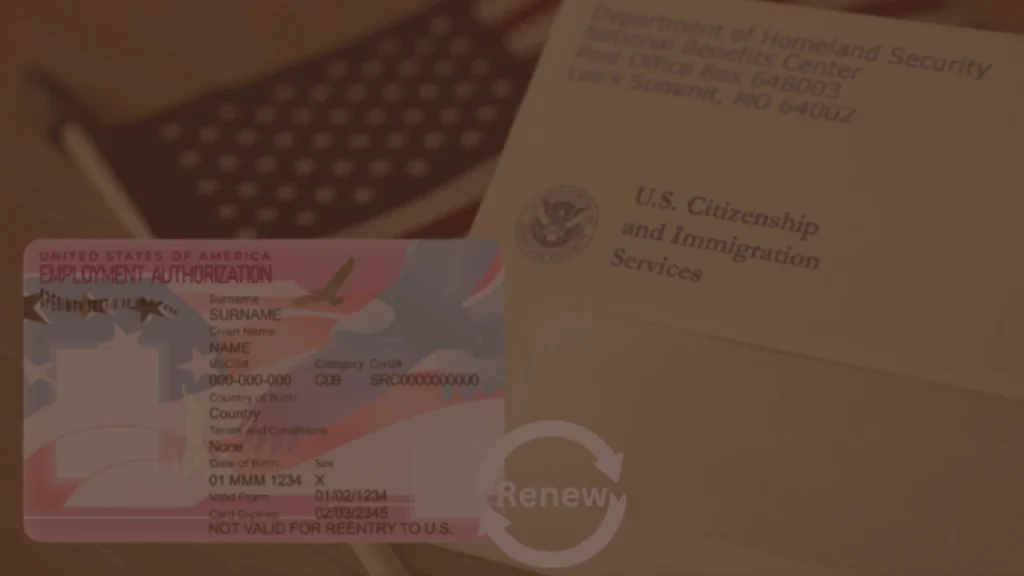
If your EAD renewal has been sitting at USCIS for months and you’re staring down a gap in your work authorization, you’re not the only one — and you’re not without options. A federal lawsuit filed in January 2026, Jane Doe 1, et al. v. United States Department of Homeland Security, No. 8:26-cv-00060, is trying to undo the rule change that’s causing a lot of this pain. It’s not a class action. It’s a targeted challenge under the Administrative Procedure Act, and it’s still being fought out in a Santa Ana courtroom right now.
USCIS EAD Renewal Lawsuit — Key Facts
| Case Name | Jane Doe 1, et al. v. United States Department of Homeland Security |
| Case Number | 8:26-cv-00060 |
| Court | U.S. District Court, Central District of California, Southern Division |
| Filed | January 8, 2026 |
| Plaintiffs | Seven H-4 visa holders (spouses of H-1B workers), suing under pseudonyms |
| Defendant | U.S. Department of Homeland Security |
| What’s Challenged | DHS’s October 30, 2025 Interim Final Rule ending the automatic 540-day extension of expiring EADs during renewal |
| Legal Theory | Administrative Procedure Act — the rule skipped notice-and-comment and was arbitrary and capricious |
| Case Type | Individual/multi-plaintiff APA challenge seeking nationwide relief — not a certified class action |
| Current Stage | Preliminary injunction motion heard late June 2026; no ruling issued as of this writing |
| Relief Sought | Vacatur of the rule nationwide and reinstatement of automatic EAD extensions |
| Last Updated | September 14, 2026 |
Why This Lawsuit Exists: The Rule That Killed the Safety Net
For years, if you filed your EAD renewal (Form I-765) before your old card expired, you got an automatic extension — first 180 days, later stretched to 540 days — that let you keep working while USCIS caught up on the paperwork. That extension was the only thing standing between a slow government agency and a very real gap in your paycheck.
On October 30, 2025, DHS ended that safety net with an Interim Final Rule. Applications filed on or after that date no longer get the automatic extension. DHS said the change was about stronger vetting and security checks. Renewal applicants who filed earlier are still grandfathered under the old rule — but everyone filing since late October 2025 is exposed if USCIS takes longer than expected. And USCIS is taking longer than expected: official data showed over 1.8 million I-765 applications pending as of mid-2025, with nearly half of them sitting past 180 days.
That’s the backdrop for Doe v. DHS.
What Doe v. DHS Actually Claims
Seven H-4 spouses — identified only as Jane Doe 1 through 5, John Doe 6, and Jane Doe 7, working at places like an accounting firm, an office supply company, and a national bank — filed suit on January 8, 2026. Their lawyers, Justin Tseng and Jonathan D. Wasden, argue DHS broke the law twice over in issuing this rule.
First, they say DHS skipped the notice-and-comment process that federal agencies normally have to go through before changing a rule like this. DHS leaned on a “good cause” exception, claiming urgent public safety and national security concerns justified skipping public input. The complaint calls that justification pretextual — the plaintiffs argue there was no sudden emergency, just a policy DHS wanted in place fast.
Second, they argue the rule itself is arbitrary and capricious — that DHS never seriously grappled with the fact that ending automatic extensions would strip lawfully working people of their jobs through no fault of their own, simply because the agency itself is slow.
Wasden isn’t new to this fight. He previously co-led Edakunni v. Mayorkas, the 2022 case that got USCIS to stop unnecessarily re-collecting biometrics and to bundle H-4 EAD adjudications with the underlying H-1B petition. That settlement’s bundling requirement expired in January 2025 — which is part of why H-4 processing got messier even before this new rule made things worse.
Related Article: Baby Brezza Formula Maker Lawsuit, Were You Affected? Levitas v. Baby Brezza Enterprises LLC, No. 1:26-cv-07465
Where the Case Stands Now
The case is still open. A judge heard arguments on a preliminary injunction motion in late June 2026 — the fastest path to blocking the rule while the full case plays out — and as of this writing, no ruling has come down. If the court grants that injunction, automatic extensions could come back for pending renewal applicants while the lawsuit continues. If it doesn’t, the rule stays in effect and EAD renewal applicants keep filing without a safety net.
Doe v. DHS isn’t the only fight over this rule, either. A separate coalition of immigrant workers and advocacy groups filed a similar Administrative Procedure Act challenge in the U.S. District Court for the District of Columbia in April 2026, making largely the same arguments. Multiple courts weighing in on the same question sometimes speeds things up — and sometimes just means a longer wait for a final answer.
What This Means If Your EAD Renewal Is Pending
Nothing about this lawsuit changes your situation today. Unless and until a court blocks the rule, USCIS is applying it as written.
- If you filed before October 30, 2025: you’re still covered by the old 540-day automatic extension rule. Your expired card plus your I-797C receipt notice should work as proof of continued authorization for your employer.
- If you filed on or after October 30, 2025: there’s no automatic extension. Your work authorization ends when your card expires, period — even if your renewal is still sitting in the queue.
- If your renewal has been pending an unusually long time: a federal mandamus lawsuit — a separate, individual legal action under 28 U.S.C. § 1361 or the APA — can sometimes force USCIS to act within weeks. This is different from Doe v. DHS, which challenges the rule itself rather than one person’s delay, and it’s worth asking an immigration attorney whether it fits your situation.
- Either way: file your renewal as early as USCIS allows (up to 180 days before expiration), and keep a paper trail of every filing, receipt, and communication.
Losing your job over paperwork you filed on time and correctly isn’t something you caused. But right now, fixing it mostly comes down to watching this litigation, or pursuing your own case if the delay is severe enough.
Frequently Asked Questions
Is there a lawsuit challenging the end of automatic EAD extensions?
Yes. Jane Doe 1, et al. v. United States Department of Homeland Security, No. 8:26-cv-00060, was filed January 8, 2026, in the U.S. District Court for the Central District of California, challenging DHS’s October 30, 2025 rule that ended automatic 540-day EAD extensions for renewal applicants.
Is this a class action?
No. It’s a multi-plaintiff Administrative Procedure Act case brought by seven named plaintiffs, but it asks the court to vacate the rule nationwide rather than certify a class. A nationwide vacatur, if granted, would functionally help everyone affected by the rule even without formal class certification.
Has the court ruled yet?
Not as of this writing. A preliminary injunction hearing took place in late June 2026, and the parties are still waiting on a decision.
What happens to my EAD if I filed my renewal after October 30, 2025?
Under the current rule, you don’t get an automatic extension. If your card expires before USCIS approves your renewal, your work authorization lapses unless a court blocks the rule or you obtain relief some other way.
Should I file my own lawsuit instead of waiting on Doe v. DHS?
It depends on your situation. Doe v. DHS challenges the rule itself, which could take months to resolve. If your own renewal has been pending far longer than USCIS’s published processing times and you’re facing real financial harm, a separate mandamus lawsuit targeting your individual case can sometimes get a decision in weeks. Talk to an immigration attorney about which route — or both — makes sense for you.
What was Edakunni v. Mayorkas, and how does it relate to this case?
Edakunni v. Mayorkas was a 2022 class action settlement that got USCIS to stop unnecessary biometrics re-collection and bundle H-4 EAD processing with the related H-1B petition. That bundling requirement expired in January 2025, which is part of why H-4 EAD processing became less predictable even before the October 2025 rule change at issue in Doe v. DHS.
Sources Used in This Article
- Complaint, Jane Doe 1, et al. v. United States Department of Homeland Security, No. 8:26-cv-00060, C.D. Cal., filed Jan. 8, 2026 (via NFAP): https://nfap.com/wp-content/uploads/2026/01/EAD-Complaint-01.08.26.pdf
- Forbes — Stuart Anderson, “Immigration Lawsuit Filed To Protect H-1B Spouses,” Jan. 15, 2026: https://www.forbes.com/sites/stuartanderson/2026/01/15/immigration-lawsuit-filed-to-protect-h-1b-spouses/
- U.S. Department of Homeland Security — Interim Final Rule ending automatic EAD extensions, effective October 30, 2025 (as summarized by the Immigration Policy Tracking Project): https://immpolicytracking.org/policies/dhs-moves-to-end-automatic-extension-of-employment-authorization-documents/
Researched and written by Israr Ahmad, legal content researcher and founder of AllAboutLawyer.com. Facts verified against the filed complaint and contemporaneous legal reporting on September 14, 2026. Last Updated: September 14, 2026.
This article is for informational purposes only and does not constitute legal advice. Immigration law changes quickly and individual circumstances vary widely. For advice about your specific situation, consult a qualified immigration attorney.
About the Author
Israr Ahmad is a legal content researcher with 4+ years of experience covering class action settlements and consumer rights cases. He has researched and published coverage of 2,500+ settlements using verified court records, settlement administrator filings, and government sources. Learn more about Israr.