
Trump Says the US Will End $4 Billion in Annual Aid to Israel, What the MOU Says, What Congress Can Do and What Changes for Israel
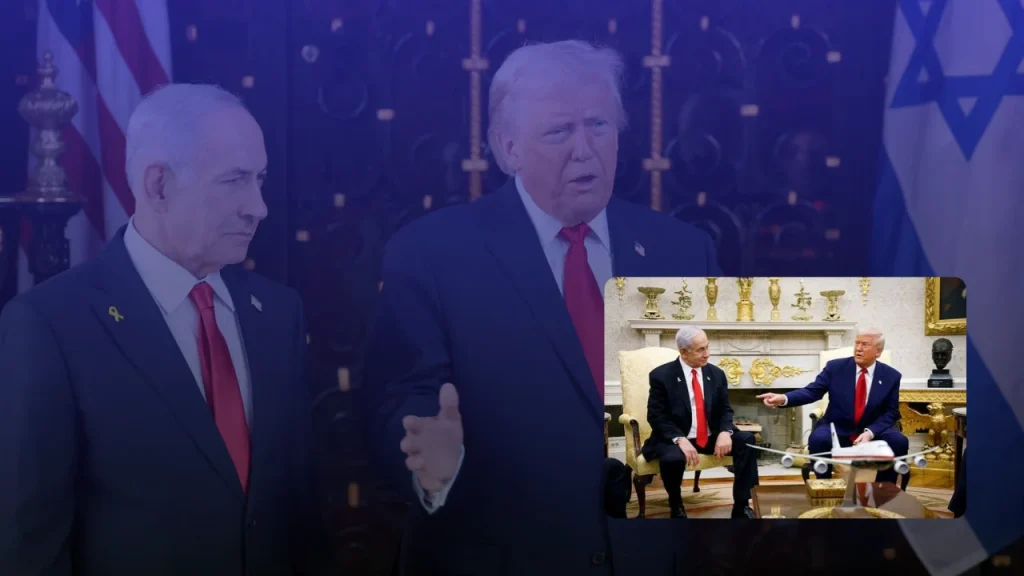
On Election Day, November 3, 2026, President Donald Trump said the United States will stop paying Israel roughly $4 billion a year after the end of 2026 while continuing to sell it weapons. He made the comments in a phone interview with Fox News’ Fox & Friends and said he and Israeli Prime Minister Benjamin Netanyahu had agreed on the change months earlier. In his words, “we won’t be paying Israel,” though the U.S. would still “help Israel if they need it.”
Three points matter before anything else:
- The $4 billion figure is rounded. The existing U.S.–Israel memorandum of understanding (MOU) provides about $3.8 billion a year: $3.3 billion in Foreign Military Financing (FMF) and $500 million for joint missile defense.
- That MOU runs through September 30, 2028. Trump described a much faster end than the ten-year taper Netanyahu has talked about publicly.
- An interview is not a legal change. As of the first reports, no joint statement, executive order or written agreement had been released. Reports said Netanyahu’s office was not aware of the details and would seek clarification. Congress controls appropriations, so the announcement alone does not cancel funds Congress has already provided.
This article uses “Trump says” and “Trump announced” for that reason, and will need updating when official documents appear.
Quick Facts: Trump’s November 3, 2026 Announcement on Aid to Israel
| Detail | What we know |
| Who announced it | President Donald Trump, on Fox News’ Fox & Friends |
| Date | November 3, 2026 (midterm Election Day) |
| Israeli counterpart | Prime Minister Benjamin Netanyahu |
| Trump’s figure | About $4 billion a year |
| Actual MOU framework | 3.8billionayear(3.3 billion FMF + $500 million missile defense) |
| Trump’s stated timing | Aid stops by the end of 2026 (reported as a halt in 2027) |
| Existing MOU period | Fiscal years 2019 to 2028, signed September 14, 2016 |
| Weapons sales | Trump says they will continue |
| Detailed agreement published? | Not as of initial reporting |
| Is the MOU a treaty? | No. It is not binding like a Senate-ratified treaty |
| Congress’s role | Controls appropriations |
| Is this a law or court ruling? | No. It is a policy announcement |
What Did Trump Say About Ending U.S. Aid to Israel?
Trump said Israel does not need the money and framed the decision partly as a response to U.S. politics. He argued that the annual payment had become a talking point for critics and named Abdul El-Sayed, a Democratic Senate candidate in Michigan, as an example. He also said Netanyahu raised the idea himself.
Asked whether he meant cash, equipment or both, Trump said it could be considered barter, military aid or cash. That answer left open which programs are covered.
Netanyahu has said publicly that he wants to wean Israel off U.S. military aid. In a May 2026 60 Minutes interview he said he wanted to take it to zero, starting right away but over ten years. The Washington Post reported on June 3, 2026 that he supported a Republican proposal to shift Israel toward financing its own purchases of American weapons. He reportedly said Israel wants to “stand on our own feet.” Netanyahu has also told The Economist he wanted to “taper off” U.S. military aid over ten years. A ten-year taper is not the same as a cutoff after 2026, and neither government has explained how the faster timeline would work.
Is Trump Ending $4 Billion or $3.8 Billion in Aid to Israel?
The established framework is $3.8 billion a year.
| Funding category | Annual amount |
| Foreign Military Financing (FMF) | $3.3 billion |
| Joint missile-defense programs | $500 million |
| Total | $3.8 billion |
Foreign Military Financing. FMF grants let Israel buy eligible U.S. defense equipment and services, such as aircraft, vehicles, munitions, radar and related support. The money is generally tied to purchases from American manufacturers, so it is not an unrestricted cash transfer. Under the current MOU, the special permission for Israel to spend part of the money on Israeli-made equipment is being phased out and ends in fiscal year 2028.
Missile defense. The $500 million supports cooperative programs including Iron Dome, David’s Sling, Arrow II and Arrow III. The MOU makes this contribution subject to congressional appropriations and allows additional support in exceptional circumstances such as major armed conflict.
The open question is whether Trump meant only the $3.3 billion in FMF or the missile-defense money as well. Until the governments say, it would be wrong to report that Iron Dome funding has been cancelled.
What Does the 2016 U.S.–Israel MOU Actually Say?
The ten-year MOU was signed on September 14, 2016 and covers fiscal years 2019 through 2028. It reflects a U.S. intention to seek about $38 billion over the period, made up of $33 billion in FMF grants and $5 billion in missile-defense funding, subject to congressional appropriation.
The Congressional Research Service (CRS) explains that MOUs like this are not treaties. They need no Senate ratification and do not legally guarantee funding in any given year. That is why a new political understanding between Trump and Netanyahu could change what the administration requests, and why Congress still decides what is actually provided.
Can Trump Legally End Military Aid to Israel Without Congress?
The president has broad foreign-policy authority and can decide what the administration asks for, negotiates and administers. He cannot ignore appropriations law.
Appropriations Clause, U.S. Constitution, Article I, Section 9, Clause 7. No money may be drawn from the Treasury except under appropriations made by law.
Authorization versus appropriation. The United States-Israel Security Assistance Authorization Act of 2020 (part of Public Law 116-283, Section 1273) authorized security assistance for Israel through 2028. An authorization is not an appropriation. Congress still has to pass funding bills, which for foreign military financing come through the annual State and foreign operations appropriations measure.
Foreign Assistance Act and Arms Export Control Act. FMF is governed by the Arms Export Control Act, including 22 U.S.C. § 2763 (credit and guaranty authority for foreign military financing). The president administers the program, but only within the limits Congress sets.
Impoundment Control Act of 1974, 2 U.S.C. §§ 681 to 688. If Congress has already appropriated money, the president cannot simply decline to spend it. Under 2 U.S.C. § 683, the president may propose a rescission and temporarily withhold the funds, but if Congress does not approve the rescission within 45 days of continuous session, the funds must generally be made available for obligation. The Government Accountability Office (GAO) administers this framework through its review of impoundments.
What this means in practice. A statement on television does not erase existing appropriations. Congress can also go the other way and reduce or end future funding through legislation. The practical test will be whether the administration submits a budget request without Israel FMF, how Congress writes the fiscal year 2027 appropriations bills, and whether any already-appropriated money is withheld.
Congress’s options include: appropriating funds despite the administration’s preference, cutting or conditioning future aid, eliminating specific funding categories, changing the authorization, or approving a formal rescission.
Can the United States Still Sell Weapons to Israel Under the Arms Export Control Act?
Yes. Weapons sales follow a different legal path from FMF grants.
- 22 U.S.C. § 2753 sets conditions on the transfer and use of U.S. defense articles and services.
- 22 U.S.C. § 2754 lists the purposes for which foreign military sales and financing may be authorized, including legitimate self-defense.
- 22 U.S.C. § 2776 governs congressional notification and review of proposed sales, including emergency procedures, and contains provisions tied to Israel’s Qualitative Military Edge (QME).
- 22 U.S.C. § 2318 gives the president limited emergency drawdown authority to provide defense articles from U.S. stocks.
Israel can buy through two channels: Foreign Military Sales (FMS), a government-to-government process, and Direct Commercial Sales, where U.S. companies sell directly under export licenses. The difference after an aid cutoff is who pays: Israel’s budget instead of U.S.-funded FMF.
CRS reported 751 active FMS cases with Israel worth about $39.2 billion as of April 2025. Those are cases with different programs and delivery schedules, not an immediate shipment, and the announcement does not cancel them. The administration could separately change or suspend particular sales under the governing laws and contracts.
Qualitative Military Edge. U.S. law and policy aim to preserve Israel’s QME, meaning its technological and operational advantage over credible conventional threats. QME is a policy and statutory framework for arms transfers. It is not a guarantee of a fixed annual payment.
The Leahy Law, 22 U.S.C. § 2378d. This law generally bars assistance to a foreign security-force unit when the U.S. government has credible information that the unit committed a gross violation of human rights, with an exception when the government is taking effective steps to bring those responsible to justice. It applies to specific units, not to a whole country, and it operates separately from Trump’s announcement. Sales remain subject to U.S. export law, end-use conditions and other restrictions.
Will Israel Lose Iron Dome If U.S. Aid Ends?
Not automatically. CRS reports that the United States has provided more than $6 billion for Iron Dome batteries, interceptors, co-production and maintenance. Past funding does not guarantee future interceptor supply, maintenance or research money after a cutoff. Three questions will decide the outcome:
- Does the $500 million missile-defense contribution continue? Trump has not said.
- Can Israel buy or make more interceptors with its own money? Its domestic defense industry (including Rafael, Israel Aerospace Industries and Elbit Systems) could expand, but replacing a large financing program takes spending and planning.
- Does U.S.–Israel technical cooperation continue? Trump says arms sales will, but co-production and joint research could be renegotiated.
The same questions apply to Arrow and David’s Sling.
What Does the Aid Cutoff Mean for Israel’s Budget and Military?
CRS estimated that annual FMF is roughly 14% of Israel’s overall defense budget. Replacing it would force choices among higher defense spending, more taxes, more borrowing, cuts elsewhere, more domestic weapons production, or buying American equipment with Israeli money directly.
Israel has a far larger economy than when aid began and a strong defense industry. But replacing billions of dollars during a period of heavy military spending is harder than phasing it out in peacetime, and advanced systems depend on international supply chains and specialized components that cannot all be replaced quickly. The relationship could shift from grants toward commercial purchases and technology cooperation without ending intelligence sharing or military planning.
What Does the Aid Cutoff Mean for U.S. Taxpayers and Defense Companies?
Supporters of ending aid point to possible federal savings. The real savings depend on which programs end, what happens to existing contracts and whether other security spending changes.
Much FMF is spent on American-made weapons, so it also supports U.S. defense manufacturers. If Israel keeps buying American weapons with its own money, much of that demand stays. If Israel shifts toward domestic or other foreign suppliers, U.S. firms could lose future business.
Critics worry about losing leverage over a key partner. Supporters argue Israel should carry more of its own costs. This is a strategic and political disagreement, not only an accounting question.
Is Trump’s Aid Announcement Tied to U.S. Politics and Public Opinion?
Trump tied it directly to domestic politics. A Quinnipiac University poll released June 24, 2026 found 48% of registered voters said the U.S. is too supportive of Israel, 38% said about right and 7% said not supportive enough. By party, 66% of Democrats, 55% of independents and 20% of Republicans said too supportive.
The poll asked about overall U.S. support, not the funding cutoff, so it does not show how voters view Trump’s announcement. It does help explain why the issue has become more contested, including among some conservatives.
Does the Camp David Peace Treaty Require the U.S. to Pay Israel?
No. The 1979 Egypt-Israel Peace Treaty is between Egypt and Israel, and the United States is not a party. According to CRS, it contains no specific U.S. obligation to provide annual military aid. U.S. assistance to both countries was provided through separate arrangements that remain subject to congressional approval. The current aid can be changed through U.S. legal and political processes without rewriting the treaty.
Does the United States Have a Mutual Defense Treaty With Israel?
No. There is no bilateral treaty that automatically requires the United States to enter a war whenever Israel is attacked. Israel is a Major Non-NATO Ally, which brings defense-cooperation benefits but not an Article 5-style collective-defense commitment. Trump’s statement that the U.S. would help Israel “if they need it” signals continued political support but is not a new binding promise to send U.S. forces.
Any U.S. military action would be governed by constitutional and statutory war-powers rules. Readers following the wider Iran conflict may find these AllAboutLawyer explainers useful:
- Operation Epic Fury And International Law The Legal Case
- War Powers Resolution Explained: The 60-Day Rule (2026)
- Presidential War Powers What The Constitution Says
How Much Has the U.S. Given Israel Since the Gaza War Began?
The regular MOU amount is separate from emergency and supplemental funding. After the October 7, 2023 Hamas attack, Congress approved additional assistance, including the Israel Security Supplemental Appropriations Act, 2024 (Division A of Public Law 118-50, April 2024). The Associated Press reported on an academic study estimating at least $21.7 billion in U.S. military assistance to Israel under the Biden and Trump administrations after the conflict began. That estimate covers a specific period and is not the regular annual package alone. Ending the regular annual aid would not erase earlier wartime funding or existing obligations, and it does not settle how future emergencies would be funded. Congress could still pass supplemental appropriations in a crisis.
What Happens Next? Five Things to Watch
- Written terms. Whether the White House publishes the agreement, and whether it covers only the $3.3 billion in FMF or also the $500 million in missile defense.
- Israel’s official position. Netanyahu’s government has reportedly said it would seek clarification. A statement would show whether Israel agreed to an end-of-2026 timetable or whether talks continue.
- Congress and fiscal year 2027 appropriations. Whether lawmakers fund, reduce or condition Israel assistance, and whether any rescission is proposed under the Impoundment Control Act.
- Existing sales. Whether active FMS cases, licenses and deliveries continue unchanged.
- Israel’s replacement plan. How Israel finances purchases and whether it expands domestic production.
Timeline: How the U.S.–Israel Aid Debate Reached This Point
| Date | Development |
| 1979 | Egypt and Israel sign their peace treaty |
| September 14, 2016 | U.S. and Israel sign the ten-year security assistance MOU |
| October 7, 2023 | Hamas attacks Israel, beginning the Gaza war |
| April 2024 | Congress approves additional military assistance for Israel |
| January 2026 | Netanyahu tells The Economist he wants to taper U.S. military aid over ten years |
| May 2026 | Netanyahu tells 60 Minutes he wants U.S. financial military aid reduced to zero |
| June 3, 2026 | The Washington Post reports Netanyahu’s support for a self-funded purchasing proposal |
| June 24, 2026 | Quinnipiac poll on U.S. support for Israel released |
| November 3, 2026 | Trump announces aid will end after 2026 while arms sales continue |
| 2027 | Start of the proposed new arrangement, subject to legal and budgetary steps |
| September 30, 2028 | Scheduled end of the existing MOU |
Frequently Asked Questions About Trump Ending U.S. Aid to Israel
Is Trump really ending $4 billion in aid to Israel?
Trump announced on November 3, 2026 that the United States would stop paying Israel about $4 billion a year after the end of 2026. The regular MOU amount is $3.8 billion, and the detailed plan has not been published.
When will U.S. aid to Israel stop?
Trump said it ends by the end of 2026, so the change would begin in 2027. The existing MOU runs through September 30, 2028, subject to congressional appropriations.
Did Netanyahu agree to end U.S. military aid?
Trump says so. Netanyahu has previously backed phasing out aid over about ten years. Early reports said his office was not aware of the details and would seek clarification, so the accelerated timetable was not publicly confirmed.
Will Trump stop weapons sales to Israel?
No. He said sales will continue, subject to U.S. export and arms-sale laws.
Will Iron Dome stop working?
No automatic shutdown follows. Future funding for interceptors, maintenance and joint programs depends on whether the separate $500 million missile-defense contribution continues.
Can Trump end aid to Israel without Congress?
He can change administration policy and negotiate a new arrangement, but Congress controls appropriations, and the Impoundment Control Act limits withholding money already appropriated.
Is the U.S.–Israel MOU a treaty?
No. It is not a Senate-ratified treaty and does not legally guarantee funding each year.
Does the Camp David treaty require U.S. aid to Israel?
No. The United States is not a party to the 1979 Egypt-Israel treaty, and it contains no specific annual U.S. aid obligation.
Does the U.S. have a mutual defense treaty with Israel?
No. Israel is a Major Non-NATO Ally, which is not the same as NATO membership.
Will American taxpayers save $4 billion?
Possibly, but net savings depend on which programs end and what happens to existing contracts, sales and other security spending.
Can Israel afford to replace the aid?
It has a developed economy and defense industry and could finance more of its own defense, but replacing roughly 14% of its defense budget (CRS estimate) would add budget pressure.
Is this a new law or court decision?
No. It was a television interview, not a statute, court ruling or published executive order.
Final Takeaway
Trump’s November 3, 2026 announcement could reshape one of America’s longest-running military partnerships. Three things should not be confused. First, $4 billion is a rounded version of the $3.8 billion MOU framework. Second, ending grant financing does not automatically end weapons sales, intelligence sharing or existing contracts. Third, an interview is not a completed legal cancellation, because Congress controls appropriations and the administration must follow spending law. The biggest open question is whether the two governments will formally replace the current arrangement with one in which Israel pays for more of its own weapons while defense cooperation continues.
Sources and Legal Authorities
Current announcement and reporting
- Reuters, As Americans Vote, Trump Says US Will Stop $4 Billion in Aid to Israel (Nov. 3, 2026)
- Associated Press, US Will Halt $4B in Aid to Israel as It Shifts to Buying Military Hardware
- NBC 5 Dallas-Fort Worth (AP), Trump says U.S. will halt $4 billion in annual aid to Israel in 2027
- The Times of Israel, Trump Says Ending Aid Could Address Criticism of Israel
- CBS News, Netanyahu 60 Minutes transcript
- The Washington Post, Netanyahu Backs Republican Effort to End U.S. Military Aid (June 3, 2026)
- Quinnipiac University, June 24, 2026 National Poll
Official U.S. government and legal sources
- Congressional Research Service, U.S. Foreign Aid to Israel
- Congressional Research Service, Possible Changes in U.S. Military Aid to Israel
- Public Law 116-283, Section 1273
- U.S. Constitution, Article I
- Impoundment Control Act, 2 U.S.C. §§ 681 to 688
- GAO, Impoundment Control Act
- Arms Export Control Act, 22 U.S.C. Chapter 39
- Leahy Law, 22 U.S.C. § 2378d
- CRS, Egypt: Background and U.S. Relations
- U.S. Department of State, U.S. Security Cooperation with Israel
This article is for general information and is not legal, financial or investment advice. AllAboutLawyer.com is not a law firm.
Researched and written by Israr Ahmad, legal content researcher and founder of AllAboutLawyer.com. All facts verified against Reuters and AP reporting of Trump’s November 3, 2026 interview, Congressional Research Service reports, the cited statutes and the U.S. Constitution, as of November 3, 2026. Last Updated: November 3, 2026.
About the Author
Israr Ahmad is a legal content researcher with 4+ years of experience covering class action settlements and consumer rights cases. He has researched and published coverage of 2,500+ settlements using verified court records, settlement administrator filings, and government sources. Learn more about Israr.