
Did Trump Announce an End to Israel’s $4 Billion in US Aid to Win Midterm Votes? What the Timing, the Netanyahu Deal and His Own Words Show
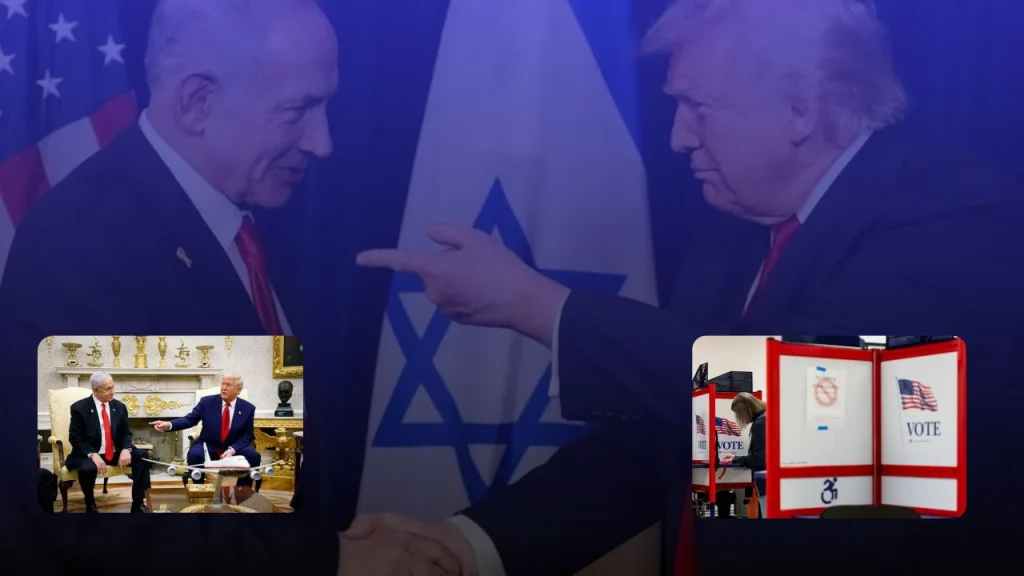
On the morning of November 3, 2026, as Americans voted in the midterm elections, President Donald Trump said the United States will stop paying Israel about $4 billion a year after the end of 2026. He made the comments by phone on Fox News’ Fox & Friends. He said he and Israeli Prime Minister Benjamin Netanyahu had agreed on the change months earlier, that Israel no longer needs the money, and that the payments had become a political problem for Republicans.
That raises two separate questions. The first, covered in our companion article, is what the cutoff would mean financially and legally. The second, covered here, is whether the announcement was a political move, a real policy change, or both.
What the evidence supports: Trump explicitly tied the announcement to election politics. There is also evidence that phasing out U.S. financial aid to Israel was discussed before Election Day. The two are not mutually exclusive. The evidence does not show that winning votes was his only reason, and the specific year-end cutoff has not been backed by a published agreement.
Quick Facts: Trump’s Election Day Israel Aid Announcement
| Question | What the evidence shows |
| When did Trump announce it? | November 3, 2026 (midterm Election Day), on Fox & Friends |
| What did he announce? | An end to about $4 billion a year in U.S. aid after 2026, with weapons sales continuing |
| Did he mention election politics? | Yes |
| Which politician did he name? | Abdul El-Sayed, a Democratic candidate for U.S. Senate in Michigan |
| How did he describe the aid issue? | A “bad talking point” used against Republicans |
| Had Netanyahu discussed ending aid before? | Yes, over a ten-year transition |
| Does the U.S.–Israel MOU expire in 2026? | No. It runs through September 30, 2028 |
| Actual annual MOU amount | 3.8billion(3.3 billion FMF + $500 million missile defense) |
| Was a written agreement released? | Not as of initial reporting |
| Is the cutoff legally implemented? | Not by the announcement alone |
| Can it be both political and real? | Yes |
What Exactly Did Trump Say About Elections and Israel Aid?
Trump said he and Netanyahu agreed “months ago” to stop the payments and that Israel was “fine with it” because it has become a successful country. He said Netanyahu raised the idea himself and that the two had discussed it for a couple of years.
He then tied it to American politics. He named El-Sayed and asked why Republicans should absorb criticism from candidates like him when Israel does not need the money. He called the aid a “bad talking point,” and said critics on the left use the $4 billion payment as a “signal of unfairness.”
Reuters and the Associated Press (AP) both reported these remarks. Bloomberg Government’s summary said Trump cited the move as a way to neutralize election-year attacks on Washington’s support for Israel. Reuters noted that Trump did not explain why he chose Election Day to announce a deal he said was months old.
Who is Abdul El-Sayed? He is a Democratic candidate for the U.S. Senate in Michigan who has criticized unconditional U.S. military aid to Israel. Trump naming him ties the announcement directly to an active campaign.
Why Does the Election Day Timing Matter?
Americans were voting on control of Congress when Trump spoke. Aid to Israel had also become more contested, especially among Democratic voters after the Gaza war and among some conservatives skeptical of foreign spending. The AP reported that prominent conservative commentators, including Tucker Carlson, have increasingly questioned U.S. support for Israel.
The obvious question is why a deal reached months earlier was announced on Election Day. Possible explanations include private negotiations reaching a point where announcement made sense, a response to growing criticism, or a message aimed at voters worried about spending overseas. Reporting does not say which was decisive. But the timing, combined with Trump naming a Democratic candidate, makes the political dimension hard to ignore.
Was Ending Aid Already Under Discussion Before Election Day?
Yes, on the Israeli side.
- January 2026: Reuters reported on January 10, 2026 that Netanyahu hoped to taper Israel off U.S. military aid over the next decade, alongside plans to invest about 350 billion shekels (roughly $110 billion) in a domestic defense industry. NBC (AP) reports he told The Economist the same month that such a change was “in the works.”
- May 2026: Netanyahu told CBS’s 60 Minutes he receives about $3.8 billion a year and wants the financial part reduced to zero, starting immediately but taking ten years.
- June 3, 2026: The Washington Post reported that Netanyahu supported a Republican proposal to shift Israel toward paying for American weapons itself. He reportedly said Israel wants to “stand on our own feet.”
But the timelines are very different. Netanyahu described a ten-year transition. Trump described a cutoff at the end of 2026. Public reporting does not show that Netanyahu formally agreed to end the whole package that fast, or whether the change covers only regular military financing or also the missile-defense funding.
A January 2026 report adds complexity. Jewish Insider reported, citing two sources, that Trump pushed back on Netanyahu’s idea of ending U.S. military aid over the next decade and doubted it would improve U.S. public opinion of Israel. That is a single outlet’s account of private conversations, not a confirmed record. It suggests Trump’s position may have moved, which makes the question of what changed between January and November relevant.
Why Would Trump Want Israel Aid Out of the Campaign Debate?
Each point below is supported by public reporting and Trump’s own comments. None proves a single motive.
- Democratic criticism of unconditional aid has grown. Some Democrats argue aid should be conditioned on how weapons are used or redirected to domestic needs. By ending the payments, Trump removes a line of attack.
- Republicans are not united. Some Republicans back strong support for Israel, while some in the MAGA movement question foreign military aid. Ending grants while keeping weapons sales addresses part of that criticism without ending the security partnership.
- The dollar figure is easy to understand. Voters may not know FMF or missile-defense budgets, but “billions to another country” is simple. Trump acknowledged it was an easy target.
- It works as both a foreign-policy and a spending message. The administration can say Israel should pay more of its own defense costs while U.S. firms keep selling.
What Does the American Public Think About U.S. Aid to Israel?
A Quinnipiac University poll released June 24, 2026 asked registered voters about the level of U.S. support for Israel.
| Voter group | Think U.S. is too supportive of Israel |
| All registered voters | 48% |
| Democrats | 66% |
| Independents | 55% |
| Republicans | 20% |
Overall, 38% said support was about right and 7% said not supportive enough. Quinnipiac described 48% as the highest dissatisfaction since it first asked in January 2017.
The poll measured views on overall U.S. support, not Trump’s proposed cutoff, and it predates the announcement. It gives political context, not proof of how Americans reacted or voted.
Did Netanyahu Agree to Trump’s End-of-2026 Deadline?
Trump says he did. Netanyahu’s earlier statements describe a slower plan, and his office had not publicly confirmed the details when Reuters and AP reported the announcement. Later reports said a spokesperson for Netanyahu stated they were unaware of the details and would seek clarification.
Israeli opposition figures reacted. AP reported that Gadi Eisenkot criticized that Israel’s defense establishment and public were learning of a possible major change through the media. Yair Golan warned that ending aid could add financial pressure on Israelis during a time of conflict on several fronts. These reactions show the Israeli debate is about the speed and security effects of the change, not only whether Israel can eventually be independent.
Is It Real Policy, an Election Stunt, or Both?
Both can be true. A policy can be discussed for months and still be announced at a politically useful moment. The administration may believe Israel should eventually pay for more of its own equipment, and Trump may also believe announcing it on Election Day helps blunt criticism of foreign aid.
Debate often frames it as either genuine policy or a stunt. The evidence supports neither extreme. It shows Trump used the announcement to address an election-related criticism, and that the underlying idea of reducing U.S. financial aid had been discussed before November 3. It does not show a finalized, legally implemented cutoff.
Did it influence the election? That cannot be measured from initial reporting. David Schenker, who served as a senior Middle East diplomat in Trump’s first term, told AP the motive was an open question and that it would not necessarily change Republican or Democratic voters’ views. That is an expert opinion, not a measurement. There is no basis to claim the announcement changed a race’s outcome or produced a specific number of votes.
Is It Illegal for a President to Announce Policy on Election Day?
Generally, no. A policy announcement is official political speech, and no federal law bars a president from making one on Election Day. The Hatch Act, which limits political activity by federal employees, does not cover the president or vice president (5 U.S.C. § 7322(1) defines “employee” to exclude them). Statements about policy are also different from offering a benefit in exchange for a vote, which federal law treats very differently. Voters, rivals and journalists can still judge the timing politically, but that is a political question, not a legal violation on these facts alone.
Can Trump Actually End Israel Aid at the End of 2026?
Even if Trump intends it, the announcement does not automatically cancel funding Congress has already provided.
- The 2016 MOU covers fiscal years 2019 through 2028 and provides about $38 billion over that period, subject to congressional appropriation. It is not a Senate-ratified treaty.
- Appropriations Clause, Article I, Section 9, Clause 7: money cannot be drawn from the Treasury without appropriations made by law.
- Impoundment Control Act, 2 U.S.C. §§ 681 to 688: limits the president’s ability to withhold appropriated money. A rescission proposal under 2 U.S.C. § 683 allows temporary withholding, but unless Congress approves the rescission within 45 days of continuous session, the funds generally must be made available.
- Arms sales run separately under the Arms Export Control Act, 22 U.S.C. Chapter 39, which is why Trump can say sales continue even if grants end.
Congress can support the change, preserve parts of the funding, or rewrite future appropriations. For the full legal and financial breakdown, see our companion article: Trump Says the U.S. Will End $4 Billion in Annual Aid to Israel: What the MOU Says, What Congress Can Do and What Changes for Israel.
Readers following the wider Iran conflict may also find these AllAboutLawyer explainers useful:
- Operation Epic Fury And International Law The Legal Case
- War Powers Resolution Explained: The 60-Day Rule (2026)
- Presidential War Powers What The Constitution Says
What to Watch to See Whether Trump Means It
- A written agreement that identifies which programs end, the effective dates and what happens to existing obligations.
- An official statement from Netanyahu’s government confirming or rejecting the year-end timetable.
- A White House or State Department implementation announcement that names the affected programs.
- Congressional action, especially fiscal year 2027 appropriations.
- Missile-defense cooperation: whether the $500 million for Iron Dome, David’s Sling and Arrow continues or is renegotiated.
- Weapons sales: whether existing cases proceed and new sales are approved.
Frequently Asked Questions About Trump’s Election Day Israel Aid Announcement
Did Trump announce the end of Israel aid to win votes?
He announced it on Election Day and tied it to Democratic criticism, naming Michigan Senate candidate Abdul El-Sayed. That shows an election-related message. It does not establish that winning votes was his sole motive.
Was Trump’s Israel announcement just a stunt?
No verified evidence shows it was invented only for attention. Netanyahu had discussed phasing out aid over ten years. But the immediate cutoff Trump announced has not been backed by a published agreement.
Did Netanyahu ask Trump to stop the aid?
Trump says Netanyahu raised it. Netanyahu has publicly supported reducing U.S. financial aid to zero over about ten years, a much slower timeline than Trump’s.
Why did Trump mention Abdul El-Sayed?
El-Sayed is a Democratic Senate candidate in Michigan who has criticized unconditional U.S. military aid to Israel. Trump named him while saying critics use the aid against Republicans.
Why stop giving Israel money but keep selling weapons?
Ending grants does not require ending sales. Israel could use its own budget to buy U.S. weapons under export-control rules, which changes who pays.
How much does the U.S. give Israel each year?
The MOU framework is about 3.8billion(3.3 billion in Foreign Military Financing and $500 million for joint missile defense). Trump said about $4 billion.
Does the current agreement end in 2026?
No. The 2016 MOU covers fiscal years 2019 to 2028 and ends September 30, 2028.
Has Netanyahu confirmed the cutoff?
Not publicly in the initial reporting. His office reportedly said it would seek clarification.
Can Congress block or change the plan?
Congress controls appropriations and can continue, reduce or change future aid. The Impoundment Control Act limits withholding funds already appropriated.
Is it illegal for the president to make this announcement on Election Day?
Generally no. A policy announcement is not prohibited, and the Hatch Act does not apply to the president.
Will Israel stop getting American weapons?
Trump said sales will continue. Ending aid does not automatically cancel existing sales cases.
Final Takeaway
Trump’s announcement has two parts. The political part is clear: he made it on Election Day, named a Democratic Senate candidate and called Israel aid a talking point used against Republicans. The policy part is real but unfinished: Netanyahu had discussed reducing U.S. financial aid over ten years, but no published agreement supports a cutoff at the end of 2026. The most accurate reading is that the presentation was political while the underlying idea has a longer history, and whether the cutoff happens will be shown by an official agreement, a White House explanation and congressional funding decisions, not by interviews.
Sources and Further Reading
- Reuters, As Americans Vote, Trump Says US Will Stop $4 Billion in Aid to Israel (Nov. 3, 2026)
- Associated Press, US Will Halt $4B in Aid to Israel as It Shifts to Buying Military Hardware (Nov. 3, 2026)
- NBC 5 Dallas-Fort Worth (AP), Trump says U.S. will halt $4 billion in annual aid to Israel in 2027
- Bloomberg Government, Trump Says US to Cut $4 Billion in Aid to Israel This Year
- CBS News, Netanyahu 60 Minutes transcript
- Reuters, Netanyahu Hopes to Taper Israel Off U.S. Military Aid in Next Decade (Jan. 10, 2026)
- Jewish Insider, Trump, Netanyahu at odds over Israeli plans to end reliance on U.S. military aid (Jan. 2026)
- The Washington Post, Netanyahu Backs Republican Effort to End U.S. Military Aid (June 3, 2026)
- Quinnipiac University, National Poll (June 24, 2026)
- The Times of Israel, Trump Says Ending Aid Could Address Criticism of Israel
- Congressional Research Service, U.S. Foreign Aid to Israel
- Impoundment Control Act, 2 U.S.C. §§ 681 to 688
This article is for general information and is not legal or political advice. AllAboutLawyer.com is not a law firm.
Researched and written by Israr Ahmad, legal content researcher and founder of AllAboutLawyer.com. All facts verified against Reuters and AP reporting of the November 3, 2026 interview, Netanyahu’s CBS interview, the dated Quinnipiac poll, Congressional Research Service reports and the cited statutes, as of November 3, 2026. Last Updated: November 3, 2026.
About the Author
Israr Ahmad is a legal content researcher with 4+ years of experience covering class action settlements and consumer rights cases. He has researched and published coverage of 2,500+ settlements using verified court records, settlement administrator filings, and government sources. Learn more about Israr.