
Trump Administration Sues Denver Over Law Enforcement Mask Ban, The Supremacy Clause Claims, the Ordinance and What Happens Next
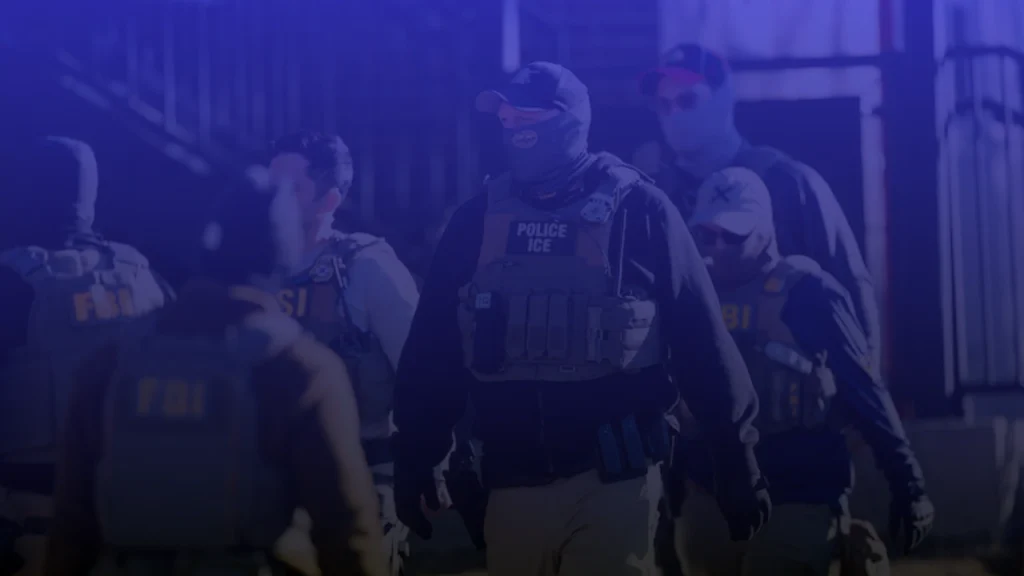
On October 8, 2026, the U.S. Department of Justice (DOJ) sued the City and County of Denver over an ordinance that bars federal law enforcement officers from wearing facial coverings during detentions and arrests and requires them to display identification. The case is United States v. City and County of Denver, Colorado, et al., No. 1:26-cv-05063, in the U.S. District Court for the District of Colorado. The DOJ says the ordinance violates the Supremacy Clause because Denver is trying to regulate the federal government directly.
No court has ruled on the merits. Filing a lawsuit does not suspend a city ordinance, and the allegations in the complaint are the government’s claims, not findings. Denver will have its chance to respond.
Quick Facts: United States v. City and County of Denver
| Detail | Information |
| Case | United States v. City and County of Denver, Colorado, et al. |
| Case number | 1:26-cv-05063 |
| Court | U.S. District Court for the District of Colorado |
| Filed | October 8, 2026 |
| Plaintiff | United States of America |
| Defendants | City and County of Denver; Mayor Michael C. Johnston; City Attorney Michiko Ando Brown; Police Chief Ronald Thomas (the three officials in their official capacities) |
| Ordinance | Council Bill No. 26-0125, Ordinance No. 125-26, codified at Denver Revised Municipal Code (D.R.M.C.) §§ 28-300 to 28-303 |
| Passed / signed | City Council passed it March 2, 2026; Mayor Johnston signed it March 3, 2026 |
| Claims | Count I (D.R.M.C. § 28-302, mask ban) and Count II (D.R.M.C. § 28-303, identification rules), both under the Supremacy Clause |
| Penalty under Denver’s code | Up to 300 days in jail and a $999 fine (D.R.M.C. § 1-13(b)) |
| Relief the DOJ seeks | Declaratory judgment, permanent injunction, costs and fees |
| Status | Complaint filed; no ruling on the merits |
What Does Denver’s Ordinance, D.R.M.C. §§ 28-300 to 28-303, Say?
Mask ban: D.R.M.C. § 28-302
As quoted in the DOJ complaint, § 28-302(a) prohibits federal law enforcement officers or agents of a federal law enforcement agency operating in Denver from wearing a facial covering while performing duties that include interrogation, detainment, arrest or other activity that restrains a person’s physical movement. Section 28-302(b) bars officers inside any city facility from wearing a facial covering to conceal their identity.
D.R.M.C. § 28-301(1) defines a facial covering as any opaque mask, garment, helmet, headgear or similar item that conceals or obscures a person’s facial identity, including balaclavas, tactical masks, gaiters and ski masks.
Identification rules: D.R.M.C. § 28-303
Section 28-303(a) requires officers to clearly identify themselves by displaying a name, badge or identification number. The display must be:
- legible and suitable for daylight and low-light conditions,
- visible and readable during direct engagement with the public, and
- on the outermost garment or gear, not hidden by tactical equipment or body armor.
If an officer is not displaying identification that way, § 28-303(a)(4) requires them to give their name, badge or identification number on request. Section 28-303(b) separately requires officers who are not uniformed to display or provide identification that includes their agency and a name or badge number when performing enforcement duties, upon request.
Exceptions in D.R.M.C. §§ 28-302(c) and 28-303(c)
The ordinance includes exceptions for tactical operations where a covering is needed for physical safety, occupational health and safety requirements, reasonable accommodations, and active undercover operations approved by a supervisor or court order. According to the complaint, it has no exception for plainclothes operations, surveillance, or general safety concerns such as protection from doxxing.
Who the ordinance covers
The complaint quotes the mask ban and the identification rules as directed at federal officers and agents, and alleges that the City Council designed the ordinance with federal agents in mind. Some press accounts describe the ordinance as reaching all law enforcement. Which description is right matters legally, and readers should check the ordinance text on Denver’s legislative records site.
Penalties under D.R.M.C. § 1-13
Because the ordinance declares the conduct unlawful, the complaint says a violation is a criminal offense under D.R.M.C. § 1-13(b), punishable by up to 300 days of incarceration and a $999 fine. Under § 1-13(c), each day a violation continues can count as a separate offense, and § 1-13(g) makes the code’s remedies cumulative.
The ordinance’s own Supremacy Clause savings clause
Section 28-300(a) says the article may not be interpreted or applied in a way that violates the Supremacy Clause or intergovernmental immunity. The DOJ answers that an act cannot cancel itself out this way, citing Citizens Bank of Maryland v. Strumpf, 516 U.S. 16, 20 (1995). Expect the city to rely on that clause and the DOJ to attack it.
Why Is the Justice Department Suing Denver Under the Supremacy Clause?
The DOJ’s complaint rests on one theory: Article VI, Clause 2 of the Constitution, as applied in United States v. Washington, 596 U.S. 832, 838 (2022), invalidates a state or local law that regulates the United States directly or discriminates against the federal government. It brings two counts, one against each of the ordinance’s operative sections, and asks the court to enjoin enforcement against federal officers.
The complaint also makes these factual and policy claims:
- Federal control over federal officers. It cites 5 U.S.C. § 301, 28 U.S.C. § 509, 8 U.S.C. § 1103(a)(2), 5 U.S.C. § 5901, 29 U.S.C. § 668 and 10 U.S.C. § 723(b)(1) to argue that federal law lets the executive branch direct how its officers dress, equip themselves and identify themselves.
- Officer safety. It alleges that officers face doxxing and harassment, and describes two incidents in the Denver area: an ICE deportation officer and his wife on January 14, 2026, and ICE deportation officers from the Durango Sub-Office on September 22, 2026. These are the government’s allegations.
- Operational flexibility. It says agencies such as CBP and ICE give officers discretion over face coverings and identification, and that Denver’s rules would remove it. It points to 8 C.F.R. § 287.8(c)(2)(iii), which requires immigration officers making arrests to announce themselves and the purpose of the arrest as soon as practical and safe.
- Purpose of the ordinance. It quotes statements by Mayor Johnston and City Council members to argue that the ordinance was aimed at federal immigration enforcement.
- Imminent enforcement. It says federal officers cannot and will not comply, and that they face a credible threat of prosecution, which supports the government’s standing to sue before anyone is charged.
In the DOJ’s press release, Associate Attorney General Stanley E. Woodward Jr. said localities lack authority to regulate the federal government, and Assistant Attorney General Brett A. Shumate said the federal government decides which equipment federal officers wear on duty.
What Is Denver’s Defense of the Mask Ban Ordinance?
Denver has said it will defend the law. The city’s stated purposes are transparency, public trust and accountability when officers detain or arrest people, including helping residents tell real officers from impersonators. The Denver defense will probably lean on the ordinance’s savings clause in § 28-300(a), the city’s police power over public safety within its borders, and an argument that identification rules are a transparency measure rather than an attempt to control federal operations. The city had not filed a response in the case as of October 10, 2026.
What Federal Laws and Constitutional Doctrines Control the Denver Case?
| Authority | What it covers | Why it matters in the Denver case |
| U.S. Const. art. VI, cl. 2 (Supremacy Clause) | Federal law is the supreme law of the land | Basis for both counts |
| Intergovernmental immunity, United States v. Washington, 596 U.S. 832 (2022) | Bars state and local laws that regulate the federal government directly or discriminate against it | The DOJ’s central theory |
| McCulloch v. Maryland, 17 U.S. 316 (1819) | Early foundation for protecting federal operations from state interference | Background for the doctrine |
| In re Neagle, 135 U.S. 1 (1890) | Federal officers acting under federal authority can be shielded from state prosecution | Relevant to the penalties the ordinance imposes |
| U.S. Const. art. II, § 3 | President must take care that the laws are faithfully executed | Supports federal control of officers |
| 5 U.S.C. § 301; 28 U.S.C. § 509; 8 U.S.C. § 1103(a)(2) | Agency heads’ power to direct their departments and employees | Cited as the source of federal authority over officers’ conduct |
| 5 U.S.C. § 5901; 29 U.S.C. § 668; 10 U.S.C. § 723(b)(1) | Uniforms, protective equipment and identification | Cited as authority over equipment and identification |
| 8 U.S.C. §§ 1182, 1225-1229a, 1231, 1357 | Immigration inspection, arrest, detention and removal | Federal immigration enforcement powers |
| 8 C.F.R. § 287.8(c)(2)(iii) | Immigration officers must announce themselves and the purpose of an arrest when practical and safe | Cited to show federal rules already address identification |
| 28 U.S.C. § 1442 | Lets federal officers remove certain state prosecutions to federal court | Possible route if an officer were ever charged under the ordinance |
| 28 U.S.C. §§ 1331, 1345, 1391(b), 1651, 2201, 2202 | Jurisdiction, venue and remedies | Basis for the federal court hearing the case |
| Printz v. United States, 521 U.S. 898 (1997); Murphy v. NCAA, 584 U.S. 453 (2018) | Anti-commandeering: Congress cannot force states to carry out federal programs | Protects Denver’s right to decline to help federal enforcement, but does not obviously authorize regulating federal officers |
| Tenth Amendment and local police powers | Reserved state and local authority over public safety | The basis for Denver’s authority over its own police |
Can Denver Regulate Federal Officers Under the Constitution?
The answer will turn on the difference between two things. A city can generally write rules for its own police department, and it can generally apply neutral laws that reach everyone. It generally cannot directly regulate how federal officers carry out federal duties, or single out federal officers for different treatment.
The Supremacy Clause does not make federal employees immune from every state law. It limits direct regulation of the federal government and discrimination against it. In Washington, the Supreme Court applied that test to a state workers’ compensation law aimed at federal contractors. The court in Denver will have to decide whether §§ 28-302 and 28-303, as applied to federal officers, regulate the United States directly, and whether the focus on federal agents adds a discrimination problem.
The DOJ’s complaint also does not claim that federal officers are above the law. The question in the case is who sets the rules for federal officers’ masks and identification, not whether federal officers must follow the Constitution and federal statutes.
What Have Other Courts Said About Similar Mask and Identification Laws?
The complaint cites rulings in four other matters involving laws it calls functionally identical:
- California: United States v. California, 173 F.4th 1060, 1063 (9th Cir. 2026), a unanimous injunction pending appeal in a case over a California law requiring federal officers to visibly display identification.
- New York: United States v. New York, No. 1:26-cv-1360 (N.D.N.Y. Aug. 3, 2026).
- Virginia: United States v. Virginia, No. 3:26-cv-0545 (E.D. Va. Aug. 18, 2026), with an appeal docketed as No. 26-2248 in the Fourth Circuit on September 14, 2026.
- Philadelphia: United States v. City of Philadelphia, No. 2:26-cv-4208 (E.D. Pa. July 2, 2026).
The DOJ press release says the Denver suit is the latest in a series by the Civil Division that includes cases involving Maryland, New York, Virginia, Connecticut, New Jersey, California, Philadelphia and Milwaukee. A district court ruling elsewhere does not bind the District of Colorado. Colorado sits in the Tenth Circuit, so the Ninth Circuit and Fourth Circuit matters are persuasive at most, and the Denver judge will write on the specific text of D.R.M.C. §§ 28-302 and 28-303.
What Happens Next in United States v. City and County of Denver?
The complaint asks for a declaration that §§ 28-302 and 28-303 are invalid as to federal law enforcement officers, agents and agencies, a declaration that defendants cannot enforce them against federal officers under intergovernmental immunity, and a permanent injunction. The complaint does not itself ask for a preliminary injunction. Possible next steps, none of them scheduled in the filings reviewed:
- Denver and the named officials answer the complaint or move to dismiss.
- The parties may move for summary judgment or the government may seek interim relief.
- The court rules on the declaratory and injunctive relief.
- Either side may appeal to the U.S. Court of Appeals for the Tenth Circuit.
What Does the Denver Mask Ban Lawsuit Mean for Residents, Federal Officers and Other Cities?
Residents. The lawsuit does not create a claim form or a payout for individuals. Someone who believes their rights were violated in an encounter with law enforcement should speak with a licensed attorney.
Federal officers. The complaint says agencies have told officers they do not intend to comply with the ordinance. Whether a Denver prosecution could proceed against a federal officer is exactly what the court will be asked to decide. Federal officers also have 28 U.S.C. § 1442 available to move certain state criminal cases to federal court.
Other cities. A ruling could shape how other cities write transparency rules. A decision for Denver could support carefully drafted local rules. A decision for the DOJ would add to the line of rulings against similar laws. One district court’s opinion does not set a nationwide rule.
Frequently Asked Questions About the Denver Mask Ban Lawsuit
Why did the Trump administration sue Denver over its law enforcement mask ban?
The DOJ says Denver’s ordinance, D.R.M.C. §§ 28-300 to 28-303, unconstitutionally regulates federal officers and threatens their safety. It asks the court to bar enforcement against federal officers.
What does Denver Ordinance No. 125-26 require?
As quoted in the complaint, it bars federal officers from wearing facial coverings while detaining or arresting people, bars covering one’s identity in city facilities, and requires officers to display or provide a name, badge or identification number.
What are the penalties under Denver’s ordinance?
The complaint says a violation is punishable by up to 300 days in jail and a $999 fine under D.R.M.C. § 1-13(b), and that continuing violations can count as separate offenses under § 1-13(c).
Has a judge blocked Denver’s mask ban?
Not as of October 10, 2026. The lawsuit was filed on October 8, 2026, and no ruling on the DOJ’s claims had been announced.
Does the Supremacy Clause mean federal agents are above state and local law?
No. It bars state and local laws that directly regulate the federal government or discriminate against it. It does not give federal officers unlimited immunity.
Are federal officers required to be unmasked during arrests?
There is no single constitutional rule on masks. Federal regulation 8 C.F.R. § 287.8(c)(2)(iii) requires immigration officers to announce themselves and the purpose of an arrest when practical and safe.
Which courts have ruled on similar laws in California, New York, Virginia and Philadelphia?
The Ninth Circuit granted an injunction pending appeal in United States v. California, and district courts ruled in New York (Aug. 3, 2026), Virginia (Aug. 18, 2026) and Philadelphia (July 2, 2026). The Virginia ruling is on appeal in the Fourth Circuit.
Can Denver police arrest a federal officer under the ordinance?
The ordinance carries criminal penalties, and the DOJ argues that applying them to federal officers is unconstitutional. Whether any such arrest would be lawful is the question the court has been asked to resolve.
Could this case reach the U.S. Supreme Court?
It could, after review by the Tenth Circuit and a grant of review by the Supreme Court. Nothing guarantees that.
Related Reading on AllAboutLawyer.com
For another federal-versus-local dispute over immigration enforcement in the same state, read ICE Colorado Warrantless Arrest Lawsuit: Ramirez Ovando. It deals with a different legal question, when immigration officers may arrest without a warrant, but it shows how courts set limits on federal enforcement.
Official Sources and Legal References
- U.S. Department of Justice press release, October 8, 2026
- Complaint, United States v. City and County of Denver, No. 1:26-cv-05063 (D. Colo.)
- Denver City Council legislative record for the ordinance
- U.S. Const. art. VI (Supremacy Clause)
- 5 U.S.C. § 301
- 28 U.S.C. § 509
- 8 U.S.C. § 1103
- 8 C.F.R. § 287.8
- 28 U.S.C. § 1442
- DOJ complaint against Virginia
- DOJ complaint against New York
- DOJ complaint against Philadelphia
This article is for general information only and is not legal advice. AllAboutLawyer.com is not a law firm. The DOJ’s allegations have not been proven, and the court has not ruled. Consult a licensed attorney about any specific situation.
Researched and written by Israr Ahmad, legal content researcher and founder of AllAboutLawyer.com. All facts verified against the official DOJ press release and the filed federal complaint in No. 1:26-cv-05063 (D. Colo.), as of October 10, 2026. Last Updated: October 10, 2026.
About the Author
Israr Ahmad is a legal content researcher with 4+ years of experience covering class action settlements and consumer rights cases. He has researched and published coverage of 2,500+ settlements using verified court records, settlement administrator filings, and government sources. Learn more about Israr.