
T. Russell Hunter Lawsuit, Why UT Dallas Arrested the Abortion Activist and Whether His First Amendment Rights Were Violated
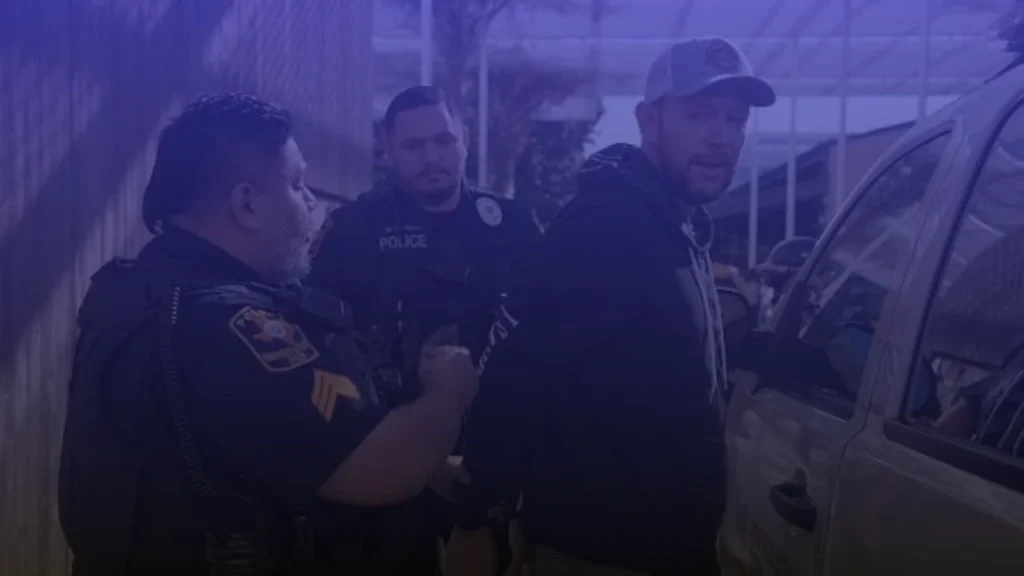
T. Russell Hunter, founder of the Christian anti-abortion group Abolitionists Rising, was arrested for criminal trespass on November 18, 2026, at the University of Texas at Dallas (UT Dallas) in Richardson, Texas. He and his attorney, C.J. Grisham, say they will fight the charge and sue the university and its campus police for violating his First Amendment rights.
As of November 24, 2026, no civil complaint, case number or damages demand from Hunter has been independently verified. An announced plan to sue is not a filed lawsuit. An arrest is not a conviction, and Hunter is presumed innocent of the charge. Everything below about what happened on campus comes from the parties’ competing public statements, not from a court record.
T. Russell Hunter Lawsuit: Quick Facts
| Detail | Information |
| Person arrested | T. Russell Hunter, founder of Abolitionists Rising |
| Arrest date | November 18, 2026 |
| Location | University of Texas at Dallas, Richardson, Texas |
| Reported charge | Criminal trespass |
| Administrator named by Hunter’s group | Tricia Losavio, Associate Dean |
| Hunter’s attorney | C.J. Grisham |
| Custody | About a day, then released on bond (per Hunter’s organization) |
| Civil lawsuit filed | Not independently verified |
| Damages demanded | Not announced |
| Texas law involved | Senate Bill 2972, amending Texas Education Code § 51.9315 |
| Related federal case | Fellowship of Christian University Students at UT Dallas v. Eltife, No. 1:25-cv-01411-DAE (W.D. Tex.) |
| Related appeal | Fifth Circuit No. 25-50914, argued October 6, 2026 |
| Current status | Criminal charge pending; civil suit announced but not verified as filed |
Why Was T. Russell Hunter Arrested at UT Dallas?
According to Hunter’s organization and attorney, Hunter spent about two and a half hours in an outdoor campus plaza talking with students about abortion and Christianity. They say the conversations were peaceful, that he used no bullhorn and blocked no walkway, and that some students asked him to stay. They say Associate Dean Tricia Losavio then asked the group to leave after student complaints, called campus police, and that officers handcuffed Hunter within about 90 seconds of arriving.
UT Dallas’s position, as reported in press coverage, is that the visitors were not invited by any student, faculty or staff group, that staff asked them to leave under university policy, and that police arrested one person after the group refused repeated requests while the others left voluntarily. The university says it enforces its rules without regard to a speaker’s viewpoint.
What can and cannot be confirmed: the UT Dallas daily crime log lists a criminal trespass incident at the campus mall area, but it does not name the person arrested. The arrest affidavit, the charging document and police body-camera footage were not publicly available when this article was written, so neither side’s version has been tested by a court.
Has T. Russell Hunter Filed a Lawsuit Against UT Dallas?
Not that we could verify. A lawsuit exists only when a complaint is filed in court, naming defendants, facts, legal claims and the relief requested. Until one is filed, claims that Hunter is “suing for millions” or has “won a settlement” are unsupported. We will update this page when a complaint, defendants and case number are confirmed.
What Is Texas Senate Bill 2972?
Senate Bill 2972, known as the Campus Protection Act, took effect September 1, 2025, and amended Texas Education Code § 51.9315, the state’s campus expressive-activity statute. It replaced the broader protections of the 2019 law (Senate Bill 18) with limits that public universities must adopt, including bans on expressive activity overnight, and limits on invited speakers, amplified sound and percussion near the end of the academic term.
The law also changes how the statute treats people who are not affiliated with the university, which is the issue most relevant to Hunter. The enrolled text of SB 2972 states that the section cannot be read to infringe constitutionally protected speech, so a university policy that follows state law can still be unconstitutional as applied to a particular person.
Has a Federal Court Already Blocked Texas SB 2972?
Only in part, and it does not decide Hunter’s arrest. In Fellowship of Christian University Students at UT Dallas v. Eltife, student groups sued on September 3, 2025. On October 14, 2025, U.S. District Judge David Alan Ezra issued a 52-page preliminary injunction stopping enforcement across the University of Texas System of four provisions:
- the overnight ban on expressive activity (10 p.m. to 8 a.m.)
- the limit on invited speakers in the last two weeks of a term
- the limit on amplified sound in that period
- the limit on drums and other percussion in that period
| Case detail | Information |
| Court | U.S. District Court, Western District of Texas (Austin) |
| Case number | 1:25-cv-01411-DAE |
| Judge | David Alan Ezra |
| Preliminary injunction | October 14, 2025 |
| Appeal | Fifth Circuit No. 25-50914; oral argument October 6, 2026 |
| Appeal ruling | None identified as of November 24, 2026 |
Why this matters for Hunter: the injunction does not, on its face, address how a university treats an unaffiliated visitor on a plaza in the daytime. It does not prove his arrest was unlawful. It is useful background because it shows a federal court already found some SB 2972 limits likely unconstitutional, and the Fifth Circuit has not yet ruled on that appeal.
Can a Public University Ban Nonstudents From Speaking on Campus?
Public universities are government actors and are bound by the First Amendment, but the right to speak is not unlimited on every piece of government property. The legal test depends on what kind of forum the location is.
| Forum type | General standard |
| Traditional public forum (streets, sidewalks, parks) | Strong protection; content-neutral time, place and manner rules only |
| Designated public forum | Strong protection while the government keeps it open for expression |
| Limited public forum | Reasonable rules that fit the forum’s purpose and do not discriminate by viewpoint |
| Nonpublic forum | Reasonable, viewpoint-neutral restrictions |
Hunter’s case will likely turn on three questions: what kind of forum the plaza is, whether the university’s rule for outside visitors is reasonable and viewpoint-neutral, and whether it was enforced against him because of his message or because of audience complaints. Being outdoors does not automatically make a space a traditional public forum, and a university’s own label does not settle the question. Courts look at the property’s history, actual use and the policies that apply, such as UT Dallas Policy UTDSP5001.
Did UT Dallas Violate Russell Hunter’s First Amendment Rights?
No court has decided that. Hunter’s side argues that the university removed him because students objected to his message, which raises the “heckler’s veto” problem: government cannot suppress speech just because listeners react badly to it. UT Dallas argues its visitor rules apply to everyone regardless of message. Key U.S. Supreme Court decisions a court would likely consider include:
| Decision | Relevance |
| Healy v. James, 408 U.S. 169 (1972) | First Amendment applies on public college campuses |
| Papish v. Board of Curators, 410 U.S. 667 (1973) | Controversial speech is protected at public universities |
| Forsyth County v. Nationalist Movement, 505 U.S. 123 (1992) | Speech cannot be restricted based on listeners’ anticipated reaction |
| Ward v. Rock Against Racism, 491 U.S. 781 (1989) | Standard for time, place and manner restrictions |
| Rosenberger v. Rector, 515 U.S. 819 (1995) | Viewpoint discrimination at a public university |
| Hays County Guardian v. Supple, 969 F.2d 111 (5th Cir. 1992) | Fifth Circuit analysis of speech rules at a Texas public university |
The outcome would depend on the actual policy, the enforcement record, the video evidence and how the court classifies the plaza.
What Is the Texas Criminal Trespass Law Behind the Arrest?
Texas Penal Code § 30.05 makes it an offense to enter or remain on property without effective consent after receiving notice to leave. Criminal trespass is generally a Class B misdemeanor. Under Texas Penal Code § 12.22, a Class B misdemeanor carries a fine of up to $2,000, up to 180 days in jail, or both. The exact charge and any enhancement in Hunter’s case have not been independently verified.
The core question in the criminal case is whether the university’s order to leave was lawful and whether officers had probable cause. If the order was an unconstitutional restriction of protected speech, that can become part of the defense.
Can T. Russell Hunter Sue UT Dallas or Its Police for Wrongful Arrest?
Possibly. The main vehicle is 42 U.S.C. § 1983, which lets a person sue state actors who violate their federal constitutional rights. Possible theories, none of which is verified as part of a filed Hunter complaint, include:
| Possible claim | Basis |
| Viewpoint discrimination | First Amendment |
| Retaliation for protected speech | First Amendment |
| Arrest without probable cause | Fourth Amendment |
| Prospective relief against an unconstitutional policy | § 1983 and Ex parte Young, 209 U.S. 123 (1908) |
Probable cause is the main obstacle. In Nieves v. Bartlett, 587 U.S. 391 (2019), the Supreme Court held that probable cause generally defeats a First Amendment retaliatory-arrest claim, with limited exceptions. In Gonzalez v. Trevino, 602 U.S. 653 (2024), the Court clarified what evidence, such as proof that similarly situated people were not arrested, can support the exception.
Officials may claim immunity. Individual officers and administrators can raise qualified immunity, which protects them from damages unless they violated a clearly established right. State sovereign immunity can also limit money claims against a public university. Claims for court orders against ongoing unconstitutional policies are treated differently. No verified report says Ms. Losavio or any officer has been disciplined or found liable.
How Much Money Could Hunter Recover?
No demand or amount has been announced. If a civil rights suit succeeded, possible remedies include compensatory damages, nominal damages, punitive damages against eligible individual defendants, attorney fees under 42 U.S.C. § 1988, and declaratory or injunctive relief. Immunity doctrines can limit what is available, and a win could result in a policy change rather than a large payment.
What Should You Do If a Texas Public University Restricts Your Speech?
- Read the university’s published speech and visitor policies.
- Ask the official which specific rule they are enforcing, and note the answer.
- Preserve recordings, written notices and witness contact details, where lawful.
- Do not physically resist officers or escalate the encounter.
- If arrested or charged, contact a criminal defense attorney before making statements.
- Ask a civil rights attorney about constitutional claims.
- Watch deadlines. Texas generally allows two years for personal injury claims under Texas Civil Practice and Remedies Code § 16.003, and federal § 1983 claims in Texas commonly borrow that period, but other claims can have shorter deadlines or notice requirements.
T. Russell Hunter Lawsuit Timeline
| Date | Development |
| 2019 | Texas enacts SB 18, expanding campus speech protections |
| September 1, 2025 | SB 2972 takes effect |
| September 3, 2025 | Student groups file FOCUS v. Eltife in federal court |
| October 14, 2025 | Preliminary injunction blocks four SB 2972 provisions |
| October 6, 2026 | Fifth Circuit hears the state’s appeal |
| November 18, 2026 | Hunter arrested at UT Dallas |
| November 19-20, 2026 | Hunter’s organization and attorney post statements; Hunter reported released on bond |
| November 23, 2026 | Planned legal action receives national coverage |
| November 24, 2026 | No filed Hunter civil complaint verified |
Frequently Asked Questions
Why was T. Russell Hunter arrested at UT Dallas? He was arrested for criminal trespass after university staff asked his group, which the university says was not invited by any campus group, to leave.
Has T. Russell Hunter sued UT Dallas? He and his attorney have said they plan to, but a filed complaint has not been independently verified.
Is T. Russell Hunter still in jail? No. His organization reported that he was released on bond after about a day in custody.
Was Hunter arrested because of his views on abortion? His attorney says complaints about his message led to the removal. UT Dallas says it enforced viewpoint-neutral campus access rules. A court has not decided.
Is Texas SB 2972 unconstitutional? A federal judge blocked four of its provisions on a preliminary basis in October 2025. The Fifth Circuit appeal was argued October 6, 2026, and the full statute has not been struck down.
Can nonstudents exercise free speech at a Texas public university? In some circumstances, yes. The answer depends on the type of forum, the university’s rules and the First Amendment.
Has Tricia Losavio been fired? No such announcement has been verified.
Related Coverage on AllAboutLawyer.com
- Torrey Pines High School Suspended a Student for Pro-ICE Flyers Then Reversed Course After a Legal Challenge
- $8.14M Cincinnati Protest Settlement, Were You Arrested in 2020?
Official Sources and Legal References
- Texas Legislature: Enrolled Senate Bill 2972 (89th Legislature)
- Order Granting Preliminary Injunction, No. 1:25-cv-01411-DAE (W.D. Tex. October 14, 2025)
- FIRE case page: Fellowship of Christian University Students at UT Dallas v. Eltife
- Fifth Circuit oral argument recording, No. 25-50914
- UT Dallas Speech, Expression and Assembly Policy UTDSP5001
- UT Dallas Police Department daily crime log
- Texas Penal Code Chapter 30 (Criminal Trespass) and Chapter 12 (Punishments)
- 42 U.S.C. § 1983 and 42 U.S.C. § 1988
- Gonzalez v. Trevino, 602 U.S. 653 (2024)
Party statements: The account of events comes from statements by Abolitionists Rising and attorney C.J. Grisham on social media and from UT Dallas statements as reported in press coverage, published November 19 to 23, 2026. The arrest affidavit, charging document and body-camera video were not independently reviewed.
This article is for informational purposes only and does not constitute legal advice. Laws vary by state and individual circumstances differ. For advice about your specific situation, consult a qualified attorney. Alleged constitutional violations remain unproven unless established through legal proceedings, and an arrest is not a finding of guilt.
Researched and written by Israr Ahmad, legal content researcher and founder of AllAboutLawyer.com. All facts verified against the enrolled text of Texas Senate Bill 2972, the federal preliminary injunction order in No. 1:25-cv-01411-DAE, the Texas Penal Code, federal statutes and U.S. Supreme Court opinions, and the public statements of the parties, as of November 24, 2026. Last Updated: November 24, 2026.
About the Author
Israr Ahmad is a legal content researcher with 4+ years of experience covering class action settlements and consumer rights cases. He has researched and published coverage of 2,500+ settlements using verified court records, settlement administrator filings, and government sources. Learn more about Israr.