
Trump HUD Immigration Lawsuit, States and Cities Sue to Block the Mixed-Status Section 8 Rule Taking Effect December 14
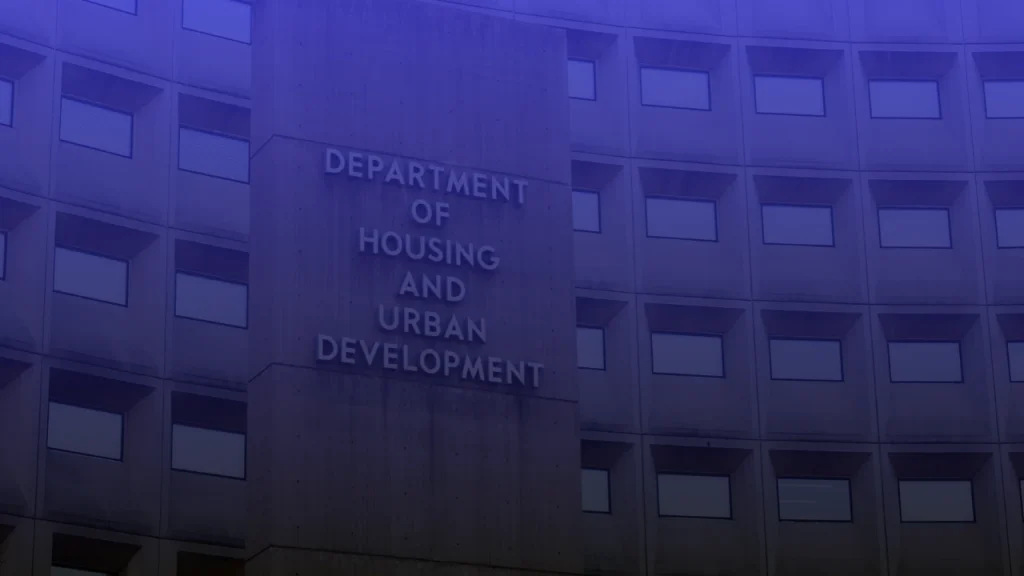
On November 23, 2026, a coalition of state attorneys general and a separate coalition of cities, counties and housing authorities sued the Department of Housing and Urban Development (HUD) in federal court. They are challenging a final rule that would end ongoing rental assistance for most “mixed-status” households, meaning families where some members are eligible for federal housing aid and at least one member is not. At least four lawsuits now challenge the rule. HUD published it on November 12, 2026, and it is scheduled to take effect December 14, 2026.
The rule is not yet in effect, and December 14 is not an eviction deadline. The rule sets notice periods, documentation deadlines, possible extensions and hearing rights, and a court could still postpone or block it. As of November 24, 2026, we could not verify any court order blocking the rule.
HUD Mixed-Status Housing Rule Lawsuits: Quick Facts
| Detail | Information |
| Agency and official | Department of Housing and Urban Development; Secretary Scott Turner |
| Rule | Final rule on verification of eligible status under Section 214 of the Housing and Community Development Act of 1980 (amends 24 C.F.R. Part 5, Subpart E) |
| Federal Register | Published November 12, 2026 (cited as 91 FR 72978) |
| Scheduled effective date | December 14, 2026 |
| Estimated households affected | About 20,000 |
| Estimated people affected | About 78,100, including about 55,000 who are otherwise eligible (per the attorneys general) |
| Multistate lawsuit | Filed November 23, 2026, D. Mass., No. 1:26-cv-15218 (as listed in the complaint reviewed; confirm on the docket) |
| Other lawsuits | Municipal and housing authority coalition (filed November 23); MLRI and tenant groups, D. Mass. (filed November 19); M.P. et al. v. Turner, C.D. Cal., No. 2:26-cv-13392 (filed November 16) |
| Court order blocking the rule | None verified as of November 24, 2026 |
| Compensation fund or claim form | None. These suits challenge the rule and do not create a payout |
What Does HUD’s New Mixed-Status Housing Rule Do?
For more than 30 years, HUD’s rules have let mixed-status families live in assisted housing while receiving prorated assistance: the subsidy covered only the eligible members, and the family paid more rent to account for ineligible members. The new rule largely ends that arrangement. Every household member would generally have to establish U.S. citizenship or an eligible immigration status.
| Issue | Previous system | New rule |
| Mixed-status households | Could receive ongoing prorated aid | Generally ineligible for continuing aid |
| Ineligible household members | Could remain without a subsidy | Generally cannot remain in an assisted household |
| Prorated assistance | Ongoing | Generally limited to temporary verification periods |
| Verification | Declaration generally sufficient, with further requests when needed | Expanded documentation and database (SAVE) verification |
| Older tenants | Special documentation provisions | Additional immigration evidence required |
Why Is HUD Changing the Rule, and Why Are States and Cities Suing?
HUD says the rule enforces existing law and directs limited housing resources to eligible citizens and qualifying immigrants, and estimates that up to $218 million could be redirected to eligible households on waiting lists. HUD explained its position in a November 10 announcement.
The plaintiffs disagree on the law and the numbers. They argue that Congress protected mixed-status families by requiring prorated assistance, that HUD cannot repeal that by regulation, and that the money HUD counts as “savings” now supports eligible citizens and immigrants inside those households. They also argue the rule will burden local housing agencies and could increase homelessness. A court will have to decide which reading of the statute is correct.
Which Lawsuits Challenge the HUD Rule?
1. Multistate lawsuit (D. Mass., filed November 23, 2026)
Led by California Attorney General Rob Bonta, New York Attorney General Letitia James and Massachusetts Attorney General Andrea Campbell, with about 22 attorneys general in total, including Washington, D.C. (official announcements describe the coalition as the lead three plus about 20 more). The defendants are HUD and Secretary Turner in his official capacity. The complaint claims HUD exceeded its statutory authority and acted arbitrarily and capriciously under the Administrative Procedure Act, and asks the court to declare the rule unlawful and set it aside.
2. Cities, counties and housing authorities (filed November 23, 2026)
A coalition including New York City (Mayor Zohran Mamdani), San Francisco, Seattle and King County, Los Angeles, Boston and others, along with several public housing authorities, filed a separate challenge. See the New York City announcement. We have not verified this complaint’s case number, so it is not listed here.
3. Tenant groups and a proposed class (D. Mass., filed November 19, 2026)
The Massachusetts Law Reform Institute and partners sued for tenant associations and an individual plaintiff. MLRI’s announcement estimates the rule threatens housing aid for about 80,000 people, including about 35,000 U.S. citizen children. Those are the advocates’ figures and differ from the attorneys general’s.
4. Los Angeles families and tenant organizations (C.D. Cal., filed November 16, 2026)
M.P. et al. v. Turner et al., No. 2:26-cv-13392, brought by Public Counsel for three Los Angeles County residents and two tenant organizations. The complaint asks the court to postpone the December 14 effective date.
Which Federal Laws Will Decide Whether the HUD Rule Is Legal?
Section 214 of the Housing and Community Development Act, 42 U.S.C. § 1436a. This statute limits federal housing aid by immigration status and addresses prorated assistance and verification. HUD reads it as requiring full household eligibility. The plaintiffs argue Congress added the proration protections in its 1988 and 1996 amendments and that HUD cannot override them. This is the central question.
Administrative Procedure Act, 5 U.S.C. § 706. Courts must set aside agency action that is contrary to law, exceeds statutory authority or is arbitrary and capricious. The plaintiffs say HUD did not adequately weigh the rule’s costs and consequences.
Loper Bright Enterprises v. Raimondo, 603 U.S. 369 (2024). The Supreme Court ended Chevron deference, so courts decide the best reading of the statute themselves instead of deferring to HUD’s interpretation.
Citizen declaration rule, 42 U.S.C. § 1436a(d). Some plaintiffs argue Congress set a simple declaration standard for citizens, which the new documentation requirements could override.
Constitutional claims. Some complaints raise due process (Fifth Amendment) and, in the municipal case, federalism and spending-power arguments. The tenant litigation also raises concerns about notice and the chance to correct database errors.
No court has yet ruled that the rule violates any of these laws.
What Are the Deadlines for Section 8 and Public Housing Tenants?
HUD’s implementation guidance sets the schedule below. If a court postpones or blocks the rule, these dates will change.
| Event | Date |
| Final rule published | November 12, 2026 |
| Lawsuits filed | November 16, 19 and 23, 2026 |
| Rule scheduled to take effect | December 14, 2026 |
| Housing providers send required notices | Within 30 days of the effective date (about January 11, 2027) |
| Mixed-status households submit documentation | Within 90 days of the effective date (about March 14, 2027) |
| Extra time for missing documents | Up to 60 additional days if requirements are met |
| Other households | At next annual or interim recertification |
| Request an informal hearing | Generally within 30 days of an adverse determination notice |
Follow written notices from your housing authority while the litigation proceeds, and do not assume a court order protects you unless it says so.
Can U.S. Citizens and Green Card Holders Lose Section 8 Because of a Relative’s Immigration Status?
Potentially, if the rule takes effect and the household cannot meet its requirements. The rule changes household eligibility. A U.S. citizen child can remain individually eligible while the household loses ongoing assistance because another member cannot establish eligible status. Children and eligible adults are not losing citizenship or immigration status. They could lose the housing subsidy.
Which Immigration Statuses Qualify for Federal Housing Assistance?
Eligibility comes from 42 U.S.C. § 1436a, and other exceptions exist. In general:
| Status | General eligibility |
| U.S. citizen or national | Eligible |
| Lawful permanent resident | Generally eligible |
| Refugee or person granted asylum | Generally eligible |
| Certain parolees or persons granted withholding of removal | Potentially eligible |
| DACA alone, TPS alone, pending asylum application alone, work permit alone, student or tourist visa alone | Generally not sufficient |
| Undocumented | Not eligible |
Immigration eligibility is not the only requirement. Income and program rules still apply.
Which Housing Programs Does the HUD Rule Cover?
The rule applies to programs covered by Section 214, including public housing, Housing Choice Vouchers (Section 8), project-based vouchers, project-based Section 8, Section 8 Moderate Rehabilitation and certain Section 236 housing. HUD’s guidance lists some programs, such as Section 202/811 PRAC, as not covered. It does not apply to every privately owned or locally funded affordable unit, so confirm what funds your rent assistance.
Can Tenants Get More Time or a Hearing?
HUD’s implementation guide describes several protections:
- Extension: up to 60 additional days under 24 C.F.R. § 5.508(g) if the person signs the required declaration and consent, explains why documents are unavailable and makes diligent efforts. The housing provider must respond in writing.
- No termination while verification is pending: if documents were submitted on time, providers generally cannot terminate, reduce or deny assistance just because verification is still underway.
- Informal hearing: a family can request one under 24 C.F.R. § 5.514, generally within 30 days of an adverse notice.
- Preservation assistance: some households may qualify for limited preservation assistance or a temporary deferral of termination.
Read the HUD implementation desk guide for the full procedures.
Can Families Be Evicted on December 14?
No automatic nationwide eviction starts on December 14. The effective date, the end of rental assistance and an eviction are different legal events. Depending on the program, tenants may have rights to written notices, verification procedures, hearings or grievance procedures, lease protections and state or local eviction defenses. Losing a voucher can still make rent unaffordable, so do not ignore eviction notices or court papers because the lawsuits are pending.
Will Housing Providers Report Tenants to ICE?
The rule expands immigration verification using the Department of Homeland Security’s SAVE program. The plaintiffs argue it improperly turns housing providers into immigration enforcers. HUD says housing agencies already have statutory reporting duties and that immigration determinations remain with federal immigration authorities. A failed first SAVE check does not by itself prove unlawful status, and loss of housing eligibility is not a deportation order. Families worried about sharing sensitive documents should get legal advice first.
Does Receiving Section 8 Affect a Green Card Application?
Housing eligibility and immigration public-charge rules are separate legal questions. Public charge is governed by 8 U.S.C. § 1182(a)(4) and current immigration regulations. The HUD rule does not by itself revoke green cards or deny pending immigration applications. See Trump’s Public Charge Rule Takes Effect September 18 Here’s What the Lawsuits Won’t Tell You About Your Own Green Card Application.
What Should Section 8 Households Do Now?
- Confirm which federal program funds your rent assistance.
- Gather identity, citizenship and immigration documents for eligible household members.
- Keep copies of every notice from your housing provider.
- Request more time in writing if documents are unavailable.
- Get legal advice before moving out, changing who lives in your household or giving up your voucher.
- Request an informal hearing promptly if you receive an adverse decision.
- Keep paying rent and following your lease.
- Never submit false information or pay anyone who promises a housing “exemption.”
Free legal help: the Legal Services Corporation can direct you to local civil legal aid, and LawHelpCA.org and WashingtonLawHelp.org list tenant and immigration resources in those states.
What Happens Next in the HUD Lawsuits?
The immediate question is whether a court will postpone or restrict the rule before December 14.
| Possible outcome | Effect |
| Temporary restraining order or preliminary injunction | Enforcement could be restricted while the case continues |
| Rule postponed under 5 U.S.C. § 705 | Dates above could shift |
| Emergency relief denied | Rule could take effect while the cases continue |
| Rule set aside | Rule invalidated |
| HUD prevails | Requirements remain enforceable |
The reach of any order will matter. A ruling for particular plaintiffs or districts may not apply nationwide.
Frequently Asked Questions
Has the HUD mixed-status rule taken effect? No. It is scheduled for December 14, 2026, unless a court or HUD changes that.
Can U.S. citizen children lose housing assistance because a parent is undocumented? Potentially. Under the rule, the household could lose ongoing assistance if an ineligible member remains. The plaintiffs are asking courts to stop that.
Do I have to move out of public housing on December 14? No. That date starts the notice and documentation process. Get legal advice before making housing decisions.
Can green card holders get Section 8? Generally yes, if they meet immigration, income and program requirements, but their household could be affected if another member is ineligible.
Can DACA recipients get Section 8? DACA alone generally does not establish eligible status for Section 214 housing.
Is there a settlement or claim form? No. The lawsuits seek to block or set aside the rule. No compensation fund has been announced.
Did Mayor Mamdani sue over the HUD rule? New York City, led by Mayor Zohran Mamdani’s administration, joined a coalition of local governments and housing authorities that sued on November 23, 2026.
Related Coverage on AllAboutLawyer.com
- Trump’s Public Charge Rule Takes Effect September 18 Here’s What the Lawsuits Won’t Tell You About Your Own Green Card Application
- Wright Equities $2 Million Settlement, Can California Section 8 Renters Receive Compensation?
Official Sources and Court Documents
- Federal Register final rule, November 12, 2026
- Multistate complaint, California et al. v. HUD (D. Mass.)
- M.P. et al. v. Turner et al. complaint (C.D. Cal.)
- MLRI tenant lawsuit announcement and complaint
- New York City Mayor’s Office announcement
- Massachusetts Attorney General announcement
- HUD verification of eligible status page and implementation desk guide
- 42 U.S.C. § 1436a
- USCIS SAVE program
This article is for informational purposes only and does not constitute legal advice. Laws vary by state and individual circumstances differ. For advice about your specific situation, consult a qualified attorney. Housing and immigration eligibility depend on individual circumstances, the final text of the rule and current court orders. Allegations in a complaint are not findings by a court.
Researched and written by Israr Ahmad, legal content researcher and founder of AllAboutLawyer.com. All facts verified against the Federal Register final rule, the filed federal complaints, HUD’s published implementation guidance, official state attorney general announcements, 42 U.S.C. § 1436a and the cited court decisions, as of November 24, 2026. Last Updated: November 24, 2026.
About the Author
Israr Ahmad is a legal content researcher with 4+ years of experience covering class action settlements and consumer rights cases. He has researched and published coverage of 2,500+ settlements using verified court records, settlement administrator filings, and government sources. Learn more about Israr.