
Student Loan Default Collections 2026, Wage Garnishment, Treasury Offset, Social Security and Your Legal Rights
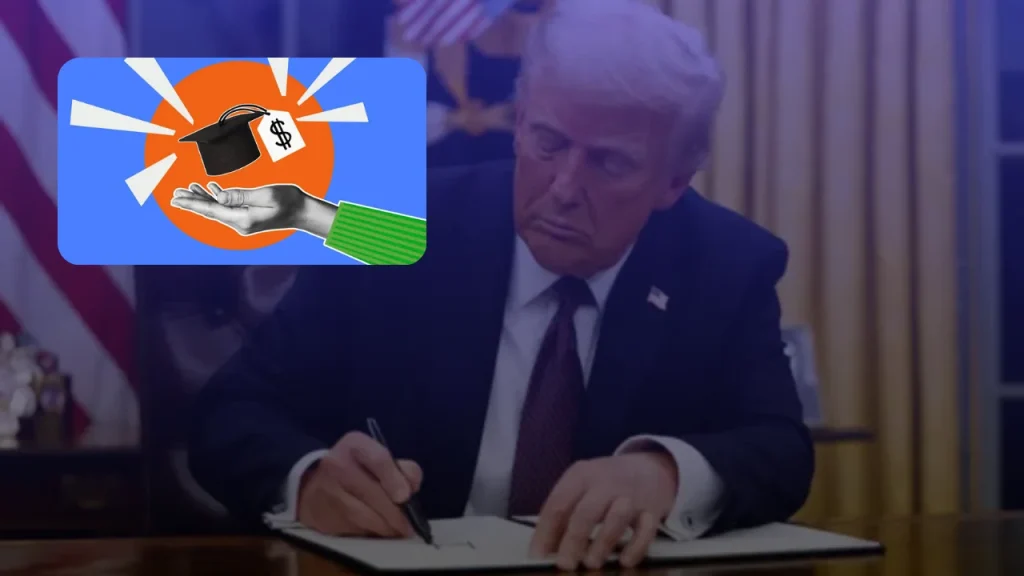
Reports published on October 19, 2026 say the Trump administration is preparing to expand forced collections on defaulted federal student loans. These tools reach wages, tax refunds and some federal benefits. Nearly 10 million borrowers are in default or close to it.
Nothing has been officially announced. The Education Department has not confirmed a restart date. A delay on wage garnishment and Treasury Offset announced on January 16, 2026 has not been formally lifted, and the reporting relies on unnamed sources. Officials reportedly warned the timeline could slip again.
This guide separates what is reported from what federal law already allows. It covers the rules on garnishment limits, notices, hearings, Social Security, tax refunds, rehabilitation, consolidation, discharge, bankruptcy, private loans, credit reporting, collector conduct and scams. This is general information, not legal advice.
Quick Facts: Student Loan Default Collections
| Question | Answer |
| What was reported? | Treasury is moving to hire private debt collectors, possibly as soon as November 2026. Penalties on defaulted borrowers are planned for next year. |
| Who reported it? | The Washington Sun on October 19, 2026, citing five people familiar with the matter. Forbes followed the same day. |
| Is it official? | No. The Education Department said it does not respond to “fishing expeditions.” Treasury and the White House Office of Management and Budget declined to comment. |
| Who is affected? | Borrowers with federal student loans in default. Private student loans are not covered by these federal tools. |
| Current pause | Wage garnishment and Treasury Offset were delayed by the Education Department on January 16, 2026. No restart has been announced. |
| Possible timing | 2027. Some officials reportedly want it in place for the tax year ending with the April 15, 2027 filing deadline, but it may be delayed again. |
| Maximum wage garnishment | 15% of disposable pay, and never below 30 times the federal minimum wage per week in take-home pay |
| Social Security offset | Up to 15% of the benefit, and the remaining benefit must stay at or above $750 per month. SSI is generally exempt. |
| Default threshold | Generally 270 days of missed payments on a federal loan with monthly payments |
| Court order required? | No, for federal administrative wage garnishment. Notice and hearing rights still apply. |
| Official place to start | The Defaulted Loans Support Center on StudentAid.gov, launched by Treasury and Education on September 30, 2026 |
| Portfolio size | About $1.7 trillion in federal student loans |
What the October 19, 2026 Reports Say
According to The Washington Sun, administration officials are preparing financial penalties for millions of borrowers in default. Five sources told the paper that Treasury is moving ahead with plans to hire private debt collectors, possibly as soon as November. Three of the sources said the plans are unlikely to be announced before the midterm elections.
The paper also reported:
- The White House Office of Management and Budget began helping the Education Department prepare to seize benefits and wages last year. Treasury officials blocked the effort over concerns about the economic cost of punitive measures against workers.
- Some officials want wage and benefit collections to apply to the tax year ending April 15, 2027. That may be delayed again while Treasury confirms its systems are ready.
- Treasury has launched a new online portal and a Defaulted Loans Support Center. The administration’s stated preference remains to move borrowers into voluntary payment plans.
Forbes, summarizing the Sun’s reporting, wrote that collection agencies could begin pursuing borrowers in November. The Sun’s own account is narrower. It says Treasury could hire collectors in November and that the penalties themselves are planned for next year.
What this means: The headlines say the government is “about to seize” wages and benefits. The reporting describes internal preparations, not a public order covering every borrower. Whether a particular borrower is affected depends on the loan type, default status, notices sent and the legal steps the government has completed.
Timeline: How Student Loan Collections Reached This Point
| Date | Event |
| March 2020 | Collections on defaulted federal student loans stop under pandemic relief |
| October 2023 | Federal student loan payments restart, followed by a one-year on-ramp that ended September 30, 2024 |
| April 21, 2025 | Education Department announces collections will resume, with about 5 million borrowers in default and millions more at risk |
| May 5, 2025 | Treasury Offset restarts for tax refunds and certain federal payments |
| June 2025 | The Department pauses Social Security offsets that were about to begin for roughly 450,000 borrowers |
| December 2025 | The Department says it will begin administrative wage garnishment in early 2026, starting with notices to a small group of borrowers in January |
| January 16, 2026 | The Department announces a delay in wage garnishment and Treasury Offset, saying the programs will work better after planned improvements to the student loan system |
| March 2026 | Education and Treasury sign an agreement giving Treasury the job of collecting on defaulted federal student loans. Referral is for collection only and ownership of the debt does not transfer |
| March 10, 2026 | A court order ends the SAVE repayment plan |
| July 1, 2026 | New repayment rules take effect, including the Repayment Assistance Plan |
| September 30, 2026 | Treasury and Education launch the Defaulted Loans Support Center |
| October 19, 2026 | Reports say Treasury is preparing to hire private collectors and officials are planning penalties for next year |
The administration has threatened crackdowns and then pulled back before. Forbes noted this history but said the threat may be real this time.
What the Law Already Allows
These powers exist in federal law today. What is uncertain is when and how widely the government will use them again.
Administrative Wage Garnishment (20 U.S.C. § 1095a)
The Higher Education Act lets the government order an employer to withhold part of a defaulted borrower’s pay and send it to the government without first suing the borrower or getting a court judgment. The Education Department’s regulations are in 34 C.F.R. Part 34.
The key limits and protections are:
- 15% cap. Deductions generally cannot exceed 15% of disposable pay, unless the borrower consents in writing to more.
- Minimum take-home pay. Under the Consumer Credit Protection Act (15 U.S.C. § 1673), garnishment cannot reduce weekly disposable earnings below 30 times the federal minimum wage. At $7.25 per hour, that is $217.50 per week.
- Combined garnishments. If other garnishments already apply, overall federal limits on total garnishment can reduce what the student loan holder can take.
- Job protection. An employer may not fire, refuse to hire or discipline a worker because of an administrative wage garnishment order. Federal law allows a worker to bring a claim for violations.
- Reemployment protection. A borrower who was involuntarily separated from a job and then finds new work generally gets a period without garnishment from the new employer. Ask the Department how this applies to your situation.
- Disposable pay is not gross pay. It is what remains after legally required deductions such as taxes.
Wage Garnishment Notice Requirements
Before garnishment begins, the borrower must receive written notice at least 30 days in advance. The notice must explain:
- The nature and amount of the debt.
- The government’s intention to garnish wages.
- The right to inspect and copy records about the debt.
- The right to enter a written repayment agreement.
- The right to request a hearing.
Notices go to the last address the government has on file. Agencies are not required to search for a borrower who moved.
Wage Garnishment Hearings
A borrower can ask for a hearing on the existence, amount or enforceability of the debt, or on whether garnishment would cause financial hardship. Timing matters.
- A request submitted within the deadline in the notice (generally 30 days) gets a hearing.
- A request made within the first 15 days generally stops garnishment from starting until a decision is issued. A later request may not stop it from starting.
- Hardship claims need documents, such as pay stubs, bills and proof of necessary expenses. Reports say the Department has historically denied most hardship objections unless circumstances are extremely dire.
- A hearing does not erase the debt or end the default. If you lose, garnishment can proceed.
Treasury Offset Program (31 U.S.C. § 3716 and § 3720A)
Under the Debt Collection Improvement Act of 1996 and related statutes, the government can intercept federal payments owed to a borrower and apply them to the defaulted debt. Payments that can be offset include:
- Federal income tax refunds (26 U.S.C. § 6402(d) and 31 U.S.C. § 3720A).
- Certain federal payments and, as reported by The Washington Sun, refundable credits that arrive as part of a tax refund.
- Certain Social Security retirement and disability benefits, with limits (see below).
- Federal salary can also be reached through separate federal salary offset rules (5 U.S.C. § 5514).
Before an offset, the borrower should receive a written notice of intent to offset. Department notices have typically allowed about 60 to 65 days to respond before a tax refund offset begins. The borrower can ask to review the debt or enter a repayment agreement.
Can Social Security Be Taken for a Student Loan?
Social Security retirement and Social Security Disability Insurance benefits can be offset for federal non-tax debt under 31 U.S.C. § 3716(c)(3) and 31 C.F.R. § 285.4. The limits are strict:
- The offset is the lesser of 15% of the monthly benefit or the amount by which the benefit exceeds $750.
- The $750 figure is the amount that must remain after the offset.
- Supplemental Security Income (SSI) is generally exempt, along with certain other need-based and veterans’ payments. Federal law protects most VA benefits from creditors (38 U.S.C. § 5301). Check Treasury’s list of exempt payments.
- The Social Security Act’s general bar on seizing benefits (42 U.S.C. § 407) does not stop the federal offset authority for federal debts. It does protect against most private creditors.
- The Education Department paused Social Security offsets in June 2025 for about 450,000 borrowers. Confirm current status before assuming either way.
Why There Is No Statute of Limitations on Federal Student Loans
Under 20 U.S.C. § 1091a, no federal or state statute of limitations applies to collection of many federal student loans. An old federal loan does not become uncollectible after six or seven years. Seven years is the general credit reporting period, which is a separate issue.
Collection Costs
Defaulted loans can accumulate collection costs on top of principal and interest, and a portion of garnished funds may go to those costs. Ask for an itemized balance in writing.
When Does a Federal Student Loan Go Into Default?
A federal loan with monthly payments generally enters default after 270 days of missed payments. Delinquency starts after a single missed payment and is not default.
| Status | Meaning | Consequences |
| Current | Payments made as scheduled | Full access to repayment plans, deferment and forbearance |
| Delinquent | At least one payment missed | Late fees, servicer contact, credit reporting after 90 days late, and increasing default risk |
| Defaulted federal loan | About 270 days of missed monthly payments | Loan balance can be accelerated, credit damage, loss of deferment and aid eligibility, Treasury Offset, wage garnishment |
| Defaulted private loan | Defined by the loan contract and state law | Collection calls, credit reporting, and possible lawsuit |
Default also means loss of eligibility for further federal student aid until the default is resolved.
The Education Department said in April 2025 that about 5 million borrowers were in default and that the number could approach 10 million. The Washington Sun now puts the figure at nearly 10 million.
How to Get Out of Default
The best route depends on loan type, prior history, income, and whether a garnishment or offset has begun. This section is general information, not legal advice.
1. Loan Rehabilitation (34 C.F.R. § 685.211(f))
Rehabilitation is a one-time opportunity per loan.
- The borrower agrees to make nine reasonable and affordable monthly payments within 10 consecutive months.
- The payment is set by formula based on income and generally cannot be less than $5 per month.
- Successful rehabilitation restores the loan to good standing, returns access to deferment, forbearance, income-driven repayment and forgiveness options, and removes the default notation from the credit report. Late payments reported before default can remain.
- The Education Department has said that entering a rehabilitation agreement and making the first five of the nine payments can stop Treasury Offset and wage garnishment. Confirm this in writing for your account, and keep paying until the Department confirms the hold.
- Because rehabilitation can only be used once per loan, do not start it and let it fail.
2. Direct Consolidation
A Direct Consolidation Loan can pay off defaulted loans and put the borrower into a new loan in repayment.
- Borrowers generally cannot consolidate while under a wage garnishment order unless it has been lifted.
- Under current rules, a borrower consolidating a defaulted loan must typically agree to an eligible income-driven repayment plan or make a series of on-time voluntary payments first. Check the current requirements.
- Consolidation can be faster than rehabilitation, but it does not remove the default record from the credit history in the same way.
- Forbes warns that consolidating now could limit repayment plan choices and erase credit toward forgiveness following the One Big Beautiful Bill Act. Compare options before consolidating.
3. Full Repayment or Settlement
Paying off the balance ends default. The Education Department has acknowledged that full repayment is not practical for most borrowers. Any compromise or settlement must be confirmed in writing by the holder of the loan.
4. Repayment Agreement
A written repayment agreement can resolve an AWG notice if made within the notice deadline and honored. Ask what it does to garnishment and offset, and get terms in writing.
5. Discharge, Cancellation or Dispute
Several discharges can apply even to defaulted loans, including:
- Total and Permanent Disability discharge. Eligibility can be based on Social Security Administration findings, VA determinations or a physician’s certification.
- Closed school discharge.
- False certification discharge.
- Unpaid refund discharge.
- Borrower defense to repayment, for school misconduct meeting the legal standard.
- Death discharge, which applies to the borrower, and to a student for Parent PLUS loans.
- Identity theft or forgery, which requires proof such as a police or FTC report.
- Debt that is not yours or has been paid. Request records and dispute it through the hearing or review process.
Applying for a discharge does not always stop collection automatically. Ask how a pending application affects your account.
6. Bankruptcy
Student loans are not automatically discharged in bankruptcy. Under 11 U.S.C. § 523(a)(8), a borrower must generally show undue hardship in an adversary proceeding. Courts commonly use the Brunner test or a totality-of-circumstances approach, depending on the circuit.
The Departments of Justice and Education issued guidance in 2022 and an attestation process for evaluating undue hardship in federal student loan cases. That does not guarantee a discharge. Filing bankruptcy triggers an automatic stay that can pause collection while the case proceeds. Speak with a bankruptcy attorney before relying on this route.
The Official Portal
The Defaulted Loans Support Center, launched by Treasury and Education on September 30, 2026, lets borrowers compare options, apply for rehabilitation or consolidation online, make a payment, and review repayment plans and discharge options. Forbes notes that the system is largely untested.
Use only the official StudentAid.gov site. Navigate there directly rather than clicking links in texts or emails.
What to Do Right Now
If your federal loan is current: Log in to StudentAid.gov, confirm your repayment plan and servicer, update your address, phone and email, and check whether a better plan is available.
If you are behind but not in default: Contact your servicer before day 270. Ask about income-driven repayment, deferment and forbearance, and get any agreement in writing.
If you are in default:
- Log in to StudentAid.gov and confirm which loans are in default, who holds them and the balance.
- Update your address so you receive required notices.
- Compare rehabilitation and consolidation on the official portal.
- Check whether a garnishment or offset notice has been sent. If so, write down the deadline immediately.
- Keep copies of everything you send and receive.
If you get a garnishment notice: Read it fully, mark the deadline, request the records and a hearing if you dispute the debt or need a hardship review, and ask in writing about repayment or rehabilitation. Do not ignore it.
If you depend on Social Security or other benefits: Identify exactly which benefit you receive. SSI is generally exempt. Retirement and disability insurance benefits may be subject to limited offset. If a payment is reduced, use the dispute process stated in the notice.
If you file a joint tax return with a spouse in default: An “injured spouse” may be able to claim their share of the refund using IRS Form 8379.
Repayment Changes in 2026 That Affect Borrowers
SAVE has ended. A court order ended the SAVE plan on March 10, 2026. Servicers began sending notices on July 1, 2026 in groups. Federal Student Aid says affected borrowers generally get 90 days from their notice to choose a new plan, followed by a final 30-day notice. Borrowers who do nothing can be placed into a plan chosen under the rules. Check your own servicer notice for your deadline.
The Repayment Assistance Plan (RAP). RAP is a new income-driven option under the 2025 law, with changes effective July 1, 2026. Payments are generally 1% to 10% of adjusted gross income, divided by 12. They are reduced by $50 for each dependent, with a $10 minimum monthly payment. Repayment runs up to 30 years before any remaining balance can be discharged. RAP is not available for Parent PLUS loans.
Other plans. Standard and, for eligible older loans, graduated and extended plans remain. Income-Based Repayment remains available to eligible borrowers. PAYE and ICR are scheduled to end no later than July 1, 2028. Borrowers with loans first disbursed on or after July 1, 2026 generally have access to the new Tiered Standard plan and RAP only.
Forgiveness Programs for Federal Borrowers
- Public Service Loan Forgiveness (PSLF). Forgives remaining Direct Loan balances after 120 qualifying monthly payments while working full-time for a qualifying government or nonprofit employer. Private loans do not qualify.
- Income-driven repayment forgiveness. Remaining balances may be discharged after the required period of qualifying payments, depending on the plan.
- Teacher Loan Forgiveness. Up to $17,500 for eligible teachers after five consecutive years at a qualifying low-income school. The same service cannot be counted toward PSLF.
- Borrower defense, closed school, false certification and disability discharges as described above.
Is Forgiven Student Debt Taxable?
It can be. The broad federal exclusion for student loan discharges expired for discharges after December 31, 2025. Student loan balances forgiven under income-driven repayment in 2026 or later may be taxable federal income unless another exclusion applies.
Several discharges remain tax-free under other provisions, including PSLF (26 U.S.C. § 108(f)(1)), and death and total and permanent disability discharges. Insolvency can also reduce or eliminate tax on canceled debt. State tax treatment varies. Speak with a tax professional if you expect a large discharge.
Private Student Loans Are Different
Private student loans follow the loan contract and state law, not the federal collection system.
- Private lenders cannot use federal administrative wage garnishment or the Treasury Offset Program.
- To garnish wages, a private lender or debt buyer generally must sue, win a judgment and follow state garnishment law.
- State statutes of limitations can apply, and they vary. Making a payment or acknowledging a debt can restart the clock in some states.
- Federal forgiveness programs such as PSLF do not apply.
- A co-signer is fully liable if the borrower stops paying. Late payments hurt both credit reports, and both can be sued. Ask whether the lender offers co-signer release.
- Private lenders may offer hardship options such as interest-only payments or modified terms. These are voluntary. Get them in writing.
- If you are sued, do not ignore the court papers. Missing the response deadline can lead to a default judgment, which can open the door to wage garnishment and bank levies.
- Refinancing federal loans into a private loan means giving up federal protections, income-driven plans and forgiveness. That change is generally permanent.
Your Rights Against Collectors
Fair Debt Collection Practices Act (15 U.S.C. § 1692 et seq.)
The FDCPA bars harassment, false statements and unfair practices by covered third-party debt collectors. Private collection agencies hired to collect on student loans are generally covered. Violations can support claims for actual damages, statutory damages and attorney’s fees. For a deeper explanation, see our guide to suing a debt collector under the FDCPA.
Key protections include the right to request written validation of the debt within 30 days of the first notice, limits on contact times and places, and a ban on threats of action the collector cannot or does not intend to take.
Regulation F (12 C.F.R. Part 1006)
Regulation F, issued by the Consumer Financial Protection Bureau, limits call frequency. A collector generally cannot call a person more than seven times within seven days about a debt, and must wait seven days after a phone conversation. It also governs electronic communications and the ability to opt out. Learn more in our article on the 7-in-7 rule for debt collectors.
Fair Credit Reporting Act (15 U.S.C. § 1681 et seq.)
The FCRA gives borrowers the right to dispute inaccurate information with credit bureaus and furnishers. Defaulted student loan information can stay on a credit report for up to seven years from the date of first delinquency. Rehabilitation can remove the default notation. Free reports are available from AnnualCreditReport.com.
State Law
States have their own debt collection acts, licensing rules, statutes of limitations and garnishment exemptions. These matter most for private student loans and judgments.
When to Get a Lawyer
Consider legal help if you have been sued, are facing a garnishment hearing, the government’s records appear wrong, a collector is violating the law, or you are considering bankruptcy. Our overview of when a lawyer is worth it in debt collection can help you decide. Many consumer attorneys and legal aid groups handle these cases, and some FDCPA cases are taken without upfront fees.
Student Loan Debt Relief Scams
Confusion over collections creates opportunities for scammers. Warning signs include:
- Upfront fees to “settle” or “forgive” federal student loans.
- Guarantees that your loans will be cancelled or default removed immediately.
- Government-like names, logos or claims of a special program.
- Requests for your FSA ID and password. Never share them.
- Pressure to sign quickly or stop contacting your servicer.
- Claims that a payment to the company will stop garnishment or offset.
Everything a legitimate company can do for federal loans, you can generally do yourself for free through StudentAid.gov. Impersonators may also call pretending to be a government collector, so verify before paying anyone.
Reaction to the Reported Plans
- Borrower advocates. Michael Pierce of Protect Borrowers criticized restarting collections just after the election and questioned whether Treasury has the data needed to certify debts for collection, which is a legal prerequisite. The Roosevelt Institute criticized the plan to hire private collectors.
- Budget hawks. Marc Goldwein of the Committee for a Responsible Federal Budget estimated that delay has cost taxpayers about $5 billion so far, and said it resembles the debt cancellation the administration criticized.
- A middle position. Preston Cooper of the American Enterprise Institute argued collections should come with efforts to prevent default, lower fees and easier rehabilitation.
- Inside the administration. The Sun described a split, with some Treasury staff warning that many affected workers are supporters of the president.
Frequently Asked Questions
Is the government garnishing student loan wages right now?
Not at scale. The Education Department announced a delay in wage garnishment and Treasury Offset on January 16, 2026, and no restart has been announced. Reports say that could change in 2027.
When could wage garnishment and benefit offsets restart?
Reporting points to 2027, with some officials pushing for the tax year ending with the April 15, 2027 deadline. Sources cautioned that it could be delayed again. Treasury could begin hiring private collectors as early as November 2026.
How much can be taken from my paycheck?
Up to 15% of disposable pay, and garnishment cannot reduce weekly take-home pay below 30 times the federal minimum wage.
Do they need a court order to garnish my wages for a federal student loan?
No. Federal law allows administrative wage garnishment without a court judgment, but only after written notice and an opportunity for a hearing.
How much notice will I get?
For wage garnishment, at least 30 days. For Treasury Offset of a tax refund, Department notices have typically allowed about 60 to 65 days. Notices go to your last known address.
Can my tax refund be taken?
Yes, if you have a defaulted federal loan and the debt has been referred for offset. A spouse on a joint return may be able to claim their share with IRS Form 8379.
Can my Social Security be taken?
Retirement and disability insurance benefits can be offset up to 15%, as long as at least $750 per month remains. SSI is generally exempt.
Can I be fired for being garnished?
No. Federal law bars an employer from firing or disciplining an employee because of an administrative wage garnishment order for a student loan.
Does federal student loan debt expire?
Generally no. Federal law removes statutes of limitations for collecting many federal student loans.
Does this affect private student loans?
No. These federal collection tools apply to federal loans only. Private lenders must use state law and typically need a court judgment.
Who collects on defaulted federal loans now?
Under a March 2026 agreement, Treasury handles collections, while the debt remains owned by the Education Department. Reports say Treasury is moving to hire private collectors.
How do I get out of default?
Rehabilitation, Direct consolidation, full repayment, a repayment agreement or a qualifying discharge. Each has tradeoffs. Use the official Defaulted Loans Support Center or speak with a counselor or attorney.
Does rehabilitation stop garnishment?
The Education Department has said that making the first five of nine rehabilitation payments can stop garnishment and offset. Confirm the status of your account in writing.
Is the SAVE plan still available?
No. A court order ended it on March 10, 2026. Check your servicer notice for your deadline to choose another plan.
Can student loans be discharged in bankruptcy?
Possibly, but only by proving undue hardship in an adversary proceeding. Consult a bankruptcy attorney.
Will forgiven loans be taxed?
Some may be. The broad exclusion expired after 2025. PSLF, death and disability discharges and insolvency can still be tax-free. Ask a tax professional.
Sources
- Jeff Stein and Kadia Goba, “Trump Aides Are Getting Ready to Penalize Defaulting Student Loan Borrowers,” The Washington Sun (October 19, 2026).
- Adam S. Minsky, “Education Department Is About To Seize Student Loan Borrowers’ Wages And Benefits,” Forbes (October 19, 2026).
- U.S. Department of the Treasury and U.S. Department of Education, announcement of the Defaulted Loans Support Center (September 30, 2026). Portal: studentaid.gov/default-support.
- U.S. Department of Education, “U.S. Department of Education Delays Involuntary Collections Amid Ongoing Student Loan Repayment Improvements” (January 16, 2026).
- CNBC, “Education Department to delay collections on defaulted student loans” (January 16, 2026).
- U.S. Department of Education, “U.S. Department of Education to Begin Federal Student Loan Collections, Other Actions to Help Borrowers Get Back into Repayment” (April 2025).
- Associated Press, “Student loan borrowers in default may see wages garnished in 2026” (December 2025).
- Federal Student Aid, “Student Loan Default and Collections: FAQs” (studentaid.gov/articles/default).
- Federal Student Aid, “Student Loan Rehabilitation for Borrowers in Default” (studentaid.gov/articles/rehab).
- Federal Student Aid, “SAVE Plan Borrowers: FAQs About Choosing a Different Repayment Plan” (studentaid.gov/articles/save).
- Federal Student Aid, “Top FAQs About Income-Driven Repayment Plans” and “Repayment Plans.”
- Federal Student Aid, Public Service Loan Forgiveness, Teacher Loan Forgiveness, Total and Permanent Disability Discharge, Borrower Defense and Loan Forgiveness and Discharge pages.
- 20 U.S.C. § 1095a (wage garnishment requirement) and 34 C.F.R. Part 34 (administrative wage garnishment).
- 20 U.S.C. § 1091a (statute of limitations and other defenses).
- 31 U.S.C. § 3716 and § 3720A; 26 U.S.C. § 6402(d); 31 C.F.R. § 285.4; 5 U.S.C. § 5514 (administrative and tax refund offset).
- 15 U.S.C. § 1673 (Consumer Credit Protection Act garnishment limits).
- 34 C.F.R. § 685.211(f) (loan rehabilitation).
- 11 U.S.C. § 523(a)(8) (student loans in bankruptcy); U.S. Department of Justice and U.S. Department of Education, undue hardship guidance (2022).
- U.S. Department of the Treasury, Treasury Offset Program legal authorities quick reference and list of payments exempt from offset.
- 42 U.S.C. § 407 and 38 U.S.C. § 5301 (protection of Social Security and veterans’ benefits).
- 15 U.S.C. § 1692 et seq. (Fair Debt Collection Practices Act); 12 C.F.R. Part 1006 (Regulation F); 15 U.S.C. § 1681 et seq. (Fair Credit Reporting Act).
- Internal Revenue Service, Form 8379 instructions and Topic No. 431, Canceled Debt; 26 U.S.C. § 108(f).
- Taxpayer Advocate Service, “What to Know About Student Loan Forgiveness and Your Taxes” (March 2026).
- Consumer Financial Protection Bureau, guidance on co-signed student loans in default.
- Federal Trade Commission, “Paying for School and Avoiding Scams.”
- National Consumer Law Center, Student Loan Borrower Assistance (as quoted by Forbes).
Written by Israr Ahmad, legal content researcher at AllAboutLawyer.com. Last updated October 20, 2026. This article is general information, not legal, tax or financial advice. AllAboutLawyer.com is not a law firm. Federal student loan rules and collection plans can change, and this is a developing story. Outcomes depend on loan type, account status, notices received and individual circumstances. Consult a qualified attorney or counselor about your specific situation.
About the Author
Israr Ahmad is a legal content researcher with 4+ years of experience covering class action settlements and consumer rights cases. He has researched and published coverage of 2,500+ settlements using verified court records, settlement administrator filings, and government sources. Learn more about Israr.