
Register to Vote in 2026, Deadlines, Requirements, Voter ID Laws and California’s DOJ Noncitizen Voting Cases
To register to vote in the United States, start at Vote.gov, choose your state or territory, and follow the link to your official state election site. You generally must be a U.S. citizen, meet your state’s residency rules and be 18 by Election Day. Deadlines and methods differ by state, and the general election is Tuesday, November 3, 2026. Some deadlines have passed, but several states still allow late or same-day registration.
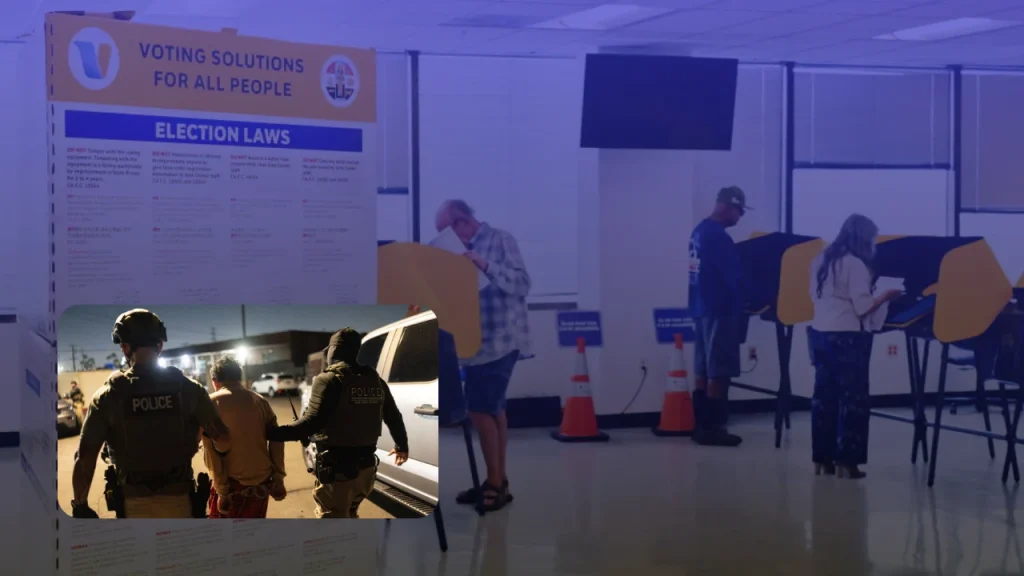
Voter registration is also in the news. On October 19, 2026, the Department of Justice (DOJ) announced federal charges against 28 lawful permanent residents in California for alleged illegal registration and voting. Eleven were arrested. Days earlier, the DOJ sued California over a separate list of more than 20,000 registrants it describes as likely noncitizens.
Every defendant is presumed innocent, and the 20,000 figure is an allegation, not a finding that 20,000 people are ineligible. This guide explains how to register, the deadlines, the federal laws involved and what the California cases do and do not mean. It is general information, not legal advice.
Quick Facts: Registering to Vote and the California Cases
| Question | Answer |
| Where do I register? | Vote.gov, which routes you to your state’s official site. Registration through official channels is generally free. |
| Is there one national deadline? | No. Deadlines vary by state and sometimes by method (online, mail, in person). |
| Next general election | Tuesday, November 3, 2026 |
| Who can register? | U.S. citizens who meet their state’s age, residency and other rules. Most states require you to be 18 by Election Day. |
| Can noncitizens vote in federal elections? | No. Green-card holders are not U.S. citizens and cannot vote in federal elections. |
| Can I still register in California? | The regular deadline was October 19, 2026. Conditional voter registration is available through Election Day at designated locations. |
| California criminal cases | 28 lawful permanent residents charged and 11 arrested, announced October 19, 2026 under “Operation Protect the Vote” |
| California civil lawsuit | DOJ seeks to bar counting of mail ballots tied to 20,000+ people it calls likely noncitizens until citizenship is verified |
| Convictions? | None announced. Charges are allegations. |
| Has a court ordered California to stop counting? | Not shown in the public materials reviewed as of October 20, 2026. Check for new orders. |
| Maximum federal penalties | Up to 1 year for noncitizen voting (18 U.S.C. § 611). Up to 5 years for a false claim of citizenship to register or vote (18 U.S.C. § 1015(f)). |
How to Register to Vote
Online
Most states offer online registration.
- Go to Vote.gov and select your state or territory.
- Confirm you meet the citizenship, age, residency and any other requirements.
- Enter the information your state requires. This commonly includes your legal name, date of birth, residential address, a driver’s license or state ID number (or the last four digits of your Social Security number), a citizenship attestation, party affiliation where applicable and a signature or electronic verification.
- Submit before the deadline for your method. Online, mail and in-person deadlines can differ.
- Check your status afterward and save any confirmation number or email.
Use an official state site. A private website or a third-party form does not mean the state has accepted your registration. A submitted form is not the same as an accepted registration.
By Mail
The U.S. Election Assistance Commission publishes a National Mail Voter Registration Form usable in most states. Read your state’s instructions, sign it, and mail it to the listed election office with enough time for delivery. The state instructions say whether a postmark or receipt date controls.
The national form is not available in New Hampshire, North Dakota, Wisconsin and Wyoming. Use those states’ own official processes.
An unsigned or incomplete form can be delayed or rejected. Contact the election office before sending a second application so the two do not conflict.
In Person
Depending on the state, you can register at a county or state election office, a motor vehicle office, a public-assistance agency or a same-day registration site. Bring the identification your state requires. After a deadline, ask whether late registration is available and where.
Military and Overseas Voters
Eligible service members, their families and U.S. citizens abroad can register and request an absentee ballot through the Federal Voting Assistance Program. Federal law on military and overseas voting is the Uniformed and Overseas Citizens Absentee Voting Act (52 U.S.C. § 20301 et seq.). Start early, because ballot request and return deadlines differ from ordinary domestic deadlines.
Who Is Eligible to Register?
Eligibility is set mainly by state law within federal constitutional limits. The 15th, 19th, 24th and 26th Amendments bar denying the vote based on race, sex, poll taxes and age (for citizens 18 or older).
- Citizenship. Required for federal elections. A lawful permanent resident is not a citizen. Do not certify citizenship on an application unless you are a citizen.
- Age. Generally 18 by Election Day. Many states let 16- and 17-year-olds preregister, but preregistration does not allow voting before the voting age.
- Residency. You register where you live. You cannot cast a regular ballot as a resident of two states in the same federal election. Students and people who recently moved should check how their state treats residency.
- Felony convictions. A felony conviction does not end voting rights everywhere. Rules vary widely, from no loss of rights to restoration after release, after supervision or by a separate process. Check your state’s current rules before assuming you are ineligible.
- People with disabilities. A disability does not by itself disqualify anyone. Federal law, including the Americans with Disabilities Act and the Help America Vote Act, requires accessible voting. Ask your election office about accommodations.
- People without a permanent home. You can generally register by describing where you stay and giving a mailing address. Ask your election office how to describe your residence.
- College students. You may be able to register at your school address or your home address, depending on state law. Never vote twice in the same election.
Documents and ID: Registration Versus Voter ID
Registration decides whether you are on the voter list. Voter ID rules decide what you may need to show when you vote. The two are different, and requirements vary by state.
- Many states ask for a driver’s license or state ID number at registration, with alternatives such as the last four digits of your Social Security number.
- Under the Help America Vote Act, certain first-time voters who registered by mail may need to show identification the first time they vote, unless they provided ID information with their application.
- Some states require ID at the polls. Others accept alternatives or let you cast a provisional ballot.
- No single nationwide rule requires every voter to show a passport or birth certificate to register. Proposals to add proof-of-citizenship requirements are a separate political and legal debate. For one analysis, see what the SAVE Act could mean for election workers and legal citizens. Always verify the rule that is actually in force in your state.
Registration Deadlines for November 3, 2026
As of October 20, 2026, many regular registration deadlines have passed. That does not mean registration is closed everywhere. These figures are general reference points based on state-law summaries. Your deadline can depend on your method, and special rules can apply. Confirm yours on your state election site.
California
The regular deadline was October 19, 2026. California allows conditional voter registration from October 20 through Election Day. An eligible person registers and casts a provisional ballot at a county elections office or other designated site. Contact your county elections office for locations and hours.
States With Same-Day or Late Registration
Roughly two dozen states and Washington, D.C. offer some form of same-day or late registration, with different dates, places and conditions. Examples include California (conditional), Colorado, Connecticut, Hawaii, Idaho, Illinois, Iowa, Maine, Maryland, Michigan, Minnesota, Montana (late registration), Nevada, New Hampshire, New Mexico, Utah, Vermont, Virginia, Washington, Wisconsin and Wyoming. North Carolina offers same-day registration during early voting only. Alaska’s late option is limited to presidential elections.
Many of these options are limited to certain offices, early voting sites or types of ballots. Do not assume you can register at any polling place.
North Dakota has no voter registration. Eligible residents follow that state’s ID and residency rules.
State-by-State Reference
| State | General timing before Election Day | Late-registration note |
| Alabama | 15 days | Verify method-specific deadline |
| Alaska | 30 days | Narrow presidential-only exception |
| Arizona | 29 days | Advance registration |
| Arkansas | 30 days | Advance registration |
| California | 15 days | Conditional registration through Election Day |
| Colorado | 8 days | Same-day registration available |
| Connecticut | 7 days | Election Day registration available |
| Delaware | 24 days | Advance registration |
| Florida | 29 days | Advance registration |
| Georgia | 29 days | Advance registration |
| Hawaii | 10 days | Same-day registration available |
| Idaho | About 25 days | Election Day registration available |
| Illinois | 28 days | Online deadline may differ; grace-period and same-day registration available |
| Indiana | 29 days | Advance registration |
| Iowa | 15 days | Same-day registration available |
| Kansas | 21 days | Advance registration |
| Kentucky | 29 days | Advance registration |
| Louisiana | Varies by method | Online and paper deadlines differ |
| Maine | 21 days | Election Day registration available |
| Maryland | 21 days | Same-day registration available |
| Massachusetts | 10 days | Limited windows; check current calendar |
| Michigan | 15 days | Same-day registration at designated offices |
| Minnesota | 21 days | Same-day registration available |
| Mississippi | 30 days | Advance registration |
| Missouri | 27 days | Advance registration |
| Montana | 30 days | Late registration available; confirm cutoff and places |
| Nebraska | Varies by method | Check in-person, mail and online deadlines |
| Nevada | Varies by method | Same-day registration available |
| New Hampshire | Set locally | Election Day registration available |
| New Jersey | 21 days | Advance registration |
| New Mexico | 28 days | Late registration at designated offices and sites |
| New York | 10 days | Advance registration |
| North Carolina | 25 days | Same-day during early voting only |
| North Dakota | No registration | Follow residency and ID rules |
| Ohio | 30 days | Advance registration |
| Oklahoma | 25 days | Advance registration |
| Oregon | 21 days | Advance registration |
| Pennsylvania | 15 days | Advance registration |
| Rhode Island | 30 days | Limited presidential-only same-day option |
| South Carolina | 30 days | Advance registration |
| South Dakota | 15 days | Advance registration |
| Tennessee | 30 days | Advance registration |
| Texas | 30 days | Advance registration |
| Utah | 11 days (online) | Same-day registration available |
| Vermont | Through Election Day | Same-day registration available |
| Virginia | 21 days | Same-day registration available via provisional ballot |
| Washington | 8 days (online and mail) | In-person registration through Election Day |
| West Virginia | 21 days | Advance registration |
| Wisconsin | 20 days (online and mail) | In-person and Election Day registration available |
| Wyoming | 14 days | Election Day registration available |
What Is a Provisional Ballot?
A provisional ballot is used when officials cannot immediately confirm your eligibility. Under the Help America Vote Act (52 U.S.C. § 21082), a voter who says they are registered and eligible in the jurisdiction generally has the right to cast a provisional ballot. It is not automatically counted or rejected. Officials review it under state law. Ask how to check whether yours counted.
Check and Maintain Your Registration
Check your registration before the election at your state’s official site. Confirm your name, address, county or district, party affiliation and status.
- Inactive status. In some states a record is marked inactive after mail goes undeliverable or a voter does not respond. That does not always mean you lost the right to vote. Ask your election office how to reactivate.
- Moved within your state. Update your address. A change with the post office or DMV may not update your election record.
- Moved to another state. Register under the new state’s rules and deadlines. A registration in your old state does not carry over.
- Changed your name. Update your registration so it matches your ID.
- Changed party. In states with closed or partly closed primaries, party affiliation can affect which primary you can vote in. Changing parties may have its own deadline.
- Record not found. Check spelling and the correct state site, then contact your local election office. If you registered near the deadline, processing may still be underway.
- Told you are not on the list. Ask the poll worker to check your record and ask about a provisional ballot.
Federal Laws That Govern Registration and Voting
States run elections, but several federal laws set rules.
- National Voter Registration Act (NVRA) of 1993 (52 U.S.C. § 20501 et seq.). Requires registration opportunities through motor vehicle and other public-assistance agencies and sets list-maintenance rules. Any program to systematically remove ineligible voters from the rolls must be completed at least 90 days before a federal election (52 U.S.C. § 20507(c)(2)). Individualized removals based on documented reasons are treated differently. This rule is central to the dispute over California’s rolls.
- Help America Vote Act (HAVA) of 2002. Requires statewide computerized voter lists, provisional ballots and ID rules for certain first-time voters.
- Voting Rights Act of 1965 (52 U.S.C. § 10301 et seq.). Prohibits discrimination in voting. It also criminalizes knowingly giving false information to register or vote (52 U.S.C. § 10307(c)), with penalties up to five years.
- 18 U.S.C. § 611. Prohibits noncitizens from voting in federal elections. The penalty is a fine and up to one year in prison. There is a narrow defense where the person’s parents were citizens, the person lived in the U.S. as a permanent resident from before age 16 and the person reasonably believed they were a citizen.
- 18 U.S.C. § 1015(f). Criminalizes knowingly making a false claim of U.S. citizenship to register or vote in a federal, state or local election. The penalty is up to five years.
- 18 U.S.C. § 911. Criminalizes falsely claiming U.S. citizenship, with a penalty up to three years.
- 18 U.S.C. § 1425. Criminalizes procuring naturalization or citizenship unlawfully. This is the basis for the allegations that defendants lied about earlier registration or voting when seeking citizenship.
- Immigration consequences. Unlawful voting or a false claim of citizenship can make a noncitizen deportable or inadmissible (8 U.S.C. §§ 1182(a)(6)(C)(ii), 1182(a)(10)(D) and 1227(a)(6)). A false claim of citizenship can carry a permanent bar. These consequences can apply separately from any criminal case.
- State law. States set most details: registration deadlines, party rules, voter ID, early voting, mail voting and their own penalties for election crimes.
Can Noncitizens Register or Vote?
Federal law bars noncitizens from voting for President, Vice President, presidential electors, U.S. senators and representatives. A small number of local governments allow noncitizens to vote in limited local-only contests, such as school boards, where state or local law permits and the ballots are separate. That does not make anyone eligible for federal or state races.
A green card is lawful permanent residence, not citizenship. A person eligible for naturalization who has not completed it cannot vote.
Accidental registration. Accepting an application does not prove the applicant was eligible, and an allegation or database flag does not prove someone is a noncitizen. Noncitizens can encounter registration prompts at agencies such as motor vehicle offices. If you are not a citizen and think you were registered by mistake, do not vote. Talk to a qualified immigration attorney before making statements to any agency, because the facts and intent matter. For a detailed look at the California rules, see what the law says about noncitizen voting in California.
The October 19, 2026 DOJ Charges in California
What Was Announced
On October 19, 2026, the DOJ announced criminal charges against 28 lawful permanent residents in California and said 11 were arrested. The cases were brought under “Operation Protect the Vote,” involving the four U.S. Attorney’s Offices in California. Defendants were expected to make initial appearances that day, and no pleas were to be taken.
According to the DOJ, the allegations include falsely claiming U.S. citizenship on voter registration applications, voting in federal elections while ineligible, and making false statements on naturalization paperwork. Charges vary by defendant. Reports describe arrests in the Los Angeles area, Sacramento and the San Francisco Bay Area.
Examples From the DOJ Announcement
These are the government’s allegations, not findings of guilt.
- A 46-year-old Sacramento man is alleged to have registered in 2018 and 2020 while falsely claiming citizenship and voted in 2022 and 2024.
- A 41-year-old Vacaville woman is alleged to have registered and voted in November 2024 after falsely certifying citizenship.
- A 67-year-old Sacramento man is alleged to have registered and voted in November 2024.
- A 72-year-old Commerce man is alleged to have registered in 2019 and voted in 2020, twice in 2022 and in 2024.
- A 30-year-old woman is alleged to have registered in 2022 and voted in November 2024.
Penalties
The DOJ said certain felony charges, including some false statements in naturalization applications and fraudulent registration offenses, carry maximum sentences of up to five years. Voting by a noncitizen in a federal election under 18 U.S.C. § 611 is a misdemeanor with a one-year maximum. These are statutory maximums, not predicted sentences. Some articles describe all the charges as felonies, which is not accurate for the § 611 count.
Part of a Wider Push
The California cases follow other recent DOJ announcements. On October 12, 2026, the DOJ announced charges against 16 people across several states, and Acting Deputy Attorney General Trent McCotter has said prosecutors have charged dozens of people with voting crimes in recent weeks. Some earlier cases involved guilty pleas. The DOJ has described the effort as enforcing the rule that only citizens may vote in federal elections.
The Separate DOJ Lawsuit Over 20,000+ California Registrants
The criminal cases are separate from a civil lawsuit.
Background. Reporting says Homeland Security Secretary Markwayne Mullin told California Secretary of State Shirley Weber in July that there were likely numerous noncitizens registered in California. The DOJ later sent letters to California and Los Angeles County officials demanding they review a list of “likely noncitizens” within a short deadline, and asked that ballots from those registrants be set aside.
The lawsuit. On or about October 15, 2026, the DOJ sued California in federal court in the Central District of California. It seeks preliminary and permanent injunctions preventing the disputed mail ballots from being counted in federal elections until citizenship is verified. The DOJ says California officials were given a chance to act and did not.
California’s response. Secretary of State Weber said the state was not given enough data or methodology to independently assess the list, and objected to the short time before the election. California officials and the Attorney General have criticized the timing and tactics. Governor Gavin Newsom signed election bills limiting law enforcement interference with ballots and election administration.
What it does not prove. The number reflects people federal officials identified as likely noncitizens. It does not establish that each person is a noncitizen, received a ballot, returned one or had one counted. A registration, a mailed ballot, a returned ballot and a counted ballot are different events. The 28 criminal cases also do not prove the status of anyone else on the list.
Key legal questions. Courts may weigh the NVRA’s 90-day limit on systematic list-maintenance programs before a federal election, the reliability of federal data matches, due process for voters wrongly flagged, the DOJ’s authority to seek the requested relief, and states’ primary role in running elections. For more on the lawsuit, see the DOJ lawsuit seeking to block counting of 20,000 California mail ballots.
Current status. As of October 20, 2026, public materials reviewed did not show that a court had granted the requested injunction. Filing a lawsuit does not by itself invalidate any ballot or stop normal election processing. Check for an actual court order and your county elections office’s instructions.
What This Means for Eligible Voters
- If you are a U.S. citizen registered in California, normal voting procedures continue unless an official notice or court order says otherwise.
- Verify your registration and your ballot status through official state tools.
- If an election official questions your eligibility, ask what specific requirement needs verification and how to respond. Keep copies of notices and documents. Do not ignore formal deadlines.
- If you believe you were wrongly removed or challenged, contact your election office and ask about the correction or appeal process. Voting-rights and legal-aid groups can explain your options. Consult an attorney if the issue involves alleged fraud or citizenship.
- If you receive court papers or an agency notice about your registration or vote, get legal advice promptly.
Voting After You Register
- In person. Confirm your polling place, hours and ID requirements. Polling places can change.
- Mail or absentee. Some states mail ballots to all registered voters. Others require a request or an eligible reason. Follow signature, witness and return instructions, and check postmark and receipt rules.
- Early voting. Many states offer in-person early voting, and some allow late registration then.
Voter Registration Scams
Be cautious if a website, text or caller:
- Claims it can guarantee registration without an official application.
- Demands payment to register you.
- Asks for a Social Security number, immigration document or other sensitive record without a clear official purpose.
- Threatens arrest or disqualification unless you act immediately.
- Tells you to ignore an official election-office notice.
Start at Vote.gov and verify any unexpected message independently before using its links or phone numbers.
Frequently Asked Questions
Where can I register to vote?
Start at Vote.gov, select your state or territory and follow the official link. You can also register by mail with the National Mail Voter Registration Form or in person at an election or designated government office.
Is there one deadline for all states?
No. Deadlines vary by state, method and election. Some states allow same-day or late registration.
Can I still register for the November 3, 2026 election?
It depends on your state and method. Many regular deadlines have passed, but some states offer late or same-day registration. In California, conditional voter registration is available through Election Day.
Do I need a driver’s license to register?
Not always. Many states accept alternative information such as the last four digits of your Social Security number. Requirements vary.
Can I register at 17?
Many states allow preregistration at 16 or 17, becoming active when you reach voting age. Check your state’s rules.
Can I register if I have a felony conviction?
Possibly. Rules vary by state and by sentence or supervision status. Check your state’s current rules.
Can a green-card holder vote in federal elections?
No. Lawful permanent residence is not citizenship, and federal law bars noncitizens from voting in federal elections.
What is the penalty for noncitizen voting?
Under 18 U.S.C. § 611, up to one year in prison and a fine. A knowingly false claim of citizenship to register or vote under 18 U.S.C. § 1015(f) carries up to five years. There can also be serious immigration consequences.
Can a noncitizen be registered by mistake?
It can happen, for example through an agency registration prompt. Prosecutors must still generally prove the required knowledge or intent for false-claim offenses. If you think this happened to you, do not vote and speak with an immigration attorney.
Does being on a voter roll prove someone is eligible?
No. It shows an application was processed. Eligibility depends on the law and facts. Likewise, a government list alleging ineligibility does not by itself prove the allegation.
Are the 28 California defendants guilty?
No. They face allegations. Each has the presumption of innocence and the right to contest the charges. The government must prove its case beyond a reasonable doubt.
Does the DOJ’s 20,000-person list mean 20,000 noncitizens voted?
No. It is a list of people federal officials consider likely noncitizens. It does not establish that each is a noncitizen, received a ballot, returned it or had it counted.
Is the lawsuit the same as the 28 criminal cases?
No. The criminal cases charge specific people. The civil lawsuit seeks an order affecting how California handles ballots tied to a larger list.
Has a court ordered California to stop counting these ballots?
As of October 20, 2026, the public materials reviewed did not show such an order. Check for updates.
What should I do if my registration is questioned?
Ask for the specific reason, follow the official correction or review process and keep copies. Get legal advice if the issue involves citizenship or alleged fraud.
Can voter registrations be challenged?
Yes, under state and federal procedures. A challenge does not automatically make a person ineligible, and officials must follow the law.
Sources
- Vote.gov, “Register to Vote” (vote.gov/register).
- USA.gov, “How to Register to Vote” (usa.gov/register-to-vote).
- U.S. Election Assistance Commission, National Mail Voter Registration Form (eac.gov/voters/national-mail-voter-registration-form).
- National Conference of State Legislatures, “Voter Registration Deadlines” (ncsl.org/elections-and-campaigns/voter-registration-deadlines) and “Same-Day Voter Registration” overview.
- California Secretary of State, “General Election, November 3, 2026: Key Dates and Deadlines” (sos.ca.gov/elections/upcoming-elections/general-election-november-3-2026/key-dates-deadlines) and Voter Registration page (sos.ca.gov/elections/voter-registration).
- U.S. Department of Justice, “Justice Department Charges 28 Foreign Nationals in California With Election Crimes” (October 19, 2026) (justice.gov/opa/pr/justice-department-charges-28-foreign-nationals-california-election-crimes).
- U.S. Department of Justice, announcement of lawsuit against California over voter list (October 2026) (justice.gov/opa/pr/justice-department-sues-state-california-over-voter-list).
- Federal Voting Assistance Program (fvap.gov).
- 18 U.S.C. § 611, § 1015(f), § 911 and § 1425.
- 52 U.S.C. § 20501 et seq. (National Voter Registration Act), § 20507(c)(2) (90-day rule), § 21082 (Help America Vote Act provisional ballots), § 10307 (Voting Rights Act false registration) and § 20301 et seq. (UOCAVA).
- 8 U.S.C. §§ 1182(a)(6)(C)(ii), 1182(a)(10)(D) and 1227(a)(6) (immigration consequences of false citizenship claims and unlawful voting).
- News reports on the DOJ’s California letters, lawsuit and related charges, including Colorado Politics and Denver Gazette (October 14 to 15, 2026) and Fox News coverage of Acting Deputy Attorney General Trent McCotter’s statements.
Written by Israr Ahmad, legal content researcher at AllAboutLawyer.com. Last updated October 20, 2026. This article is general information, not legal advice, and AllAboutLawyer.com is not a law firm. Registration rules, deadlines and ID requirements vary by state and can change, and the California matters are developing allegations, not final judicial findings. Use official election-office guidance for your registration and consult a qualified attorney about a specific legal or immigration matter.
About the Author
Israr Ahmad is a legal content researcher with 4+ years of experience covering class action settlements and consumer rights cases. He has researched and published coverage of 2,500+ settlements using verified court records, settlement administrator filings, and government sources. Learn more about Israr.