
St. Luke’s Boise ER Doctor Lawsuit, Family Sues Dr. Bryan Shiflett Over Teen’s Death After Bogus Basin Snowboarding Accident
The parents of 16-year-old Leo Gonzalez have filed a wrongful death lawsuit against St. Luke’s Regional Medical Center, emergency physician Dr. Bryan Shiflett and four other defendants after their son died following a snowboarding accident at Bogus Basin, Idaho. The family alleges failures in emergency transportation, trauma response, treatment and patient stabilization contributed to Leo’s death on March 3, 2026.
A federal investigation reportedly identified violations of the Emergency Medical Treatment and Labor Act (EMTALA) involving St. Luke’s efforts to stabilize and transfer the teenager. The lawsuit, filed in Ada County in September 2026, drew renewed attention in late November after reporting revealed that Shiflett previously faced a $13.5 million medical malpractice jury verdict in 2023, later resolved through a confidential settlement.
The Gonzalez lawsuit is pending. No finding of civil liability, damages award or settlement has been announced, and all allegations remain unproven.
St. Luke’s Boise ER Doctor Lawsuit: Quick Facts
| Case detail | Information |
| Plaintiffs | Joel and Lorena Gonzalez |
| Deceased patient | Leo Gonzalez, 16 |
| School | Centennial High School |
| Emergency physician | Dr. Bryan Shiflett |
| Cardiothoracic surgeon | Dr. Andrew Forbes |
| Hospital | St. Luke’s Boise Medical Center |
| Accident location | Bogus Basin Mountain Recreation Area |
| Accident date | February 28, 2026 |
| Death date | March 3, 2026 |
| Lawsuit filed | September 2026 |
| Court | Ada County District Court, Idaho |
| Assigned judge | Patrick Miller, per published court reporting |
| Defendants | Six |
| Reported civil claims | Ten |
| Federal investigation | April 6-7, 2026 |
| Federal law at issue | Emergency Medical Treatment and Labor Act (EMTALA) |
| Prior malpractice verdict involving Shiflett | $13.5 million (2023) |
| Settlement | None announced |
| Class action | No |
| Status | Pending litigation |
The Leo Gonzalez Wrongful Death Lawsuit Explained
Why Is St. Luke’s Boise ER Doctor Bryan Shiflett Being Sued?
The family alleges that medical providers failed to respond adequately to a life-threatening internal injury. According to published accounts of the complaint, Leo fractured his collarbone and injured his subclavian artery, a major blood vessel supplying the upper body, causing severe internal bleeding. His parents contend that appropriate emergency intervention could have prevented his death.
Their allegations concern several stages of care:
- Emergency response at Bogus Basin.
- Selection of emergency transportation.
- Trauma assessment at St. Luke’s.
- Availability and use of surgical resources.
- Stabilization before hospital transfer.
- Hospital oversight of its medical providers.
The suit does not seek compensation merely because a snowboarding accident occurred. It challenges the emergency response and medical decisions that followed. Whether any defendant breached a legal duty, and whether that breach caused Leo’s death, are questions for the court.
Who Is Being Sued in the Leo Gonzalez Lawsuit?
| Defendant | Role in the allegations |
| Dr. Bryan Shiflett | Emergency physician responsible for Leo’s initial hospital treatment |
| Dr. Andrew Forbes | On-call cardiothoracic surgeon at St. Luke’s |
| St. Luke’s Regional Medical Center | Hospital treatment, protocols and provider oversight |
| Emergency Medicine of Idaho LLC | Shiflett’s employer and physician staffing company |
| Acute Rescue and Transport | Emergency medical transportation |
| Bogus Basin Recreational Association | Ski-area emergency response |
Saint Alphonsus Regional Medical Center, where Leo later received emergency surgery, is not among the six reported defendants. Being named in a complaint does not establish liability.
What Happened to Leo Gonzalez at Bogus Basin?
Leo fell while snowboarding at Bogus Basin on February 28, 2026, and injured his shoulder. According to the complaint, ski patrollers found him conscious and in shoulder pain, and more concerning symptoms reportedly developed during the response. The family alleges an air ambulance should have been requested instead of ground transport.
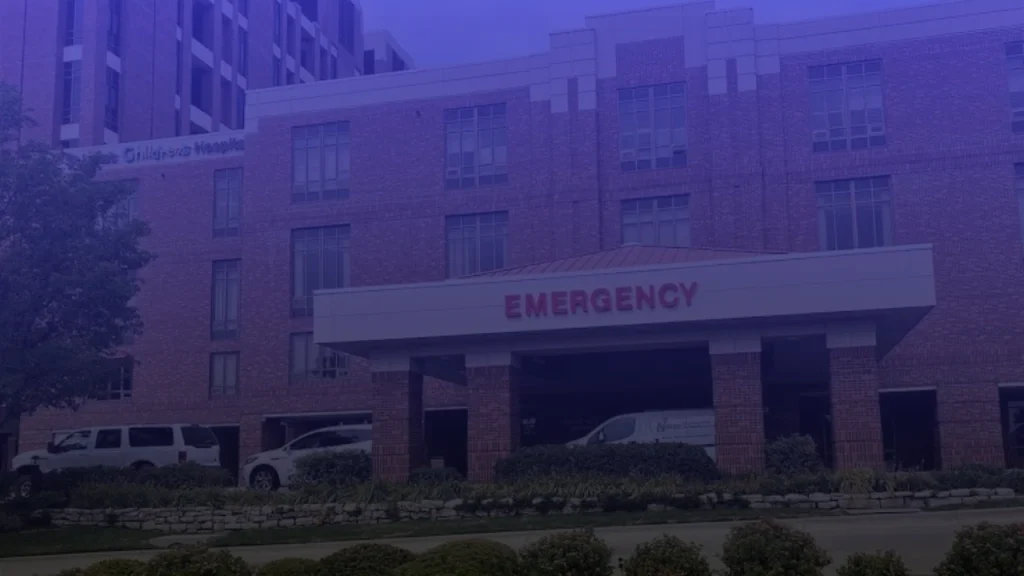
Leo was taken to St. Luke’s Boise Medical Center, where imaging identified a serious vascular injury and internal bleeding. His parents allege St. Luke’s did not activate its trauma team or obtain timely surgical intervention before arranging a transfer to Saint Alphonsus. He received emergency treatment there but died on March 3. These accounts come from published reporting describing the complaint and records; legal responsibility has not been established.
Accident and Emergency Treatment Timeline
| Date and reported time | Development |
| February 28, approx. 9:30 p.m. | Snowboarding accident at Bogus Basin |
| March 1, 12:19 a.m. | Arrival at St. Luke’s Boise Medical Center |
| March 1, approx. 1:17 a.m. | ER physician reportedly informed of active internal bleeding |
| March 1, 1:50 a.m. | On-call cardiothoracic surgeon reportedly contacted |
| March 1, 2:06 a.m. | Patient leaves St. Luke’s |
| March 1, approx. 2:18 a.m. | Arrival at Saint Alphonsus |
| March 1-3 | Emergency surgery and intensive treatment |
| March 3 | Leo dies |
| April 6-7 | Federal investigators examine St. Luke’s emergency treatment |
| September 2026 | Parents file civil lawsuit |
| November 6 | Bogus Basin reportedly files an answer denying liability |
| November 23-25 | Renewed media coverage |
Times come from published descriptions of the complaint and inspection report, not independently obtained medical records.
Federal EMTALA Investigation of St. Luke’s
Did Federal Investigators Find That St. Luke’s Violated Emergency Care Laws?
According to the Idaho Statesman and Idaho News 6, an April 2026 federal investigation identified deficiencies in St. Luke’s treatment and transfer of Leo. Published accounts describe two main concerns:
- The hospital allegedly failed to use available resources to provide necessary stabilizing treatment.
- The transfer was reportedly not timely or appropriate enough.
Idaho News 6 reports inspectors identified a 49-minute interval between the physician learning of the internal bleeding and Leo’s departure, and describes uncertainty among staff about trauma protocols for patients aged 15 to 17. These reported findings are significant, but they are not a civil judgment of malpractice or an award of compensation. The full federal inspection report was not independently obtained for this article.
What Is EMTALA and Why Does It Matter?
Congress enacted EMTALA in 1986 to protect access to emergency care regardless of ability to pay. It is codified at 42 U.S.C. § 1395dd and implemented through regulations including 42 CFR § 489.24. It applies to Medicare-participating hospitals with emergency departments, and its protections are not limited to Medicare patients.
| Hospital obligation | Meaning |
| Medical screening | Provide an appropriate exam to determine whether an emergency condition exists |
| Stabilizing treatment | Provide necessary stabilizing care within available capabilities |
| Appropriate transfer | Follow statutory requirements when transferring patients who need more treatment |
The Gonzalez complaint reportedly asserts that St. Luke’s violated its stabilization and transfer obligations.
Is It Illegal for an ER to Transfer an Unstable Patient?
Not in every circumstance. EMTALA permits certain transfers of unstabilized patients if statutory conditions are met, for example when a physician certifies that the expected benefits of treatment elsewhere outweigh the increased risks of transfer. An appropriate transfer generally requires:
- Treatment within the transferring hospital’s capacity to minimize risks.
- Acceptance by a receiving facility with appropriate resources.
- Transfer of relevant medical information.
- Qualified transport personnel and necessary equipment.
Idaho News 6 reports the emergency physician documented his belief that the benefits of transfer outweighed the risks. The family disputes the adequacy of the preceding care and transfer process. A transfer certification does not necessarily establish compliance with every EMTALA requirement.
Dr. Bryan Shiflett’s Prior $13.5 Million Malpractice Verdict
What Was the 2023 Verdict?
The earlier case involved a patient who had a stroke in 2016. The lawsuit alleged delays in diagnosis and treatment caused serious neurological injuries. In February 2023, an Ada County jury awarded about $13.5 million after finding Shiflett and his employer liable. The verdict included a finding involving reckless misconduct, which matters because Idaho law ordinarily caps noneconomic damages.
Shiflett appealed, challenging aspects of the trial court’s instructions. The case was resolved through a confidential settlement and the appeal was withdrawn. According to November 2026 reporting, the settlement did not require an admission of liability, and the amount paid has not been disclosed.
| Comparison | Previous case | Gonzalez lawsuit |
| Medical incident | 2016 stroke treatment | 2026 traumatic vascular injury |
| Main allegations | Delayed diagnosis and treatment | Emergency treatment and stabilization failures |
| Jury verdict | $13.5 million (2023) | None |
| Appeal | Filed, later withdrawn | Not applicable at this stage |
| Final resolution | Confidential settlement | None announced |
The earlier verdict does not establish liability in the Gonzalez case. The cases involve different patients, medical circumstances and evidence.
Why Was Dr. Shiflett Still Practicing After the 2023 Verdict?
A civil malpractice verdict does not automatically revoke a medical license. Licensing and discipline operate separately from civil litigation. In Idaho, the Board of Medicine regulates licensed practitioners, and discipline can range from restrictions to suspension or revocation depending on the evidence. Hospitals run their own credentialing and privileging processes.
The Gonzalez family alleges St. Luke’s failed to adequately credential, train, supervise and oversee its providers. St. Luke’s told the Idaho Statesman it maintains credentialing and peer-review processes. No current suspension, revocation or disciplinary finding against Shiflett has been independently verified for this article.
Hospital and Ski Area Liability
Can St. Luke’s Be Held Liable for an Independent Contractor’s Errors?
Potentially. Hospitals can face direct liability for their own negligence and, in qualifying circumstances, vicarious liability for physicians or other personnel. That an ER doctor works through an outside staffing company does not automatically remove the hospital’s responsibilities. Issues can include:
- Whether the hospital used appropriate care in credentialing providers.
- Whether adequate emergency procedures existed.
- Whether staff were properly trained.
- Whether the hospital met its independent EMTALA obligations.
- Whether an employment or agency relationship supports vicarious liability.
The complaint reportedly includes both direct negligence and vicarious liability claims. Plaintiffs must prove the legal elements, not merely that a physician worked inside the hospital. Institutional oversight questions also arise in other healthcare litigation, such as the MultiCare $55.5 million spine surgery settlement in Spokane, which is unrelated to St. Luke’s and the Gonzalez family.
Can Bogus Basin Be Held Responsible?
Idaho’s Ski Area Liability Act (Idaho Code Title 6, Chapter 11) sets responsibilities for ski-area operators and participants. It recognizes that skiing and snowboarding carry inherent risks, but that does not give operators unlimited immunity. Section 6-1103 establishes operator duties, and § 6-1107 addresses liability when a violation of those duties causes injury or loss. In its June 25, 2025 substitute opinion in Milus v. Sun Valley Company, the Idaho Supreme Court addressed how ordinary standards of care apply to those statutory duties.
The family alleges deficiencies in the emergency response after Leo’s fall. Bogus Basin has denied liability in a court filing. Outcomes will depend on the facts, statutory duties and defenses.
Idaho Medical Malpractice Law and Procedure
Which Idaho Laws Apply to the Lawsuit?
| Law | Legal significance |
| Idaho Code § 5-311 | Wrongful death actions by qualifying heirs or representatives |
| Idaho Code § 5-219(4) | Filing limitations for malpractice and wrongful death claims |
| Idaho Code § 6-1001 | Mandatory medical malpractice screening process |
| Idaho Code § 6-1005 | Tolling during qualifying prelitigation screening |
| Idaho Code § 6-1012 | Proof of applicable healthcare standards |
| Idaho Code § 6-1013 | Medical expert testimony requirements |
| Idaho Code § 6-1603 | Limits on noneconomic damages |
| Idaho Code § 6-1604 | Punitive damages requirements |
| 42 U.S.C. § 1395dd | Federal emergency treatment and transfer obligations |
Plaintiffs generally need qualified expert evidence that a provider failed to meet the applicable standard of care, plus a legally sufficient link between that failure and the injury. An unfortunate outcome alone does not establish malpractice.
What Is Idaho’s Prelitigation Screening Process?
Idaho generally requires malpractice claims against physicians and covered hospitals to go through a prelitigation screening process administered through the Board of Medicine. A panel evaluates the claim and gives a nonbinding assessment under Idaho Code § 6-1001. The opinion is not a court verdict. Idaho courts have addressed when pending litigation may be stayed during screening. According to November reporting, the family’s attorney indicated the case was awaiting the mandatory screening. A licensing complaint against a doctor is not the same as a malpractice prelitigation claim.
How Long Do Patients Have to File a Malpractice Lawsuit in Idaho?
Idaho Code § 5-219 generally sets a two-year limitation period for professional malpractice and wrongful death claims, and Idaho has restrictive rules on when malpractice claims accrue. Limited exceptions can apply to retained foreign objects, fraudulent concealment and other qualifying circumstances. Screening may toll the period under § 6-1005. A private EMTALA action generally must be brought within two years of the alleged violation. A hospital grievance or licensing complaint does not automatically extend a filing deadline. Consult a qualified Idaho attorney promptly if you believe negligent emergency care caused serious harm.
Compensation: What Could the Gonzalez Family Recover?
How Much Compensation Can Leo’s Parents Receive?
No damages award or settlement has been announced. The family reportedly seeks medical expenses, funeral costs and other recoverable damages, and requests a jury trial and potentially punitive damages, subject to Idaho’s procedural requirements. Wrongful death compensation may include qualifying economic losses and certain noneconomic losses such as loss of companionship. Idaho significantly limits noneconomic damages, though exceptions may apply.
What Is Idaho’s Medical Malpractice Damages Cap in 2026?
The Idaho Industrial Commission publishes an annually adjusted calculation of the noneconomic damages limit under Idaho Code § 6-1603.
| Effective date | Published cap calculation |
| July 1, 2024 | $490,512.33 |
| July 1, 2025 | $509,013.28 |
| July 1, 2026 | $538,425.04 |
These are published courtesy calculations, not guaranteed recoveries, and which year applies to a case depends on the legal rules. The limit generally does not apply to qualifying willful or reckless misconduct or certain conduct found to be a felony. Economic damages are separate from this limit.
Can Idaho Malpractice Plaintiffs Recover Punitive Damages?
Potentially, but the requirements are demanding. Under Idaho Code § 6-1604, plaintiffs generally must prove qualifying misconduct by clear and convincing evidence and follow special procedures before adding a punitive damages demand. Punitive damages are ordinarily limited to the greater of $250,000 or three times compensatory damages, subject to exceptions. The earlier $13.5 million verdict does not set a minimum or expected recovery here.
If You Believe You Received Negligent Emergency Care
What Should St. Luke’s Patients Do?
- Obtain your medical records: emergency department records, imaging, labs, discharge summaries and transfer documentation. HIPAA generally gives patients or their authorized representatives access to covered records.
- Get records from every provider involved, including ambulance services and other hospitals, to build the full timeline.
- Preserve evidence of harm: bills, insurance statements, employment records and communications.
- Seek an independent medical assessment of whether the care met clinical standards.
- File an appropriate regulatory complaint with CMS for suspected emergency treatment violations or the Idaho Board of Medicine for professional misconduct.
- Consult an Idaho medical malpractice attorney about claims, expert requirements and deadlines.
Do not delay necessary medical treatment while gathering evidence.
Related patient safety coverage includes our reports on the Medline hospital bed recall and the Philips Lumify ultrasound FDA early alert. Neither device issue has been connected to Leo Gonzalez’s treatment.
How to Report an EMTALA Violation or Malpractice Concern in Idaho
| Concern | Official resource |
| Emergency room screening or stabilization | CMS EMTALA complaint process |
| Physician licensing or misconduct | Idaho Board of Medicine |
| Medical malpractice screening | Idaho Board of Medicine resources and forms |
| License verification | Idaho Division of Occupational and Professional Licenses (DOPL) |
| Court case information | Idaho Judicial Branch |
Links are in the Sources section below. Filing a regulatory complaint does not establish entitlement to compensation. Under EMTALA, people who suffer qualifying personal harm directly resulting from a participating hospital’s violation may bring a civil action against that hospital. The federal remedy generally does not authorize an EMTALA damages suit against an individual physician, though state-law malpractice claims may apply.
Is There a St. Luke’s Boise ER Doctor Class Action Settlement?
No. The Gonzalez case is an individual wrongful death and medical negligence action. There is no verified class action settlement, compensation fund, administrator or claim form connected to it. Other patients cannot join simply because they were treated at the same hospital or by the same physician. Any independent claim depends on that patient’s own treatment and evidence.
Frequently Asked Questions
Who is the St. Luke’s Boise ER doctor being sued?
Dr. Bryan Shiflett is the emergency physician identified in the lawsuit. Dr. Andrew Forbes, an on-call cardiothoracic surgeon, is also named.
What happened to Leo Gonzalez?
The 16-year-old suffered a serious internal injury in a snowboarding accident at Bogus Basin on February 28, 2026, and died March 3 after emergency treatment.
Was Dr. Bryan Shiflett previously sued for malpractice?
Yes. A separate case about stroke treatment produced a $13.5 million jury verdict in 2023 and was later resolved through a confidential settlement.
Did St. Luke’s lose the lawsuit?
No. The case is pending and no verdict has been announced.
Did federal investigators find emergency treatment violations?
Published reporting says the inspection identified deficiencies in stabilization and transfer. Those regulatory findings are separate from the unresolved civil claims.
Has Dr. Shiflett lost his medical license?
No current revocation or suspension has been independently verified.
How much is the Leo Gonzalez lawsuit worth?
There is no confirmed damages figure or settlement amount.
Is Saint Alphonsus being sued?
It is not among the six defendants identified in current published accounts.
Can other St. Luke’s patients sue over negligent emergency care?
Potentially. Each claim requires an individual assessment of the care, standard of care, causation, damages and deadlines.
What Happens Next in the Lawsuit?
Expect malpractice screening, expert evaluation, discovery and further court proceedings. The parties may dispute the standard of care, the hospital’s available surgical capabilities, the transport decisions and whether different treatment would have changed the outcome. The family’s request for a jury trial is unresolved. As of November 26, 2026, no trial date, settlement or compensation award has been confirmed.
Related Articles on AllAboutLawyer.com
- MultiCare $55.5 Million Spine Surgery Settlement, Spokane Patients May Qualify for $2,000 or More
- Medline Hospital Bed Recall 2026, 7 Deaths, 35 Serious Injuries, Affected Products and What to Do Now
- Philips Lumify Ultrasound FDA Early Alert, 4 Deaths and 8 Serious Injuries Reported, What Hospitals, EMS Teams and Patients Need to Know
Sources and Official Legal Resources
- Idaho News 6, parents file wrongful death lawsuit after son’s snowboarding fall at Bogus Basin: https://www.kivitv.com/news/local-news/in-your-neighborhood/bogus-basin/parents-file-wrongful-death-lawsuit-after-sons-snowboarding-fall-at-bogus-basin
- Idaho Statesman reporting, republished by East Idaho News: https://www.eastidahonews.com/2026/11/after-boise-teens-death-this-er-doctor-is-being-sued-its-not-the-first-time/
- Idaho Capital Sun, February 2023 malpractice verdict: https://idahocapitalsun.com/2023/02/09/he-had-a-stroke-and-sued-for-medical-malpractice-a-jury-awarded-millions-rare-in-idaho/
- 42 U.S.C. § 1395dd (EMTALA): https://www.law.cornell.edu/uscode/text/42/1395dd
- CMS, EMTALA: https://www.cms.gov/medicare/regulations-guidance/legislation/emergency-medical-treatment-labor-act
- CMS, how to file an emergency room complaint: https://www.cms.gov/priorities/your-patient-rights/emergency-room-rights/how-to-file-complaint
- Idaho Code § 6-1001: https://law.justia.com/codes/idaho/title-6/chapter-10/section-6-1001/
- Idaho Code § 6-1603: https://legislature.idaho.gov/statutesrules/idstat/title6/t6ch16/sect6-1603/
- Idaho Code § 6-1604: https://legislature.idaho.gov/statutesrules/idstat/title6/t6ch16/sect6-1604/
- Idaho Code § 5-219: https://legislature.idaho.gov/statutesrules/idstat/title5/t5ch2/sect5-219/
- Idaho Industrial Commission, 2026 noneconomic damages cap calculations: https://iic.idaho.gov/wp-content/uploads/2026/06/Benefits-Non-economic-caps-effective-07_01_26.pdf
- Idaho Ski Area Liability Act: https://law.justia.com/codes/idaho/title-6/chapter-11/
- Milus v. Sun Valley Company (Idaho Supreme Court, 2025): https://law.justia.com/cases/idaho/supreme-court-civil/2025/49693.html
- Idaho Board of Medicine: https://dopl.idaho.gov/bom/ and resources: https://dopl.idaho.gov/bom/bom-resources/
- Idaho DOPL: https://dopl.idaho.gov/ | Idaho Judicial Branch: https://isc.idaho.gov/
Legal and medical disclaimer: AllAboutLawyer.com is an independent legal information website, not a law firm or healthcare provider. This article provides general information and is not legal or medical advice. The allegations in the Gonzalez lawsuit are unresolved. References to a prior malpractice verdict or reported regulatory findings do not establish liability in the current case. Consult a licensed Idaho attorney and qualified medical professionals about your situation.
About the Author
Israr Ahmad is a legal content researcher with 4+ years of experience covering class action settlements and consumer rights cases. He has researched and published coverage of 2,500+ settlements using verified court records, settlement administrator filings, and government sources. Learn more about Israr.