
Speedway Class Action Lawsuit 2026, Hourly Employees Allege Unpaid Mandatory Training and Overtime Violations
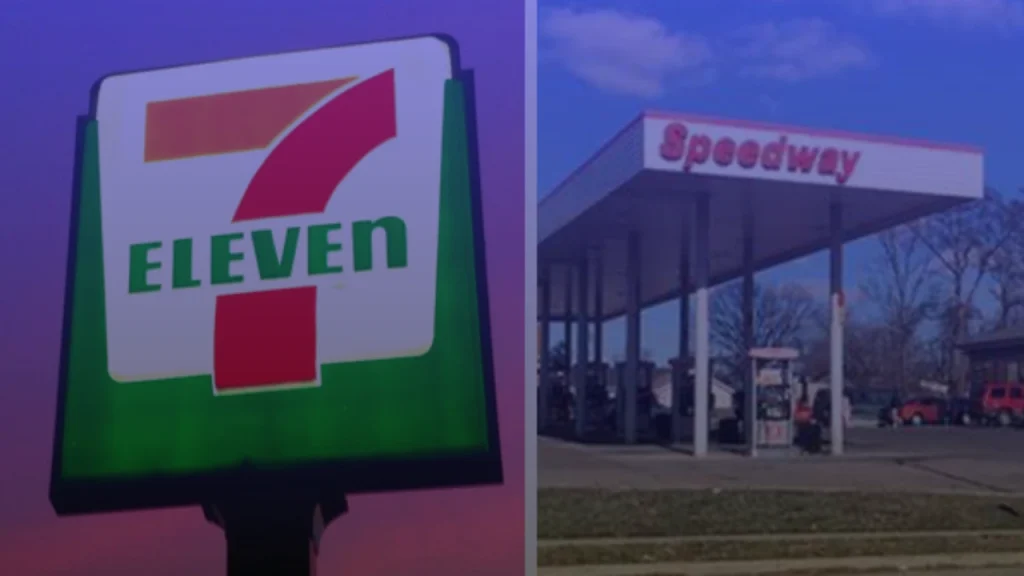
Current and former Speedway employees could have unpaid wage claims after two former workers filed a federal lawsuit accusing 7-Eleven, Inc., doing business as Speedway, of not paying hourly employees for mandatory training done outside scheduled shifts. John Sherman and Nichole Corrales filed the putative class and collective action on November 9, 2026, in the U.S. District Court for the Northern District of Texas.
The plaintiffs allege that required training added as many as three unpaid hours at recurring intervals, which could mean minimum wage and overtime violations under the Fair Labor Standards Act (FLSA). If the violations are proven, affected workers could recover unpaid wages plus an equal amount in liquidated damages.
As of November 26, 2026, no Speedway unpaid training settlement, court-authorized collective notice or official claim form has been confirmed. 7-Eleven has not been found liable, and the allegations are unproven.
Sherman v. 7-Eleven, Inc. (Speedway): Quick Facts
| Case information | Details |
| Lawsuit | Sherman et al. v. 7-Eleven, Inc. |
| Plaintiffs | John Sherman and Nichole Corrales |
| Defendant | 7-Eleven, Inc., doing business as Speedway |
| Filing date | November 9, 2026 |
| Court | U.S. District Court, Northern District of Texas (Dallas) |
| Case number | 3:26-cv-03930-D |
| Assigned judge | Sidney A. Fitzwater |
| Plaintiffs’ attorneys | Jesse H. Forester (Forester Haynie PLLC) and C. Ryan Morgan (Morgan & Morgan P.A.) |
| Main allegations | Unpaid mandatory training, minimum wage and overtime violations |
| Alleged unpaid training | Up to three additional hours at recurring intervals |
| Proposed coverage | Current and former hourly Speedway employees nationwide |
| Case type | Proposed FLSA collective action |
| Jury trial requested | Yes |
| Settlement amount | None announced |
| Official settlement website | None. No settlement exists, so there is no administrator site |
| Claim deadline | None announced |
The public federal court docket confirms the plaintiffs, defendant, filing date, judge and FLSA nature of the case.
Why Is 7-Eleven, Inc. Being Sued Over Speedway Mandatory Training?
The lawsuit alleges Speedway required hourly employees to complete job-related training without recording or paying for all the time it took. According to Top Class Actions’ November 25 report, the training reportedly covered:
- Cash register and cashier duties.
- Food preparation.
- Money order transactions.
- Required workplace certifications.
- Selling age-restricted products.
Sherman and Corrales allege some of this training was done before or after scheduled shifts without pay, and that the extra time was left out of payroll, causing alleged minimum wage and overtime violations. They seek to represent similarly situated hourly workers at Speedway locations across the country.
The full complaint and exhibits were not independently reviewed for this article, and no public company response to these allegations was identified.
Why Is 7-Eleven Named in a Speedway Lawsuit?
7-Eleven acquired about 3,800 Speedway stores from Marathon Petroleum in May 2021, according to 7-Eleven’s corporate history. The docket therefore names 7-Eleven, Inc., doing business as Speedway.
The case concerns Speedway workers. Working at a regular 7-Eleven store, another affiliated brand or an independently operated location does not automatically make you eligible. Check which company appears on your pay statements, employment agreement and tax forms.
This is also separate from other 7-Eleven wage disputes, such as those in Goodyear, Pizza Hut, 7-Eleven, and Campbell’s Are All Facing Wage and Hour Lawsuits Right Now.
Is the 2026 Speedway Lawsuit the Same as the $12.1 Million Howe v. Speedway Settlement?
No. Searches for a “Speedway lawsuit” can surface two unrelated cases.
| Sherman v. 7-Eleven, Inc. (2026) | Howe v. Speedway LLC | |
| Court | N.D. Texas, 3:26-cv-03930-D | N.D. Illinois, 1:19-cv-01374 |
| Subject | Unpaid mandatory training (FLSA) | Fingerprint time-clock scans (Illinois Biometric Information Privacy Act) |
| Who is covered | Hourly Speedway workers nationwide (proposed) | Illinois Speedway workers who used a finger scanner between September 1, 2012 and November 1, 2017 |
| Status | Newly filed, no settlement | $12.1 million class settlement; final approval granted October 22, 2025 |
If you are looking for fingerprint settlement payments, that is a different case. The 2026 training lawsuit has no settlement fund or claim form.
Who Could Qualify for the Speedway Unpaid Training Lawsuit?
The plaintiffs reportedly seek to represent current and former hourly Speedway employees who had to complete training as a condition of employment. You may have a relevant wage claim if:
- You worked as an hourly Speedway employee in the United States.
- Your employer required you to complete job-related training.
- You did some of that training outside your recorded working hours.
- You were not paid what the law requires for that time.
- The underpayment falls within the applicable limitations period.
Cashiers, food service workers, store associates and other nonexempt hourly employees could have claims, depending on their duties and pay records. The final collective definition and covered period have not been independently confirmed, and working for Speedway alone does not establish a right to payment.
Former employees can potentially join, since leaving the company does not erase a timely wage claim. The proposed coverage is nationwide, so filing in Dallas does not limit it to Texas workers, although state wage laws may add different remedies.
Is Mandatory Unpaid Training Illegal Under 29 C.F.R. § 785.27?
Mandatory job-related training generally counts as working time. Under 29 C.F.R. § 785.27, training can be excluded from paid time only if all four conditions are met.
| Requirement | What it means |
| Outside regular working hours | Training takes place outside normal work hours |
| Voluntary attendance | Employees can genuinely choose whether to attend |
| Unrelated to the employee’s job | Training is not directly meant to improve performance of current duties |
| No productive work | No productive work is done during the training |
Under § 785.28, training is not voluntary if the employer requires it or employees reasonably believe refusing could hurt their jobs. If Speedway required training tied directly to store duties, as alleged, that time would generally count as hours worked. Whether the unpaid hours produced a recoverable minimum wage or overtime violation is a separate question.
What Federal Wage Laws Apply to Sherman v. 7-Eleven, Inc.?
The complaint reportedly alleges violations of Sections 6 and 7 of the FLSA.
FLSA Minimum Wage, 29 U.S.C. § 206
Covered employers generally must pay at least $7.25 per hour. Unrecorded training can pull a worker’s effective hourly pay below that level once all compensable hours are counted. For example, someone paid $290 for 40 hours who actually worked 43 hours averaged under $7.25 an hour, before the overtime owed is counted.
FLSA Overtime, 29 U.S.C. § 207
Covered nonexempt employees generally must receive at least 1.5 times their regular rate for hours over 40 in a workweek. Compensable training counts toward that total, and an employer cannot avoid overtime just because required work happened outside the published schedule.
Off-the-Clock Work, 29 C.F.R. §§ 785.11–785.13
These rules cover work the employer knows, or should know, is being done, including work done at home. A policy against unauthorized overtime does not necessarily erase the duty to pay for work the employer knowingly allows.
Recordkeeping, 29 U.S.C. § 211(c) and 29 C.F.R. Part 516
Employers must keep accurate records of hours and pay. Where records leave out off-the-clock training, workers may be able to prove hours with reasonable estimates under Anderson v. Mt. Clemens Pottery Co. A recordkeeping violation does not by itself create a separate damages claim, but records are key evidence.
Remedies, 29 U.S.C. § 216(b)
Eligible workers may seek unpaid minimum wages, unpaid overtime, an equal amount in liquidated damages, and reasonable attorneys’ fees and costs.
Good-Faith Defense, 29 U.S.C. § 260
A court may reduce or deny liquidated damages if the employer proves good faith and reasonable grounds to believe it complied with the FLSA. Double pay is possible but not guaranteed.
How Much Money Could Speedway Employees Receive Under the FLSA?
No settlement amount or individual payment estimate has been announced. Any recovery depends on the number of unpaid hours, the worker’s pay rate, whether overtime was owed and whether liquidated damages are awarded.
The examples below assume a worker already paid for 40 hours, a $15 regular rate and extra unpaid training in the same workweek.
| Additional unpaid overtime | Unpaid overtime wages | With equal liquidated damages |
| 1 hour | $22.50 | $45 |
| 2 hours | $45 | $90 |
| 3 hours | $67.50 | $135 |
| 10 hours | $225 | $450 |
These are hypothetical figures, not Speedway settlement estimates. At three unpaid overtime hours every week for 50 weeks, unpaid overtime would total $3,375, or $6,750 with equal liquidated damages. The plaintiffs allege training at recurring intervals, not necessarily weekly.
Workers who stayed under 40 hours and still earned more than the federal minimum may need state wage law or contract rights to recover ordinary unpaid straight-time pay, since the FLSA does not guarantee every unpaid dollar in every situation.
Does the Texas Payday Law Require Speedway to Pay for Mandatory Training?
Texas workers may have added remedies under the Texas Payday Law, Chapter 61 of the Texas Labor Code. The Texas Workforce Commission’s training guidance explains that mandatory job-related training is generally compensable.
Under Texas Labor Code § 61.051, a wage claim with the agency ordinarily must be filed within 180 days after the wages became payable. Instructions are on the Texas Workforce Commission’s Texas Payday Law page. That deadline differs from FLSA limitations periods.
Workers in other states may have different minimum wages, procedures and deadlines, and some states protect workers more than federal law. No separate Texas Payday Law claim has been confirmed in the Speedway complaint.
How Long Do Speedway Employees Have to Claim Unpaid Wages Under 29 U.S.C. § 255?
| Type of claim | General limitations period |
| Ordinary FLSA violation | Two years |
| Willful FLSA violation | Three years |
| Texas administrative wage claim | 180 days after wages became due |
Willfulness requires more than an ordinary payroll mistake. Under 29 U.S.C. § 255 these periods apply, and under 29 U.S.C. § 256 an employee who joins an existing collective action generally has the clock keep running until their written consent is filed with the court.
The November 9, 2026 filing therefore does not automatically protect every Speedway worker’s claim. Do not assume you can wait for a settlement announcement.
Is Sherman v. 7-Eleven, Inc. a Class Action or an FLSA Collective Action?
News coverage often calls wage suits class actions, but federal FLSA claims usually proceed as opt-in collective actions under § 216(b).
| Rule 23 damages class action | FLSA collective action |
| Members generally included unless they opt out | Workers must affirmatively opt in |
| Governed by Fed. R. Civ. P. 23 | Governed by 29 U.S.C. § 216(b) |
| Depends on the certified class definition | Written consent must be filed with the court |
The docket lists consent forms attached to the original complaint, but the court has not been confirmed to have authorized notice to a nationwide collective.
The Northern District of Texas is in the Fifth Circuit. In Swales v. KLLM Transport Services, LLC, 985 F.3d 430 (5th Cir. 2021), the court rejected the traditional two-stage conditional certification approach. Courts must now closely examine whether workers are similarly situated before approving notice, so nationwide notice is not automatic just because two workers allege a common practice.
Can 7-Eleven Fire Speedway Employees for Joining the Lawsuit?
Federal law prohibits retaliation for exercising FLSA rights. Under 29 U.S.C. § 215(a)(3), employers generally cannot fire or otherwise punish workers for filing protected wage complaints or taking part in covered proceedings. Retaliation can include termination, cut hours or other adverse actions. Workers who suspect retaliation should keep records and consult an employment attorney or the Department of Labor. Legitimate actions unrelated to protected activity are not covered.
How to Join the Speedway Unpaid Training Lawsuit
There is currently no public settlement claim form or court-authorized participation portal. Workers who think they were affected can:
- Confirm they worked for the relevant Speedway employer.
- Identify mandatory training done outside recorded working hours.
- Gather pay statements, schedules and training completion records.
- Contact a qualified wage-and-hour attorney or the plaintiffs’ attorneys.
- Ask whether filing a written consent to join is appropriate.
- Confirm deadlines before deciding.
The plaintiffs are represented by Forester Haynie PLLC and Morgan & Morgan P.A. Contacting a firm or filling out an intake form does not make you a party. Written consent must be filed with the court to join an FLSA collective action.
What Evidence Should Speedway Employees Save?
| Evidence | Why it matters |
| Pay stubs and wage statements | Show pay received |
| Work schedules | Show scheduled shift hours |
| Clock-in and clock-out records | Show recorded working time |
| Training completion certificates | Show training participation |
| Training platform timestamps | Help show when training occurred |
| Manager messages and emails | Show training was mandatory |
| Personal notes of training hours | Help reconstruct unpaid time |
| W-2 forms | Identify the employer and employment period |
Keep only records you can lawfully access, and do not take confidential company documents or other employees’ personal information.
How to Report Unpaid Training or Overtime to the U.S. Department of Labor
You do not need to join a collective action to pursue wage rights. The Department of Labor’s Wage and Hour Division investigates qualifying minimum wage, overtime and recordkeeping violations. File through the Department of Labor complaint page or call 1-866-487-9243. Filing is free. Ask an attorney how a government complaint, private litigation and any release or deadline interact before choosing a path.
What Happens Next in Sherman v. 7-Eleven, Inc.?
The docket shows the original complaint, a request for summons and corporate disclosure documents filed November 9, 2026. Likely next steps include a response from 7-Eleven, motions challenging the claims, discovery of payroll and training records, and a ruling on collective treatment. The parties could also settle.
Similar retail wage disputes include the Gap and Athleta Putative Class Action, Washington Hourly Workers Allege Missed Breaks and Unpaid Overtime (Case No. 26-2-33532-0 SEA). One that reached a negotiated resolution is the Datadog $4.15 Million Overtime Settlement, Which Account Executives Qualify Before November 20? Those cases involve different employers and do not decide Speedway’s liability.
Speedway Unpaid Training Lawsuit Timeline
| Date | Development |
| October 22, 2025 | Final approval of the separate $12.1 million Howe v. Speedway LLC fingerprint settlement |
| November 9, 2026 | Sherman and Corrales file suit against 7-Eleven, Inc. (Speedway) |
| November 25, 2026 | Case reported by Top Class Actions |
| November 26, 2026 | No settlement, collective notice or claim form confirmed |
Frequently Asked Questions About the Speedway and 7-Eleven, Inc. Lawsuit
Is Speedway being sued for unpaid employee training?
Yes. John Sherman and Nichole Corrales sued 7-Eleven, Inc., doing business as Speedway, on November 9, 2026, alleging hourly employees were not properly paid for mandatory training.
Is there a Speedway employee settlement in 2026?
No settlement has been confirmed in Sherman v. 7-Eleven, Inc. The earlier Speedway settlement involved separate fingerprint litigation.
Does Speedway have to pay for online training done at home?
Generally, mandatory job-related training counts as working time wherever it is done. Recovery depends on federal and state wage rules.
Can former Speedway employees receive unpaid wages?
Potentially, if their claims are timely and meet the requirements.
Does the lawsuit cover every 7-Eleven employee?
No. It concerns hourly Speedway workers. Other 7-Eleven employees may have separate claims.
Can Speedway employees receive double their unpaid overtime?
Potentially. The FLSA allows an equal amount in liquidated damages, subject to defenses and court rulings.
What is the Speedway lawsuit claim deadline?
No collective participation or settlement deadline has been confirmed, but individual limitations periods still apply.
Has Speedway admitted wrongdoing?
No admission or finding of liability was identified in the records reviewed.
Bottom Line
Sherman v. 7-Eleven, Inc. alleges hourly Speedway employees did required training outside their shifts without legally required pay. If proven, that could violate federal minimum wage and overtime law and entitle workers to back wages and liquidated damages. Current and former employees should keep their payroll and training records and ask about their own filing deadlines. No settlement, court-authorized notice or claim form exists yet.
Sources
- Sherman v. 7-Eleven, Inc., federal docket (Justia)
- 29 C.F.R. § 785.27
- 29 U.S.C. § 216
- 29 U.S.C. § 255 and § 256
- Swales v. KLLM Transport Services, LLC
- Department of Labor, FLSA guide
- Texas Labor Code Chapter 61
- 7-Eleven corporate history
- Duane Morris Class Action Weekly Wire, Episode 124 (Howe v. Speedway)
- Official settlement website: none exists, as no settlement has been announced.
Researched and written by Israr Ahmad, legal content researcher and founder of AllAboutLawyer.com. All facts verified against the federal court docket, Top Class Actions reporting, the federal wage regulations and statutes cited, and Duane Morris reporting on the separate Howe v. Speedway settlement, as of November 26, 2026. Last Updated: November 26, 2026.
Disclaimer: AllAboutLawyer.com is an independent legal-information website, not a law firm, and this is not legal advice. The allegations are unproven.
About the Author
Israr Ahmad is a legal content researcher with 4+ years of experience covering class action settlements and consumer rights cases. He has researched and published coverage of 2,500+ settlements using verified court records, settlement administrator filings, and government sources. Learn more about Israr.