
SpaceXAI Mississippi Data Center Lawsuit, Judge Rejects xAI’s Bid to Dismiss NAACP Clean Air Act Case as Southaven Residents Pursue Noise Claims
On October 30, 2026, U.S. District Judge Debra M. Brown refused to dismiss the NAACP’s Clean Air Act lawsuit over the gas turbines that power xAI’s Colossus 2 data center. The ruling keeps the environmental case alive. It does not find that xAI or MZX Tech LLC violated the law.
A second lawsuit, brought by Southaven residents, alleges that noise and vibrations from the same power operation interfere with their homes. That case is a putative class action, meaning the plaintiffs want a class certified, but no class has been certified. Neither case has ended in a settlement.
What Is the SpaceXAI Mississippi Data Center Lawsuit About?
The controversy involves several separate legal and regulatory matters over the natural-gas power plant that supplies electricity to xAI’s AI computing operations near Memphis. xAI is now part of SpaceX, and the company is also referred to as SpaceXAI.
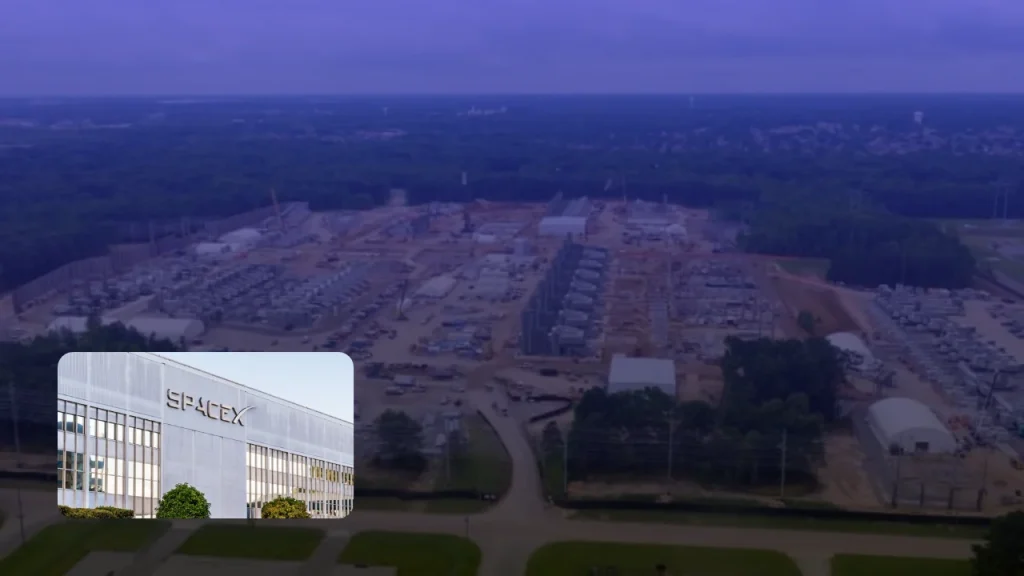
The power plant sits at 2875 Stanton Road South in Southaven, DeSoto County, Mississippi. The Colossus 2 data center it supplies is in Whitehaven, Memphis, Tennessee. The lawsuits concern the power infrastructure and its effect on Mississippi residents, even though the computing facility is across the state line.
The matters are:
- A federal Clean Air Act citizen suit by the NAACP against X.AI Corp. and MZX Tech LLC.
- A putative class action by Southaven residents over noise, vibration and property harm.
- A state administrative challenge to the air permit for 41 permanent turbines.
- Mississippi Department of Environmental Quality (MDEQ) notices of violation over construction stormwater permits at three sites.
- A separate commercial dispute over construction of the Memphis-area data center project.
Quick Facts: SpaceXAI and MZX Tech Mississippi Lawsuits
| Detail | Information |
| Companies | X.AI Corp. (SpaceXAI) and its subsidiary MZX Tech LLC |
| Power plant location | 2875 Stanton Road South, Southaven, Mississippi |
| Data center supplied | Colossus 2, Whitehaven, Memphis, Tennessee |
| Environmental case | NAACP et al. v. X.AI Corp. et al., No. 3:26-cv-00074-DMB-JMV |
| Court | U.S. District Court for the Northern District of Mississippi |
| Environmental case filed | April 14, 2026 |
| Latest major ruling | October 30, 2026 (motion to dismiss denied) |
| Environmental plaintiffs | NAACP and Mississippi State Conference of the NAACP |
| Noise case | Haley et al. v. X.AI Corp. et al., No. 3:26-cv-00148 (putative class action) |
| Noise case filed | June 8, 2026 |
| Proposed class size | More than 10,000 residents, according to the complaint |
| Noise plaintiffs | Jason Haley, Preston Herrington and Taylor Logsdon |
| Temporary turbines | 69, per Mississippi Today’s July 2026 reporting |
| Proposed permanent turbines | 41 (Air Construction PSD Permit No. 0680-00119) |
| Next permit hearing | November 9, 2026, 9 a.m. (continuing November 10 if needed) |
| Official settlement website | None; no settlement or claim form exists |
| Certified class | None |
Where Is the SpaceXAI Data Center, and Who Are the Defendants?
News coverage often blurs two things. The gas plant is in Southaven, Mississippi. The data center it feeds is in Memphis, Tennessee.
- X.AI Corp. is an operator of the plant and a defendant in both community cases.
- MZX Tech LLC is its wholly owned subsidiary. It acquired the Southaven property in July 2025 and owned and operated the plant.
- Space Exploration Technologies Corp. was named in the original noise complaint. According to case-tracking information, the plaintiffs voluntarily dismissed their claims against it without prejudice in August 2026 after the company filed a declaration about the separate corporate identities of xAI and MZX Tech.
Elon Musk is not named as an individual defendant in either community lawsuit. The proceedings concern corporate entities.
How Many Turbines Did xAI Install in Southaven, Mississippi?
The numbers reflect different dates, not conflicting counts.
- August 2025: about 18 generators arrived at Southaven.
- April 7, 2026: the NAACP complaint alleged at least 27 turbines with a combined capacity of at least 495 megawatts.
- July 2026: Mississippi Today reported 69 temporary turbines.
- Planned permanent plant: 41 turbines.
The NAACP case challenges the treatment of the temporary turbines. The permanent plant is a separate permitting matter.
What Does the NAACP Allege Against X.AI Corp. and MZX Tech Under the Clean Air Act?
The NAACP and the Mississippi State Conference of the NAACP, represented by the Southern Environmental Law Center and Earthjustice, filed suit on April 14, 2026. They allege that between August and December 2025 the companies installed and operated a major stationary pollution source without required permits. The complaint raises three issues.
1. Operating a stationary source without a Mississippi State Implementation Plan permit
Mississippi’s rules exempt certain mobile sources. MDEQ told the company in a July 29, 2025 letter that trailer-mounted turbines intended to stay under 12 months could qualify as mobile and temporary. The NAACP argues that large combustion turbines serving a fixed power plant do not become mobile because they sit on trailers.
2. Operating a major source without a Prevention of Significant Deterioration permit and BACT
Under the Clean Air Act’s Prevention of Significant Deterioration (PSD) program, a major source must get a preconstruction permit and apply Best Available Control Technology (BACT). The NAACP says the Southaven plant should have done both before construction.
3. Hazardous air pollutant rules under 40 C.F.R. Part 63, Subpart YYYY
The plaintiffs allege the plant is a major source of hazardous air pollutants and did not comply with the National Emission Standards for Hazardous Air Pollutants for stationary combustion turbines. Formaldehyde is among the pollutants cited.
They also say the emissions threaten nearby communities, including through respiratory risks and odors, and that the burden falls disproportionately on neighbors. They seek injunctive relief, pollution controls, offsets for health impacts and daily civil penalties.
These are allegations, not findings.
How Much Pollution Does the NAACP Say the Southaven Turbines Could Emit?
The complaint cites potential annual emissions of roughly:
| Pollutant | Alleged potential annual emissions |
| Nitrogen oxides (NOx) | 1,700 tons |
| Carbon monoxide | 580 tons |
| Fine particulate matter | 180 tons |
| Formaldehyde | 19 tons |
These are potential-to-emit figures from the complaint. They are not measurements of what was actually released in a given year, and the court has not found that the plant caused any resident’s medical condition.
Why Did Judge Debra Brown Deny xAI’s Motion to Dismiss the NAACP Lawsuit?
On October 30, 2026, Judge Brown denied the motion to dismiss filed by X.AI Corp. and MZX Tech LLC. The defendants argued that the NAACP lacked statutory standing, that the turbines fell within Mississippi’s mobile-source exemption, and that the Clean Air Act’s citizen-suit provision is unconstitutional. The court rejected each argument at the pleading stage.
- Standing: The court held the plaintiffs have statutory standing under the Clean Air Act’s citizen-suit provision. It did not decide whether each affected member will ultimately prove an injury.
- Mobile-source exemption: The court examined the federal definitions incorporated into Mississippi’s State Implementation Plan, which refer to motor vehicles, nonroad engines and nonroad vehicles. It concluded that stationary combustion turbines as described in the complaint do not qualify just because they are mounted on trailers. The MDEQ letter did not bind the court or bar a citizen suit.
- Constitutionality: The defendants relied on Article II and the private nondelegation doctrine. The court held that Congress can let private parties sue to protect their own legally recognized interests without handing over the government’s whole enforcement power.
The ruling lets all three major claims proceed. It does not establish liability, award damages, or order any turbine shut down.
Did the Trump Administration Try to End the NAACP Lawsuit Against xAI?
Yes. In June 2026 the Department of Justice moved to intervene and asked the court to dismiss the case, supporting the position that Mississippi’s agency had treated the turbines as exempt. The government argued that it could end a citizen suit because the EPA enforces the Clean Air Act.
On October 19, 2026, Judge Brown allowed the United States to intervene but refused to let it unilaterally dismiss the NAACP’s claims. She wrote that the EPA’s role as a primary enforcer does not give the federal government complete control over all Clean Air Act litigation. The government’s September 18 notice of appeal was held premature, and the Fifth Circuit denied a stay. The government can participate, but the NAACP’s case stays in court.
Is There a Preliminary Injunction Against the Southaven Turbines?
Not as of November 2, 2026. The NAACP asked on May 6, 2026 for a preliminary injunction to stop operation of the turbines while the case proceeds. Reporting indicates the judge had not ruled on that motion. The October 30 order denied a motion to dismiss. It is a different motion with a different purpose and does not require the turbines to stop.
What Is the Haley v. X.AI Corp. Putative Class Action in Southaven?
On June 8, 2026, Southaven residents Jason Haley, Preston Herrington and Taylor Logsdon filed Haley et al. v. X.AI Corp. et al., No. 3:26-cv-00148, in the same federal court. They allege near-constant noise and vibration from the gas plant disrupt sleep and daily life and have reduced home values. Their claims include:
- Public nuisance.
- Private nuisance.
- Negligence.
- Negligence per se, based on alleged violations of Southaven’s municipal noise requirements.
- Negligent infliction of emotional distress.
They seek compensation for loss of use and enjoyment of property, emotional distress and reduced property values, plus injunctive relief and punitive damages.
Who could be in the proposed class?
The complaint alleges more than 10,000 residents could be included. The proposed area is bounded by Stateline Road West to the north, U.S. Highway 51 to the east, Nail Road to the south, and a line one mile west of Hom Lake Road. It would cover people who lived there at any time since August 2025, and the attorneys say renters may qualify.
The judge has not certified any class or approved those boundaries. Living nearby does not make anyone a class member or guarantee compensation.
What is the latest status of the noise case?
The defendants moved in July 2026 to dismiss several claims. The plaintiffs opposed, and X.AI and MZX Tech replied on September 22. A case-tracking review dated October 28 reported the motion still pending. The plaintiffs reportedly conceded they would not pursue the emotional-distress claim while opposing dismissal of the others. No ruling on the remaining motion, on class certification, or on settlement has been verified as of November 2.
Why Is SpaceXAI Offering to Buy Homes Near the Southaven Power Plant?
Mississippi Today reported on October 15, 2026 that real-estate agents acting for MZX Tech sent offers to buy homes near the plant. Burch Realty Group reportedly sent letters, and Cushman & Wakefield was reported to have made at least one offer. The letters reportedly described a release of claims tied to the residents’ noise lawsuit. Some owners rejected the offers, and others accepted or considered them. Some renters reported displacement pressure after their landlords sold, and critics have called the buyout effort “Elonville.”
A home sale and a release of legal claims are different things. Depending on the wording, a release could waive rights to damages or participation in the litigation. The offers are individual transactions, not a court-approved settlement, and they do not admit liability. Anyone with an offer should have the full sale and release documents reviewed by an independent lawyer before signing.
What Is the November 9, 2026 Hearing on the 41 Permanent Turbines?
The Mississippi Environmental Quality Permit Board issued Air Construction PSD Permit No. 0680-00119 on March 11, 2026 for the planned permanent 41-turbine plant. On April 9, the Southern Environmental Law Center challenged it for the NAACP, Young Gifted & Green and the Safe and Sound Coalition. The Permit Board’s website lists an evidentiary hearing for November 9, 2026, at 9 a.m., continuing November 10 if necessary. The public may attend but seating is limited and the proceeding takes no public comment.
This is separate from the federal case. The permanent-plant permit does not automatically cover the temporary turbines the NAACP is challenging.
What Is the Retirement Schedule for the 69 Temporary Turbines?
MDEQ issued an agreed order on July 30, 2026 setting a schedule to retire the 69 temporary turbines. The company asked for more time because supply-chain issues delayed the permanent plant. Under the order:
- Retirement of temporary units began August 18, 2026.
- Most units must retire by April 2027.
- Thirteen units were allowed to stay beyond the original 12-month period.
- Three units received extensions of up to five months beyond their original deadline.
- The most recently added units must stop operating by July 14, 2027.
A state retirement schedule does not resolve the NAACP’s claim that permits were required from the start.
Could MZX Tech Face $6.1 Million in Mississippi Stormwater Penalties?
In an October 22, 2026 securities filing, SpaceX disclosed that MDEQ issued notices of violation to MZX Tech LLC in August 2026. The notices allege that land-disturbing construction at three sites began before coverage under Mississippi’s Large Construction Stormwater General Permit. According to the filing:
- MDEQ may seek civil penalties of up to $25,000 per day.
- Preliminary claimed exposure is about $6.1 million across the three sites.
- MZX Tech is cooperating and is discussing a single agreed order.
No final $6.1 million penalty has been imposed in the reporting reviewed. This matter is separate from the NAACP and residents’ cases.
What Is the $500 Million Lawsuit Over the Memphis Data Center Construction?
In August 2026, SpaceXAI LLC and affiliates CTC Property LLC and MZX Tech LLC sued Darana Hybrid, Inc., Cuttell Motorsports LLC (doing business as the International Hot Rod Association) and Darryl Cuttell in the U.S. District Court for the Western District of Tennessee. The amended complaint alleges breach of a master services agreement, fraud, conversion, unjust enrichment and trademark-related claims, with claimed damages above $500 million. The defendants dispute the allegations and filed counterclaims and construction liens seeking about $569 million for alleged unpaid work. These are competing claims, not awards. The case is separate from the Mississippi residents’ claims.
What Does SpaceXAI Say About the Mississippi Lawsuits?
SpaceXAI says it relied on MDEQ’s July 29, 2025 determination that the trailer-mounted turbines could qualify as temporary mobile sources. It describes the temporary generators as a bridge to the permitted permanent plant and says it uses pollution controls such as selective catalytic reduction, monitoring and sound mitigation, including sound walls. It denies key allegations in the residents’ suit and says it intends to defend both cases. Local and state officials have generally supported the investment, and community groups argue speed was prioritized over compliance and local impacts. These are the parties’ positions, not court findings.
Which Laws Apply to the SpaceXAI and MZX Tech Mississippi Lawsuits?
1. Clean Air Act citizen suits, 42 U.S.C. § 7604
Allows eligible persons and organizations to sue over alleged violations of emission standards or other specified requirements. It generally requires 60 days’ notice before suing, which is why the NAACP sent a notice of intent in February 2026 before filing on April 14. It also lets the government intervene, but, per Judge Brown’s October 19 order, not end a private action by itself.
2. Prevention of Significant Deterioration, 42 U.S.C. §§ 7475 and 7479
Requires certain major sources to obtain a preconstruction permit and use BACT.
3. New Source Performance Standards, 42 U.S.C. § 7411
Authorizes standards for new stationary sources. Stationary combustion turbines can be subject to 40 C.F.R. Part 60, including Subpart KKKK where its applicability conditions are met, so the mobile-versus-stationary question matters.
4. Hazardous air pollutants, 42 U.S.C. § 7412
Sets the federal hazardous air pollutant program. The NAACP’s third claim relies on Subpart YYYY of 40 C.F.R. Part 63.
5. Mississippi State Implementation Plan
The court examined 11 Miss. Admin. Code Part 2, Chapter 2, Rule 2.1; Rule 2.13 on permitting exemptions; and Chapter 5, Rule 5.2.
6. Mississippi common-law nuisance and negligence
Private nuisance generally requires substantial and unreasonable interference with the use and enjoyment of property. Public nuisance concerns interference with a right shared by the public. Negligence requires duty, breach, causation and damages. Noise complaints alone do not prove any of these.
7. Southaven municipal noise rules
The residents allege negligence per se based on the city’s noise requirements. Measurements, applicable ordinance provisions and evidence of violations are disputed.
8. Federal Rule of Civil Procedure 23
Governs class actions. Plaintiffs generally must show numerosity, commonality, typicality and adequacy, and, for a damages class under Rule 23(b)(3), predominance and superiority. No certification ruling has been issued in the noise case.
9. Mississippi Large Construction Stormwater General Permit
Governs coverage for large land-disturbing construction projects and underlies the MDEQ notices of violation.
Important: Allegations in a complaint are not findings that any law was violated.
Can Southaven Residents Receive Compensation From the SpaceXAI Lawsuits?
Potentially, if they prove valid claims and win a judgment or reach a settlement. No damages award, class settlement or compensation fund exists as of November 2, 2026. The Clean Air Act case seeks compliance, injunctive relief, civil penalties and attorney fees. The noise case seeks noise reduction and compensation.
Residents who have been affected may want to keep:
- Dates and times of disruptive noise.
- Lawful audio or video recordings.
- Notes on sleep and daily disruption.
- Property valuation records.
- Relevant medical documentation.
- Lease or proof of residence.
- Communications with local officials.
A proposed class action does not necessarily eliminate individual claims, and living outside the proposed area does not necessarily mean no claim exists. A lawyer would need to evaluate location, interference, causation and damages.
Is There a SpaceXAI Mississippi Settlement or Claim Form?
No. There is no approved settlement, payment amount, claims administrator, official settlement website or claim form in either community lawsuit as of November 2, 2026. The home-purchase offers are separate individual transactions.
For related coverage of data-center permitting and community challenges, see Birmingham Residents Sue Nebius and the City Over AI Factory, Is the 300-Megawatt Data Center Built on Illegal Permits?. For other SpaceX regulatory litigation, see SpaceX Settles Political Bias Lawsuit Against California Agency and SpaceX Starbase Louisiana Lawsuit, Residents Say Vermilion Parish Officials Broke the Open Meetings Law Approving the Tax Deal.
Frequently Asked Questions About the SpaceXAI Mississippi Data Center Lawsuits
Why is SpaceXAI being sued in Mississippi?
X.AI Corp. and MZX Tech LLC face a Clean Air Act suit from the NAACP over gas turbines at Southaven and a separate putative class action from residents over noise and vibration.
Did the NAACP win its Clean Air Act lawsuit against xAI?
Not yet. It won a procedural ruling on October 30, 2026 when the court denied the motion to dismiss. The underlying claims have not been decided.
Did the judge order xAI to shut down the Southaven turbines?
No. The NAACP’s separate request for a preliminary injunction was still pending in the reporting reviewed.
Are the xAI gas turbines in Southaven illegal?
The NAACP alleges they ran without required permits. The court rejected the mobile-source exemption argument at the dismissal stage, but no final finding of liability has been made.
How many turbines does xAI have in Southaven, Mississippi?
Mississippi Today reported 69 temporary turbines in July 2026, and a separate permit covers 41 proposed permanent turbines.
Is the Colossus 2 data center in Mississippi?
No. It is in Whitehaven, Memphis, Tennessee. The Southaven plant supplies its electricity.
How many residents are in the proposed Haley class?
The complaint alleges more than 10,000 people. The class has not been certified.
Can renters join the Southaven noise class action?
The attorneys say renters in the proposed area may be included if a class is certified.
Is SpaceXAI buying homes near the Southaven power plant?
Mississippi Today reported that agents for MZX Tech offered to buy some nearby homes, and some offers reportedly included releases of claims tied to the noise lawsuit.
Is there a $6.1 million fine against SpaceXAI?
No final fine has been reported. The company disclosed preliminary claimed exposure of about $6.1 million in potential stormwater penalties at three sites.
When is the hearing on the permanent xAI turbines in Mississippi?
November 9, 2026, at 9 a.m., continuing November 10 if necessary.
Is Elon Musk personally being sued in the Southaven cases?
No. The case captions name X.AI Corp. and MZX Tech LLC, not Musk.
Does xAI already have an air permit in Mississippi?
Permit No. 0680-00119 was issued March 11, 2026 for the planned permanent plant. It does not automatically cover the temporary turbines challenged by the NAACP.
Is there a SpaceXAI class action settlement?
No approved settlement or claim form exists in either community lawsuit.
What Happens Next in the SpaceXAI Mississippi Data Center Lawsuits?
- November 9-10, 2026: the Permit Board hearing on the 41-turbine permit.
- NAACP federal case: the three Clean Air Act claims move into further proceedings, and the preliminary injunction request remains to be decided.
- Haley noise case: the motion to dismiss several claims was reported pending as of October 28, and class certification has not been decided.
- MDEQ stormwater notices: MZX Tech and MDEQ are discussing an agreed order.
- Home buyouts: residents continue to face decisions about offers that may include releases.
The larger question is whether fast-growing AI infrastructure must meet the same air, stormwater, property and nuisance rules as other industrial operations. The October 30 ruling lets the NAACP keep pressing its case, but the outcome will depend on evidence and the court’s eventual findings.
As of November 2, 2026, neither the NAACP Clean Air Act case nor the Haley putative class action has produced a final finding of liability or an approved compensation settlement.
Sources and Court Records
- NAACP v. X.AI Corp., Doc. 139: Opinion and Order (October 30, 2026)
- NAACP v. X.AI Corp., Federal Docket No. 3:26-cv-00074
- Earthjustice and Southern Environmental Law Center: Court Denies xAI’s Motion to Dismiss
- Mississippi Today: Judge Denies Trump Administration Request to Dismiss NAACP Lawsuit Against xAI
- Haley v. X.AI Corp., Federal Docket No. 3:26-cv-00148
- Mississippi Today: SpaceXAI Home Buyout Offers (October 15, 2026)
- Mississippi Today: Temporary Turbine Retirement Schedule (July 31, 2026)
- Mississippi DEQ: MZX Tech Facility and Permit Records
- Mississippi Environmental Quality Permit Board: Hearing Notice
- Space Exploration Technologies Corp.: October 22, 2026 Securities Filing
- 42 U.S.C. § 7604: Citizen Suits
- 42 U.S.C. § 7475: Preconstruction Requirements
- 42 U.S.C. § 7412: Hazardous Air Pollutants
Legal disclaimer: AllAboutLawyer.com is an independent U.S. legal information website, not a law firm. This is not legal advice, and allegations in complaints are not proven facts.
Researched and written by Israr Ahmad, legal content researcher and founder of AllAboutLawyer.com. All facts verified against the federal court orders and dockets in NAACP v. X.AI Corp. and Haley v. X.AI Corp., Mississippi DEQ and Permit Board records, and SpaceX’s October 22, 2026 securities filing, as of November 2, 2026. Last Updated: November 2, 2026.
About the Author
Israr Ahmad is a legal content researcher with 4+ years of experience covering class action settlements and consumer rights cases. He has researched and published coverage of 2,500+ settlements using verified court records, settlement administrator filings, and government sources. Learn more about Israr.