
Nationwide Lunchmeat Recall, City Foods Pastrami and Corned Beef Products Recalled Over Listeria Risk
Key Facts
| Recalling company | City Foods, Inc. (Chicago, IL — doing business as Bea’s Best Corned Beef) |
| Amount recalled | Approximately 3,215 pounds |
| Contaminant | Listeria monocytogenes |
| Recall class | Class I — most serious FSIS classification; potential for serious health consequences or death |
| Production date | July 16, 2026 |
| Shelf life | 60 days (product remains within date into mid-September 2026) |
| Establishment number | EST. 1896 |
| Initial distribution | Foodservice locations in Illinois, Iowa, and Michigan, then redistributed nationwide |
| Illnesses confirmed | None reported as of this recall notice |
| How discovered | Routine FSIS inspection activity, not an active outbreak investigation |
| Announced | August 8, 2026 (label details corrected August 13, 2026) |
What Products Are Affected?
Three specific products are covered by this recall, according to FSIS’s official recall notice:
- 10-lb. cardboard boxes containing four 2.5-lb. pieces of “MIDAMAR HALAL SLICED PASTRAMI ROUND 4/2.5# – MIDAMAR”, item number MBPS10 (FSIS corrected this label description on August 13 — an earlier version of the notice had listed a different Midamar product and incorrect piece count)
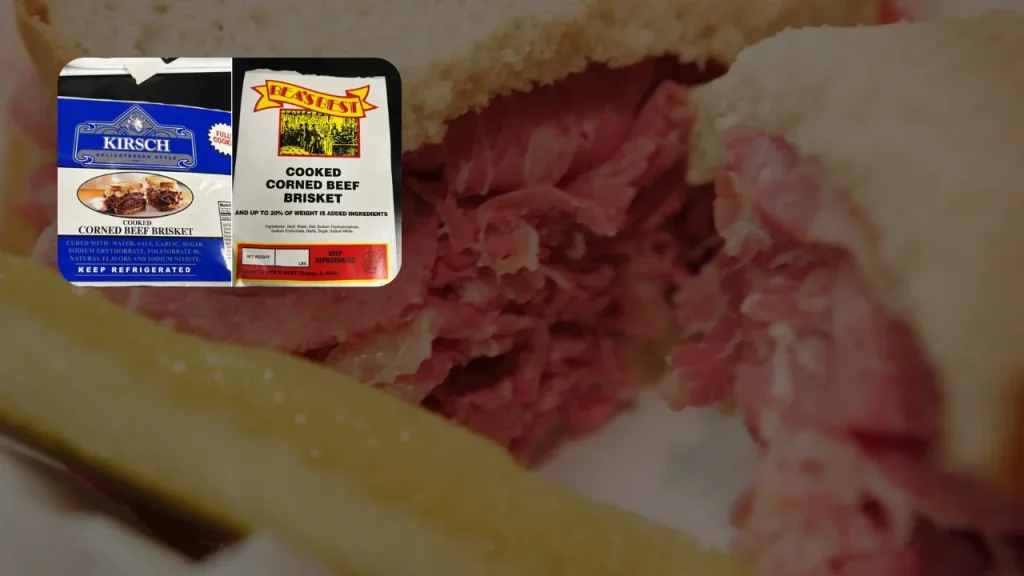
- Various weight 20- to 30-lb. boxes containing 2–3 pieces of “BEA’S BEST COOKED CORNED BEEF BRISKET,” case code 18919
- Various weight 20- to 30-lb. boxes containing 2–3 pieces of “KIRSCH DELICATESSEN STYLE COOKED CORNED BEEF BRISKET,” case code 19751
All three bear establishment number “EST. 1896” inside the USDA mark of inspection. These are bulk, foodservice-format products — not individually wrapped deli slices — meaning they were destined for a slicer at a deli counter, sandwich shop, caterer, hospital, or nursing home kitchen rather than sold directly to shoppers in a retail package. That distinction matters: most consumers who ended up eating this product would have no way to identify it themselves, since it likely reached them as sliced sandwich meat with no recall label attached. That’s part of why FSIS specifically flagged concern about institutional refrigerators and freezers, including hospitals and nursing homes, where medically vulnerable populations are concentrated.
Related article: Former DOJ Prosecutor Sues Justice Department Over FACE Act-Related Firing
Where Were These Products Distributed?
The recalled product initially shipped to foodservice locations in Illinois, Iowa, and Michigan, and was further distributed nationwide from there — which is the basis for describing this as a nationwide recall despite the relatively small initial three-state footprint. FSIS notes that a full retail distribution list will be posted to its website when available; as of this writing, a complete list of specific retailers or institutions has not been published.
Why This Recall Matters More Than the Pounds Involved Suggest
At roughly 3,215 pounds, this is a small recall by volume compared to some recent listeria events — the 2024 Boar’s Head recall, for comparison, involved more than 7 million pounds. But FSIS classified this as a Class I recall, its most serious category, reserved for situations where there is a reasonable probability that using the product will cause serious, adverse health consequences or death. The bulk foodservice format, the multi-state institutional distribution, and the fact that affected product remains within its 60-day shelf life into mid-September are all reasons this warrants attention despite the modest total weight.
Listeria Symptoms and Who’s Most at Risk
Listeria monocytogenes causes listeriosis, an infection that can range from mild to life-threatening depending on who’s affected.
People at highest risk:
- Adults 65 and older
- Pregnant women (listeriosis can cause miscarriage, stillbirth, or severe illness in newborns)
- Anyone with a weakened immune system (chemotherapy patients, transplant recipients, people with certain chronic conditions)
Common symptoms include fever, muscle aches, headache, stiff neck, confusion, loss of balance, and convulsions, sometimes preceded by diarrhea or other gastrointestinal symptoms. Symptoms can appear anywhere from a few days up to 10 weeks after eating contaminated food, which is part of why listeria outbreaks are notoriously difficult to trace back to a single product.
Pregnant women may experience only mild, flu-like symptoms themselves, even while the infection poses serious risk to the fetus or newborn — anyone pregnant who has eaten recalled product should contact a healthcare provider even without symptoms.
What You Should Do
- Check for the establishment number “EST. 1896” and the specific case codes or item numbers listed above if you have bulk deli meat in a refrigerator or freezer, whether at home or in an institutional kitchen.
- Throw the product away or return it to the place of purchase. Do not taste it to check for spoilage — listeria doesn’t reliably cause smell or taste changes.
- Clean anything the product touched — refrigerator shelves, cutting boards, slicers, countertops — with hot soapy water and sanitizer, since listeria can survive refrigeration and spread through cross-contamination.
- Contact a healthcare provider if you develop symptoms after eating recalled product, particularly if you’re pregnant, over 65, or immunocompromised, and mention the potential listeria exposure specifically.
- Report illness to FSIS if you believe you got sick from this product, even though no illnesses have been confirmed as of this notice — individual reports are part of how outbreak links get established.
Do I Have a Legal Claim If I Got Sick?
As of this recall notice, FSIS has confirmed no illnesses linked to these products, and this recall stemmed from routine inspection rather than an active outbreak investigation — which is a meaningfully different, earlier-stage situation than, for example, the 2024 Boar’s Head listeria outbreak that was tied to 10 deaths and dozens of hospitalizations before litigation followed. That doesn’t mean a claim isn’t possible if someone does get sick from this specific product; foodborne illness claims generally require establishing that a specific contaminated product caused a specific illness, typically supported by medical records, a lab-confirmed listeria diagnosis, and evidence connecting your illness to the recalled lot. Anyone who develops listeriosis symptoms after consuming product matching this recall should prioritize medical care and documentation first, and can separately consult an attorney about their options — but there is no active outbreak litigation tied to this recall at this time.
Frequently Asked Questions
Is this recall connected to the 2024 Boar’s Head listeria outbreak?
No. These are unrelated events from different companies. This recall involves City Foods, Inc. of Chicago and was discovered through routine inspection with no confirmed illnesses; the 2024 Boar’s Head outbreak was tied to a specific plant and resulted in 10 deaths and dozens of hospitalizations before this recall was announced.
Has anyone gotten sick from these products?
No confirmed illnesses have been reported as of the recall notice.
How long are these products good for?
The recalled product was made on July 16, 2026, with a 60-day shelf life, meaning it could still be within date in consumers’ or institutions’ refrigerators and freezers into mid-September 2026.
Was this product sold directly to consumers?
It appears to have been distributed primarily in bulk foodservice format — to delis, restaurants, caterers, and institutional kitchens — rather than as individually packaged retail deli meat, meaning most affected consumers would have encountered it as sliced sandwich meat rather than a labeled package.
What should I do if I can’t tell whether meat I bought at a deli counter came from this recall?
Contact the store or deli directly and ask whether they received product from City Foods, Inc. (establishment number EST. 1896) or the specific brands listed above. When in doubt with any ready-to-eat deli meat and a possible listeria concern, USDA guidance is to discard it rather than risk consumption.
Sources
- FSIS — City Foods, Inc. Recalls Ready-To-Eat Pastrami and Corned Beef Products Due To Possible Listeria Contamination, August 8, 2026, revised August 13, 2026
Update Log
- August 18, 2026 — Initial publication, incorporating FSIS’s August 13 label correction.
Researched and written by Israr Ahmad, legal content researcher and founder of AllAboutLawyer.com. All facts verified against the official FSIS recall notice and its August 13, 2026 correction, as of August 18, 2026. Last Updated: August 18, 2026.
This article is for informational purposes only and does not constitute legal advice or medical advice. Laws vary by state and individual circumstances differ. For advice about your specific situation, consult a qualified attorney or healthcare provider.
About the Author
Israr Ahmad is a legal content researcher with 4+ years of experience covering class action settlements and consumer rights cases. He has researched and published coverage of 2,500+ settlements using verified court records, settlement administrator filings, and government sources. Learn more about Israr.