
Regions Bank and Fifth Third Bancorp Lawsuits, Call Center Workers Allege Unpaid Wages for Computer Login Time
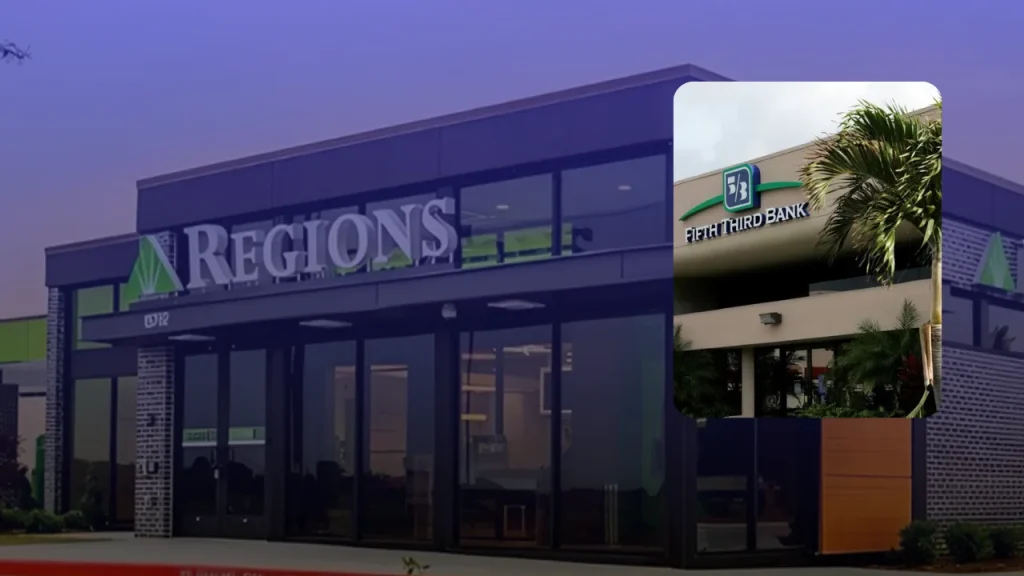
Regions Bank and Fifth Third Bancorp are each facing a separate putative class action in federal court. Former call center employees say they were not paid for the time it took to start their computers, log in and open the systems they needed before they could take a single call.
The Fifth Third complaint alleges about 13 to 20 minutes of unpaid time per workday. The Regions complaint alleges about 8 to 15 minutes per shift. [1][2]
The two cases are Jantz v. Fifth Third Bancorp, No. 1:26-cv-01014-JPH, in the U.S. District Court for the Southern District of Ohio, and Blevins v. Regions Bank, No. 2:26-cv-01680-AMM, in the U.S. District Court for the Northern District of Alabama.
No class has been certified in either case, no settlement has been announced, and neither bank has been found liable. Everything below describes allegations, not proven facts.
Regions Bank and Fifth Third Bancorp Unpaid Wages Lawsuits: Quick Facts
| Detail | Fifth Third Bancorp case | Regions Bank case |
| Case name | Jantz v. Fifth Third Bancorp | Blevins v. Regions Bank |
| Named plaintiff | Holly Jantz | Latasha Blevins |
| Case number | 1:26-cv-01014-JPH | 2:26-cv-01680-AMM |
| Court | U.S. District Court, Southern District of Ohio | U.S. District Court, Northern District of Alabama, Southern Division |
| Filing date | October 5, 2026 | September 17, 2026 |
| Main allegation | Unpaid computer setup, system login and other pre-shift work | Unpaid computer setup, login, technical-delay and related work time |
| Alleged unpaid time | About 13 to 20 minutes per workday | About 8 to 15 minutes per shift |
| Federal law | Fair Labor Standards Act (FLSA) | Fair Labor Standards Act (FLSA) |
| Proposed group | Similarly situated current and former call center representatives | Similarly situated current and former call center employees |
| Other claims reported | Breach of contract, unjust enrichment | Breach of contract, unjust enrichment |
| Class certified? | No | No |
| Settlement or claim form? | None announced | None announced |
The public docket listings reviewed for this article show the original complaints. They do not show a merits ruling, a certified class or an approved settlement. [1][2]
What Does the Fifth Third Bancorp Lawsuit (Jantz) Allege About Unpaid Login Time?
Holly Jantz, a former Fifth Third customer-service representative, filed the proposed class and collective action in Ohio. The complaint says Fifth Third expected representatives to be ready to take calls the moment their scheduled shift began, but would not let them start recording paid time until their computers and systems were already running.
According to the complaint, representatives had to:
- Boot up their computers.
- Connect to Fifth Third’s secure network.
- Complete phone-based verification or authentication.
- Open Microsoft Teams and other required applications.
- Reach the bank’s customer database and call-handling systems.
- Fix technical problems that kept them from becoming ready for calls.
Jantz alleges that this took roughly 10 to 15 minutes per shift. She also alleges that representatives came back from unpaid lunch breaks three to five minutes early to log in again, which brings the total to about 13 to 20 unpaid minutes a day. [3]
The complaint further claims that Fifth Third management knew about the setup work and still enforced schedule-adherence rules that required readiness at the start of each shift. Fifth Third can dispute all of this, including what its timekeeping systems recorded and what employees were actually required to do.
What Does the Regions Bank Lawsuit (Blevins) Allege About Unpaid Wages?
Latasha Blevins filed her proposed wage lawsuit against Regions Bank on September 17, 2026. She alleges call center workers had to complete computer and network setup before they could clock in and become available for calls, so work done before the recorded shift went unpaid.
Plaintiffs’ counsel’s published case summary describes alleged unpaid pre-shift setup, post-shift tasks and work tied to unpaid meal breaks. It also says system updates and technical problems caused delays that were not fully paid. [4] The alleged tasks include:
- Starting and booting the computer.
- Entering usernames, passwords and authentication details.
- Connecting to the bank’s network or VPN.
- Opening customer-service applications.
- Handling required updates or technical issues.
- Completing shutdown or logout tasks after paid time ended.
- Returning early from an unpaid meal break to be ready for the next period.
The 8-to-15-minute figure is an allegation. It is not a court-verified measurement for every Regions employee.
Who Represents the Workers in the Regions and Fifth Third Lawsuits?
Top Class Actions’ October 21, 2026 report lists these plaintiffs’ firms and attorneys: [3]
- Sanford DeRose Trial Lawyers LLP: Robert E. DeRose and Mathias Manner
- Sommers Schwartz P.C.: Kevin J. Stoops and Paulina R. Kennedy
- Wallace Miller: Mark R. Miller, Lawrence K. Holcomb and Julia Ozello
Confirm the counsel of record for each case on its docket, because attorney appearances can change.
How Much Unpaid Time Could the Regions and Fifth Third Allegations Add Up To?
A few minutes a day sounds small. Over a year it is not. The table assumes a worker on five shifts a week for 52 weeks. It is arithmetic, not an estimate of anyone’s recovery.
| Alleged unpaid time | Per week | Over 52 weeks |
| 8 minutes per workday (Regions, low end) | 40 minutes | About 34.7 hours |
| 15 minutes per workday (Regions, high end) | 75 minutes | 65 hours |
| 13 minutes per workday (Fifth Third, low end) | 65 minutes | About 56.3 hours |
| 20 minutes per workday (Fifth Third, high end) | 100 minutes | About 86.7 hours |
At $20 an hour, 86.7 hours is about $1,733 in straight-time pay. That is not what a worker is “owed.” Under the FLSA, unpaid straight time is not always recoverable on its own (see the “gap time” discussion below), and any real recovery depends on pay records, actual workweeks, which activities are legally compensable, and the limitation period.
What Does the Fair Labor Standards Act Say About Computer Login Time at Regions and Fifth Third?
The Fair Labor Standards Act is the main law in both cases. Here are the provisions and cases that matter most.
Minimum wage and overtime under 29 U.S.C. §§ 206 and 207
Covered, nonexempt employees must receive at least the federal minimum wage for all hours worked, and overtime at no less than one and a half times the regular rate for hours over 40 in a workweek. [5]
“Suffer or permit” and the employer’s knowledge under 29 C.F.R. Part 785
Work the employer “suffers or permits” counts as working time. The Department of Labor says an employer must count work it knows, or has reason to know, is being done, even if it did not ask for it. [6] See 29 C.F.R. §§ 785.11 to 785.13. That is why both complaints stress that management allegedly knew about the setup work.
Department of Labor guidance on call centers (Fact Sheet #64)
The Department of Labor has published guidance specifically about call centers under the FLSA. It covers time spent starting up and logging into computers and software before the first call. [10] Fact Sheet #64 is guidance, not a court ruling, but it shows the issue is a recognized enforcement area.
The Portal-to-Portal Act, 29 U.S.C. § 254, and Integrity Staffing Solutions, Inc. v. Busk
The Portal-to-Portal Act excludes certain “preliminary” and “postliminary” activities from compensable time. In Integrity Staffing Solutions, Inc. v. Busk, 574 U.S. 27 (2014), the Supreme Court held that an activity is compensable if it is “integral and indispensable” to the employee’s principal activities. [7][8]
In IBP, Inc. v. Alvarez, 546 U.S. 21 (2005), the Court held that once the first principal activity begins, the “continuous workday” rule generally makes later time compensable.
That is the real fight in the Fifth Third and Regions cases. If logging in and authenticating are integral to taking calls, the time may be compensable. If they are only preliminary, it may not be. Courts decide this on the facts of each job, so it is not something a headline can settle.
The de minimis rule and rounding, 29 C.F.R. §§ 785.47 and 785.48
Employers often argue that tiny, hard-to-record slices of time are de minimis and need not be paid. Under 29 C.F.R. § 785.47, that defense generally applies only to insubstantial periods that cannot practically be recorded. Eight to 20 minutes a day, if proven, is a different question from a few seconds. Section 785.48(b) also allows time rounding only if, over time, it does not systematically undercount hours worked.
Meal periods under 29 C.F.R. § 785.19
Federal law does not require meal breaks for adults. But a meal period is unpaid only if the employee is completely relieved of duty. If a worker logs in early or performs tasks during the break, the time may have to be counted. Both complaints allege early log-ins around lunch.
Employer timekeeping duties under 29 U.S.C. § 211(c) and 29 C.F.R. Part 516
Employers must keep accurate records of hours worked. Under Anderson v. Mt. Clemens Pottery Co., 328 U.S. 680 (1946), when an employer’s records are inadequate, an employee can meet the burden of proof by showing the work was done and offering a reasonable estimate of the time, and the burden then shifts to the employer. Login timestamps and system-access logs can matter a great deal here.
Unpaid “gap time” and why other claims were added
The FLSA guarantees minimum wage and overtime. It generally does not give a federal claim for straight-time pay in a week where no overtime was worked and total pay still met the minimum wage. That limit is one reason plaintiffs add breach-of-contract and unjust-enrichment counts, and sometimes state wage-law claims. Whether those theories survive is for the courts to decide.
What Other Claims Are Reported Against Regions Bank and Fifth Third Bancorp?
- FLSA claims. Unpaid minimum wages and overtime. If proven, remedies include unpaid wages and, in many cases, an equal amount as liquidated damages, plus attorney’s fees and costs. [9] An employer can try to avoid liquidated damages by proving it acted in good faith with reasonable grounds under 29 U.S.C. § 260.
- Breach of contract. This generally alleges the bank failed to honor a legally enforceable promise or obligation about pay. No court has found that either bank breached a contract.
- Unjust enrichment. This generally concerns a benefit a defendant should not equitably keep at another’s expense. Its availability alongside wage-law claims depends on the pleaded facts and governing law.
State law may matter. Ohio has its own wage statutes, including the Ohio Minimum Fair Wage Standards Act (Ohio Revised Code Chapter 4111) and the Ohio Prompt Pay Act (R.C. 4113.15). Alabama has no state minimum wage law of its own, so federal law carries most of the weight in the Regions case. Reporting on these cases identifies the FLSA, contract and unjust-enrichment claims. Check each complaint for any state-law counts.
Is the Regions Bank or Fifth Third Bancorp Lawsuit a Class Action or an FLSA Collective Action?
Both are described as putative class actions because no judge has certified any group. But the FLSA has its own procedure, and it differs from a standard Rule 23 class:
| FLSA collective action (29 U.S.C. § 216(b)) | Rule 23 class (Fed. R. Civ. P. 23) | |
| How workers join | Must file a written consent to opt in | Included automatically unless they opt out, once certified |
| Governing step | Court-approved notice to similarly situated workers | Class certification |
| Applies to | Federal FLSA claims | Usually state-law and other claims |
Two points make this more than a technicality.
- Opt-in matters. For an FLSA claim, a worker’s time limit generally keeps running until that worker’s written consent is filed (29 U.S.C. § 256). A worker who waits may lose weeks of recoverable time.
- Different circuits, different rules. The Ohio case sits in the Sixth Circuit and the Alabama case in the Eleventh. In Clark v. A&L Home Care and Training Center, LLC, 68 F.4th 1003 (6th Cir. 2023), the Sixth Circuit required plaintiffs to show a “strong likelihood” that others are similarly situated before notice goes out. The Eleventh Circuit has long used a two-stage approach, as in Hipp v. Liberty National Life Insurance Co., 252 F.3d 1208 (11th Cir. 2001). The Supreme Court approved court-facilitated notice in Hoffmann-La Roche Inc. v. Sperling, 493 U.S. 165 (1989). So the Ohio and Alabama cases may not proceed on the same terms.
No court-approved class definition or notice process had been identified in the records reviewed.
Which Regions Bank and Fifth Third Bancorp Employees Could Be Affected?
The cases target current and former hourly call center or customer-service employees who allegedly had to do required setup work without pay. Titles that may be relevant include customer-service representative, call center representative, contact-center agent and phone representative. A job title alone does not decide inclusion. Duties, pay status, work dates and timekeeping practices all matter.
Salaried exempt employees, managers and independent contractors may be treated differently, and so may workers whose jobs did not involve the challenged tasks.
How Long Do Regions and Fifth Third Call Center Workers Have to Bring FLSA Claims?
Under 29 U.S.C. § 255(a), an FLSA claim generally must be brought within two years of the violation, or three years if the violation was willful. Each paycheck can be its own violation, so older weeks can expire while newer ones remain open. Because the period keeps running for each worker until a written consent is filed, delay can cost recoverable time. State laws can set different deadlines.
What Defenses Could Regions Bank and Fifth Third Bancorp Raise?
These are common defenses in wage cases, listed for context only. Nothing here says either bank has raised them.
- Preliminary activity. That booting up and logging in fall outside compensable time under the Portal-to-Portal Act.
- De minimis time. That the time was too small or too hard to record.
- Rounding and accurate pay. That timekeeping or rounding policies were lawful and employees were fully paid.
- No employer knowledge. That the bank did not know about or require the work.
- Arbitration agreements and class waivers. In Epic Systems Corp. v. Lewis, 584 U.S. 497 (2018), the Supreme Court held that employment agreements requiring individual arbitration, with class and collective waivers, can be enforced under the Federal Arbitration Act. If affected workers signed such agreements, that could limit who can join a group case.
- Good faith. Under 29 U.S.C. § 260, to avoid liquidated damages.
- Individualized differences. That workers’ systems and routines varied too much to proceed as a group.
What Compensation Are the Plaintiffs Seeking from Regions Bank and Fifth Third Bancorp?
Based on published summaries, the relief sought includes:
- Back wages for compensable setup and other work time.
- Overtime, where the added time pushes a workweek past 40 hours.
- Liquidated damages where the FLSA allows them.
- Contract-based or other relief tied to the additional claims.
- Attorney’s fees and litigation costs where permitted. [9]
No total damages figure was verified for either case. Nobody can promise a per-worker payment at this stage.
For comparison, other wage cases on this site ended differently and involved different facts and parties:
- 15M Discover Call Center Unpaid Wages Settlement, Did You Work Their Call Center Between 2021 and 2025? involved a call center settlement. It does not show that Fifth Third or Regions owes a similar amount.
- Fontaine Modification $1.6 Million Employee Wage Class Action Settlement, Who Qualifies, How to Claim and the November 27 Deadline involved alleged unpaid preparation time and its own eligibility rules.
- Pins Mechanical Co. Class Action Lawsuit, Servers and Bartenders Claim Stolen Tips and Unpaid Wages concerned tip-pooling and wage practices, not login time.
What Should Regions Bank and Fifth Third Bancorp Call Center Employees Do Now?
There is no claim form or settlement administrator for either case right now. If you worked in a Regions or Fifth Third call center, these steps help protect you:
- Save pay and time records. Keep pay stubs, schedules, timecards and any timekeeping exports.
- Write down your routine. Note which systems you opened before clocking in, how long it took, and whether you were told to be ready at shift start.
- Keep instructions and policies. Save supervisor messages, handbooks, training material and schedule-adherence rules.
- Track meal breaks and technical delays. Note dates and rough durations when you logged in early, waited on updates or worked after clocking out.
- Think in workweeks. Overtime is counted by the workweek, so total weekly hours matter.
- Don’t assume you are already included. For FLSA claims you generally must file a written consent. Wait for a court-approved notice or talk to a qualified wage-and-hour attorney.
- Know your rights against retaliation. 29 U.S.C. § 215(a)(3) bars retaliation against employees who file or take part in FLSA complaints.
Do not alter records, enter company systems without permission, or take confidential customer data to support a claim.
Have Regions Bank and Fifth Third Bancorp Responded to the Lawsuits?
The docket listings reviewed show the original complaints and no merits ruling or settlement. The banks will have chances to answer, move to dismiss, challenge the proposed groups and raise defenses. A complaint is a set of claims, not a finding.
Regions has faced older wage suits too. Law360 reported in 2011 that Regions agreed to settle a putative class action by a Florida former teller over overtime, and in 2012 that two former loan officers filed a proposed collective action over overtime in Alabama federal court. [11][12] Those cases involved different workers and different tasks, and they do not prove the 2026 allegations.
What Happens Next in the Regions and Fifth Third Lawsuits?
The cases are early. Likely next steps include the banks’ responses, possible motions to dismiss, discovery on timekeeping systems and job duties, and later requests for court-approved notice or class certification. Useful evidence may include payroll data, login timestamps, system-access logs, call-handling records and break records.
If a settlement is ever proposed, check its scope, release terms, court approval status and whether workers must file a claim or opt in before treating any payment as available.
Regions Bank and Fifth Third Bancorp Lawsuit Timeline
| Date | Development |
| September 17, 2026 | Latasha Blevins filed Blevins v. Regions Bank in the Northern District of Alabama. |
| October 5, 2026 | Holly Jantz filed Jantz v. Fifth Third Bancorp in the Southern District of Ohio. |
| October 21, 2026 | Top Class Actions published a combined report on both putative class actions. |
| October 22, 2026 | The records reviewed showed no settlement, class certification or merits ruling in either case. |
Frequently Asked Questions About the Regions Bank and Fifth Third Bancorp Unpaid Wages Lawsuits
Are Regions Bank and Fifth Third Bancorp being sued in the same lawsuit?
No. They face two separate putative class actions in two federal courts: the Southern District of Ohio (Fifth Third) and the Northern District of Alabama (Regions). A ruling in one does not bind the other.
What is the Fifth Third Bancorp lawsuit case number?
Jantz v. Fifth Third Bancorp, No. 1:26-cv-01014-JPH, filed October 5, 2026, in the U.S. District Court for the Southern District of Ohio.
What is the Regions Bank lawsuit case number?
Blevins v. Regions Bank, No. 2:26-cv-01680-AMM, filed September 17, 2026, in the U.S. District Court for the Northern District of Alabama, Southern Division.
How many minutes of unpaid work do Regions and Fifth Third employees allege?
The Fifth Third complaint alleges about 13 to 20 minutes per workday. The Regions complaint alleges about 8 to 15 minutes per shift. These are allegations, not findings.
Does the FLSA require Regions and Fifth Third to pay for computer login time?
Not automatically. It depends on whether the login and setup work is integral and indispensable to the employee’s principal duties, or only a preliminary activity under the Portal-to-Portal Act. Integrity Staffing Solutions, Inc. v. Busk and the Department of Labor’s call center guidance (Fact Sheet #64) are the starting points.
Can unpaid login time at Regions or Fifth Third affect overtime?
Yes, potentially. If counting the missing time pushes a nonexempt employee past 40 hours in a workweek, overtime under 29 U.S.C. § 207 may apply. The result depends on the actual weekly hours and pay records.
Has a class been certified in the Regions or Fifth Third cases?
No. Neither court has certified a class or conditionally authorized an FLSA collective action based on the records reviewed.
Is there a Regions Bank or Fifth Third Bancorp settlement or claim form?
No settlement or claim form had been identified as of October 22, 2026. If one is announced, we will update this article.
How long do Regions and Fifth Third call center workers have to file an FLSA claim?
Generally two years from the violation, or three years if willful, under 29 U.S.C. § 255(a). For an FLSA collective action, the clock generally keeps running for each worker until that worker’s written consent is filed under 29 U.S.C. § 256.
Do I have to be a current Regions or Fifth Third employee to be included?
Not necessarily. Former employees are often included in wage cases, but the final scope depends on how each court defines the group.
Could an arbitration agreement affect my Regions or Fifth Third wage claim?
Possibly. Under Epic Systems Corp. v. Lewis, individual-arbitration agreements with class waivers can be enforceable. Whether any agreement applies to you is a question for a lawyer.
Where can I check the latest status of the Regions and Fifth Third cases?
Use PACER or the electronic filing systems of the Southern District of Ohio and the Northern District of Alabama. Public Justia docket pages are a good starting point but may lag behind the latest filings.
Related Reading
- 15M Discover Call Center Unpaid Wages Settlement, Did You Work Their Call Center Between 2021 and 2025?
- Fontaine Modification $1.6 Million Employee Wage Class Action Settlement, Who Qualifies, How to Claim and the November 27 Deadline
- Pins Mechanical Co. Class Action Lawsuit, Servers and Bartenders Claim Stolen Tips and Unpaid Wages
Sources and Court Records
- U.S. District Court, Southern District of Ohio, Jantz v. Fifth Third Bancorp, No. 1:26-cv-01014-JPH, docket.
- U.S. District Court, Northern District of Alabama, Blevins v. Regions Bank, No. 2:26-cv-01680-AMM, docket.
- Top Class Actions, Regions, Fifth Third Bank face class action allegations over unpaid wages at call centers, October 21, 2026.
- Wallace Miller, Regions Bank FLSA Lawsuit, case overview and allegations.
- 29 U.S.C. § 206 and 29 U.S.C. § 207.
- U.S. Department of Labor, Fact Sheet #22: Hours Worked Under the FLSA; see also 29 C.F.R. Part 785.
- U.S. Supreme Court, Integrity Staffing Solutions, Inc. v. Busk, 574 U.S. 27 (2014).
- 29 U.S.C. § 254, Portal-to-Portal Act.
- 29 U.S.C. § 216, Civil remedies under the FLSA.
- U.S. Department of Labor, Fact Sheet #64: Call Centers Under the FLSA.
- Law360, Regions Bank, Former Teller Settle OT Action, April 25, 2011.
- Law360, Ex-Loan Officers Hit Regions Bank With OT Pay Suit, September 7, 2012.
Disclaimer: General information only, not legal advice. AllAboutLawyer.com is not a law firm. The allegations are not court findings.
Researched and written by Israr Ahmad, legal content researcher and founder of AllAboutLawyer.com. All facts verified against the federal court dockets for Jantz v. Fifth Third Bancorp and Blevins v. Regions Bank, the Top Class Actions report, plaintiffs’ counsel’s case summary, and U.S. Department of Labor and statutory sources, as of October 22, 2026. Last Updated: October 22, 2026.
About the Author
Israr Ahmad is a legal content researcher with 4+ years of experience covering class action settlements and consumer rights cases. He has researched and published coverage of 2,500+ settlements using verified court records, settlement administrator filings, and government sources. Learn more about Israr.