
Ethicon Physiomesh Lawsuit, Settlement Updates, Who Qualifies, and What to Do Next
If you had hernia surgery between 2010 and 2016 and later experienced complications, you may still have legal options. Johnson & Johnson’s Ethicon subsidiary recalled its Physiomesh Flexible Composite Mesh in May 2016 after data revealed it failed at unusually high rates. Thousands of patients filed lawsuits. Ethicon has now reached settlements — but not everyone has been compensated, and some patients don’t even know the recalled mesh is still inside them.
Here is everything you need to know right now: what happened, who qualifies, what settlements look like, and what steps to take.
Quick Case Snapshot
| Defendant | Ethicon, Inc. (subsidiary of Johnson & Johnson) |
| Product | Physiomesh Flexible Composite Mesh |
| MDL Case | MDL-2782, In Re: Ethicon Physiomesh Flexible Composite Hernia Mesh Products Liability Litigation |
| Court | U.S. District Court, Northern District of Georgia |
| Judge | Senior District Judge Richard W. Story |
| Recall Date | May 25–27, 2016 (voluntary global market withdrawal) |
| Claims Alleged | Defective design, failure to warn, negligence, product liability |
| Settlement Status | Global settlement reached (May 2022); additional cases resolved through December 2023; 0 pending Physiomesh cases as of February 2026 |
| Settlement Amount | Confidential — not publicly disclosed |
| New Cases | Attorneys are still accepting new claims |
What Happened With Physiomesh — The Short Version
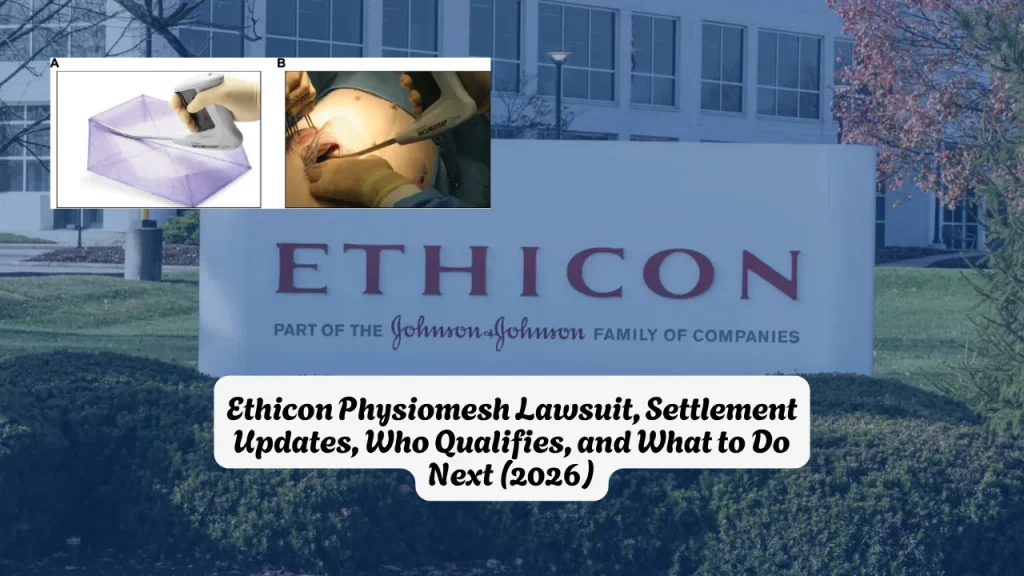
Ethicon Physiomesh was introduced in March 2010, featuring a unique, multilayered design that was intended to improve performance. However, amid a high number of failures, an Ethicon Physiomesh recall was issued in May 2016, removing the product from the market worldwide.
On May 25, 2016, Ethicon voluntarily recalled its Physiomesh flexible composite hernia mesh worldwide after unpublished data from European registries revealed higher rates of complications and revision surgeries following laparoscopic ventral hernia repair. The recall was attributed to multifactorial issues involving product design and patient factors. Ethicon decided not to return the product to the market globally.
A critical detail that many patients missed: Ethicon decided to withdraw Physiomesh based on an analysis of unpublished data from two large independent hernia registries. The company sent an official letter to doctors advising them about problems with the mesh and the market withdrawal. Unfortunately, Physiomesh patients were not on Ethicon’s mailing list.
In plain terms — Ethicon told doctors. Many patients never found out.
The FDA’s MAUDE database received thousands of adverse event reports for Ethicon Physiomesh Flexible Composite Mesh from 2010 to 2016, including infections, mesh failures such as hernia recurrence, bowel perforations, chronic pain, and adhesions, many requiring revision surgeries.
What Injuries and Complications Are Linked to Physiomesh?
Patients who received Physiomesh have reported a range of serious, life-altering complications. Some patients have reported the following hernia mesh complications: adhesions — bands of scar tissue that may form around the mesh and nearby organs, which can cause pain or lead to bowel obstruction; bowel obstruction — scar tissue or mesh migration that can block the intestines and may require emergency surgery; infection — bacterial contamination that can cause a serious infection requiring removal of the device; mesh failure — design defects or material breakdown allowing the hernia to return; meshoma — mesh that shrinks or folds into a ball-like structure that may trap nerves and cause chronic pain; mesh migration — in some cases, hernia mesh may move from its original position and damage surrounding organs; and organ perforation — migrated or defective mesh that may puncture nearby organs or tissue.
One of the most alarming statistics: about 20% of the patients who received the Physiomesh device had a recurring hernia in the first 6 months following surgery, and most patients in the Physiomesh group reported significantly higher rates of pain within the first 3 months of surgery.
Those who have yet to experience a problem but are implanted with Ethicon’s Physiomesh are still at risk. As of this writing, there are still patients who have not yet experienced complications and still have the recalled mesh inside their bodies.
Related article: Ameriprise Financial Sued Over ShinyHunters Data Breach That Allegedly Exposed Clients’ Social Security Numbers, Account Data
What Do the Lawsuits Allege?
Plaintiffs across thousands of cases made consistent core allegations against Ethicon and parent company Johnson & Johnson:
Lawsuits involving Physiomesh include allegations regarding Ethicon’s failure to warn about the risks of Physiomesh, defective design, manufacturing, and labeling, and negligence theories of discoveries.
A key background issue that strengthens plaintiffs’ arguments: Physiomesh, like many medical devices and drugs, was approved via the FDA’s 510(k) short-cut process. This means the product became available to consumers without a thorough evaluation because it was similar to a product already on the market. Critics argue this regulatory shortcut allowed a dangerous product onto the market without adequate independent safety testing.
Settlement Status: Where Things Stand Right Now
The Ethicon Physiomesh MDL has effectively wound down — but that doesn’t mean everyone has been paid.
In May 2021, Johnson & Johnson’s Ethicon division agreed to a plan to settle around 3,600 lawsuits related to their Physiomesh product, involving about 4,300 people. By September 2021, this plan had become a formal agreement covering 3,729 of those cases. In May 2022, a broader settlement was reached for all Physiomesh-related lawsuits, but the company did not disclose the amount of money involved. Most recently, in December 2023, Johnson & Johnson quietly resolved over 200 remaining cases within this MDL.
As of February 2026, there were 0 pending Physiomesh Flexible Composite hernia mesh lawsuits in the MDL. However, attorneys emphasize this does not mean no new cases can be filed. Hernia mesh litigation is still going strong in 2026. There are 26,297 hernia mesh lawsuits pending. Despite several settlements and jury verdicts, lawyers continue to accept cases.
The settlement amount is confidential. Ethicon has not disclosed individual payouts. Legal experts estimate hernia mesh lawsuit settlements could average from $65,000 to $80,000, with some exceeding $1 million. Settlement amounts depend on injury severity, medical costs and case strength.
Who Qualifies to File a Physiomesh Claim?
You may still have a valid claim if several key conditions apply to your situation:
You may qualify for a hernia mesh lawsuit if: you underwent a laparoscopic hernia repair surgery that used hernia surgical mesh; the surgery took place on or after January 1, 2008; and you had or have scheduled hernia revision surgery.
To be eligible for compensation, the basic elements of this type of medical device or product liability lawsuit must be proved: the Ethicon mesh product was defective; the hernia mesh product caused the injury; and the injury is monetarily quantifiable.
Importantly: your hernia mesh doesn’t have to be recalled for you to file a hernia mesh lawsuit. And if you’re unsure which mesh brand was used during your surgery, an attorney can help you find that out through your medical records.
If you’re unsure whether you had Physiomesh implanted, the product was sold between March 2010 and May 2016 and was used specifically in laparoscopic ventral hernia repair. Ask your surgeon or hospital for your operative report — it will list the implant details.
What Compensation Can You Recover?
The most common types of potential damages available to injured patients include: damages for loss of earning capacity; damages for past, present, and future pain and suffering; damages for past, present, and future mental anguish or emotional distress; payment of costs for further corrective surgeries; payment of lost wages; and payment of medical bills.
Based on an earlier class action involving Kugel hernia mesh cases, the average settlement is about $70,000. Cases involving more severe injuries — multiple revision surgeries, permanent organ damage, or long-term disability — have historically received significantly higher payouts.
What to Do If You Think You Have a Claim
Step 1 — Get medical attention first. If you suspect your hernia mesh has failed, the first step is to seek medical attention to address any immediate health concerns and document your symptoms. Consult with a specialist who can assess the complications and recommend necessary treatments, which may include corrective surgery. It’s important to keep detailed records of all medical visits, treatments, and communications related to your hernia mesh complications.
Step 2 — Identify your implant. Request your surgical records to confirm you received Physiomesh specifically. Your hospital or surgical center is required to keep these records.
Step 3 — Contact a product liability attorney. Most hernia mesh attorneys work on contingency — meaning no upfront costs, and you only pay if you win. Time limits (statutes of limitations) vary by state, so acting promptly matters.
Step 4 — Document everything. Keep all receipts, medical bills, prescription records, and documentation of missed work. This evidence directly affects the value of your claim.
Why Are New Cases Still Being Filed If the MDL Settled?
The global settlement covered the cases that were part of the MDL at that time. Several categories of people were not included: patients who didn’t know they were injured yet, patients who developed complications after the settlement, and patients who opted out. It is expected that there will still be more Ethicon Physiomesh claims because many victims have not yet had complications. Unfortunately, it means there are still many people out there with recalled mesh inside of them.
FAQs
Q: Is the Physiomesh lawsuit still open? Can I still file?
Yes. Although the MDL itself has wound down, attorneys are still accepting new Physiomesh cases. Patients who developed complications after the settlement, or who weren’t part of the original MDL, may still file claims in state or federal court. Speak with an attorney quickly — state statutes of limitations apply.
Q: How much money could I get from a Physiomesh settlement?
Settlement amounts are confidential, so there is no publicly disclosed average specific to Physiomesh. Based on comparable hernia mesh litigation, estimates generally range from $65,000 to over $1 million depending on severity. Cases requiring multiple surgeries or causing permanent disability tend to receive higher compensation.
Q: I didn’t know I had Physiomesh. How do I find out?
Request your operative report from the hospital or surgeon who performed your hernia surgery. That document will identify the brand and model of mesh used. If you can’t access it yourself, a product liability attorney can help retrieve it.
Q: I had hernia mesh surgery but my hernia hasn’t come back — do I still have a claim?
Possibly. All patients who were implanted with Physiomesh are at an increased risk of serious complications, making it critical that you and your healthcare team monitor symptoms of failed mesh. You may not have experienced problems yet. Consulting a physician and an attorney now is strongly recommended.
Q: What is the difference between an MDL and a class action?
A multidistrict litigation differs from a class action lawsuit. In class action lawsuits, the case combines individual plaintiffs into a single suit. In MDLs, the court groups similar cases and decides them in one or a few bellwether trials. This means MDL plaintiffs maintain individual cases — and individual settlement values based on their specific injuries — rather than receiving a uniform payout.
Q: Will I need to go to court?
Probably not. The vast majority of hernia mesh cases settle before trial. However, your willingness to go to trial, if necessary, often strengthens your negotiating position.
Last Updated: April 17, 2026
This article is for informational purposes only and does not constitute legal advice. Allegations in a complaint are not findings of fact. Settlement estimates are not guarantees of compensation. Consult a licensed attorney in your state to evaluate your specific situation.
About the Author
Israr Ahmad is a legal content researcher with 4+ years of experience covering class action settlements and consumer rights cases. He has researched and published coverage of 2,500+ settlements using verified court records, settlement administrator filings, and government sources. Learn more about Israr.