
NYC Horse Carriage Ban Lawsuit, Could Central Park Drivers and Medallion Owners Receive Compensation?
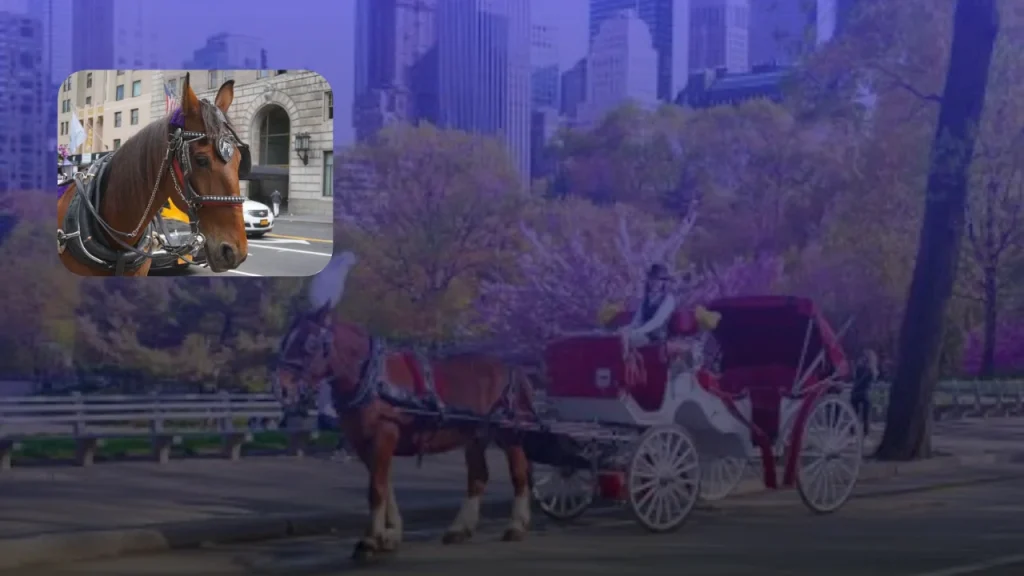
Central Park horse-carriage drivers, owners and union representatives have filed a federal putative class action challenging New York City’s new law ending its horse-drawn carriage industry by June 1, 2028. The lawsuit, Chiarello et al. v. City of New York et al., No. 1:26-cv-10154, was filed on November 19, 2026 in the Southern District of New York, the same day Mayor Zohran Mamdani signed Romanch’s Law (Local Law 165 of 2026).
The plaintiffs say the law destroys the value of carriage medallions, interferes with existing contracts and deprives workers and owners of constitutional protections. New York City says it will help roughly 200 affected workers with career assistance, retraining and possible medallion buybacks, but no individual compensation amount has been set.
Central Park carriage rides are not banned today. Licensed operations can generally continue during the transition, subject to existing rules and the new law’s restrictions. There is no approved settlement, compensation claim form or court order requiring the city to pay carriage drivers. The city has not been found liable.
NYC Horse Carriage Ban Lawsuit: Quick Facts
| Detail | Information |
| Lawsuit | Chiarello et al. v. City of New York et al. |
| Case number / court | 1:26-cv-10154 / U.S. District Court, Southern District of New York |
| Filed | November 19, 2026 (143-page complaint, 18 causes of action) |
| Challenged law | Romanch’s Law (Introduction 943-A, Local Law 165 of 2026) |
| City Council approval | October 22, 2026 (reported 40–7 vote) |
| Mayor’s signature | November 19, 2026 |
| Worker transition plan due | April 1, 2027 |
| License expiration / phaseout | May 31, 2028 / June 1, 2028 |
| Proposed classes | Four |
| Class certification | Not verified |
| Compensation amount | Undetermined |
| Claim form | None |
| Status | Active litigation |
Sources: original federal complaint and the NYC Council record for Introduction 943-A.
Why Is New York City Ending Central Park Horse Carriages?
The horse-drawn carriage trade has operated in New York for roughly 150 years, and its future has been debated for nearly two decades, with animal welfare advocates raising concerns about horses working in crowded city streets. The latest effort gained momentum after Romanch Mahajan, 18, died following a horse-drawn carriage accident in Central Park on June 17, 2026. The law is named in his memory. City officials say ending commercial carriage operations will improve public safety and animal welfare.
The Transport Workers Union disputes that a full ban is necessary. It argues the industry is regulated, provides long-standing jobs and could continue under appropriate safety rules. The lawsuit also challenges whether the city properly studied the economic effects. The accident and the ban do not by themselves establish wrongdoing by any carriage driver or owner.
What Does Romanch’s Law Require, and When?
The law sets a transition period rather than shutting operations down overnight.
| Date | Requirement or development |
| November 19, 2026 | Law signed; certain provisions take effect immediately |
| March 1, 2027 | City must make the horse disposition certification form available |
| April 1, 2027 | Deadline for the industry transition plan |
| June 1, 2027 | Horse owners’ certification deadline |
| May 31, 2028 | Existing carriage-related licenses expire |
| June 1, 2028 | Commercial carriage phaseout; no new licenses |
Individual provisions have different effective dates, and some restrict business transactions well before the final operating deadline.
Can tourists still ride in 2026 and 2027? Yes, generally, subject to operator availability, weather and safety rules. Anyone booking an event for June 1, 2028 or later should check cancellation and refund terms. Are all horse-drawn vehicles banned after June 1, 2028? Not necessarily. The law keeps a limited permit framework for special events such as weddings, parades and film productions, which are also challenged in the lawsuit. These exceptions do not allow ordinary sightseeing rides.
Who Filed the Lawsuit, and Who Is Being Sued?
| Plaintiff | Role |
| John Chiarello | President, Transport Workers Union Local 100 |
| John Samuelsen | President, Transport Workers Union of America |
| Medet Fidan | Carriage medallion and carriage owner representative |
| Christina Hansen | Carriage lessee and horse owner representative |
| David Koch | Licensed carriage driver representative |
The union plaintiffs seek declaratory and injunctive relief for their members, and the individual plaintiffs seek relief for themselves and for proposed classes. The defendants include the City of New York, the City Council, Mayor Mamdani in his official capacity and officials responsible for consumer protection, public health, transportation, policing and administrative enforcement. This is a challenge to legislation, not a criminal case against any official.
Who Could Qualify for the Proposed Class Action?
The complaint proposes four classes under Federal Rule of Civil Procedure 23.
| Proposed class | Who is potentially affected |
| Medallion and carriage owners | Owners of commercial carriage licenses and vehicles |
| Carriage lessees | People leasing carriages for commercial operations |
| Horse owners | Owners of horses used in the industry |
| Non-owner licensed drivers | Licensed drivers who do not own medallions |
Losing a driving job is a different injury from losing the market value of a license, which is why the classes are separate. Stable workers are included in the city’s transition measures but are not a separate damages class in the original complaint. No class has been verified as certified, and the definitions could change.
License vs. Medallion vs. Property Right
Three things are often blurred in news coverage:
| Asset or concept | What it is |
| Driver license | Authorizes an individual to drive a horse-drawn cab |
| Carriage medallion / owner license | A limited city-issued authorization to operate a licensed carriage; plaintiffs allege there are 68 medallions held by 63 owners |
| Horse license | Identifies and regulates a horse used in the industry |
| Constitutional property right | A legal question: whether a government license is a protected property interest that must be compensated if taken |
Owning a carriage or horse does not by itself authorize commercial rides. The city’s Department of Consumer and Worker Protection requires separate authorization for owners and drivers. See the owner license checklist and driver license checklist.
Why Are Medallion Owners Suing Before 2028?
The plaintiffs say their losses began when the law was signed, not when operations end. Sections 25 and 26 affect the licensing framework, including the ability to transfer medallions. Owners argue that shutting down the transfer market stops them from selling assets they invested heavily in. That creates two alleged injuries: the immediate loss of the ability to transfer or cash out a medallion, and the eventual loss of the operating rights. The plaintiffs ask the court for emergency relief on the transfer restrictions and horse disposition rules. No court has found that these restrictions are an unconstitutional taking.
Can NYC Take Medallions Without Compensation?
It depends on whether the interests are constitutionally protected property and whether the law is a compensable taking. The Fifth Amendment bars the government from taking private property for public use without just compensation, and it applies to cities through the Fourteenth Amendment. Article I, Section 7 of the New York Constitution offers similar protection. A drop in market value alone does not prove a violation, and governments have broad power to regulate for public health, safety and welfare.
A regulatory taking can occur when a restriction is burdensome enough to require compensation even without a physical seizure. Under Penn Central Transportation Co. v. New York City, 438 U.S. 104 (1978), courts consider the economic impact, interference with reasonable investment-backed expectations and the character of the government action. The owners say decades of licensing and transfer practice encouraged big investments. The city can defend the phaseout as a lawful exercise of regulatory power, and the court must decide the property question first. For a separate municipal property case, see NYC $60 Million Third Party Transfer Settlement.
All 18 Legal Claims
| Count | Challenge | Authority |
| 1 | Taking without just compensation | Fifth and Fourteenth Amendments; NY Const. Art. I, § 7 |
| 2 | Impairment of existing contracts | U.S. Const. Art. I, § 10 |
| 3 | Vagueness and improper delegation | Fourteenth Amendment; NY Const. Art. I, § 6 |
| 4 | Procedural due process | Fourteenth Amendment |
| 5 | Substantive due process | Fourteenth Amendment |
| 6 | Unequal treatment | Equal Protection Clause |
| 7 | Burden on interstate commerce | Dormant Commerce Clause |
| 8 | Legislative punishment without trial | Bill of attainder prohibition |
| 9 | Excessive financial penalties | Eighth Amendment; NY Const. Art. I, § 5 |
| 10 | Exceeding municipal authority | NY Municipal Home Rule Law § 10 |
| 11 | Conflict with state law | NY Vehicle and Traffic Law; home-rule provisions |
| 12 | Inadequate public hearing notice | Municipal Home Rule Law § 20(5) |
| 13 | Premature passage | NYC Charter § 36; Municipal Home Rule Law § 20(4) |
| 14 | Budget notice and fiscal impact deficiencies | NYC Charter § 33 |
| 15 | Failure to give required advance notice | NYC Charter § 33-a |
| 16 | Permit fee provisions | NYC Charter § 28(f) |
| 17 | Public access to legislative records | NY Public Officers Law §§ 103, 107 |
| 18 | Inadequate environmental review | SEQRA and CEQR |
These are the plaintiffs’ allegations, and no court has ruled on them. A few are worth explaining.
Due process. The plaintiffs say licenses and business interests can’t be extinguished without adequate procedure. But courts often distinguish individual licensing decisions from broad legislation, which does not always require a hearing for each affected business. For a different NYC licensing case, see NYC TLC $140 Million Settlement, which involves different drivers and has no bearing on carriage operators’ rights.
Interstate commerce. The plaintiffs object to limits on transferring horses for commercial carriage work, including to businesses in other states. The Commerce Clause restricts some state and local rules, but not every restriction touching an interstate transaction is unconstitutional.
Environmental review. The plaintiffs say the city didn’t properly examine job loss and community effects under SEQRA and CEQR. The complaint alone does not invalidate the city’s review.
How Could Drivers and Owners Get Compensation?
No amount has been set. Money could come through one of three paths:
| Path | Current position |
| The city’s April 1, 2027 transition plan | Must consider compensation for businesses, licenses and equipment; payout is discretionary |
| A negotiated settlement | None announced |
| A federal court ruling finding a compensable taking | Requested in the lawsuit; not awarded |
The law says the plan must consider compensation, which is not a guarantee of any specific fund. If a court did find a compensable taking, valuation would require evidence such as medallion sale history, business records, ownership agreements and expert appraisals. There is no formula guaranteeing owners their purchase price or drivers their future income.
What Has the City Promised?
On November 17, 2026, the mayor’s office announced a framework to help affected workers, identifying about 200 people and saying it intends to facilitate medallion buybacks. Section 23 of the law lets agencies weigh asset values, business transitions, employment plans and compensation used in other jurisdictions. As of November 26, 2026, none of these has been established: a guaranteed buyback price, a compensation budget, a payment formula, an application form or a payment deadline. Source: NYC Mayor’s Office, November 17 announcement.
What Happens to Drivers and Stable Workers?
The city plans a Horse Carriage Worker Industry Program with the Department of Small Business Services, NYC Talent and LaGuardia Community College, offering career counseling, training, tuition help, job placement and support for starting new businesses, in roughly a two-year workforce program. The city will also study electric carriages and electric pedal-assist bicycles, but a study is not an approval and does not promise a job for every worker. The transition program does not guarantee severance, wages or permanent employment. For a separate worker program, see DoorDash $131.5 Million NYC Settlement.
What Happens to the Horses?
Romanch’s Law requires humane disposition of licensed carriage horses. Amended Administrative Code § 17-329 restricts selling or transferring them for slaughter, for another carriage business or for other inhumane purposes, and owners must give advance notice of intended dispositions.
| Requirement | Deadline or rule |
| Notice of intended disposition | At least 10 business days in advance |
| City certification form available | March 1, 2027 |
| Owner certification due | June 1, 2027 |
| Transfers for slaughter | Prohibited |
| Transfers for another horse-drawn cab business | Prohibited |
| Humane retirement assistance | Part of transition planning |
Owners may keep their horses. The city plans to connect owners with organizations that can provide retirement homes, but the law does not promise every horse a government-funded sanctuary. Owners should follow agency instructions and get legal advice if existing arrangements are affected.
What About Existing Business Contracts?
Carriage businesses may have stable leases, horse or carriage financing, rental agreements and bookings. The plaintiffs argue the ban substantially interferes with them. The Contracts Clause limits government actions that substantially impair existing contracts, but it does not bar every regulation affecting private agreements, and courts consider the public purpose and reasonableness of the action. Romanch’s Law does not automatically cancel any lease, loan or debt. Owners should review termination clauses, regulatory-change provisions, insurance and payment obligations.
Are There $10,000 Penalties After the Ban?
Amended Administrative Code § 17-332(c) provides that violating the post-phaseout operating prohibition may be prosecuted criminally, with fines or a short jail term, or pursued as a civil violation carrying a penalty of at least $10,000. The plaintiffs challenge the civil penalty as an excessive fine. That challenge does not suspend the provision or show it is unconstitutional.
Has a Judge Blocked the Ban?
No order blocking the ban has been verified. On November 19, the plaintiffs submitted a proposed emergency order seeking temporary and preliminary relief, either suspending specific medallion transfer and horse disposition provisions or, alternatively, blocking enforcement of the law more broadly. Public docket entries show activity on November 24 and 25, including hearing scheduling and an extension-of-time order, but the full text of those orders was not reviewed. A request for a restraining order is not the same as a granted one. Treat the law as applicable unless a court order or new legislation says otherwise. Follow the federal docket.
How to Protect Your Rights
- Keep your carriage owner and driver licenses and medallion records.
- Keep purchase agreements, bills of sale and financing documents.
- Collect earnings, expense and business tax records.
- Keep stable leases, carriage rental agreements and open contracts.
- Keep horse ownership, licensing and veterinary records.
- Document any attempted transfers and any losses from the new restrictions.
- Contact your union or a qualified New York attorney about remedies.
- Watch for official NYC announcements on worker assistance and buybacks.
Giving information to a union, attorney or agency does not make you a class member or entitle you to compensation. There is no court-authorized public claim form. Union updates: Transport Workers Union of America.
Timeline
| Date | Development |
| June 11, 2026 | Introduction 943 presented to the City Council |
| June 17, 2026 | Romanch Mahajan dies after a carriage accident |
| July 15, 2026 | City Council committee hearing |
| October 22, 2026 | Council approves revised legislation |
| November 4, 2026 | Mayor holds public hearing |
| November 17, 2026 | City announces worker transition framework |
| November 19, 2026 | Mayor signs Romanch’s Law; federal lawsuit filed |
| November 24–25, 2026 | Further procedural docket activity |
| March 1, 2027 | Horse disposition form deadline |
| April 1, 2027 | Industry transition plan deadline |
| June 1, 2027 | Horse owner certification deadline |
| May 31, 2028 | Existing licenses expire |
| June 1, 2028 | Scheduled commercial phaseout |
Frequently Asked Questions
Are Central Park horse carriages banned now? No. The commercial industry is scheduled to end by June 1, 2028, though some restrictions already apply.
Can I book a ride for Christmas 2026? Generally yes, subject to operators’ availability, weather and rules.
Why is it called Romanch’s Law? It honors Romanch Mahajan, 18, who died after a Central Park carriage accident in June 2026.
Can drivers get compensation from the city? Possibly, through future municipal assistance or a successful lawsuit. No universal amount is set.
Will medallion owners get back what they paid? There is no such guarantee.
Is it a certified class action? No certification has been verified. It is a putative class action.
Can stable workers get help? The city’s transition measures include them, but they are not a separate damages class in the original complaint.
Can owners sell horses to businesses in another state? The enacted rules restrict transfers for commercial carriage use and are not expressly limited to New York City. The plaintiffs challenge this, so get legal guidance before arranging a transfer.
Will electric carriages replace horses? The city has announced a feasibility study only, and nothing has been approved.
Is the ban unconstitutional? The plaintiffs allege it is. No court has issued a final ruling.
Is there a settlement claim deadline? No. There is no settlement or claim process.
What Happens Next?
The court must address the plaintiffs’ emergency relief request, the city’s response and the many constitutional and procedural challenges. The litigation could affect the transfer restrictions, horse disposition rules or the broader phaseout, and could establish compensation rights if the plaintiffs prove legally recognized injuries. The April 1, 2027 transition plan is the next key milestone for buyback terms. Until a court or new legislation changes the requirements, the June 1, 2028 phaseout stays in place.
Official Sources
- Federal complaint, No. 1:26-cv-10154
- Federal court docket
- NYC Council: Introduction 943-A / Local Law 165 of 2026
- NYC Mayor’s Office: November 19 signing announcement
- NYC Mayor’s Office: November 17 worker transition framework
- Transport Workers Union: lawsuit announcement
- Penn Central Transportation Co. v. New York City, 438 U.S. 104 (1978)
- U.S. Constitution, Fifth Amendment
- 42 U.S.C. § 1983
Disclaimer: AllAboutLawyer.com is an independent legal information website, not a law firm or settlement administrator. This article provides general legal information, not legal advice. The plaintiffs’ allegations are unresolved, and compensation, class certification and outcomes are not guaranteed. Information reflects public sources as of November 26, 2026 and may change.
About the Author
Israr Ahmad is a legal content researcher with 4+ years of experience covering class action settlements and consumer rights cases. He has researched and published coverage of 2,500+ settlements using verified court records, settlement administrator filings, and government sources. Learn more about Israr.