
Nvidia $290 Million Class Action Settlement 2026, Who Qualifies, Key Dates and Investor Payments
Nvidia Corporation (NASDAQ: NVDA) and CEO Jensen Huang have agreed to a proposed $290 million all-cash settlement of a securities class action over how the company described its cryptocurrency-mining revenue. Investors who bought Nvidia common stock between August 10, 2017, and November 15, 2018, may qualify, but only if they have a recognized loss under the settlement’s allocation plan.
On November 24, 2026, class counsel filed an unopposed motion for preliminary approval in the U.S. District Court for the Northern District of California in In re NVIDIA Corporation Securities Litigation, Case No. 4:18-cv-07669-HSG. The motion lists a hearing before Judge Haywood S. Gilliam Jr. for February 4, 2027, at 2 p.m. Pacific Time.
As of November 27, 2026, the settlement still needs court approval. No official settlement website or claim form is live, and no claim deadline has been set. You do not need to own Nvidia stock today to take part.
Nvidia $290 Million Securities Class Action Settlement: Quick Facts
| Detail | Information |
| Company | NVIDIA Corporation (NASDAQ: NVDA) |
| Case name and number | In re NVIDIA Corporation Securities Litigation, No. 4:18-cv-07669-HSG |
| Court | U.S. District Court, Northern District of California (Oakland Division) |
| Judge | Haywood S. Gilliam Jr. |
| Settlement amount | $290,000,000 (gross, all cash) |
| Eligible purchase period | August 10, 2017 – November 15, 2018 (inclusive) |
| Key holding date | November 16, 2018, under the proposed allocation plan |
| Class certified | March 25, 2026 |
| Motion filed | November 24, 2026 |
| Preliminary approval hearing | February 4, 2027, 2 p.m. Pacific Time |
| Proposed claim deadline | 90 days after the notice date (not yet final) |
| Proposed claims administrator | JND Legal Administration |
| Estimated notices | Approximately 2 million |
| Official settlement website | Not yet launched. Check back after preliminary approval |
| Official case page | Bernstein Litowitz Berger & Grossmann: Nvidia securities litigation |
| Defendants’ position | Nvidia and Jensen Huang deny wrongdoing |
This 2018 lawsuit is separate from the newer Nvidia investor suits and investigations filed in 2026.
Why Was Nvidia Sued Over Cryptocurrency Mining Revenue?
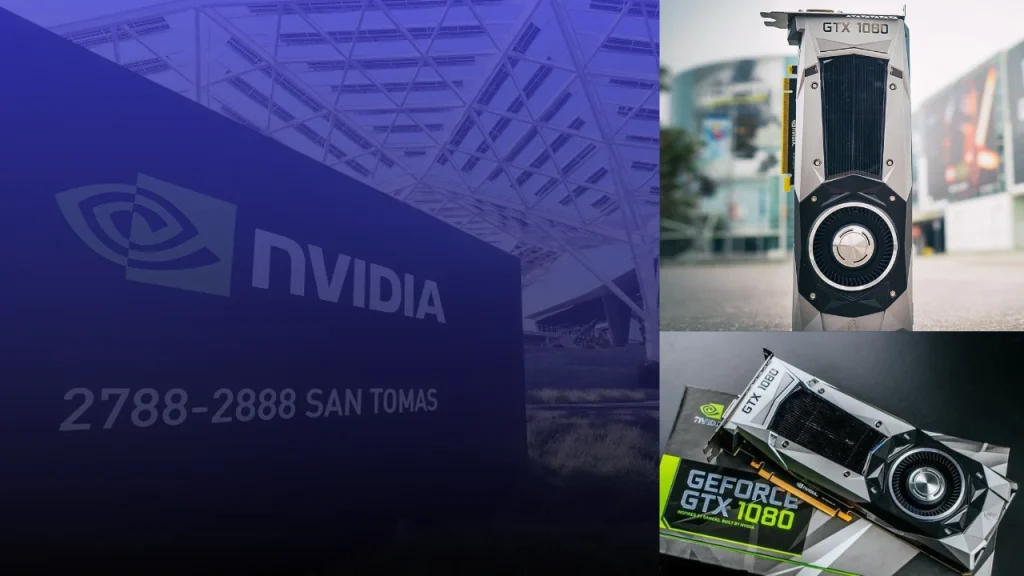
During the 2017–2018 crypto boom, miners bought large numbers of Nvidia GeForce graphics cards to mine digital currencies. The investors alleged that Nvidia and its executives understated how much of its gaming-segment growth came from crypto miners rather than ordinary gamers, which made the revenue look steadier than it was.
According to the plaintiffs, they also gave misleading assurances about the company’s ability to handle a drop in mining demand and about excess graphics card inventory. When crypto prices fell, Nvidia cut its revenue outlook on November 15, 2018. Class counsel says the stock dropped about 28.5% over two trading sessions.
Nvidia and Huang dispute the allegations. The settlement is not an admission of wrongdoing, and no court has found that Nvidia committed fraud.
Who Qualifies for the Nvidia Settlement?
You may be in the Nvidia class if you:
- bought or otherwise acquired Nvidia common stock from August 10, 2017 through November 15, 2018;
- held at least some of those shares through the November 16, 2018 price drop, as the proposed allocation plan requires;
- have a recognized loss under the court-approved formula;
- are not excluded from the class; and
- file a valid claim with supporting records by the final deadline.
Buying in the class period is not enough on its own to get paid.
Nvidia Investor Eligibility Examples
| Your situation | Likely result |
| Bought NVDA in September 2017 and held into 2019 | Potentially eligible |
| Bought in October 2018 and sold in December 2018 | Potentially eligible |
| Bought and sold every qualifying share before November 16, 2018 | No recognized loss on those shares under the proposed plan |
| Bought only before August 10, 2017 | Generally not eligible |
| Bought NVDA only in 2020, 2024 or 2026 | Not eligible |
| Own Nvidia only through an ETF or mutual fund | Generally not individually eligible on that basis alone |
| Held only Nvidia options | Not part of the certified common-stock class |
| Bought Nvidia graphics cards but never owned the stock | Not eligible |
The administrator makes the final call under the approved plan.
Who Is Excluded From the Nvidia Settlement?
The agreement excludes the defendants, Nvidia officers and directors, certain family members and related parties, and others named in the stipulation. Anyone who validly opts out is also excluded.
Do Former Nvidia Shareholders Qualify?
Yes. Eligibility turns on when you bought and sold, not on what you own now. Someone who bought in 2018 and sold in 2019 could have a recognized loss and may be paid. Do not buy Nvidia shares today hoping to qualify. The eligible period ended in November 2018.
Can Investors Outside California Claim?
Yes. This is a federal securities case, not a California residents’ program. Investors in New York, Texas, Florida and every other state fall under the same class definition. Trades made outside the United States may raise extra questions, so wait for the notice.
Related article: Jack in the Box Putative Class Action Revived, Can California Customers Get Refunds Over Recycling Labels?
How Much Will Nvidia Investors Receive From the $290 Million Fund?
No one has a guaranteed amount. The $290 million is a gross figure, and payments come from what is left after approved deductions.
| Item | Amount |
| Gross settlement fund | $290,000,000 |
| Maximum attorneys’ fee requested | Up to 21.4% (about $62.06 million) |
| Estimated notice and administration costs | About $2.5 million to $3 million |
| Illustrative remainder before expenses, taxes and interest | About $224.9 million |
These are proposed figures, not a final distribution. The court must approve fees and costs, and expenses and interest will move the numbers.
The motion estimates maximum class-wide damages at about $2.059 billion at trial, so $290 million is roughly 14% of that estimate. That does not mean you will get 14% of your own loss.
How Nvidia Settlement Payments Are Calculated
Under the proposed plan of allocation, your share depends on:
- the date you bought and the number of qualifying shares;
- your purchase price;
- when and at what price you sold;
- the estimated artificial inflation in the stock price;
- the statutory damages caps; and
- the total recognized losses of all approved claimants.
Everyone’s recognized loss is added up, and each claimant gets a proportional share of the net fund.
How to Prepare an Nvidia Class Action Settlement Claim Now
The claim process has not opened. You can still get ready.
- Find your 2017–2018 trades. Pull monthly statements, trade confirmations and transaction histories covering August 10, 2017 through the date you sold. If you have switched brokers (Robinhood, Fidelity, Schwab, E*TRADE, TD Ameritrade, Vanguard or another), ask your current or former broker for archived records.
- Gather supporting records. Account transfer records and available Form 1099-B documents can help, though tax forms alone may not have every detail the claim form asks for.
- Keep original share counts. Nvidia split 4-for-1 in 2021 and 10-for-1 in 2024, so 10 original shares held through both would show as 400 today. Keep the original records and follow the administrator’s instructions on split adjustments.
- Wait for the official notice. The motion proposes sending notices and making claim forms available within 20 days after preliminary approval. Do not rely on mail alone if you have moved or changed brokers.
- File the official form and keep proof. Save a copy and any confirmation number, and answer quickly if the administrator asks for more documents.
Scam warning: There is no verified live claim portal yet. Never give brokerage logins or pay a fee to anyone offering to “file” your Nvidia claim. Legitimate class action claims do not charge claimants upfront.
Nvidia Settlement Claim Deadline and Proposed Schedule
These dates are proposed and could change. Do not confuse the February 4, 2027 hearing with a claim deadline.
| Event | Date or proposed deadline |
| Class period | August 10, 2017 – November 15, 2018 |
| Original lawsuit filed | December 21, 2018 |
| Class certification | March 25, 2026 |
| Mediator’s recommendation accepted | September 24, 2026 |
| Preliminary approval motion filed | November 24, 2026 |
| Preliminary approval hearing | February 4, 2027, 2 p.m. Pacific Time |
| Notice and claim forms available | Within 20 days after preliminary approval |
| Claim deadline | 90 days after the notice date |
| Objection and opt-out deadlines | 21 days before the final approval hearing |
| Final approval hearing | About 130 days after preliminary approval, or later |
| Payments | Not yet determined |
Your Legal Options in the Nvidia Class Action Settlement
Once notice goes out, class members are expected to have four choices.
| Option | What it means |
| File a valid claim | You may get paid and will release the covered claims |
| Opt out | No payment, but you generally keep the right to sue separately, subject to time limits |
| Object | You tell the court your concerns about the settlement, the plan or the fee request |
| Do nothing | You generally get no payment and are still bound by the release if the settlement is approved |
If you are thinking of opting out, know that statutes of limitations and repose may limit a separate securities suit. Doing nothing does not protect your rights.
Federal Securities Laws in the Nvidia Class Action
Section 10(b) of the Securities Exchange Act of 1934 and SEC Rule 10b-5
Section 10(b) (15 U.S.C. § 78j(b)) and Rule 10b-5 (17 C.F.R. § 240.10b-5) prohibit materially misleading statements and omissions in connection with buying or selling securities. The Nvidia plaintiffs said statements about crypto-related sales inflated the stock price. A private plaintiff must generally show a material misrepresentation or omission, scienter, reliance, economic loss and loss causation. A falling stock price alone does not prove fraud.
Section 20(a) of the Securities Exchange Act: Control Person Liability
Section 20(a) (15 U.S.C. § 78t(a)) can make people who control a violator liable too. The plaintiffs used it against Jensen Huang based on his role and public statements. Holding a senior title does not automatically create liability, and the statute includes a good-faith defense.
Private Securities Litigation Reform Act of 1995 (PSLRA)
The PSLRA (15 U.S.C. § 78u-4) sets heightened pleading standards, lead-plaintiff rules and limits on damages, including a 90-day lookback price cap that affects how recognized losses are figured. Nvidia’s Supreme Court appeal focused on these pleading rules. Read the PSLRA text at Cornell Law.
Federal Rule of Civil Procedure 23(e): Court Approval of the Nvidia Settlement
Rule 23(e) requires Judge Gilliam to decide whether the settlement is fair, reasonable and adequate. He will look at how the class was represented, how negotiations went, how payments will be distributed, the litigation risks and the attorneys’ fee request. Class certification on March 25, 2026 did not decide whether Nvidia committed fraud.
Did the U.S. Supreme Court Rule Against Nvidia?
Not on whether fraud occurred. After the Ninth Circuit revived the case on August 25, 2023, Nvidia asked the Supreme Court to review the pleading standards in NVIDIA Corp. v. E. Ohman J:or Fonder AB, No. 23-970. On December 11, 2024, the Court dismissed the case as improvidently granted, so the Ninth Circuit ruling stood and the case continued. The Court did not find that Nvidia or Huang committed fraud and did not award investors any money.
Nvidia’s Earlier $5.5 Million SEC Penalty Over Crypto Disclosures
On May 6, 2022, the SEC announced that Nvidia agreed to pay a $5.5 million civil penalty over inadequate disclosures about crypto mining’s effect on its gaming business. The order cited Sections 17(a)(2) and 17(a)(3) of the Securities Act of 1933, reporting and disclosure rules, and disclosure controls. Nvidia settled without admitting or denying the findings.
That penalty is separate from the $290 million private investor settlement. You cannot file a claim for this settlement through the SEC announcement.
Nvidia Securities Lawsuit Timeline, 2017–2027
- August 10, 2017: Class period begins.
- November 15, 2018: Nvidia cuts its revenue outlook.
- December 21, 2018: The securities class action is filed.
- May 2, 2019: Lead plaintiffs appointed.
- March 16, 2020: District court dismisses the complaint with leave to amend.
- March 2021: District court dismisses the amended complaint.
- May 6, 2022: SEC announces its $5.5 million settlement.
- August 25, 2023: Ninth Circuit partly reverses the dismissal.
- December 11, 2024: Supreme Court dismisses Nvidia’s appeal as improvidently granted.
- December 3, 2025: Mediation.
- March 25, 2026: Class certified.
- May 26, 2026: Ninth Circuit denies permission to appeal certification.
- September 21, 2026: Mediator recommends $290 million.
- September 24, 2026: Both sides accept.
- November 24, 2026: Settlement signed and preliminary approval requested.
- February 4, 2027: Preliminary approval hearing.
Why Did Nvidia Agree to Pay $290 Million?
Settling lets both sides avoid trial and further appeals. Class counsel says the amount is a strong recovery given the risks of going on. The defendants disputed liability and damages. The deal is a civil settlement, not a criminal conviction or a finding of fraud.
Is the Nvidia $290 Million Settlement Related to the 2026 Jensen Huang Investigations?
No. The 2018 crypto case covers August 2017 – November 2018 purchases. Newer Nvidia matters involve different conduct and different periods, and none has a verified settlement or claim process. Buying Nvidia stock during the AI boom does not make you eligible here.
For related reading:
- Nvidia Investigation 2026, California AG Subpoenas Company Over China, Jensen Huang and Investor Disclosures
- Coastal Financial (CCB) Securities Class Action, Lead Plaintiff Deadline Is December 1, 2026 (Not a Settlement)
- Nvidia NeMo Copyright Class Action Lawsuit, Judge Refuses to Dismiss Authors’ Claims Over 197,000 Pirated Books
When Will Nvidia Settlement Payments Be Sent?
No payment date exists. The court must grant preliminary approval, notice must go out, claims must be reviewed, and then final approval is needed. Appeals or claim disputes could add delays. Do not expect checks after the February 2027 hearing.
What Should Nvidia Investors Do Now?
If you bought Nvidia common stock between August 10, 2017 and November 15, 2018, start collecting your statements and trade records, and check whether you held shares on November 16, 2018. You do not need a lawyer just to monitor the case or prepare records. Watch the official case page for the court-approved notice, claim form and final deadlines, and treat the administrator’s official site as the only place to file once it launches.
Tax treatment depends on your situation, so ask a CPA how any payment should be reported.
Frequently Asked Questions About the Nvidia $290 Million Class Action Settlement
Who is eligible for the Nvidia $290 million settlement? Buyers of Nvidia common stock between August 10, 2017 and November 15, 2018 who have a recognized loss under the plan of allocation and are not excluded.
Is there an Nvidia settlement claim form yet? No. The official claim form will come after Judge Gilliam grants preliminary approval.
What is the Nvidia settlement claim deadline? Not set. The proposed deadline is 90 days after the notice date.
Can I claim if I sold my Nvidia shares years ago? Yes, if you have a recognized loss. Current ownership is not required.
When is the Nvidia preliminary approval hearing? February 4, 2027, at 2 p.m. Pacific Time before Judge Haywood S. Gilliam Jr.
How much will each Nvidia investor get? It depends on each claimant’s recognized loss compared with all approved claims, after fees and costs.
Sources and References
- Plaintiffs’ Unopposed Motion for Preliminary Approval of Settlement, Docket 304 (Nov. 24, 2026)
- Stipulation and Agreement of Settlement, Docket 304-1
- Bernstein Litowitz Berger & Grossmann: Nvidia case page
- Kessler Topaz: $290 Million Nvidia Investor Settlement Announcement
- Ninth Circuit Opinion, Aug. 25, 2023
- U.S. Supreme Court Docket No. 23-970
- SEC Press Release 2022-79 (May 6, 2022)
- Nvidia Investor Relations: stock split information
- 15 U.S.C. § 78u-4 (PSLRA), Cornell Law
Disclaimer: This article is general information, not legal, tax or investment advice. The settlement is subject to court approval, and Nvidia and Jensen Huang deny wrongdoing.
Researched and written by Israr Ahmad, legal content researcher and founder of AllAboutLawyer.com. All facts verified against the preliminary approval motion (Dkt. 304), the Stipulation and Agreement of Settlement (Dkt. 304-1), class counsel’s official case page, the Ninth Circuit opinion, the Supreme Court docket and the SEC press release, as of November 27, 2026. Last Updated: November 27, 2026.
About the Author
Israr Ahmad is a legal content researcher with 4+ years of experience covering class action settlements and consumer rights cases. He has researched and published coverage of 2,500+ settlements using verified court records, settlement administrator filings, and government sources. Learn more about Israr.