
Medtronic MiniMed Insulin Pump Lawsuit, Dorn v. Medtronic Over Recalled 600 Series Pumps, FDA Findings, Claims and Case Status
Two women have filed a new personal-injury lawsuit against Medtronic over recalled MiniMed 600 Series insulin pumps. The case is Dorn, et al. v. Medtronic MiniMed Inc., et al., Case No. 26STCV32898, pending in the Superior Court of California, County of Los Angeles. Plaintiffs Linda Dorn and Brooke Vasquez allege that a defective retainer ring on their pumps caused insulin to be delivered incorrectly, leading to serious medical emergencies. These are allegations in a civil complaint, not court findings.
This article explains what the retainer-ring recall was, what the FDA found, what the plaintiffs claim, how the law applies, and where the case stands as of October 31, 2026.
Quick Facts: Dorn v. Medtronic MiniMed (Case No. 26STCV32898)
| Item | Detail |
| Case name | Dorn, et al. v. Medtronic MiniMed Inc., et al. |
| Case number | 26STCV32898 |
| Court | Superior Court of California, County of Los Angeles |
| Plaintiffs | Linda Dorn and Brooke Vasquez |
| Defendants | Medtronic MiniMed Inc.; Medtronic Inc.; MiniMed Group Inc. |
| Plaintiffs’ attorneys | C. Moze Cowper and Paige Miller, Cowper Law LLP |
| Case type | Individual product liability / personal injury |
| Products | Medtronic MiniMed 600 Series insulin pumps (including the 630G and 670G) |
| Class action? | No. No class has been certified |
| Settlement | None verified in this case |
What Is the Medtronic MiniMed 600 Series Retainer Ring Defect?
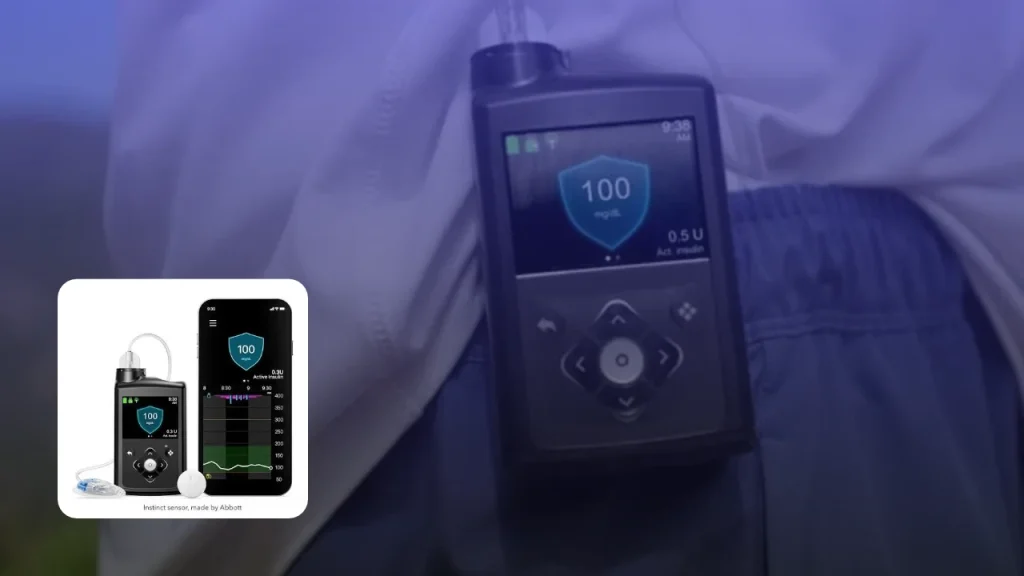
The dispute centers on a small part: the clear plastic retainer ring that locks the insulin reservoir into the pump. According to Medtronic’s November 21, 2019 urgent safety notification, the ring could break, loosen, detach or go missing, sometimes after the pump was dropped or struck against a hard surface.
That can go wrong in two directions:
- Too much insulin. If the reservoir is not secured and is reinserted while the infusion set is still connected, insulin can enter the body too quickly. This can cause hypoglycemia (dangerously low blood sugar), seizures and loss of consciousness.
- Too little insulin. If the reservoir does not lock properly, the pump may under-deliver. This can cause hyperglycemia (dangerously high blood sugar) and diabetic ketoacidosis (DKA).
The original notification identified two models: the MiniMed 630G (MMT-1715) and the MiniMed 670G (MMT-1780). The FDA’s recall records list additional 630G and 670G variations.
This lawsuit concerns the retainer-ring issue only. It is not about every Medtronic pump recall (see the comparison table below).
Medtronic MiniMed Recall Timeline: From the 2016 CAPA to the FDA Class I Recall
The timeline matters because the plaintiffs are challenging not just the broken part but how Medtronic allegedly handled what it knew.
June 2016: internal investigation. The FDA said Medtronic opened a corrective and preventive action (CAPA) investigation in June 2016 after an increase in complaints about damaged clear retainer rings. The FDA later concluded the company’s risk assessment underestimated the likelihood of harm, and that Medtronic considered but did not send customers a communication at that time.
August 2019: redesigned ring. Medtronic began distributing pumps with a redesigned black retainer ring.
November 21, 2019: urgent field safety notification. Medtronic told customers to inspect their pumps and contact the company if the ring looked damaged.
February 7, 2020: FDA Class I classification. The FDA classified the action as a Class I recall, its most serious category, meaning there is a reasonable probability the product could cause serious adverse health consequences or death. It appears in the FDA database as Recall Event 84430.
October 5, 2021: expanded recall. Medtronic committed to proactively replace all 600 Series pumps with the clear retainer ring, even without visible damage and regardless of warranty status.
December 9, 2021: FDA warning letter. Covered in the next section.
What the FDA Found in Its December 2021 Warning Letter to Medtronic
After inspecting Medtronic’s Northridge, California facility from June 7 through July 7, 2021, the FDA issued a warning letter citing problems with corrective-action procedures, complaint investigations and medical device reporting. Key findings:
- More than 74,000 retainer-ring complaints between the June 2016 CAPA and the November 2019 recall, of which more than 57,000 were reported to the FDA as Medical Device Reports (MDRs). These are complaint and reporting records, not 74,000 confirmed injuries.
- 887 complaints about the redesigned black ring between December 2019 and May 2021. In 772 of them, Medtronic referenced the earlier clear-ring investigation instead of opening a separate formal investigation. The FDA cited customer reports of glucose readings of 450 mg/dL and 434 mg/dL, along with missing or loose rings.
- A missed serious-injury report. The FDA said a patient had a blood glucose reading of 36 mg/dL after a MiniMed pump malfunction, that the event met serious-injury reporting criteria, and that Medtronic had not submitted the required report. Under 21 CFR § 803.50(a)(1), manufacturers generally must report within 30 calendar days of becoming aware of such information.
A warning letter is a regulatory finding, not a civil judgment. It does not prove that any particular plaintiff’s injury was caused by the device.
Who Are Linda Dorn and Brooke Vasquez, and What Do They Allege Against Medtronic?
Both plaintiffs used MiniMed 600 Series pumps. According to published reporting on the complaint:
- Linda Dorn alleges her pump failed to deliver the correct amount of insulin, causing hypoglycemia and other injuries. She also alleges Medtronic refused to reimburse her out-of-pocket expenses.
- Brooke Vasquez alleges her pump malfunctioned in 2021, causing a seizure and emergency treatment for diabetic ketoacidosis.
Both say they did not know about the defect until after recall notices were issued. They allege Medtronic concealed the defect and misrepresented the pumps’ safety, and that they bought and used the devices under false pretenses. They seek compensation for medical expenses, economic losses, emotional distress and pain and suffering.
Note: the stamped complaint was not available in the public materials reviewed, so the plaintiffs’ allegations are attributed to published lawsuit reporting and the court-record index.
What Are the Causes of Action Against Medtronic MiniMed Under California Law?
The complaint asserts four claims, plus a demand for punitive damages and a jury trial.
Strict product liability. California recognizes manufacturing defect, design defect and failure-to-warn theories. For design defects, CACI No. 1204 sets out a risk-benefit test weighing the seriousness and likelihood of harm, whether a safer alternative design was feasible, and the cost of that alternative. CACI No. 1205 covers failure-to-warn claims.
Negligence. Plaintiffs must show Medtronic failed to use reasonable care in designing, testing, monitoring and warning about the pumps, and that this was a substantial factor in causing their harm.
Intentional misrepresentation and concealment. This generally requires a false representation or actionable nondisclosure, knowledge, intent to induce reliance, justifiable reliance and resulting damage. The 2016 CAPA investigation could become central evidence on what Medtronic knew and when.
Negligent misrepresentation and concealment. Under CACI No. 1903, plaintiffs must show an untrue statement the company had no reasonable grounds to believe, intended reliance, actual reasonable reliance and harm.
Punitive damages. California Civil Code § 3294 requires clear and convincing evidence of oppression, fraud or malice, plus additional requirements tied to an officer, director or managing agent of a corporate defendant. A recall or warning letter alone does not make punitive damages automatic.
How Do FDA Medical Device Laws and Federal Preemption Affect the Medtronic Lawsuit?
Because the 630G and 670G were approved through the FDA’s premarket approval (PMA) process (P150001 and P160017 in the recall records), federal preemption is a likely defense issue.
- 21 U.S.C. § 360k(a) can preempt state requirements that differ from or add to federal requirements for a PMA device.
- Riegel v. Medtronic, Inc., 552 U.S. 312 (2008) held that certain state-law claims involving PMA devices can be preempted.
- Medtronic, Inc. v. Lohr, 518 U.S. 470 (1996) recognizes that state-law claims paralleling federal requirements can survive.
- Buckman Co. v. Plaintiffs’ Legal Committee, 531 U.S. 341 (2001), together with 21 U.S.C. § 337(a), limits fraud-on-the-FDA claims, because enforcing the FDCA belongs to the federal government.
These doctrines do not mean the case must be dismissed. Claims tied to alleged violations of specific federal requirements, such as complaint handling and adverse-event reporting, are the kind plaintiffs typically use to argue a “parallel” claim.
On quality-system rules: the FDA’s 2021 letter cited 21 CFR §§ 820.100(a) and 820.198(c) as they then applied. The FDA’s Quality Management System Regulation (QMSR) replaced the former Quality System Regulation on February 2, 2026, so the 2021 findings should not be described as a new 2026 finding.
Can Dorn and Vasquez Overcome the California Statute of Limitations?
California Code of Civil Procedure § 335.1 generally gives two years to sue for personal injury. Vasquez alleges a 2021 incident and the case was filed in 2026, so timing will likely be contested. Two doctrines may matter:
- The discovery rule, which looks at when a plaintiff discovered, or reasonably should have discovered, the connection between an injury and a product.
- Fraudulent concealment, which can toll a limitations period while a plaintiff cannot discover a claim despite reasonable diligence. The California Supreme Court discussed this in Bernson v. Browning-Ferris Industries, 7 Cal.4th 926 (1994).
In related cases, Cowper Law announced that a Los Angeles Superior Court judge denied Medtronic’s statute-of-limitations summary-judgment motions in the separate Davis and Burgess cases by an order dated March 27, 2025. According to the firm, the judge found evidence that could support a fraudulent-concealment theory, including alleged knowledge of retainer-ring defects dating to 2016. That was not a finding of fraud, and it was a different case from Dorn.
How Big Is the Wider Medtronic MiniMed Retainer Ring Litigation?
The Dorn case is one of many. According to a quarterly report for the period ended July 31, 2026, as of August 2026:
| Wider litigation detail | Reported figure |
| U.S. lawsuits filed | 28 |
| Individuals in those cases | 109 |
| Cases coordinated in Los Angeles County | 26 |
| Separate federal case in Washington | 1 |
| Separate federal case in New York | 1 |
| Additional potential claimants identified by plaintiffs’ firms | About 2,000 |
The roughly 2,000 are potential future claimants, not newly filed lawsuits.
Earlier jury trial. A multi-plaintiff trial in the Los Angeles County litigation began May 11, 2026. On June 17, 2026, the jury found liability on certain claims involving one pump user and awarded approximately $253,000. It awarded no damages to three other plaintiffs (two pump users and one loss-of-consortium plaintiff). Judgment was entered in August 2026, and Medtronic disclosed the award was reduced by about one-third based on proportionate-responsibility findings. Post-trial motions and appeals remained possible. That verdict does not decide the Dorn case.
Litigation accrual. The same report disclosed approximately $20 million in accrued litigation charges for certain pending and threatened claims, including the retainer-ring litigation, with part of the accrual relating to claimants who might become subject to a master settlement agreement. This is an accounting accrual, not a settlement fund available to patients, and the company said its ultimate liability could differ materially.
A purported Canadian class action filed in 2021 is also described in the company’s disclosures as early-stage. It is separate from this California case.
Is the Dorn v. Medtronic MiniMed Lawsuit a Class Action?
No. Dorn is an individual personal-injury lawsuit by two named plaintiffs. No class has been certified, and there is no claim form or administrator-run settlement process for this case. Using a recalled pump does not automatically make someone a plaintiff or entitle them to compensation, and neither does a medical emergency while using a pump. The specific device, defect, medical evidence and causation all matter.
Medtronic MiniMed Pump Recalls Compared: How the Retainer Ring Recall Differs
| Date | Safety issue | How it differs |
| November 2019 to October 2021 | Clear retainer-ring defect | The issue behind the Dorn lawsuit |
| September 2022 | Cybersecurity vulnerability | Possible unauthorized access and unintended insulin delivery |
| July to October 2024 | Shortened battery life | Pumps could stop delivering insulin sooner than expected |
| February 2026 | Pump position relative to infusion site | Pressure changes can affect insulin delivery |
These are separate safety matters and should not be treated as evidence that the retainer ring caused the others.
Readers following diabetes-device safety may also want our coverage of the Dexcom G7 Lawsuit, Class Action Over Failed Alerts And FDA Recalls Rocks Diabetes Device Market. For broader device-safety reporting, see Philips Lumify Ultrasound FDA Early Alert, 4 Deaths and 8 Serious Injuries Reported, What Hospitals, EMS Teams and Patients Need to Know. For another long-running product liability litigation, read Ethicon Physiomesh Lawsuit, Settlement Updates, Who Qualifies, and What To Do Next.
What Should MiniMed 600 Series Insulin Pump Users Do Now?
- Check your model. The original notice named the MiniMed 630G (MMT-1715) and 670G (MMT-1780). The model number is on the bottom or back of the pump.
- Check the retainer ring. The original recall concerned the clear ring design. The series name alone does not tell you whether your pump was affected.
- Review your paperwork. Look for Medtronic recall letters, replacement notices and correspondence with your care team.
- Get medical guidance. Talk to your diabetes-care team and Medtronic about the applicable safety instructions. Do not stop insulin or change treatment because of a lawsuit article. Seek urgent medical help for a suspected severe insulin-delivery problem.
- Preserve records if you are considering a claim: pump model and serial number, the device itself if safe to keep, pump logs and glucose-monitoring data, medical records, hospital and pharmacy bills, and recall notices.
- Talk to a medical-device attorney promptly. Filing deadlines vary by state and circumstance, and a recall alone does not establish a right to compensation.
Current Status of Dorn v. Medtronic MiniMed (Case No. 26STCV32898)
| Item | Status as of October 31, 2026 |
| Stage | Early stage, pending |
| Complaint | Listed in October 2026 |
| Settlement | None verified |
| Class certification | None |
| Trial date | Not verified |
| Final judgment | None reported |
| Medtronic response | No public response to these specific allegations verified |
Court dockets, FDA recall databases and Medtronic/MiniMed patient notices remain the primary sources for current status.
Frequently Asked Questions About the Medtronic MiniMed Insulin Pump Lawsuit
Is Medtronic facing a new insulin pump lawsuit in 2026?
Yes. Linda Dorn and Brooke Vasquez filed Dorn, et al. v. Medtronic MiniMed Inc., et al., Case No. 26STCV32898, in Los Angeles County Superior Court, alleging defective MiniMed 600 Series pumps caused serious injuries.
Which Medtronic MiniMed pumps are involved in the Dorn lawsuit?
The MiniMed 600 Series, including the 630G (MMT-1715) and 670G (MMT-1780) named in the original November 2019 notice, with additional variations in the FDA’s Event 84430 records. The defect involved the clear retainer ring.
Did the FDA confirm the Medtronic MiniMed retainer ring defect?
The FDA classified the recall as Class I in February 2020 and issued a December 9, 2021 warning letter citing corrective-action, complaint-investigation and reporting failures. Those are significant regulatory findings, but they do not establish liability for any individual injury claim.
Can I join the Dorn v. Medtronic MiniMed lawsuit?
There is no certified class and no public claim form for this case. People with documented injuries may want an individual evaluation from a medical-device attorney.
Has Medtronic MiniMed agreed to a settlement?
No settlement or payment program for the Dorn case has been verified. MiniMed Group’s disclosures mention litigation accruals and a possible master settlement for certain claimants in the wider litigation, which is not an approved program open to every pump user.
Can I bring a claim against Medtronic if I used a MiniMed 600 Series pump but was not injured?
A recall alone does not create an entitlement to personal-injury compensation. Dorn is based on alleged personal injuries. Any economic-loss or consumer-protection theory would need its own factual and legal basis.
Is every Medtronic MiniMed 600 Series pump defective?
No. The allegations concern a particular component and design. The retainer-ring recall is separate from the 2022 cybersecurity, 2024 battery and 2026 pump-position safety actions.
Why the Dorn v. Medtronic MiniMed Lawsuit Matters
People who rely on insulin pumps need them to deliver the right dose. The most important part of this litigation may be the evidence on what Medtronic knew about the clear retainer ring, how it handled complaints, whether the black-ring redesign had its own problems, and whether customers were warned in time. The FDA’s 2021 warning letter and the earlier jury verdict give the case a significant backdrop, but the outcome for Dorn and Vasquez is unresolved and will turn on their own evidence.
This article is general legal information, not legal advice, and no attorney-client relationship is created. Case status and deadlines can change, and past results do not guarantee future outcomes.
Sources and Legal Authorities
- FDA: December 9, 2021 Medtronic warning letter
- FDA: MiniMed 630G Class I recall
- FDA: MiniMed 670G Class I recall
- FDA: MiniMed 600 Series recall records, Event 84430
- Medtronic: November 21, 2019 retainer-ring safety notification
- SEC: quarterly report for the period ended July 31, 2026
- California Civil Code § 3294; California Code of Civil Procedure § 335.1; CACI Nos. 1204, 1205 and 1903
- Riegel v. Medtronic, Inc., 552 U.S. 312 (2008); Medtronic, Inc. v. Lohr, 518 U.S. 470 (1996); Buckman Co. v. Plaintiffs’ Legal Committee, 531 U.S. 341 (2001); Bernson v. Browning-Ferris Industries, 7 Cal.4th 926 (1994)
- 21 U.S.C. §§ 337(a), 360k(a); 21 CFR § 803.50
Researched and written by Israr Ahmad, legal content researcher and founder of AllAboutLawyer.com. All facts verified against the FDA warning letter and recall database records, Medtronic’s original safety notification and the SEC quarterly report, as of October 31, 2026. Plaintiffs’ allegations are attributed to published reporting because the stamped complaint was not publicly accessible. Last Updated: October 31, 2026.
About the Author
Israr Ahmad is a legal content researcher with 4+ years of experience covering class action settlements and consumer rights cases. He has researched and published coverage of 2,500+ settlements using verified court records, settlement administrator filings, and government sources. Learn more about Israr.