
Keurig Dr Pepper Class Action Lawsuit, Were You Misled by “Recyclable” K-Cup Claims?
Prepared by the AllAboutLawyer.com Editorial Team and reviewed for factual accuracy against court filings in Dixon v. Keurig Dr Pepper, Inc., No. 26-cv-2172 (S.D. Cal.), Davin v. Keurig Dr Pepper Inc., No. 1:26-cv-20604 (S.D. Fla.), and regulatory complaints filed with the FTC by TINA.org (January 27, 2026). Last Updated: April 27, 2026
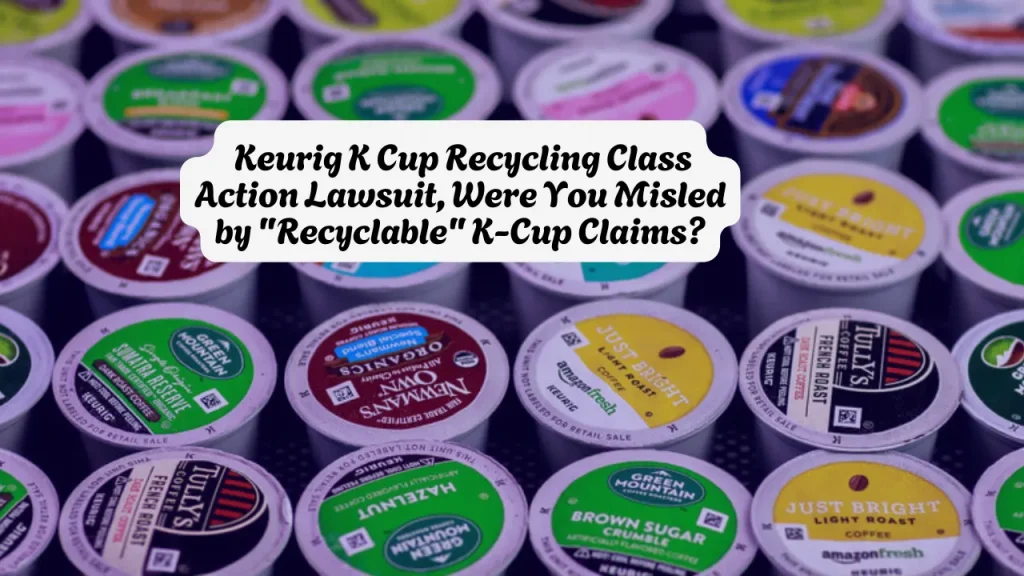
Keurig Dr Pepper is facing multiple class action lawsuits filed in 2026 in federal courts in California, Florida, and New York alleging the company falsely markets its K-Cup single-serve coffee pods as “recyclable” when the vast majority of U.S. consumers have no practical way to recycle them. No settlement exists in these new cases. If you bought K-Cups based on recyclability claims, here is what the lawsuits allege and what your options are right now.
Quick Facts: Keurig K-Cup Recyclable Claims Lawsuits
| Field | Detail |
| Lawsuit Filed | January 29, 2026 (Florida); April 7, 2026 (California); April 10, 2026 (New York) |
| Defendant | Keurig Dr Pepper Inc. |
| Alleged Violation | Violations of the FTC Green Guides; California Unfair Competition Law (UCL); California False Advertising Law (FAL); California Consumers Legal Remedies Act (CLRA); Florida Deceptive and Unfair Trade Practices Act (FDUTPA); negligent misrepresentation; unjust enrichment |
| Who Is Affected | U.S. consumers who purchased Keurig single-serve K-Cup pods labeled as “recyclable” during the applicable statute of limitations period |
| Current Court Stage | Early-stage litigation — no class certification, no settlement |
| Court & Jurisdiction | U.S. District Court, Southern District of California; U.S. District Court, Southern District of Florida; U.S. District Court, Western District of New York |
| Lead Law Firm | TBD — multiple plaintiffs’ firms involved across three jurisdictions |
| Next Hearing Date | TBD — cases in early stage |
| Official Case Website | None yet — no settlement administrator assigned |
| Last Updated | April 27, 2026 |
What Is the Keurig K-Cup Recyclable Lawsuit About? Dixon v. Keurig Dr Pepper, Inc., No. 26-cv-2172 (S.D. Cal.)
According to the complaint filed April 7, 2026, Keurig K-Cups are virtually non-recyclable due to their small size, multi-material design, residual coffee grounds and liquids, and limited economic value in recycling streams. Despite these facts, Keurig promotes its K-Cup pods as “recyclable” because they are made from polypropylene #5 plastic — a material that is technically recyclable but rarely processed in practice.
The core legal theory runs directly through the FTC Green Guides (16 C.F.R. Part 260), the federal framework that governs environmental marketing claims. The FTC’s Green Guides are explicit: if a substantial majority of consumers cannot actually recycle a product, calling it recyclable without qualification misleads them. The suit stresses that Keurig’s definition of recyclable is “purely theoretical” in that it ignores these Green Guides principles and does not align with consumer understanding. Plaintiffs call this greenwashing — using environmental language to drive sales without the product backing it up.
The suit cites 2025 research conducted by TINA.org and SCS Engineers, a national environmental consulting firm, stating that municipal recycling programs across major U.S. markets generally do not accept K-Cups and instead send the pods to landfills. This isn’t a fringe argument — less than 2% of polypropylene post-consumer waste is actually recycled, and small lightweight items like K-Cups often fall through sorting equipment at recycling facilities and end up in landfills.
This is also not Keurig’s first time in this fight. In 2023, Keurig settled similar allegations for $10 million but allegedly made only “minor modifications” to its marketing. The company also paid a separate $1.5 million civil penalty to the SEC for failing to disclose to investors that major recycling companies had told them K-Cups were not commercially feasible to recycle. Three years later, plaintiffs argue the pods are still on shelves with the same misleading label. For a broader look at how courts handle greenwashing and false advertising claims like this one, see our analysis of the Vital Farms greenwashing lawsuit on AllAboutLawyer.com.
Are You Part of the Keurig K-Cup Class Action Lawsuit?
You do not need to do anything right now to preserve your place in this lawsuit. Most people who purchased K-Cups during the relevant period are automatically included if the court certifies the class. Here is how to know whether these cases likely cover you:
You may be part of this class if:
- You purchased Keurig Dr Pepper single-serve K-Cup pods in the United States during the applicable statute of limitations period (exact dates TBD — pending class certification)
- You purchased the pods for personal, household, or individual use — not for resale
- You saw or relied on “recyclable” labeling, marketing, or the chasing-arrows recycling symbol on Keurig packaging or retail listings
- You would not have purchased the pods — or would have sought out compostable or reusable alternatives — had you known the products were not practically recyclable
Related article: $12M Compass Minerals SEC Fair Fund Settlement, Check If You Qualify for a Cash Payment July 12, 2026 Is Deadline
You are likely NOT included if:
- You purchased K-Cups strictly for resale or commercial distribution
- You are a defendant, officer, or director of Keurig Dr Pepper Inc.
- You are bringing an individual lawsuit against Keurig rather than participating as a class member
The California case alleges violations of state law that could extend to a nationwide class. The Florida and New York cases name additional state-specific consumer protection statutes. None of these cases have been certified as class actions yet — that determination comes later in litigation.
For context on how courts evaluate consumer false advertising class action claims involving food and beverage products, our article on the Red Bull “Gives You Wings” false advertising lawsuit walks through the key legal standards used to decide whether a marketing claim crosses the line.
What Are Keurig K-Cup Plaintiffs Seeking?
This is not a settlement section — no money is available, and no claim form exists. Here is what the plaintiffs have asked courts to award if they prevail.
Plaintiffs are seeking certification of the class action, damages, fees, costs, and a jury trial. The California complaint specifically claims violations of the UCL, FAL, and CLRA, which allow plaintiffs to seek restitution, injunctive relief requiring Keurig to change its marketing practices, and disgorgement of any profits the company earned through the allegedly misleading recyclability claims.
The complaint alleges that Keurig’s “recyclable” representations have allowed the company to charge a price premium for its pods while misleading consumers as to the products’ environmental impact. In plain terms: plaintiffs argue you paid more for K-Cups than you would have without the recyclable label — and they want that price premium back, plus a court order forcing Keurig to stop making the claim.
No specific dollar amount has been filed for the class as a whole. Make clear: there is no fund to claim from, no payout date, and no settlement in any of these 2026 cases.
What Should You Do If You Were Affected by Keurig’s Recyclability Claims?
Right now, your options are straightforward:
Most K-Cup buyers are automatically included as potential class members once a court certifies the class — you do not need to file anything, hire an attorney, or register anywhere to hold your place. The court will notify class members if and when the case reaches a resolution.
If you want to pursue your own individual consumer fraud lawsuit against Keurig rather than waiting for the class action, consult a consumer rights lawyer directly. Many offer a free legal consultation and work on contingency — meaning you pay nothing unless they recover money for you. That route gives you more control but involves more personal participation.
Save any records that show you purchased K-Cups. Order histories on Amazon, Costco, Target, or your grocery store loyalty program, receipts, or credit card statements all establish your connection to this case. You may need them later.
Monitor the PACER docket for Dixon v. Keurig Dr Pepper, Inc., No. 26-cv-2172 (S.D. Cal.) at ecf.casd.uscourts.gov for case updates. There is no official settlement website at this time.
Keurig K-Cup False Advertising Lawsuit Timeline
| Milestone | Date |
| Original K-Cup recyclability lawsuit filed | 2018 — Smith v. Keurig Green Mountain |
| SEC civil penalty paid by Keurig | September 2024 — $1,500,000 |
| Prior U.S. class action settlement finalized | 2023 — $10,000,000 |
| TINA.org files FTC complaints over K-Cup recyclability claims | January 27, 2026 |
| Davin v. Keurig Dr Pepper filed (S.D. Fla.) | January 29, 2026 |
| Dixon v. Keurig Dr Pepper filed (S.D. Cal.) | April 7, 2026 |
| Sulli v. Keurig Dr Pepper filed (W.D.N.Y.) | April 10, 2026 |
| Class Certification Motion | TBD — not yet filed |
| Next Scheduled Hearing | TBD — cases in early stage |
| Expected Settlement Timeline | TBD — given prior settlement history, resolution is possible but could take years |
Frequently Asked Questions
Is there a class action lawsuit against Keurig for recyclable K-Cup claims?
Yes — multiple. Dixon v. Keurig Dr Pepper, Inc. was filed April 7, 2026 in the U.S. District Court for the Southern District of California, alleging K-Cup recyclable labeling violates California consumer protection law and the FTC Green Guides. Near-identical cases were also filed in Florida in January 2026 and New York in April 2026.
Do I need to do anything right now to be included in the Keurig class action?
No. If you purchased K-Cup pods during the relevant period, you are likely already a potential class member. You do not need to sign up, register, or file anything at this stage. Courts notify class members when a case reaches resolution.
When will a settlement be reached in the Keurig K-Cup case?
There is no timeline to predict with certainty. Given that Keurig already settled identical claims for $10 million in 2023, a future settlement is possible — but these cases were just filed and could take years to resolve through litigation. TBD — pending class certification and further court proceedings.
Can I file my own lawsuit against Keurig instead?
Yes. Class membership does not prevent you from pursuing an individual claim. If you believe you have significant damages or prefer a separate case, speak with a class action lawsuit attorney for a free consultation about your specific options before these cases progress further.
How will I know if the Keurig K-Cup lawsuit settles?
If a settlement is reached, the court will require class-wide notice — typically by mail, email, and publication — to all identified class members. You can also monitor the docket directly at ecf.casd.uscourts.gov using case number 26-cv-2172. AllAboutLawyer.com will update this page when significant developments occur.
Did Keurig already settle a K-Cup recyclability lawsuit before?
Yes. Keurig settled prior class action claims for $10 million in 2023 and paid a separate SEC fine — yet these 2026 lawsuits allege the company made only minor changes and continues to label K-Cups as recyclable.
What does the FTC Green Guides say about recyclable claims?
The FTC’s Green Guides state that a product should not be marketed as recyclable unless it can be collected, separated, or otherwise recovered from the waste stream through an established recycling program. Plaintiffs argue Keurig’s labeling fails that standard because most U.S. facilities cannot actually process K-Cups.
What Keurig K-Cup lawsuit update should I watch for in 2026?
The most important near-term milestones are a ruling on whether the court consolidates the California, Florida, and New York cases, and any motion for class certification. TBD — no hearing date has been set in any of the three cases as of April 27, 2026.
Sources & References
- Dixon v. Keurig Dr Pepper, Inc., No. 26-cv-2172, U.S. District Court, Southern District of California (filed April 7, 2026): https://ecf.casd.uscourts.gov
- Davin v. Keurig Dr Pepper Inc., No. 1:26-cv-20604, U.S. District Court, Southern District of Florida (filed January 29, 2026): https://ecf.flsd.uscourts.gov
- TINA.org FTC Complaint — Keurig Dr Pepper Recyclable K-Cup Claims (January 27, 2026): https://www.globenewswire.com/news-release/2026/01/27/3226368/0/en/Keurig-Reported-to-Regulators-for-Deceptively-Marketing-K-Cups-as-Recyclable.html
- FTC Green Guides, 16 C.F.R. Part 260: https://www.ftc.gov/policy/federal-register-notices/guides-use-environmental-marketing-claims-green-guides
Disclaimer: This article is for informational purposes only and does not constitute legal advice. Legal claims and outcomes depend on specific facts and applicable law. For advice regarding a particular situation, consult a qualified attorney.
About the Author
Israr Ahmad is a legal content researcher with 4+ years of experience covering class action settlements and consumer rights cases. He has researched and published coverage of 2,500+ settlements using verified court records, settlement administrator filings, and government sources. Learn more about Israr.