
Katie Phang Lawsuit, DOJ Begins Reviewing Epstein Files After Court Rejects Todd Blanche’s Appeal Stay Request
Journalist and attorney Katie Phang has secured another important procedural victory in her federal lawsuit against Todd Blanche, the U.S. Attorney General named in his official capacity, after a three-judge appeals court rejected the Justice Department’s attempt to suspend a court order requiring review of previously unexamined Jeffrey Epstein records.
On October 28, 2026, the U.S. Court of Appeals for the D.C. Circuit denied the government’s motion for a stay pending appeal. The decision allows an earlier order requiring DOJ to begin reviewing foreign-language Epstein documents to remain in effect while the broader legal fight continues.
Then, in a November 2 court filing, the Justice Department confirmed that it had begun reviewing records previously categorized as foreign-language documents.
The development is significant because DOJ had previously maintained that it was impractical for its initial reviewers to determine whether those materials were responsive to the Epstein Files Transparency Act, the federal law requiring the disclosure of covered investigative records.
Phang, a Miami-based attorney and former MSNBC host who now reports independently on legal and political developments, filed her lawsuit on April 27, 2026. She argues that DOJ unlawfully withheld records, improperly redacted information, failed to review certain documents and did not fully comply with the transparency law.
The dispute involves more than foreign-language records. It also concerns handwritten FBI interview notes, documents containing redacted names, and whether DOJ adequately explained its decisions to conceal certain information.
However, the October appeals-court decision did not order the immediate public release of all remaining Epstein files, and it did not resolve the merits of the government’s appeal.
Here is what the lawsuit alleges, what federal judges have actually ordered, why particular documents are disputed, what the Justice Department says in response, which laws control, and what could happen next.
Katie Phang Lawsuit: Quick Facts
| Detail | Verified information |
| Lawsuit | Katie Phang v. Todd Blanche |
| Plaintiff | Katie Phang, attorney and independent journalist |
| Defendant | Todd Blanche, in his official capacity as U.S. Attorney General (court filings style him “Acting Attorney General”) |
| Original filing date | April 27, 2026 |
| Federal district court | U.S. District Court for the District of Columbia |
| District court case | 1:26-cv-01417-EGS (also cited as Civil Action No. 26-1417) |
| District judge | Emmet G. Sullivan |
| Principal law | Epstein Files Transparency Act, Public Law 119-38 |
| Additional legal basis | Administrative Procedure Act, 5 U.S.C. §§ 701–706 |
| Original injunction | June 25, 2026 |
| Enforcement opinion | September 16, 2026 |
| Further document-review order | October 9, 2026 |
| Appeals | D.C. Circuit Nos. 26-5299 and 26-5334 |
| Latest major appellate ruling | October 28, 2026 |
| Appellate decision | Government’s stay request denied |
| November 2 development | DOJ confirms foreign-language review has begun |
| November 9 docket activity | Additional district-court order entries (contents not independently verified) |
| Final decision on lawsuit | Not verified |
| Public release of all disputed records | Not established |
| Relief sought | Declaratory and injunctive relief; attorneys’ fees and costs where available |
| Financial damages or settlement | No monetary settlement verified |
| Class action | No |
Current status: The lawsuit and related appeals remain active. DOJ must address applicable court orders, but the parties continue disputing the scope of the law and the remedies available. No final judgment resolving all claims has been verified as of November 11, 2026.
Who Is Katie Phang, and Why Did She Sue the Justice Department?
Katie Phang is an American attorney, former prosecutor, legal analyst and independent journalist, based in Miami.
She previously hosted The Katie Phang Show on MSNBC, which ended in early 2025, and has reported extensively on high-profile court proceedings and government investigations.
After leaving the network, she continued producing independent reporting through digital platforms, including YouTube and Substack.
According to her declaration in federal court, Phang had produced extensive coverage examining Jeffrey Epstein, Ghislaine Maxwell and individuals connected with Epstein’s criminal activities and investigations.
Her reporting relied partly on documents released by the Justice Department under the Epstein Files Transparency Act.
She says incomplete disclosures and allegedly improper redactions prevented her from effectively investigating and explaining information that Congress required to be made public.
What does Phang want from the lawsuit?
The April 27 complaint seeks several forms of relief.
Phang asks the court to determine whether DOJ violated the transparency law and require the agency to comply with its statutory obligations.
Her requested remedies include:
- Production of responsive records allegedly withheld without legal justification.
- Removal of redactions that do not satisfy the law’s exceptions.
- Explanations supporting legally permitted redactions.
- Review of relevant foreign-language materials.
- Disclosure of qualifying FBI investigative records.
- Publication of required redaction justifications.
- Appointment of a special master to oversee compliance.
- Recovery of attorneys’ fees and costs where legally available.
The lawsuit is about access to government records.
It is not a criminal prosecution of Blanche, a lawsuit seeking damages from President Trump, or a class action on behalf of Epstein survivors.
What Is the Epstein Files Transparency Act?
Congress enacted the Epstein Files Transparency Act, Public Law 119-38, on November 19, 2025.
The law directed the Attorney General to make specified unclassified records relating to Jeffrey Epstein publicly available in a searchable and downloadable format within 30 days.
The deadline was December 19, 2025.
The law covers nine broad categories of documents, including records concerning:
- Jeffrey Epstein’s investigations, prosecutions and detention.
- Ghislaine Maxwell.
- Epstein-related flight logs and travel records.
- People named or referenced in connection with related criminal investigations, agreements or proceedings.
- Organizations and entities associated with Epstein’s financial or trafficking networks.
- Immunity agreements, plea bargains and non-prosecution arrangements.
- Internal DOJ communications concerning investigative and prosecutorial decisions.
- Records concerning the alteration, destruction, concealment or loss of relevant evidence.
- Epstein’s detention and death.
Can DOJ legally withhold or redact Epstein records?
Yes, but the statute restricts when that can happen.
Section 2(c) permits specified redactions or withholding involving:
- Personally identifiable information and sensitive records of victims.
- Child sexual abuse material.
- Information that could jeopardize an active federal investigation or prosecution, subject to narrow and temporary restrictions.
- Images depicting death, physical abuse or injury.
- Properly classified national-security or foreign-policy information.
The law also contains requirements concerning classified materials and written explanations for redactions, including a redaction log that must be published in the Federal Register and updated with each future release of redacted materials.
Can documents be withheld to protect someone’s reputation?
The statute expressly prohibits withholding or redacting covered records simply because disclosure could cause embarrassment, reputational harm or political sensitivity, including for government officials and public figures.
That prohibition does not eliminate legitimate victim-privacy protections or other statutory exceptions.
A person’s name appearing in an Epstein-related record also does not automatically establish criminal wrongdoing.
The distinction between releasing records and proving misconduct is central to understanding this case.
Why Did Phang Challenge the Epstein File Release?
DOJ announced on January 30, 2026, that its production had reached approximately 3.5 million pages and that it had completed its principal obligations under the transparency law.
Phang disagreed.
Her lawsuit identified several categories of allegedly unresolved disclosure problems.
1. Emails containing redacted names
Phang questioned redactions in a group of emails connected to Epstein-related investigative materials.
She argued that the government had not adequately demonstrated why certain names and identifying information needed to remain concealed.
The Justice Department responded that several disputed redactions protected victims, while others concerned private email addresses.
The parties disagreed over the lawfulness of withholding particular information.
2. Potential co-conspirator names
Another dispute involved materials described as containing names of potential co-conspirators or other people referenced in investigative documents.
Phang argued that the transparency law did not permit the government to conceal those names without a valid statutory basis.
DOJ maintained that particular redactions protected victims or law-enforcement personnel.
A person identified as a potential co-conspirator in an investigative document has not necessarily been charged with or convicted of a crime.
3. Handwritten FBI interview notes
This became one of the lawsuit’s central legal disputes.
Phang sought underlying handwritten FBI notes associated with several FD-302 interview reports.
An FD-302 is a form commonly used by FBI agents to summarize interviews and other investigative information.
The handwritten notes used to prepare such a report may contain details not captured in the final summary.
Phang argued that the original notes were covered by the transparency law.
DOJ said the handwritten notes were substantially similar to the typewritten summaries and raised additional privacy concerns because handwritten documents can be difficult to redact accurately.
4. Foreign-language Epstein documents
The lawsuit also challenged DOJ’s decision not to review certain foreign-language records.
The department had explained that its initial reviewers could not practically determine whether documents written in foreign languages were relevant.
Phang argued that administrative difficulty did not create an exception to Congress’s disclosure requirements.
5. Written explanations for redactions
The statute requires written justifications for redactions to be published in the Federal Register and submitted to Congress.
Phang challenged the timing and adequacy of the government’s compliance.
DOJ responded that it had provided reporting to Congress and subsequently published relevant material in the Federal Register on August 27, 2026.
The dispute therefore concerns not merely whether a report exists, but whether the government’s disclosures satisfy the statute’s requirements.
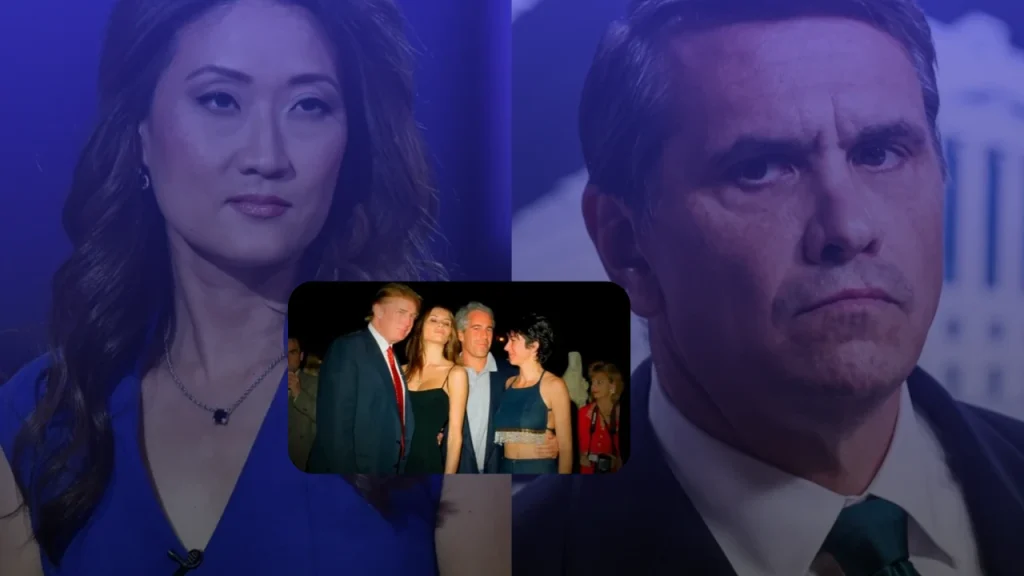
June 25, 2026: Judge Emmet Sullivan Grants Phang a Preliminary Injunction
One of the first major rulings came on June 25.
U.S. District Judge Emmet G. Sullivan granted Phang’s motion for a preliminary injunction.
The decision found that she had made the required showing for temporary judicial relief while the lawsuit continued, including that the government was likely not in compliance with the transparency law.
The opinion addressed legal standing, the Administrative Procedure Act and the Justice Department’s disclosure obligations.
What did the judge order?
The order required DOJ to address identified categories of records by producing relevant information or explaining why withholding was lawful.
These included:
- Eight emails containing redacted names.
- Documents containing disputed potential co-conspirator information.
- Underlying handwritten FBI interview notes.
- Foreign-language materials requiring review.
- Redaction justifications under the transparency statute.
The judge also directed the government to provide appropriate explanations concerning certain records.
Did the judge order every Epstein file unredacted?
No.
The June injunction addressed specific alleged violations raised in Phang’s motion.
It did not automatically eliminate privacy protections or require unrestricted publication of every document in DOJ possession.
The order allowed the government to explain why particular information should remain withheld.
That feature became important in later rulings.
July and August 2026: Show-Cause Responses and Status Hearing
DOJ responded to the court’s show-cause order on July 2 without producing the disputed notes. It argued instead that handwritten FBI notes were similar to later typed reports as a general matter.
Phang’s team countered that DOJ had not shown that the specific handwritten notes at issue were duplicative.
On August 13, Judge Sullivan held a status hearing. Reporting from the hearing indicates the judge questioned DOJ attorneys about foreign-language documents, the Federal Register redaction log and the FBI notes, and asked Phang’s team to submit proposed orders. An order setting a hearing is not a sanction, and no ruling at that point ordered anything released.
September 16: Judge Rejects DOJ’s Explanation for Not Reviewing Foreign-Language Records
The September 16 ruling was another significant development.
Judge Sullivan reviewed the parties’ responses to the earlier injunction and considered how the government had addressed several disputed disclosure categories.
The 20-page opinion rejected DOJ’s argument that it was impractical for initial reviewers to examine foreign-language records.
The judge concluded that administrative inconvenience did not excuse compliance with the statutory requirements.
Did the judge threaten to hold Blanche in contempt?
The September opinion discussed the court’s civil-contempt powers.
Phang had urged stronger enforcement based on the government’s failure to begin reviewing foreign-language records.
However, Judge Sullivan concluded that a contempt finding at that stage would be premature.
He instead directed the government to begin the required review and comply with further court instructions.
The opinion did not find Blanche in contempt or impose a contempt penalty.
What happened to the handwritten FBI notes?
The court rejected the position that handwritten interview notes could simply be excluded because typewritten summaries were substantially similar. It noted that handwritten notes are not true duplicates of typed reports.
It directed DOJ to provide specified handwritten notes to the court for private examination, including the notes underlying four FD-302 reports.
That process is known as in camera review.
The judge can examine sensitive material without immediately releasing it to the public.
This allows the court to assess whether redactions or withholding are legally justified while protecting sensitive information during judicial review.
Did the Court Find Some DOJ Redactions Were Legitimate?
Yes.
This is an important part of the case that should not be overlooked.
In the September 16 opinion, Judge Sullivan found that the government had adequately supported certain redactions protecting victims.
The court discharged portions of its earlier show-cause order concerning those materials.
It also examined redactions involving private email addresses and law-enforcement personnel.
Some questions about the interaction between the transparency law and the Privacy Act remained unresolved.
What happened on October 9?
Judge Sullivan issued another order after reviewing additional materials submitted by DOJ.
The judge accepted the government’s explanations for three previously disputed name redactions, finding that adequate documentation supported its representation that the concealed names belonged to victims.
The court also addressed four sets of handwritten FBI interview notes.
For one set, the judge accepted the government’s explanation concerning its inability to provide the underlying notes.
For three others, DOJ had provided unredacted handwritten notes privately, but the court had also required proposed redacted versions.
The judge ordered the government to submit those redacted versions for private review by October 16.
The order did not require immediate public publication of those materials.
The distinction is significant: a court can uphold some redactions while requiring additional review of other documents in the same lawsuit.
October 28: Appeals Court Rejects DOJ’s Stay Request
The most significant recent appellate development occurred on October 28, 2026.
A three-judge panel of the U.S. Court of Appeals for the D.C. Circuit considered the government’s request to suspend the foreign-language review requirement while appeals proceeded.
The panel consisted of:
- Chief Judge Sri Srinivasan.
- Circuit Judge Cornelia T. L. Pillard.
- Circuit Judge Florence Y. Pan.
The appeals are docketed as Nos. 26-5299 and 26-5334.
What did the appeals court decide?
The court denied the government’s stay motion.
It concluded that DOJ had not met the demanding legal standard for suspending the district court’s order during the appeal.
The panel focused particularly on whether merely beginning a review of foreign-language records would cause irreparable harm to the government.
It found that the government had not demonstrated such harm.
Does this mean Phang won her entire lawsuit?
No.
The ruling resolved the government’s immediate request for a stay.
It did not decide the full merits of the appeals.
The court also referred Phang’s motion challenging appellate jurisdiction to the panel assigned to decide the merits.
That issue remains distinct from the stay ruling.
Was DOJ ordered to release thousands of documents immediately?
No.
The appellate order addressed beginning the review process.
The panel noted that actual production did not appear imminent.
If DOJ identifies a legal reason to redact or withhold particular records, disputes about those decisions may require additional proceedings.
The ruling therefore concerns continued compliance and review, not an unrestricted release of everything still in the department’s possession.
November 2: DOJ Confirms Foreign-Language Review Has Begun
This is the most important subsequent development.
In a November 2 filing, the Justice Department acknowledged that it had begun reviewing records previously identified as foreign-language documents.
That announcement followed the district court’s enforcement orders and the D.C. Circuit’s rejection of the government’s stay request.
Why is this significant?
The department had previously maintained that reviewing those documents was impractical during its initial production process.
The new filing confirms that review work is underway.
It does not establish how many records have been examined, how many are responsive or when additional public disclosures will occur.
What did Phang request next?
Phang’s attorneys sought additional oversight of the review process.
Their proposed requirements included:
- More information about how many foreign-language records had been identified.
- Disclosure of when the review began and its progress.
- Information about staffing and review procedures.
- Periodic updates to the court.
- A proposed November 27 deadline to complete the review.
- Publication of responsive records as they are processed, subject to lawful protections.
Is November 27 a court-ordered deadline?
The November 2 reporting identifies it as a deadline requested by Phang, not as an independently verified court-imposed deadline.
Readers should not assume that DOJ has been legally required to complete the entire foreign-language review by November 27 unless a verified court order establishes that requirement.
What Happened in the District Court in Early November?
Three additional district-court order entries appeared on the docket on November 9, 2026. Their full text has not been independently verified for this article, so they should not be described as new disclosure orders or a final victory.
Separate summaries of the case report that Judge Sullivan, in early November, directed that handwritten FBI notes be published on the Justice Department’s website, required a status report (reported as due around December 10) on the review and public production of foreign-language documents, and ordered production of the long-overdue administrative record. Those details are reported but unconfirmed. Anyone relying on them should check the entries on the live docket.
The administrative record is the set of materials an agency considered in making the decision being challenged. In administrative-law cases brought under the Administrative Procedure Act, courts generally review the agency’s action based on that record.
Why Does the Lawsuit Involve FBI Notes Related to Donald Trump?
Some of the disputed FBI materials have attracted attention because court filings and news coverage describe interview reports in which a woman made allegations involving Jeffrey Epstein and President Donald Trump.
Phang challenged the withholding of underlying handwritten notes associated with identified FBI interview summaries.
The existence of an FBI interview report does not establish that every allegation contained in the interview is accurate.
Nor does a court order requiring review of investigative records establish criminal wrongdoing by a person named in them.
Is Trump a defendant in Katie Phang’s lawsuit?
No.
The named defendant is Todd Blanche in his official capacity as Attorney General.
Phang’s suit challenges federal records-disclosure practices.
It does not seek a criminal conviction, civil damages or another personal judgment against Trump.
Could the withheld notes contain new information?
Possibly, but their contents cannot be reliably characterized beyond the verified record.
The reason original interview notes matter is that they may differ from typewritten summaries in wording, context or details.
The court has ordered private review of specified materials, but that does not establish that the notes contain proof of a separate crime, an undisclosed suspect or a new allegation.
For a broader account of congressional efforts to obtain Epstein records and the separate legal proceedings involved, see Will Democrats Release More Epstein Files in 2027? What Congress Can Force DOJ to Reveal.
Why Is Todd Blanche Being Sued Personally?
The lawsuit names Blanche in his official capacity as Attorney General, not as a private individual accused of personally injuring Phang.
Court filings in the case style him as “Acting Attorney General of the United States.” Acting officials are governed by the Federal Vacancies Reform Act (5 U.S.C. §§ 3345–3349d) and, within the Justice Department, the succession rules in 28 U.S.C. § 508. The title does not change the nature of the suit, which targets the office.
Official-capacity litigation generally seeks relief against government action through the responsible official.
If an official leaves the relevant office, the successor can ordinarily be substituted automatically under Federal Rule of Civil Procedure 25(d).
The case therefore concerns the legal obligations of the Attorney General’s office.
It does not establish that Blanche personally committed a crime or that he owes Phang damages from his personal funds.
What Does the Justice Department Say in Its Defense?
DOJ maintains that it complied substantially with the transparency law and that the disputed withholding and redactions involve lawful privacy, review or other legal considerations.
The department has argued that Phang lacks a sufficient legal basis to compel additional disclosures in this particular action.
One central defense concerns whether the Administrative Procedure Act provides an appropriate route for judicial review and whether other processes, such as the Freedom of Information Act, are relevant alternatives.
The government has also argued that Phang did not suffer a legally sufficient injury from the nondisclosure. Judge Sullivan rejected the standing arguments at the preliminary-injunction stage.
The government has also argued that certain redactions protect victims or law-enforcement personnel.
With respect to foreign-language records, it initially emphasized the practical difficulty of identifying responsive information.
The district court rejected that explanation as sufficient grounds for refusing to begin review.
On October 1, 2026, the government also filed a motion for judgment on the pleadings, which remains part of the district-court proceedings.
However, the government’s broader appeal remains unresolved.
The Main Federal Laws Behind Katie Phang’s Lawsuit
Several federal laws and constitutional doctrines help explain the dispute.
1. Epstein Files Transparency Act — Public Law 119-38
This is the statute at the center of the case.
Section 2 establishes covered disclosure obligations and specified exceptions.
Section 3 requires reporting to Congress.
The dispute concerns whether DOJ complied with those obligations and whether its explanations for withholding records are legally sufficient.
2. Administrative Procedure Act — 5 U.S.C. §§ 701–706
The Administrative Procedure Act allows judicial review of certain federal agency actions.
Relevant provisions include:
5 U.S.C. § 702: Governs judicial review and the availability of certain nonmonetary remedies against federal agencies or officials.
5 U.S.C. § 704: Addresses the reviewability of final agency action and other circumstances where statutes provide review.
5 U.S.C. § 706: Directs reviewing courts to decide relevant legal questions and, in appropriate circumstances, set aside unlawful agency action or compel action unlawfully withheld or unreasonably delayed (§ 706(1)).
Phang relies on administrative-law principles to challenge DOJ’s alleged failure to fulfill the transparency statute.
The government disputes the availability and scope of relief under those principles.
3. Freedom of Information Act — 5 U.S.C. § 552
FOIA generally allows people to request federal agency records, subject to statutory exemptions and procedures, including the nine exemptions in 5 U.S.C. § 552(b).
The Justice Department has argued that FOIA-related remedies are relevant to the dispute.
Phang contends that the Epstein Files Transparency Act imposes affirmative disclosure duties beyond ordinary case-by-case FOIA requests.
The distinction matters because the transparency statute requires publication of specified categories of records without waiting for every member of the public to file an individual request.
4. Privacy Act — 5 U.S.C. § 552a
The Privacy Act contains restrictions governing the disclosure of certain federal records about individuals.
DOJ has invoked privacy considerations for some disputed redactions.
The courts must determine how those rules interact with the newer Epstein Files Transparency Act and its specific disclosure requirements.
The protection of victims’ identities remains an essential legal concern.
5. Victim-protection laws
Several federal laws help explain why victim information is treated with special care. The Crime Victims’ Rights Act (18 U.S.C. § 3771(a)(8)) gives crime victims a right to be treated with fairness and with respect for their dignity and privacy. Federal law also protects the privacy of child victims and witnesses in federal proceedings (18 U.S.C. § 3509), and defines child sexual abuse material (see 18 U.S.C. § 2256(8)), which the transparency statute allows to be withheld.
6. Grand jury secrecy — Federal Rule of Criminal Procedure 6(e)
Grand jury materials are generally secret under Rule 6(e). Courts have recognized limited exceptions, and questions about grand jury records in Epstein-related matters have been litigated separately. The transparency statute does not by itself answer how Rule 6(e) applies to particular records, and this lawsuit should not be confused with those separate grand jury disputes.
7. Federal Rule of Civil Procedure 65
Rule 65 governs preliminary injunctions and temporary restraining orders.
It provides the procedural framework for emergency and preliminary relief.
Courts generally assess whether the requesting party meets requirements concerning the likelihood of success, irreparable harm, the balance of equities and the public interest.
The June injunction and the government’s subsequent stay requests arise within this broader framework.
8. Article III Standing
Under Article III of the Constitution, a plaintiff must establish standing to bring a federal lawsuit.
That generally requires a concrete and particularized injury, a sufficient connection to the challenged conduct and a likelihood that a favorable ruling would address the injury. See Lujan v. Defenders of Wildlife, 504 U.S. 555 (1992).
In cases about statutory rights to information, the Supreme Court has recognized that being denied information a statute requires to be disclosed can be an injury. See Public Citizen v. U.S. Department of Justice, 491 U.S. 440 (1989).
The district court found Phang had adequately supported standing for preliminary relief based on the effect of the alleged nondisclosure on her journalism.
The government contests aspects of the court’s authority to hear the case.
9. Appellate Review and Stays
Federal appellate courts can review certain injunction orders before final judgment under 28 U.S.C. § 1292(a)(1).
When a party seeks a stay pending appeal, courts apply standards discussed in Nken v. Holder, 556 U.S. 418 (2009), and Federal Rule of Appellate Procedure 8.
The October 28 panel concluded the government had not satisfied the requirements for the requested stay.
That procedural decision does not determine every issue raised on appeal.
10. Civil contempt
Federal courts have power to enforce their orders through civil contempt, including under 18 U.S.C. § 401 and their inherent authority. Contempt generally requires a clear and specific order, a violation and a finding that the violation occurred. Judge Sullivan’s September opinion discussed this power but found a contempt ruling premature, and no contempt finding has been verified.
11. Attorneys’ fees — Equal Access to Justice Act
When a private party prevails against the federal government in certain civil actions, the Equal Access to Justice Act (28 U.S.C. § 2412) can allow recovery of fees and costs, subject to its conditions. Phang’s complaint seeks fees where legally available. No fee award has been verified.
12. Judgment on the pleadings — Federal Rule of Civil Procedure 12(c)
The government’s October 1 motion invokes the procedure that lets a party ask for judgment based on the pleadings after the pleadings are closed. A ruling on it could narrow or end claims at the district-court level.
Could Katie Phang’s Lawsuit Force the Release of All Epstein Files?
Not necessarily.
A successful case may require DOJ to produce additional responsive materials or provide better explanations for legally permitted withholding.
But a court must consider the statutory exceptions and the scope of the claims before it.
The Epstein Files Transparency Act does not eliminate protections for victims, child sexual abuse material, specified active investigations or properly classified information.
The lawsuit also does not automatically give Phang access to every record held by foreign governments, private businesses or entities outside DOJ.
A court order must operate within the governing law and jurisdiction.
Could a special master be appointed?
Phang requested a special master to oversee compliance.
Under Federal Rule of Civil Procedure 53, courts may appoint special masters in specified circumstances.
Such an appointment could involve judicial supervision of complex document-review obligations.
However, requesting a special master does not mean one has been appointed.
No verified order appointing a special master in this case was identified as of November 11.
Is Katie Phang’s Lawsuit Connected to New Mexico’s Epstein Investigation?
The cases concern some of the same underlying federal records but have different plaintiffs and purposes.
On August 5, 2026, the State of New Mexico filed a separate lawsuit seeking access to federal Epstein-related materials for its investigation involving Zorro Ranch.
That case is distinct from Phang’s challenge to DOJ’s handling of public disclosure obligations.
New Mexico has also pursued separate civil litigation concerning Epstein’s estate and people accused of facilitating his activities.
For the related state civil case, see Jeffrey Epstein Zorro Ranch Lawsuit, New Mexico Seeks to Block $75 Million in Estate Payments to Darren Indyke and Richard Kahn.
An order providing investigative access to a state government is not necessarily an order making the same documents publicly available.
Each proceeding has different legal claims, records and potential remedies.
Could People Named in Released Epstein Files Sue Over Publication?
Potentially, depending on the facts and applicable law.
The release of government documents can lead to separate disputes involving defamation, privacy and the accuracy of published reporting. Many states recognize a “fair report” privilege that can protect accurate reports of official records and proceedings, though its scope varies by state.
But merely appearing in an Epstein-related email, contact list or investigative file does not establish criminal conduct.
Likewise, accurate reporting that someone appears in a record should not be confused with accusing that person of participating in Epstein’s crimes.
For an example involving a person who disputed media coverage of Epstein-related communications, see Ramsey Elkholy and the Epstein Files, The Lawsuits, the Emails, and What Has Been Confirmed.
That controversy is separate from Phang’s federal disclosure lawsuit.
Katie Phang Lawsuit Timeline: 2025–2026
| Date | Development |
| November 19, 2025 | Epstein Files Transparency Act becomes law |
| December 19, 2025 | Original statutory disclosure deadline |
| January 30, 2026 | DOJ announces release totaling approximately 3.5 million pages |
| April 27, 2026 | Phang files lawsuit against Todd Blanche |
| May 28, 2026 | Phang requests preliminary injunction |
| June 25, 2026 | Judge Sullivan grants preliminary injunction |
| July 2, 2026 | DOJ responds to the court’s show-cause order |
| August 13, 2026 | District court holds status hearing |
| August 24–25, 2026 | Government appeals preliminary injunction |
| August 27, 2026 | DOJ publishes its report in the Federal Register |
| September 16, 2026 | Judge issues opinion requiring further review and compliance |
| September 17, 2026 | Government files second appeal |
| September 21, 2026 | District court denies government stay motion |
| September 24, 2026 | DOJ files its answer to the complaint |
| October 1, 2026 | Government files motion for judgment on the pleadings |
| October 9, 2026 | Court rules on further private document review |
| October 16, 2026 | DOJ files notice of compliance |
| October 28, 2026 | D.C. Circuit denies government’s stay request |
| November 2, 2026 | DOJ acknowledges foreign-language review has begun |
| November 9, 2026 | Additional district-court order entries appear (contents unverified) |
| About December 10, 2026 | Status report on foreign-language review reportedly due (unconfirmed) |
| November 11, 2026 | No final appellate merits decision independently verified |
Frequently Asked Questions About Katie Phang’s Lawsuit
Who is Katie Phang suing?
Katie Phang is suing Todd Blanche in his official capacity as U.S. Attorney General. Court filings style him as Acting Attorney General.
Why did Katie Phang file the lawsuit?
She alleges that the Department of Justice failed to fully comply with the Epstein Files Transparency Act by improperly withholding or redacting records and not reviewing certain materials.
When did she file the case?
April 27, 2026.
What is the case number?
Phang v. Blanche, No. 1:26-cv-01417-EGS, in the U.S. District Court for the District of Columbia.
Who is the judge?
U.S. District Judge Emmet G. Sullivan.
What happened on October 28?
The D.C. Circuit denied DOJ’s request to pause the court-ordered foreign-language document review while the government’s appeal continues.
Did Katie Phang win?
She obtained a preliminary injunction and successfully opposed a stay request. But the full lawsuit and the merits of the government’s appeals remain unresolved.
What happened on November 2?
DOJ confirmed that it had begun reviewing foreign-language Epstein documents.
Has DOJ released all of the disputed records?
No complete public release resolving all disputed records was independently verified.
Why are handwritten FBI notes important?
They may contain information relevant to evaluating the completeness of typewritten interview summaries. Their legal treatment and potential redactions remain part of the litigation.
Did the judge rule that every DOJ redaction was illegal?
No. The district court accepted some redactions as adequately supported, including certain victim-identifying information.
Was Todd Blanche held in contempt?
No verified contempt finding was identified. The September opinion discussed contempt but concluded that a finding at that stage was premature.
Is Donald Trump a defendant?
No. The lawsuit names Blanche in his official capacity.
Does the lawsuit prove Trump committed a crime?
No. It concerns the government’s disclosure obligations and does not adjudicate the truth of criminal allegations involving people referenced in Epstein records.
Is there an Epstein client list in the lawsuit?
The lawsuit challenges disclosure decisions involving investigative records. It has not established the existence of an authenticated list identifying criminal clients.
Can a judge order additional Epstein records released?
Yes, if the governing law and facts support that relief. Courts must still respect legally authorized protections and the scope of the case.
Can the government appeal again?
The government already has related appeals pending. Additional review depends on subsequent court rulings and procedural requirements.
Is there a class-action settlement?
No. This is a federal administrative-law and records-disclosure lawsuit, not a consumer class action or settlement program.
Is Katie Phang seeking millions in damages?
No verified multimillion-dollar damages demand exists. The complaint principally seeks declaratory and injunctive relief, along with attorneys’ fees and costs where legally available.
Why was the case brought under the Administrative Procedure Act?
The Epstein Files Transparency Act does not itself spell out a private lawsuit procedure, so Phang relies on the APA, which lets courts compel agency action that is unlawfully withheld or unreasonably delayed. The government disputes whether that route is available.
Can the public still file a FOIA request for Epstein records?
Yes. FOIA remains available for requests, subject to its exemptions. The transparency statute is a separate obligation to publish specified categories of records.
What Happens Next in Katie Phang v. Blanche?
Several developments could determine the next stage of the litigation.
First, DOJ must continue addressing the court’s foreign-language review requirements unless a later order changes those obligations.
Second, the district court must address outstanding procedural and legal issues, including the effect of additional compliance information and the government’s pending motion for judgment on the pleadings.
Third, the D.C. Circuit must consider the merits of the government’s appeals and Phang’s jurisdictional challenge.
Fourth, disputes about particular records could lead to further private court review, additional disclosure orders or judicial acceptance of lawful withholding.
The November 9 docket entries demonstrate continued activity, but their specific effects require examination of the filed orders.
No definitive completion date for the entire review, final appellate judgment or global disclosure order has been verified.
The Bottom Line
Katie Phang’s lawsuit has already produced significant judicial scrutiny of how the Justice Department handled records subject to the Epstein Files Transparency Act.
Judge Sullivan granted preliminary relief in June, rejected DOJ’s explanation for not reviewing foreign-language records in September, and ordered additional review of disputed FBI materials.
On October 28, a federal appeals court declined to suspend the foreign-language review requirement.
DOJ subsequently acknowledged that the review had begun.
These developments represent meaningful procedural progress for Phang’s case.
But they do not amount to a final judgment requiring every remaining Epstein-related document to be published.
The next legal questions concern how DOJ completes the review, whether specific redactions or withholdings are justified, and whether the appellate court upholds the district court’s interpretation of the government’s statutory duties.
For journalists, Epstein survivors and members of the public seeking records, the central issue remains whether the federal government has fulfilled the disclosure requirements Congress enacted while protecting legally sensitive information.
Laws, Rules and Cases Referenced in This Article
| Authority | What it covers |
| Epstein Files Transparency Act, Pub. L. 119-38 | Disclosure duties, exceptions and redaction-log requirements |
| 5 U.S.C. §§ 701–706 (APA) | Judicial review; compelling unlawfully withheld agency action |
| 5 U.S.C. § 552 (FOIA) | Public records requests and exemptions |
| 5 U.S.C. § 552a (Privacy Act) | Limits on disclosing records about individuals |
| 5 U.S.C. §§ 3345–3349d; 28 U.S.C. § 508 | Acting officials; Justice Department succession |
| 18 U.S.C. § 3771(a)(8) | Crime victims’ right to dignity and privacy |
| 18 U.S.C. § 3509; § 2256(8) | Child victim privacy; child sexual abuse material |
| 18 U.S.C. § 401 | Federal court contempt power |
| 28 U.S.C. § 1292(a)(1) | Appeals from injunction orders |
| 28 U.S.C. § 2412 | Equal Access to Justice Act fee awards |
| Fed. R. Civ. P. 12(c), 25(d), 53, 65 | Judgment on pleadings; substitution; special masters; injunctions |
| Fed. R. Crim. P. 6(e) | Grand jury secrecy |
| Fed. R. App. P. 8 | Stays pending appeal |
| Nken v. Holder, 556 U.S. 418 (2009) | Stay-pending-appeal standard |
| Lujan v. Defenders of Wildlife, 504 U.S. 555 (1992) | Article III standing |
| Public Citizen v. DOJ, 491 U.S. 440 (1989) | Standing based on denial of statutorily required information |
Primary Court Documents and Verified Sources
- Phang v. Blanche, No. 1:26-cv-01417-EGS — Federal District Court Docket. View case docket. Original complaint, injunction, enforcement proceedings and later filings.
- District Court Memorandum Opinion — June 25, 2026. Read the full opinion. Preliminary injunction and legal standing analysis.
- District Court Memorandum Opinion and Order — September 16, 2026. Read the full opinion. Foreign-language review, disputed FBI notes and redaction analysis.
- D.C. Circuit — October 28, 2026 Order. Read the appellate order. Denial of government’s stay request in Nos. 26-5299 and 26-5334.
- Official District Court Docket Listing. PlainSite case record. Includes October and November 2026 docket entries.
- Epstein Files Transparency Act — Public Law 119-38. Official enacted law. Statutory obligations, exceptions and reporting requirements.
- U.S. Department of Justice — Federal Register Notice, August 27, 2026. Report Under Public Law 119-38. Government report concerning disclosure and redactions.
- CBS News — June 2026 Court Ruling. Judge Orders DOJ to Unredact More Epstein Files or Explain Withholding. Initial litigation and DOJ response.
- Axios — June 26, 2026. Judge Orders DOJ to Release More Epstein Files. Preliminary injunction and case context.
- Civil Rights Litigation Clearinghouse — Phang v. Blanche. Case history and documents. Complaint, injunction and litigation record.
Researched and written by Israr Ahmad, legal content researcher and founder of AllAboutLawyer.com. All facts verified against the federal court opinions and orders in Phang v. Blanche, No. 1:26-cv-01417-EGS, the D.C. Circuit’s October 28, 2026 order, the case docket, and the Epstein Files Transparency Act (Public Law 119-38), as of November 11, 2026. Last Updated: November 11, 2026.
Verification note: The October 28 appellate order and the November 2 disclosure that the government had begun foreign-language review were verified. Three November 9 district-court orders appear on the case docket, but their full text was not independently available for analysis. This article does not attribute a substantive ruling to those entries without confirmation. It also does not independently establish the contents of disputed unreleased FBI records.
This article is for informational purposes only and does not constitute legal advice. Laws vary by state and individual circumstances differ. For advice about your specific situation, consult a qualified attorney. AllAboutLawyer.com is an independent legal-information website, not a law firm. This article provides public-record reporting and general legal information. Allegations appearing in investigative records or court filings must not be treated as proven misconduct without appropriate evidence and legal findings.
About the Author
Israr Ahmad is a legal content researcher with 4+ years of experience covering class action settlements and consumer rights cases. He has researched and published coverage of 2,500+ settlements using verified court records, settlement administrator filings, and government sources. Learn more about Israr.