
John Allen Rubio Execution November 12, Time, Appeals, Clemency Denial and What Happens Next
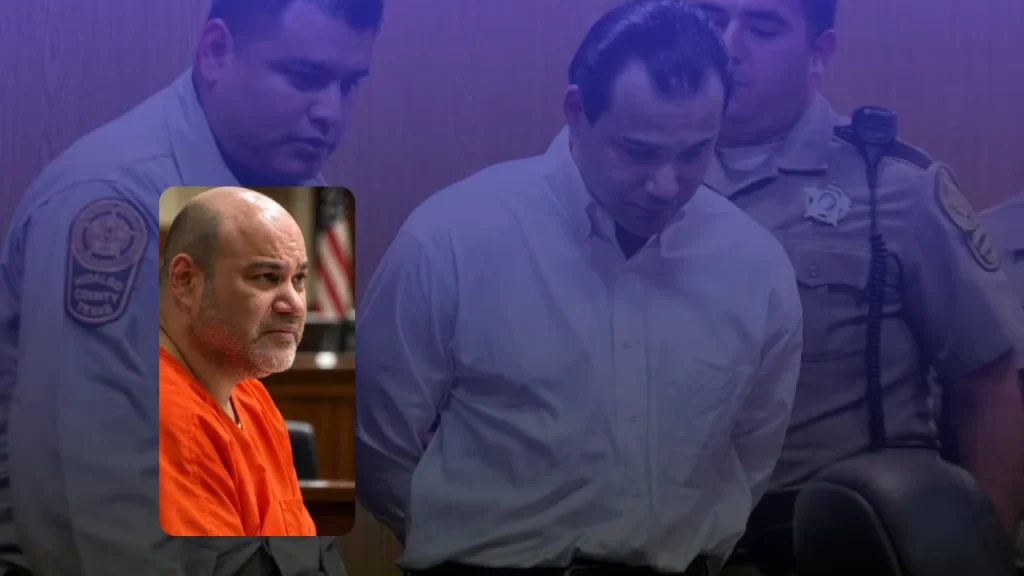
John Allen Rubio, 46, is scheduled to be executed by lethal injection on Thursday, November 12, 2026, at the Texas Department of Criminal Justice (TDCJ) Huntsville Unit. He was convicted of killing three young children in Brownsville, Texas, on March 11, 2003.
The execution can begin no earlier than 6 p.m. Central, which is 7 p.m. Eastern. As of the latest verified reports, the Texas Court of Criminal Appeals has denied his stay request, the Texas Board of Pardons and Paroles has unanimously denied clemency, and no court or governor’s reprieve has stopped the execution. The Death Penalty Information Center’s 2026 warrant list still showed the date as active at its last update.
This article will be updated as soon as TDCJ confirms the outcome.
John Allen Rubio Execution: Quick Facts
| Detail | Information |
| Name | John Allen Rubio (TDCJ No. 999462) |
| Age | 46 |
| Offense | Capital murder of three children |
| Crime date | March 11, 2003 |
| Crime location | Brownsville, Cameron County, Texas |
| Victims | Julissa Quesada (age 3), John Esteban Rubio (14 months), Mary Jane Rubio (2 months) |
| First conviction / death sentence | November 2003 |
| First conviction overturned | September 2007 |
| Retrial and second death sentence | August 2, 2010 |
| Execution date | Thursday, November 12, 2026 |
| Earliest execution time | After 7 p.m. Eastern (6 p.m. Central) |
| Execution location | Huntsville Unit, Huntsville, Texas |
| Method | Lethal injection (pentobarbital) |
| Competency ruling | Cameron County judge found him competent, October 2026 |
| Stay of execution | Denied by Texas Court of Criminal Appeals, November 5, 2026 |
| Clemency | Unanimously denied by Board of Pardons and Paroles, November 10, 2026 |
| Current status | Execution scheduled; no stay or reprieve reported |
What Did John Allen Rubio Do in Brownsville in 2003?
On March 11, 2003, Rubio and his common-law wife, Angela Camacho, killed three children inside their Brownsville apartment. The children were stabbed and beheaded.
- Julissa Quesada, age 3 (also spelled Quezada in some reports), Camacho’s daughter from a prior relationship.
- John Esteban Rubio, 14 months, Camacho’s son.
- Mary Jane Rubio, 2 months, the biological daughter of Rubio and Camacho.
Only Mary Jane was Rubio’s biological child. The older two were Camacho’s children, but the family lived together and Rubio acted as their father. According to the Texas Court of Criminal Appeals’ 2012 opinion, the family was under severe financial strain and had previously come to the attention of Child Protective Services.
The killings shocked the Rio Grande Valley. More than 23 years later, the case is still one of the most disturbing in Cameron County history. Cameron County District Attorney Luis V. Saenz has publicly supported carrying out the sentence.
Why did Rubio say he killed the children?
Rubio has said he believed the children were possessed by evil spirits. Reports on the case say he told police after surrendering that he knew what he did was wrong but preferred the children dead to possessed. His defense has argued for years that severe mental illness, including psychosis and delusions, drove that belief.
Prosecutors argued the killings were deliberate and tied to the couple’s financial desperation, and that Rubio understood his actions were wrong. Two juries heard the insanity defense. Both rejected it.
What Happened to Angela Camacho, Rubio’s Common-Law Wife?
Angela Camacho was also charged in the killings. She took a plea deal and is serving life sentences, so she did not face a death sentence. Different charges, plea agreements and sentencing proceedings can produce different outcomes for co-defendants, and her sentence has no legal effect on Rubio’s separate death sentence.
Why Was John Allen Rubio’s First Death Sentence Overturned in 2007?
Rubio was convicted of capital murder and sentenced to death in November 2003. In September 2007, the Texas Court of Criminal Appeals reversed that conviction.
The reason was a trial-evidence error. Prosecutors had put Angela Camacho’s statements to police in front of the jury even though Rubio had no chance to cross-examine her. That implicates the Confrontation Clause of the Sixth Amendment and the U.S. Supreme Court’s decision in Crawford v. Washington, 541 U.S. 36 (2004), which restricts the use of out-of-court testimonial statements against a defendant.
The reversal was not an acquittal and not a finding of innocence. It only meant the first trial could not stand.
What happened at Rubio’s 2010 retrial?
Rubio was retried in Cameron County. His attorneys presented psychiatric evidence and pursued an insanity defense, and prosecutors called their own forensic psychiatrist, Dr. Michael Welner, to rebut it. On August 2, 2010, the jury again convicted him of capital murder and sentenced him to death. The Texas Court of Criminal Appeals affirmed the conviction and sentence in October 2012 in Rubio v. State, No. AP-76,383. A federal district court denied habeas relief on April 5, 2024.
Why Was This Capital Murder Under Texas Law?
Two provisions of Texas Penal Code § 19.03(a) applied to the facts of this case:
- § 19.03(a)(8): At the time of the offense, murdering a child younger than six years old was capital murder. All three victims were under six. (The legislature has since raised that age threshold, but Rubio’s case is judged under the law in force in 2003.)
- § 19.03(a)(7)(A): Murdering more than one person during the same criminal transaction is also capital murder.
After a capital murder conviction, the jury decides punishment under Texas Code of Criminal Procedure Article 37.071. The jury must answer special issues, including future dangerousness and whether mitigating evidence warrants a life sentence instead of death. Rubio’s 2010 jury answered those issues in a way that required a death sentence.
Why Didn’t Rubio’s Insanity Defense Stop the Death Sentence?
Mental illness and legal insanity are not the same thing in Texas. Texas Penal Code § 8.01 says insanity is an affirmative defense that the defendant must prove: that, because of a severe mental disease or defect, he did not know his conduct was wrong at the time of the offense. A psychiatric diagnosis alone does not meet that standard.
The U.S. Supreme Court has held that states have wide latitude in defining insanity. See Clark v. Arizona, 548 U.S. 735 (2006), and Kahler v. Kansas, 589 U.S. 271 (2020). Rubio’s jury decided the evidence did not meet the Texas standard, and the Court of Criminal Appeals upheld that finding in 2012.
Is insanity at trial different from competency to be executed?
Yes. They are separate legal questions asked at different times:
- Insanity at the time of the offense asks what Rubio understood in 2003.
- Competency to be executed asks what he understands now: that he is going to be executed and why.
The Eighth Amendment bars executing a prisoner who lacks that understanding. See Ford v. Wainwright, 477 U.S. 399 (1986), Panetti v. Quarterman, 551 U.S. 930 (2007), and Madison v. Alabama, 586 U.S. 265 (2019). In Texas, the procedure is governed by Code of Criminal Procedure Article 46.05, which lets a court hold a competency determination and requires appellate review of the findings.
Rubio’s attorneys argued his delusions made him incompetent to be executed. A Cameron County judge disagreed after hearing psychiatric evidence and found him competent in October 2026. Being legally competent does not mean he has no mental illness. It means the court found he met the constitutional minimum for execution.
What Were John Allen Rubio’s Final Appeals?
October 28: Claim of false psychiatric testimony
Rubio’s attorneys filed a new application and an emergency request for a stay. They alleged prosecutors used or failed to correct false testimony from Dr. Welner at the 2010 retrial, specifically about whether Rubio had received antipsychotic medication and shown signs of psychosis before trial. Prosecutors opposed the filing, arguing the issues had been raised before and other evidence supported the verdict.
November 5: Texas Court of Criminal Appeals denies relief
The court rejected the application and denied the stay in Ex parte Rubio, No. WR-65,784-06. The filing was a successive habeas application under Code of Criminal Procedure Article 11.071, § 5, which bars a court from considering a later application unless it meets narrow exceptions, such as a new legal or factual basis that was unavailable earlier, or clear and convincing evidence that no rational juror would have convicted or sentenced the defendant to death. The court’s denial meant it did not find those exceptions satisfied.
November 9: Lethal-injection drug appeal dismissed
In Rubio and Dennes v. Texas Department of Criminal Justice, No. 15-26-00200-CV, Rubio and fellow death row prisoner Reinaldo Dennes argued Texas should not use pentobarbital that was allegedly expired or past its beyond-use date. On November 9, the Texas Fifteenth Court of Appeals dismissed the appeal because the dispute concerned criminal execution procedures and fell outside its civil appellate jurisdiction.
That was a jurisdictional dismissal. It was not a ruling that the drugs are safe or effective. Method-of-execution claims also face a high bar under federal law: the prisoner generally must show a substantial risk of severe pain and identify a feasible, more humane alternative. See Baze v. Rees, 553 U.S. 35 (2008), Glossip v. Gross, 576 U.S. 863 (2015), and Bucklew v. Precythe, 587 U.S. 119 (2019). For more on that legal framework, see Is Lethal Injection Still Legal in the United States? What US Law Says in 2026.
Federal review limits
After the state process, federal habeas review of a Texas death sentence is governed by the Antiterrorism and Effective Death Penalty Act (AEDPA), including 28 U.S.C. § 2254(d) and § 2244(b). Those provisions sharply limit federal courts’ ability to overturn state rulings or to hear second or successive petitions.
Why Did the Texas Board of Pardons and Paroles Deny Clemency?
The board voted unanimously on November 10, 2026, to deny clemency. The board’s reasoning is not usually published. Anti-death-penalty groups had urged the board and Gov. Greg Abbott to stop the execution, citing Rubio’s mental health history.
Texas has a narrow clemency structure. Under Texas Constitution Article IV, Section 11, the governor can commute a death sentence only if the Board of Pardons and Paroles first recommends it. Because the board said no, commutation is off the table.
Can Gov. Greg Abbott still stop the execution?
In a limited way, yes. The same constitutional provision lets the governor grant one reprieve of up to 30 days in a capital case, even without a board recommendation. A reprieve only delays an execution. It does not overturn the conviction or sentence. No reprieve had been reported in the sources reviewed.
Can the U.S. Supreme Court still intervene?
Possibly. A prisoner can ask the Supreme Court for a stay, but filing the request does not pause the execution by itself. The Court must grant the stay, and it rarely does in the final hours of a case where lower courts have already denied relief.
What Time Is John Allen Rubio’s Execution?
Texas executions can take place after 6 p.m. Central on the scheduled date, as set by Code of Criminal Procedure Chapter 43. That is 7 p.m. Eastern. TDCJ does not announce a precise minute ahead of time. Officials first confirm that no court has issued a stay and the governor has not granted a reprieve.
Rubio is being held at the Polunsky Unit near Livingston, which houses Texas death row, and is transferred to the Huntsville Unit for execution. The method is intravenous lethal injection under Code of Criminal Procedure Article 43.14. TDCJ has outlined its standard protocol, including a last meal and limited witnesses. Rubio can make a final statement, but none can be reported until the execution happens.
Certain witnesses, including designated relatives of the victims and media representatives, may attend under Code of Criminal Procedure Article 43.20. Texas executions are not open to the general public and are not livestreamed. For a separate execution-livestream question under military law, see Is It Legal to Livestream Nidal Hasan’s Execution? Fort Hood Firing Squad Set for December 3.
How Is Brownsville Remembering Julissa, John Esteban and Mary Jane?
A candlelight vigil was planned in Brownsville at Tres Angeles Park shortly before the execution window, to remember the three children. For many in the Rio Grande Valley, the case is still raw. Local prosecutors and residents have described the execution as a moment of accountability, while death penalty opponents continue to argue for mercy given Rubio’s mental health history. Those views do not change the legal record: Rubio’s conviction and death sentence have survived more than a decade of state and federal review.
John Allen Rubio Case Timeline
| Date | Development |
| March 11, 2003 | Three children killed in Brownsville apartment |
| November 2003 | Rubio convicted and sentenced to death |
| September 2007 | Texas Court of Criminal Appeals overturns first conviction (Confrontation Clause error) |
| August 2, 2010 | Retrial: convicted again and resentenced to death |
| October 2012 | Texas Court of Criminal Appeals affirms |
| April 5, 2024 | Federal district court denies habeas relief |
| February 2026 | Execution date of November 12, 2026 set |
| October 2026 | Cameron County judge finds Rubio competent to be executed |
| October 28, 2026 | New application filed alleging false psychiatric testimony |
| November 5, 2026 | Texas Court of Criminal Appeals denies relief and stay |
| November 9, 2026 | Fifteenth Court of Appeals dismisses lethal-injection drug appeal |
| November 10, 2026 | Board of Pardons and Paroles unanimously denies clemency |
| November 12, 2026 | Execution scheduled, 7 p.m. Eastern at the earliest |
Frequently Asked Questions About John Allen Rubio
Has John Allen Rubio been executed?
Not confirmed as of this update. The execution is scheduled for November 12, 2026, after 7 p.m. Eastern (6 p.m. Central). Check the TDCJ website for the official outcome.
What crime did John Allen Rubio commit?
He was convicted of capital murder for the March 11, 2003 killings of three young children in Brownsville, Texas.
Who were John Allen Rubio’s victims?
Julissa Quesada, 3; John Esteban Rubio, 14 months; and Mary Jane Rubio, 2 months.
Why was Rubio’s first conviction overturned?
The Texas Court of Criminal Appeals ruled in 2007 that the first trial improperly admitted Angela Camacho’s statements to police, which raised a Confrontation Clause problem. He was retried and convicted again in 2010.
Was John Allen Rubio found competent to be executed?
Yes. A Cameron County judge found him competent in October 2026 after psychiatric evaluations. Competency to be executed is a different legal question from insanity at the time of the crime.
Did John Allen Rubio get clemency?
No. The Texas Board of Pardons and Paroles unanimously denied clemency on November 10, 2026.
Can Gov. Greg Abbott stop the execution?
He can grant one reprieve of up to 30 days under Texas Constitution Article IV, Section 11. He cannot commute the sentence without a favorable board recommendation, and the board denied clemency.
What is Angela Camacho’s sentence?
She took a plea deal and is serving life in prison. She did not receive the death penalty.
Where will the execution take place?
At the TDCJ Huntsville Unit in Huntsville, Texas.
Are Texas executions public or livestreamed?
No. Limited witnesses may attend under Texas law, but executions are not open to the public or livestreamed.
What is the execution method in Texas?
Lethal injection using pentobarbital, under Code of Criminal Procedure Article 43.14.
What Happens Next?
Before the execution can proceed, officials must confirm that no court stay or gubernatorial reprieve is in effect. If the execution goes forward, TDCJ will confirm the time of death and may release Rubio’s last statement. If a court or the governor intervenes, the execution will be postponed. Either way, this page will be updated.
What is established: Rubio was convicted twice, his second death sentence was affirmed on appeal, a judge found him competent to be executed, his latest challenges were denied, and clemency was denied. What remains open until it is officially confirmed is whether the execution is carried out as scheduled.
Sources and Legal Authorities
- TDCJ Scheduled Executions and TDCJ Inmate Information: John Allen Rubio
- Rubio v. State, No. AP-76,383 (Tex. Crim. App. 2012)
- Rubio v. Lumpkin, No. 1:18-cv-00088 (S.D. Tex. Apr. 5, 2024)
- Rubio and Dennes v. TDCJ, No. 15-26-00200-CV (Tex. App.—15th Dist. Nov. 9, 2026)
- Texas Board of Pardons and Paroles: Clemency
- Texas Code of Criminal Procedure, Chapter 43; Arts. 11.071, 37.071 and 46.05
- Texas Penal Code, Chapter 19 and § 8.01; Texas Constitution Art. IV, § 11
- 28 U.S.C. §§ 2244(b), 2254(d)
- Crawford v. Washington, 541 U.S. 36 (2004); Ford v. Wainwright, 477 U.S. 399 (1986); Panetti v. Quarterman, 551 U.S. 930 (2007); Madison v. Alabama, 586 U.S. 265 (2019); Clark v. Arizona, 548 U.S. 735 (2006); Kahler v. Kansas, 589 U.S. 271 (2020); Baze v. Rees, 553 U.S. 35 (2008); Glossip v. Gross, 576 U.S. 863 (2015); Bucklew v. Precythe, 587 U.S. 119 (2019)
- Death Penalty Information Center, Outcomes of Death Warrants in 2026
- KRGV reporting on the competency ruling (Oct. 7), the false-testimony filing (Oct. 28), the stay denial (Nov. 6), the clemency denial and TDCJ protocol (Nov. 11)
For more on lethal-injection complications and unsuccessful executions, see Christa Pike Discharged From Hospital After Surviving Tennessee Execution Attempt, What Happened and What Comes Next.
Researched and written by Israr Ahmad, legal content researcher and founder of AllAboutLawyer.com. All facts verified against TDCJ records, Texas Court of Criminal Appeals and Texas Fifteenth Court of Appeals opinions, the Texas Constitution and statutes, and KRGV and Death Penalty Information Center reporting, as of November 12, 2026. Last Updated: November 12, 2026.
This article is for informational purposes only and does not constitute legal advice. Laws vary by state and individual circumstances differ. For advice about your specific situation, consult a qualified attorney. Execution dates and post-conviction proceedings can change through court or executive action.
About the Author
Israr Ahmad is a legal content researcher with 4+ years of experience covering class action settlements and consumer rights cases. He has researched and published coverage of 2,500+ settlements using verified court records, settlement administrator filings, and government sources. Learn more about Israr.