
Richard Posner Dies at 87, The Federal Judge Who Changed American Law, His Landmark Rulings and Controversial Legacy
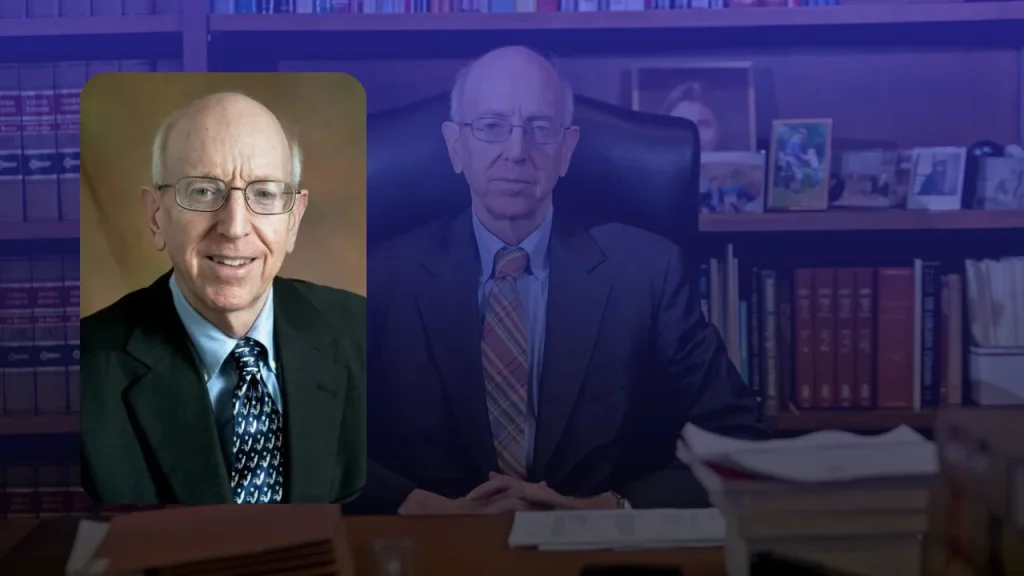
Richard Allen Posner, the influential federal appeals court judge, University of Chicago professor and pioneer of law and economics, died on November 10, 2026. He was 87. The University of Chicago Law School confirmed his death on Wednesday, November 11, ending a legal career that spanned more than six decades.
Appointed by President Ronald Reagan in 1981, Posner served nearly 36 years on the U.S. Court of Appeals for the Seventh Circuit, wrote approximately 3,300 judicial opinions and authored dozens of books that transformed how lawyers and judges think about economics, constitutional rights and the consequences of legal decisions. Widely described as one of the most-cited legal scholars of all time, he combined rigorous economic analysis with pragmatic judging and an extraordinarily prolific writing career.
His influence extended far beyond the courtroom. Posner authored the opinion that struck down same-sex marriage bans in Indiana and Wisconsin, supported workplace protections against sexual-orientation discrimination, upheld a controversial voter-identification law he later questioned, and criticized how federal courts treated people who could not afford lawyers.
Although he never served on the U.S. Supreme Court, Posner became one of the most influential American legal scholars and lower-court judges of his generation.
His legacy also includes provocative arguments about adoption, national security, privacy and the role of judges, views that sometimes drew criticism even from legal scholars who admired his work.
Richard Posner: Key Facts About His Life and Death
| Detail | Information |
| Full name | Richard Allen Posner |
| Born | January 11, 1939 |
| Birthplace | New York City, New York |
| Died | November 10, 2026 (announced by the University of Chicago Law School on November 11, 2026) |
| Age at death | 87 |
| Cause of death | Not disclosed in the University of Chicago’s announcement |
| Education | Yale University (B.A., 1959); Harvard Law School (LL.B., 1962) |
| Profession | Federal appellate judge, law professor, author and legal scholar |
| Appointed by | President Ronald Reagan |
| Court | U.S. Court of Appeals for the Seventh Circuit |
| Judicial service | 1981 to 2017 |
| Chief judge | 1993 to 2000 |
| Major contribution | Pioneering modern law and economics |
| Best-known book | Economic Analysis of Law (1973) |
| Judicial opinions | Approximately 3,300 |
| Supreme Court justice? | No |
| University affiliation | University of Chicago Law School (Senior Lecturer) |
| Spouse | Charlene Horn |
| Son | Eric Posner, professor at the University of Chicago Law School |
How Did Richard Posner Die?
The University of Chicago Law School announced on November 11 that Posner had died the previous day. The university did not identify a specific cause of death in its initial statement.
The Wall Street Journal reported that Posner had been diagnosed with Alzheimer’s disease around 2018. However, that diagnosis does not establish what caused his death, and it should not be presented as the cause without confirmation.
His son, University of Chicago law professor Eric Posner, also confirmed his father’s death to The New York Times. University of Chicago Law School Dean Adam Chilton called him a “giant” whose influence on the legal system, on law and economics and on the school itself “cannot be overstated.” The university said it planned additional tributes and remembrances from his colleagues.
Who Was Richard Posner Before He Became a Federal Judge?
Richard Allen Posner was born in New York City on January 11, 1939, the only child of Max and Blanche (Hofrichter) Posner, who were European immigrants. He attended Yale University, graduating summa cum laude with a degree in English literature in 1959 and earning Phi Beta Kappa honors. He then earned his law degree from Harvard Law School in 1962, graduating first in his class and serving as president of the Harvard Law Review.
His early career connected him with some of America’s most influential legal institutions.
Richard Posner’s clerkship for Supreme Court Justice William Brennan
After law school, Posner clerked for U.S. Supreme Court Justice William J. Brennan Jr. during the 1962 to 1963 term. Brennan was a leading figure in the Supreme Court’s expansion of constitutional protections concerning civil liberties, criminal procedure and equal rights.
Posner’s later intellectual development differed from Brennan’s, especially in his early emphasis on economic efficiency. Yet both believed legal principles required close attention to their consequences.
Richard Posner’s work at the FTC, the Solicitor General’s Office and the Johnson task force
From 1963 to 1965, Posner worked at the Federal Trade Commission as a legal assistant to Commissioner Philip Elman. From 1965 to 1967 he served as an assistant to the Solicitor General at the Justice Department, including during Thurgood Marshall’s tenure as solicitor general. From 1967 to 1968 he was general counsel to President Lyndon B. Johnson’s Task Force on Communications Policy.
In 1968, Posner became an associate professor at Stanford Law School. One year later, he joined the University of Chicago Law School, where he remained affiliated for the rest of his life. He was named the Lee and Brena Freeman Professor of Law in 1978 and later served as a Senior Lecturer.
How Did Richard Posner Become One of America’s Most Influential Legal Scholars?
Posner became a leading figure in the modern law and economics movement centered at the University of Chicago. His breakthrough came in 1973 with the publication of Economic Analysis of Law, now in its ninth edition.
The book applied microeconomic tools, including efficiency, incentives and cost-benefit analysis, to contracts, property, criminal justice, torts, antitrust and other areas. His central insight was that legal rules affect how people behave by changing incentives, risks and costs. He argued that many common-law doctrines evolved toward wealth-maximizing, or efficient, outcomes.
He was a founding editor of the Journal of Legal Studies in 1972, and, according to published accounts, helped establish the American Law and Economics Review. His work reshaped legal education, scholarship and judicial reasoning in the United States and beyond.
What does law and economics actually mean?
Consider a business deciding whether to install a safety device. The device costs $10,000. Without it, accidents might occur that collectively create an expected loss of $100,000. Economic analysis suggests that installing the device would prevent substantially greater expected harm than its cost.
The example illustrates why courts may consider the burden of precautions, the likelihood of injury and the severity of potential losses. These ideas connect to established negligence principles, including the reasoning behind United States v. Carroll Towing Co., 159 F.2d 169 (2d Cir. 1947), in which Judge Learned Hand framed negligence as a comparison of the burden of precautions against the probability and gravity of harm.
Posner did not invent economic reasoning in law. Scholars including Ronald Coase, Gary Becker and Guido Calabresi helped develop the field. But Posner was instrumental in making economic analysis a systematic framework for evaluating legal rules across many different subjects.
Richard Posner and antitrust law
Posner also wrote extensively on antitrust, advancing Chicago School ideas that influenced enforcement in the 1980s. Antitrust law, built on the Sherman Act (15 U.S.C. §§ 1 and 2), became one of the fields most visibly changed by economic analysis, with courts increasingly asking how conduct affects consumer welfare and market efficiency.
Why was Richard Posner’s law-and-economics approach controversial?
Critics argued that economic efficiency does not always produce justice. A rule that maximizes total economic welfare might still disadvantage people with fewer resources or inadequately protect individual rights. Others questioned whether people’s decisions can be understood primarily through economic incentives.
Posner’s approach helped transform legal scholarship, but it never became the universally accepted method for deciding legal disputes.
Why Did Ronald Reagan Appoint Richard Posner as a Federal Judge?
President Ronald Reagan nominated Posner to the U.S. Court of Appeals for the Seventh Circuit on October 27, 1981. The Senate confirmed him on November 24, and he received his judicial commission on December 1. Federal appeals judges are appointed by the president with the advice and consent of the Senate under Article II, Section 2 of the Constitution and 28 U.S.C. § 44, and hold office during “good behaviour” under Article III, Section 1.
The Seventh Circuit hears federal appeals from district courts in Illinois, Indiana and Wisconsin. Posner became its chief judge in 1993 and served in that position until 2000.
At the time of his appointment, he was widely associated with conservative and free-market legal scholarship. However, his decisions did not consistently follow one political ideology. He became known for deciding cases through pragmatism: examining the purpose of the law, the actual facts and the practical consequences of competing interpretations.
How did Richard Posner write his judicial opinions?
Posner wrote approximately 3,300 opinions, far above the average, and was famous for drafting them almost entirely himself rather than relying heavily on law clerks. His style was clear, direct, often blunt and free of legal jargon. He prized pragmatism over formalism or strict textualism. Many legal observers ranked him among the most influential federal judges outside the Supreme Court.
Richard Posner’s Most Important Court Decisions
Posner’s judicial record covered constitutional rights, employment discrimination, election laws, antitrust, criminal sentencing, intellectual property and civil procedure. Five decisions and disputes particularly illustrate his influence.
1. Baskin v. Bogan (2014): Posner struck down same-sex marriage bans in Indiana and Wisconsin
In September 2014, Posner authored a unanimous Seventh Circuit opinion striking down laws prohibiting same-sex marriage in Indiana and Wisconsin. The consolidated cases included Baskin v. Bogan and Wolf v. Walker, reported at 766 F.3d 648.
The states argued that restricting marriage to opposite-sex couples served interests connected with responsible procreation and child welfare. Posner rejected those explanations as inadequate to justify the unequal treatment. He emphasized that denying marriage to same-sex couples also harmed children being raised by those couples.
The decision rested principally on the Equal Protection Clause of the Fourteenth Amendment. It came before the U.S. Supreme Court’s nationwide recognition of same-sex marriage in Obergefell v. Hodges, 576 U.S. 644 (2015).
Why it mattered: Posner’s opinion helped remove marriage restrictions in two states and contributed to the broader constitutional debate preceding Obergefell.
2. Hively v. Ivy Tech Community College (2017): Posner’s concurrence on workplace discrimination under Title VII
In April 2017, the Seventh Circuit, sitting en banc, ruled that discrimination based on sexual orientation constitutes discrimination because of sex under Title VII of the Civil Rights Act of 1964 (42 U.S.C. § 2000e-2(a)). The case was Hively v. Ivy Tech Community College, 853 F.3d 339.
Posner wrote a concurring opinion, not the court’s majority opinion. Chief Judge Diane Wood authored the majority decision. Posner argued that legal interpretation sometimes must account for changing societal understandings rather than remain tied exclusively to how particular words were understood when Congress enacted a statute.
The decision anticipated an important development in federal employment law. In Bostock v. Clayton County, 590 U.S. 644 (2020), the Supreme Court held that Title VII prohibits employment discrimination based on sexual orientation or transgender status, using a different interpretive approach.
Why it mattered: The case demonstrated Posner’s willingness to support modern applications of federal civil-rights protections while openly challenging rigid methods of statutory interpretation.
3. Crawford v. Marion County Election Board (2007): the Indiana voter-ID decision Posner later questioned
One of Posner’s most debated rulings involved Indiana’s voter-identification law. In Crawford v. Marion County Election Board, 472 F.3d 949 (7th Cir. 2007), Posner wrote the majority opinion upholding the state’s photo-ID requirement. The Supreme Court subsequently upheld the law in 2008 in Crawford v. Marion County Election Board, 553 U.S. 181 (2008), in a fractured decision that applied the balancing framework from Anderson v. Celebrezze, 460 U.S. 780 (1983), and Burdick v. Takushi, 504 U.S. 428 (1992).
Years later, Posner expressed concern that courts had lacked sufficient information about whether voter-ID requirements prevented legitimate voters from participating. His 2013 book Reflections on Judging prompted reports that he had repudiated his earlier ruling. In a subsequent essay titled I Did Not ‘Recant’ on Voter ID Laws, Posner clarified his position. He said he could not be confident the original decision was correct because the court lacked sufficiently reliable evidence about the policy’s effects. He also emphasized that this was not the same as categorically declaring the judgment wrong.
In a later Wisconsin voter-ID case, Frank v. Walker (7th Cir. 2014), Posner dissented from the denial of rehearing en banc and sharply criticized the evidence offered to justify that state’s law.
Why it mattered: His reflections highlighted a persistent problem in constitutional litigation: courts sometimes make decisions about public policy without adequate evidence about how those rules operate in practice.
4. ACLU v. Alvarez (2012): Posner’s dissent on recording police
Posner also took positions that civil-liberties advocates opposed. In American Civil Liberties Union of Illinois v. Alvarez, 679 F.3d 583 (7th Cir. 2012), the court considered whether Illinois could enforce its eavesdropping statute against people who audio-record police officers performing their public duties. The majority held that the ACLU was likely to succeed in its First Amendment challenge and ordered preliminary relief.
Posner dissented. He argued that the majority had underestimated the privacy concerns and other costs associated with recording conversations. The case illustrates that Posner’s approach to individual rights could produce conclusions different from those of judges normally considered more conservative. His dissent did not become the governing decision in that case.
5. Planned Parenthood of Wisconsin v. Van Hollen (2013): blocking a Wisconsin abortion restriction
In 2013, Posner wrote the Seventh Circuit opinion in Planned Parenthood of Wisconsin, Inc. v. Van Hollen, 738 F.3d 786 (7th Cir. 2013), which blocked a Wisconsin law requiring doctors who perform abortions to have admitting privileges at a nearby hospital. He questioned the health justification the state offered for the requirement.
Why it mattered: The ruling showed his pragmatic, evidence-focused approach to constitutional challenges and added to the pattern of decisions that defied easy labels as conservative or liberal.
Posner’s criticism of government sting practices
Posner also criticized certain government practices, including ATF stash-house sting operations, in his judicial writing. These critiques reflected his skepticism toward law-enforcement tactics he viewed as unfair or poorly justified.
Was Richard Posner a Conservative or a Liberal Judge?
Posner’s political and judicial outlook was difficult to classify. He entered the federal judiciary as a Reagan appointee and prominent free-market scholar. Over time, he increasingly criticized both conservative and liberal methods of constitutional interpretation.
He supported legal recognition of same-sex marriage and stronger protections against some forms of discrimination. At other times, he defended government surveillance powers, emphasized economic efficiency or questioned expansive interpretations of particular constitutional rights.
He also strongly criticized originalism, the approach associated with Justice Antonin Scalia that generally interprets constitutional provisions according to their original public meaning. Posner believed judges should consider the real-world consequences of legal interpretations. That did not mean he viewed established law or judicial precedent as irrelevant. His point was that law cannot be applied intelligently without understanding the problems it is meant to address.
He described himself as a legal pragmatist.
What Were Richard Posner’s Most Controversial Views?
Posner was an iconoclast and polymath. He wrote on animal rights, feminism, drug policy, same-sex marriage, moral philosophy, Keynesian economics and literature. He co-blogged for years with economist Gary Becker and was known for candor, intellectual independence and a willingness to revise his views. Critics sometimes accused him of reducing complex human issues to cold cost-benefit calculations or of overconfidence. Admirers praised his originality, productivity and clarity.
Some of his scholarship attracted criticism because he applied economic or practical reasoning to subjects that others considered primarily questions of morality, dignity or fundamental rights.
The controversial 1978 adoption-market article by Richard Posner and Elisabeth Landes
In 1978, Posner and economist Elisabeth Landes published The Economics of the Baby Shortage. The article examined adoption through economic concepts, including supply, demand and financial incentives. Critics argued that the analysis risked treating children as commodities.
Posner later disputed the simplistic characterization that he was advocating unrestricted commercial sales of babies. Nevertheless, the paper became a prominent example of the ethical objections raised against aggressive applications of law and economics.
Richard Posner’s arguments about torture and national security after 9/11
Following the September 11 attacks, Posner wrote extensively about terrorism, intelligence gathering and emergency government powers. In a 2002 essay, he argued that extraordinary measures, including torture in a hypothetical imminent-catastrophe scenario, might be considered necessary to prevent mass casualties.
Civil-liberties critics argued that such reasoning endangered fundamental rights and encouraged dangerous exceptions to legal protections. His writings should be understood as controversial legal and policy arguments, not as judicial rulings establishing that torture is lawful.
Criticism of Richard Posner’s approach to discrimination law
Some legal scholars argued that Posner’s economic pragmatism could undervalue the experiences of people facing discrimination. For example, scholars Ann C. McGinley and Jeffrey W. Stempel criticized aspects of his approach to pregnancy-discrimination law in a 1994 Florida Law Review article.
These criticisms demonstrate that his reputation rested on intellectual influence, not universal agreement with his conclusions.
Posner’s willingness to revise his views
In later life he expressed some regrets about earlier positions, including aspects of the voter-ID case. After retiring from the bench he continued teaching and writing, focusing in part on social justice reform.
Why Did Richard Posner Retire Suddenly From the Seventh Circuit in 2017?
Posner retired from the Seventh Circuit on September 2, 2017, at age 78. His departure surprised legal observers because he remained an exceptionally productive and prominent judge. In his retirement announcement, he said he planned to keep teaching at the University of Chicago Law School and to write with a particular focus on social justice reform.
Subsequent interviews revealed a more specific concern: the treatment of people representing themselves in court. A growing emphasis in his later years on the treatment of pro se litigants and social justice concerns contributed to tensions with colleagues and to his abrupt retirement.
Posner’s criticism of how federal courts treated people without lawyers
Posner believed many federal courts gave insufficient attention to pro se litigants, meaning people who bring or defend cases without legal representation. He criticized the judicial system’s complexity and argued that unrepresented people faced substantial disadvantages when trying to navigate appeals.
Federal law already provides some protections for these litigants. Courts liberally construe pro se filings under Haines v. Kerner, 404 U.S. 519 (1972), and 28 U.S.C. § 1915 allows people who cannot afford fees to proceed in forma pauperis and permits courts to request counsel for them in appropriate cases. Posner argued that these protections were not enough in practice.
Other judges and court officials disputed his characterization of the Seventh Circuit. After retiring, Posner founded an initiative called the Posner Center of Justice for Pro Se’s, intended to assist individuals navigating the judicial system without lawyers. The initiative was short-lived and faced substantial practical limitations. His concerns nevertheless contributed to continuing discussions about access to justice, legal costs and the fairness of court procedures.
The distinction between trial proceedings and appellate review remains important in modern cases such as Murdaugh Murders and Legal Cases Timeline, Key Events, Civil Lawsuits, and the 2026 New Trial Order, where an appellate ruling led to a new criminal trial.
Why Was Richard Posner Never Appointed to the Supreme Court?
Despite his enormous influence, Posner never became a Supreme Court justice. His name surfaced in discussions of potential Supreme Court candidates over the years, but no president formally nominated him to the Court.
There is no single verified public explanation establishing why he was never selected. His outspoken personality, unconventional judicial philosophy and willingness to criticize prominent judges may have complicated his prospects, but such explanations remain interpretations rather than documented reasons given by a president.
The distinction matters because Posner’s influence did not require a Supreme Court seat. His books were widely studied, his opinions were cited by other courts and his legal theories shaped scholarly debates across many fields. Many ranked him among the most influential federal judges outside the Supreme Court itself.
What Were Richard Posner’s Most Famous Books?
Posner authored or co-authored dozens of books (published estimates run from more than 50 to 60) and hundreds of scholarly articles, writing well beyond standard judicial opinions.
| Book | Publication year | Main subject |
| Economic Analysis of Law | 1973 | Economics applied to legal rules |
| The Economics of Justice | 1981 | Economic approaches to justice |
| The Problems of Jurisprudence | 1990 | Judicial reasoning and legal theory |
| Sex and Reason | 1992 | Law, sexuality and social behavior |
| Overcoming Law | 1995 | Pragmatism and legal institutions |
| An Affair of State | 1999 | Clinton impeachment proceedings |
| Law, Pragmatism, and Democracy | 2003 | Judicial pragmatism |
| How Judges Think | 2008 | How judges actually make decisions |
| A Failure of Capitalism | 2009 | Causes of the financial crisis |
| Reflections on Judging | 2013 | Judicial methods and institutional problems |
| The Federal Judiciary: Strengths and Weaknesses | 2017 | Reform of the federal courts |
His work on President Bill Clinton’s impeachment reflected a broader interest in how constitutional institutions respond to political crises. He also wrote about the 2000 election recount. For readers interested in how impeachment functions under the Constitution, our separate guide Pete Hegseth Impeachment, Republicans Turn on Him After the Midterms, Will the House Vote the Week of November 9? explains the legal process in a contemporary context.
Posner also wrote about literature, aging, terrorism, patents, economic recessions, judicial administration and the relationship between moral philosophy and legal decision-making.
How Did Richard Posner Change the American Legal System?
Posner’s influence can be understood through four major contributions.
First, he transformed legal scholarship. His work helped establish economic analysis as a standard subject in American law schools and a widely used approach to questions of liability, regulation and competition.
Second, he changed how judges explain decisions. His opinions frequently used clear language, concrete examples and practical reasoning instead of relying exclusively on technical legal formulas.
Third, he contributed to constitutional and statutory law. His decisions addressed marriage equality, discrimination, elections and the limits of government power.
Fourth, he challenged the judiciary itself. Late in his career, he questioned whether complicated procedures and professional legal conventions prevented ordinary people from obtaining meaningful access to justice.
His critique of court procedure is relevant to understanding modern appeals, including cases such as Bob Lee Murder Case, Why Nima Momeni Got 16 Years to Life, What Happened, and the Family’s Wrongful Death Lawsuit, where the potential consequences of appellate review remain important.
Posner’s judicial legacy includes thousands of individual decisions, but his broader contribution was encouraging lawyers and judges to ask what legal rules actually accomplish.
Richard Posner’s Personal Life and Family
Posner married Charlene Horn in 1962. They had two sons: Eric Posner, a prominent professor at the University of Chicago Law School, and Kenneth Posner, an investment banker. According to published obituary information, he was survived by his wife, his sons and four grandchildren. He was known as a devoted cat owner.
Richard Posner’s Life and Career Timeline
| Year | Event |
| 1939 | Born in New York City |
| 1959 | Graduates from Yale University |
| 1962 | Graduates from Harvard Law School; marries Charlene Horn |
| 1962 to 1963 | Clerks for Supreme Court Justice William Brennan |
| 1963 to 1965 | Works at the Federal Trade Commission |
| 1965 to 1967 | Works in the Solicitor General’s Office |
| 1967 to 1968 | General counsel, President’s Task Force on Communications Policy |
| 1968 | Joins Stanford Law School |
| 1969 | Joins University of Chicago Law School |
| 1972 | Helps found the Journal of Legal Studies |
| 1973 | Publishes Economic Analysis of Law |
| 1978 | Named Lee and Brena Freeman Professor of Law |
| 1981 | Appointed to the Seventh Circuit by Ronald Reagan |
| 1993 | Becomes chief judge of the Seventh Circuit |
| 2000 | Completes tenure as chief judge |
| 2007 | Authors decision upholding Indiana voter-ID law |
| 2013 | Writes opinion blocking Wisconsin abortion admitting-privileges law |
| 2014 | Authors opinion striking down same-sex marriage bans |
| 2017 | Concurs in major workplace-discrimination ruling |
| September 2, 2017 | Retires from federal judiciary |
| 2018 | Reported Alzheimer’s diagnosis; works on access-to-justice issues |
| November 10, 2026 | Dies at age 87 |
| November 11, 2026 | University of Chicago announces his death |
Frequently Asked Questions About Richard Posner
Is Judge Richard Posner dead?
Yes. Richard A. Posner died on November 10, 2026, at age 87. The University of Chicago Law School confirmed his death the following day.
What was Richard Posner’s cause of death?
The university’s initial announcement did not provide a cause of death. Although later-life health information has been reported, including an Alzheimer’s diagnosis around 2018, no specific cause should be assumed without confirmation.
When did Richard Posner die: November 10 or November 11, 2026?
He died on November 10, 2026. November 11 is the date the University of Chicago publicly announced his death.
Who appointed Richard Posner as a judge?
President Ronald Reagan nominated him to the Seventh Circuit in October 1981. The Senate confirmed him the following month.
What was Richard Posner famous for?
He was best known for pioneering modern law and economics, writing approximately 3,300 federal appellate opinions and authoring influential books about judicial decision-making.
Was Richard Posner a Supreme Court justice?
No. He served on the U.S. Court of Appeals for the Seventh Circuit, a federal appellate court below the Supreme Court.
Did Richard Posner support same-sex marriage?
In 2014, he authored a unanimous federal appellate opinion invalidating same-sex marriage bans in Indiana and Wisconsin.
Did Richard Posner support voter-ID laws?
He authored a 2007 opinion upholding Indiana’s photo-ID law. He later questioned whether courts possessed enough evidence to evaluate its consequences but clarified that he had not formally recanted the ruling.
Was Richard Posner conservative or liberal?
He was initially associated with conservative law-and-economics scholarship but later adopted positions associated with different political traditions. He generally described his judicial approach as pragmatic.
Why did Richard Posner leave the bench in 2017?
He retired in September 2017. He later pointed to disagreements about the treatment of self-represented litigants as an important factor.
Did Richard Posner have children?
Yes. His family included his son Eric Posner, who is also a prominent legal scholar and professor at the University of Chicago Law School, and his son Kenneth Posner, an investment banker.
Are Richard Posner’s legal opinions still valid after his death?
Yes. A judge’s death does not automatically invalidate prior judicial rulings, and Posner had already retired from the bench in 2017. Published appellate opinions may remain binding precedent within the relevant circuit unless later overturned, overruled or superseded by controlling law.
What was Richard Posner’s most important book?
Economic Analysis of Law, first published in 1973, is generally regarded as his most influential work because it helped establish law and economics as a major field of legal scholarship.
The Lasting Legacy of Judge Richard Posner
Richard Posner’s death marks the passing of a legal scholar whose influence reached almost every major area of American law. His career cannot be reduced to a single ideology or famous decision.
He was a Reagan-appointed judge who challenged conservative legal theories, an economist who questioned whether law could be reduced to moral philosophy, and an institutional critic who spent his final professional years arguing that the courts needed to treat ordinary litigants more fairly. His work prompted admiration, disagreement and sometimes intense criticism. But his contributions changed how legal questions are studied, how judicial decisions are written and how courts evaluate the consequences of their rulings.
His death prompted widespread tributes recognizing him as one of the defining legal minds of the late 20th and early 21st centuries.
Posner’s lasting importance is not simply that he decided thousands of cases. It is that he helped generations of lawyers and judges rethink what the law is meant to achieve, and whether the legal system is achieving it.
Primary Sources and Legal References
- University of Chicago Law School: Richard Posner Death Announcement, November 11, 2026: Official confirmation of death, judicial career and scholarly contributions.
- ABC7 Chicago: Richard Posner, former federal appellate judge in Chicago, dies at 87
- Chicago Sun-Times, November 11, 2026: Richard Posner, longtime federal judge and ‘prolific’ University of Chicago legal scholar, dies at 87
- Federal Judicial Center: Richard Allen Posner: Official federal judicial biography, appointment, confirmation and retirement records.
- University of Chicago Law School: Richard A. Posner Faculty Biography: Education, professional appointments, books and scholarly achievements.
- Baskin v. Bogan, 766 F.3d 648 (7th Cir. 2014): Posner’s opinion addressing same-sex marriage bans.
- Hively v. Ivy Tech Community College, 853 F.3d 339 (7th Cir. 2017): Employment discrimination ruling and Posner’s concurrence.
- Richard Posner, I Did Not ‘Recant’ on Voter ID Laws, October 27, 2013: Posner’s own explanation of his earlier voter-ID ruling.
- ACLU v. Alvarez, 679 F.3d 583 (7th Cir. 2012): First Amendment decision and Posner’s dissent.
- University of Chicago Law School: Judge Richard Posner to Retire from Seventh Circuit: Retirement announcement.
- Posner’s Supreme Court Amicus Filing, 2018: His firsthand explanation of concerns about access to justice for unrepresented litigants.
- University of Chicago Law Review: Posner on Vertical Restraints: Scholarly assessment of his influence in antitrust law.
- Additional authorities cited: Crawford v. Marion County Election Board, 553 U.S. 181 (2008); Planned Parenthood of Wisconsin v. Van Hollen, 738 F.3d 786 (7th Cir. 2013); Obergefell v. Hodges, 576 U.S. 644 (2015); Bostock v. Clayton County, 590 U.S. 644 (2020); Haines v. Kerner, 404 U.S. 519 (1972); U.S. Const. art. II, § 2 and art. III, § 1; 28 U.S.C. §§ 44 and 1915; 42 U.S.C. § 2000e-2(a); 15 U.S.C. §§ 1 and 2.
Research note: This article distinguishes verified biographical information, Posner’s actual judicial opinions, his personal scholarship and criticisms of his work. Family details and the reported 2018 diagnosis come from published obituary and news accounts and should be checked against the family’s official obituary. Last reviewed November 12, 2026.
Legal disclaimer: This article provides general U.S. legal information and historical analysis, not legal advice. The continuing authority of any judicial decision depends on subsequent precedent and applicable law.
Researched and written by Israr Ahmad, legal content researcher and founder of AllAboutLawyer.com. All facts verified against the University of Chicago Law School’s announcement, the Federal Judicial Center biography and contemporaneous reporting from ABC7 Chicago and the Chicago Sun-Times, and the published opinions and statutes cited above, as of November 12, 2026. Last Updated: November 12, 2026.
About the Author
Israr Ahmad is a legal content researcher with 4+ years of experience covering class action settlements and consumer rights cases. He has researched and published coverage of 2,500+ settlements using verified court records, settlement administrator filings, and government sources. Learn more about Israr.