
California’s Death Penalty, Legal but Frozen Here’s the Current Status
California’s death penalty is technically legal under state law, but executions have been paused since Governor Gavin Newsom declared a moratorium in 2019. No executions have taken place since 2006. Over 700 people remain on death row, but none can be executed while the moratorium remains in effect.
California’s death penalty is technically legal under state law, but executions have been paused since Governor Gavin Newsom declared a moratorium in 2019. No executions have taken place since 2006. Over 700 people remain on death row, but none can be executed while the moratorium remains in effect.
California has the death penalty. It also hasn’t executed anyone in nearly two decades. That contradiction sits at the center of one of the most debated legal questions in the state — and understanding it requires looking at what the law actually says versus what is actually happening.
Whether you’re following a specific case, researching for school, or just trying to understand the news, the answer involves more than a simple yes or no. This article breaks down the legal status, what crimes qualify, what the moratorium means in practice, and what could change.
The Short Answer: Legal on Paper, Suspended in Practice
California law authorizes the death penalty for certain first-degree murder convictions under California Penal Code § 190. Voters have reaffirmed that law twice — most recently in 2016, when Proposition 62 (which would have abolished capital punishment) was defeated, and Proposition 66 (which aimed to speed up executions) passed.
Despite this, the state hasn’t carried out an execution since January 17, 2006, when Clarence Ray Allen was put to death. The reasons go beyond any single decision.
In March 2019, Governor Gavin Newsom issued an executive order placing a moratorium on all executions for as long as he remains governor. He also ordered the dismantling of the state’s execution chamber at San Quentin State Prison.
The result: death sentences are still handed down by California courts, people still sit on death row, but no one can legally be executed right now.
What the Moratorium Actually Does — and Doesn’t Do
A moratorium is not the same as abolition. It does not:
- Remove anyone’s death sentence
- Change what crimes qualify for capital punishment
- Prevent prosecutors from seeking the death penalty in new cases
- Bind future governors
What it does is halt the execution of those sentences for the duration of Newsom’s time in office. The moment a new governor takes over — one who opposes the moratorium — executions could theoretically resume, pending resolution of other legal obstacles.
Those obstacles are significant. California also faces ongoing legal challenges over its lethal injection protocols. Under the Eighth Amendment to the U.S. Constitution, which prohibits cruel and unusual punishment, courts have scrutinized the drugs used in executions. California’s protocol has been challenged repeatedly, and no approved protocol was in place even before Newsom’s order.
Which Crimes Can Lead to a Death Sentence in California?
Not every murder qualifies. California law reserves the death penalty for first-degree murder with at least one of 22 “special circumstances” defined under Penal Code § 190.2. These include:
- Killing a peace officer or firefighter on duty
- Murder committed during a robbery, rape, kidnapping, burglary, or arson
- Killing a witness to prevent testimony
- Murder for financial gain (hired killing)
- Multiple murder victims
- Torture
- Killing by poison, bomb, or lying in wait
Prosecutors must prove both the underlying murder and at least one special circumstance beyond a reasonable doubt before the death penalty can even be considered at sentencing.
Related article: Operation Epic Fury and International Law, What the Rules of War Actually Say
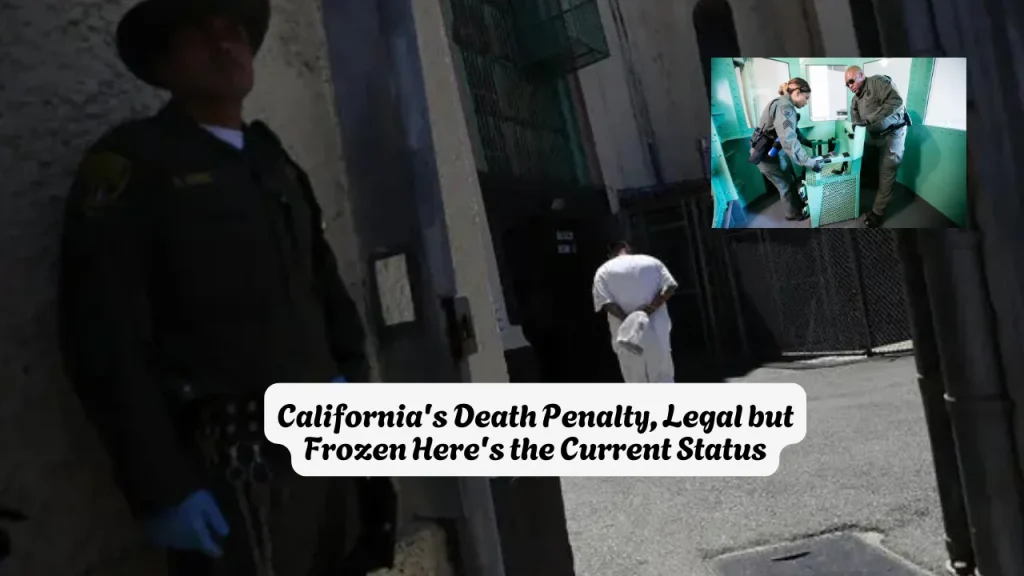
California’s Death Row: The Numbers
With over 700 people currently on death row, California has the largest death row population in the United States. Most inmates have been there for decades, as California’s appeals process is notoriously lengthy — cases routinely spend 20 or 30 years in the courts before any final resolution.
San Quentin State Prison historically housed death row, though under Newsom’s administration the facility has undergone significant restructuring. According to the California Department of Corrections and Rehabilitation, the average time spent on death row before any resolution (including natural death, sentence commutation, or exoneration) exceeds 20 years.
Since capital punishment was reinstated in California in 1978, more death row inmates have died of natural causes or suicide than have been executed.
Related article: Weed Is Legal in Montana But Here’s What the Law Actually Allows
Could the Death Penalty Resume in California?
Yes, but several barriers stand in the way:
A new governor would need to lift the moratorium. Executive orders issued by one governor can be reversed by the next. If a future governor favored resuming executions, the moratorium could end.
Lethal injection protocols must be legally approved. Courts have blocked California’s protocols multiple times. Any resumption would require a new, court-approved method — a process that has taken years in other states.
Federal constitutional questions remain open. Ongoing litigation about the Eighth Amendment’s application to specific execution methods could delay any resumption regardless of who holds the governorship.
Voters have shown divided opinions. Californians narrowly voted to retain capital punishment in 2016, but polling since then has shown shifting public opinion, particularly regarding wrongful conviction risk and racial disparities in sentencing.
Frequently Asked Questions
Q: When was the last execution in California?
The last execution in California took place on January 17, 2006. Clarence Ray Allen was executed at San Quentin State Prison. No executions have occurred in the nearly two decades since.
Q: How long do death penalty cases typically take in California?
Capital cases in California take an exceptionally long time to resolve. The appeals process — including state court review, federal habeas corpus petitions, and constitutional challenges — routinely lasts 20 to 30 years. Many inmates die of natural causes before their cases are fully resolved.
Q: Do I need a lawyer if a family member is facing capital charges?
Absolutely yes. Death penalty cases are among the most complex in the legal system. A defendant facing capital charges is entitled to counsel under the Sixth Amendment, and California law requires appointment of qualified capital defense attorneys in such cases. If you are involved in a capital case in any capacity, consulting an experienced criminal defense attorney immediately is critical. Most offer free initial consultations. Visit AllAboutLawyer.com to connect with a qualified attorney in your area.
Q: Can California’s governor permanently abolish the death penalty?
Not unilaterally. Abolishing capital punishment in California would require either a constitutional amendment approved by voters or a legislative act — both are beyond the power of any single governor’s executive order. The governor can suspend executions through a moratorium, as Newsom has done, but permanent abolition requires broader action.
Q: Has anyone been exonerated from California’s death row?
Yes. According to the Death Penalty Information Center, at least five people have been exonerated from California’s death row since 1973 — meaning they were sentenced to death but later found to be innocent. This is one of the primary arguments cited by abolitionists in ongoing debates over California’s capital punishment laws.
Legal Terms Used in This Article
Death penalty (capital punishment): The legally authorized execution of a person as punishment for a serious crime, typically first-degree murder with aggravating circumstances.
Moratorium: A temporary suspension of an activity by official order. California’s execution moratorium halts all executions but does not change the underlying law or existing sentences.
Special circumstances: Under California Penal Code § 190.2, these are specific aggravating factors — such as killing a police officer or committing murder for financial gain — that must be proven for a death sentence to be sought.
Eighth Amendment: The provision of the U.S. Constitution prohibiting cruel and unusual punishment. It governs how executions may be carried out and has been the basis for numerous legal challenges to lethal injection protocols.
Habeas corpus: A legal action through which a convicted person can challenge the lawfulness of their detention or sentence in federal court, separate from direct appeals. Death row inmates routinely file habeas corpus petitions.
Executive order: A directive issued by the governor (at the state level) or president (at the federal level) that carries the force of law but can be reversed by a successor.
Exoneration: The formal legal finding that a convicted person is innocent, often based on new evidence. Exoneration from death row is distinct from having a sentence overturned on procedural grounds.
Where Things Stand in 2026
California’s death penalty occupies a legal gray zone that has lasted for twenty years. It exists in statute, survives at the ballot box, produces active death sentences in courtrooms — and yet produces no executions.
The moratorium means that for now, the question of whether the death penalty is legal in California matters less in practice than whether it is active. It is not.
If you are involved in a capital case — as a defendant, a family member of a victim, or someone facing charges — the complexity of California death penalty law demands immediate legal guidance. Do not navigate this alone. Contact a qualified California criminal defense attorney today for a free consultation. Visit AllAboutLawyer.com to find experienced legal representation in your area.
Disclaimer
This article is for general informational purposes only and does not constitute legal advice. Laws and policies may change, and individual circumstances vary. For advice on a specific case, consult a qualified attorney.