
Greenbrier Clinic Mammogram Class Action, Were Your Results Unreliable? Here’s What to Do
A federal class action lawsuit was filed on April 7, 2026, against The Greenbrier Clinic in White Sulphur Springs, West Virginia, after the FDA ordered it to stop performing mammograms. The clinic admits it may have delivered unreliable breast cancer screenings to more than 1,000 patients over a period of more than two years — from October 28, 2023, through February 26, 2026. If you received a mammogram at The Greenbrier Clinic during that window, your health follow-up comes first. Your legal options come second.
Quick Facts
| Field | Detail |
| Defendant | The Greenbrier Clinic, Inc. (White Sulphur Springs, WV) |
| Lawsuit Filed | April 7, 2026 |
| Court | U.S. District Court, Southern District of West Virginia |
| Judge Assigned | U.S. District Judge Frank Volk |
| Case Name | Martin v. The Greenbrier Clinic, Inc. |
| Affected Period | October 28, 2023 – February 26, 2026 |
| Estimated Patients Affected | Approximately 1,000+ |
| Why FDA Shut Down Mammograms | Failure to meet clinical image quality standards under the MQSA |
| Settlement Amount | TBD — no settlement reached yet |
| Claim Deadline | TBD |
Where Things Stand Right Now
- A proposed class action was filed in federal court on April 7, 2026 — just two weeks after The Greenbrier Clinic notified patients about the quality failures on March 23, 2026.
- The case has been assigned to U.S. District Judge Frank Volk. No class certification, settlement, or trial date has been scheduled yet.
- The Greenbrier Clinic says it is working with the FDA and the American College of Radiology to fix the identified problems and eventually restore its mammography accreditation. No timeline for that has been given.
What Happened at The Greenbrier Clinic?
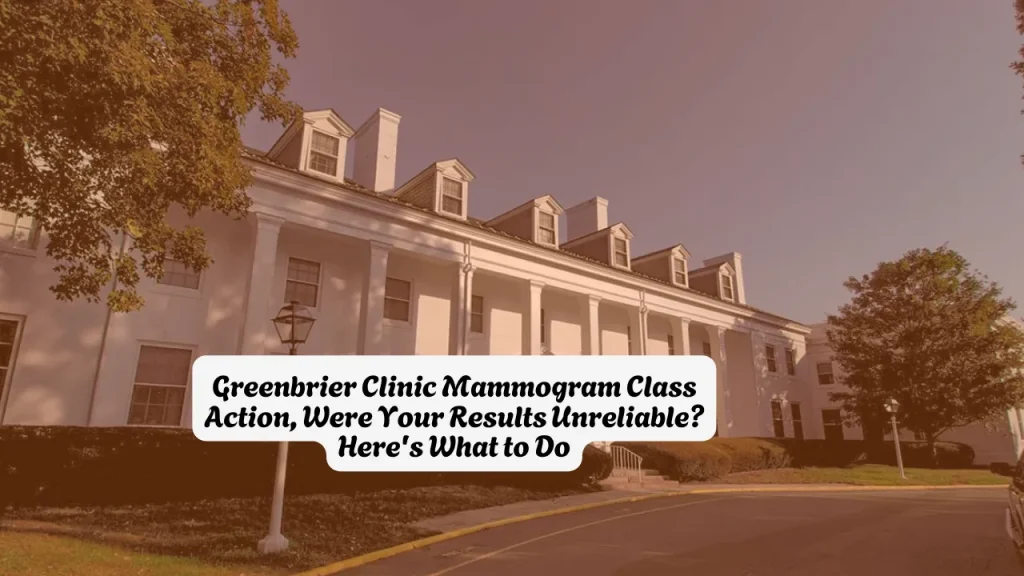
The Greenbrier Clinic operates inside The Greenbrier Resort — a historic luxury property in White Sulphur Springs, West Virginia, owned by U.S. Senator Jim Justice. The clinic markets premium medical services to an affluent national and international clientele, including a $3,500 cash-only “Executive Health” two-day physical and a “Concierge Medicine” program. Among those services, the clinic offered 3D mammography, which it described on its website as “one of the latest technological innovations in women’s healthcare” that “improves accuracy and can help detect breast cancer earlier.”
On March 23, 2026, Dr. Henry Setliff, a radiologist at the clinic, wrote to patients: “I am writing to let you know that there is serious concern about the quality of the mammography that our facility performed between Oct. 28, 2023, and Feb. 26, 2026.”
The FDA had identified a failure to meet the clinical image quality standards established by the clinic’s accreditation body, the American College of Radiology. As a result, the FDA required the clinic to stop performing mammography as of February 26, 2026.
The clinic told patients their past results are not definitely incorrect — but that the quality concerns are serious enough that every patient from that period needs to follow up with a doctor and potentially get rescreened. For women who received a “benign” result during that period and moved on with their lives believing they were cancer-free, that uncertainty is deeply unsettling.
Related article: Nordic Ware “Made in USA” Lawsuit, Did You Overpay for Bakeware Based on a False Claim?
What Does the Lawsuit Claim?
Lead plaintiff Tabitha Martin, a Monroe County, West Virginia, resident, filed the federal class action on April 7, 2026. According to the complaint, Martin visited the clinic on February 13 for a mammogram. The clinic’s report classified her results as benign and assured her the screening was reliable.
Five weeks later, Martin and other clinic patients received a letter saying there was a serious concern about the quality of mammography the facility performed between October 28, 2023, and February 26, 2026.
The attorneys who filed the lawsuit wrote that Martin “went from having every reason to believe she was not at risk for breast cancer, to having no reason at all to believe that she was not at risk for breast cancer.”
The lawsuit accuses The Greenbrier Clinic of unfair and deceptive acts and practices, unjust enrichment, breach of contract, fraudulent or misleading representations, and negligent infliction of emotional distress. It seeks actual and statutory damages under the West Virginia Consumer Credit and Protection Act, disgorgement of profits, contract damages, and attorneys’ fees.
Because of the resort’s affluent, national clientele, the complaint notes that affected patients reside across the country and internationally — not just in West Virginia.
If You Had a Mammogram at The Greenbrier Clinic, Do This Now
Your health is the immediate priority. Legal options can come after you have taken care of your medical follow-up.
Step 1 — Contact your doctor right away Call your primary care physician, OB-GYN, or gynecologic oncologist and tell them you received a mammogram at The Greenbrier Clinic between October 28, 2023, and February 26, 2026. Ask whether you need a repeat screening at an accredited facility.
Step 2 — Request your mammography records You have the legal right to request your original mammography films and written reports from The Greenbrier Clinic. Take those records to another accredited facility for a comparison or second-opinion review.
Step 3 — Confirm whether you received the clinic’s notification letter If you were a patient between October 2023 and February 2026 and have not received a certified letter, contact The Greenbrier Clinic directly to confirm your status and update your contact information.
Step 4 — Document your costs and experiences Keep records of every expense connected to the faulty screening — re-screening costs, travel, time off work, and any emotional distress. This documentation will matter if you join the lawsuit or pursue a separate claim.
Step 5 — Contact the plaintiff’s legal team The attorneys representing lead plaintiff Tabitha Martin include Anthony J. Majestro and Graham B. Platz of Powell & Majestro in Charleston, West Virginia, and D. Adrian Hoosier II. A consultation to discuss whether you qualify to join the class action is typically free.
Step 6 — File a complaint with the FDA You can report your experience with The Greenbrier Clinic directly to the FDA’s MedWatch program at fda.gov/safety/medwatch. Reporting helps regulators track the scope of the problem.
Key Dates & Timeline
| Milestone | Date |
| Deficient Mammography Period Begins | October 28, 2023 |
| FDA Orders Greenbrier Clinic to Stop Mammograms | February 26, 2026 |
| Greenbrier Clinic Sends Patient Notification Letters | March 23, 2026 |
| Federal Class Action Lawsuit Filed | April 7, 2026 |
| Case Assigned to Judge Frank Volk | April 2026 |
| Class Certification Hearing | TBD |
| Settlement or Trial | TBD |
| Claim Deadline | TBD |
Frequently Asked Questions
Does this mean my mammogram result was definitely wrong?
Not necessarily. The clinic clarified that past results are not definitely incorrect, and medical professionals urged patients to have their previous scans professionally re-evaluated to determine if a new exam is necessary. What is certain is that the quality of those images did not meet federal standards — which means you cannot rely on your result without getting it independently reviewed.
Do I need a lawyer to participate in this class action?
Not right now. The case was just filed on April 7, 2026, and no formal process for joining the class exists yet. Your first step is to contact the plaintiff’s legal team or monitor the case for updates. Initial consultations with the attorneys handling this case are typically free.
I live outside West Virginia. Can I still be part of this lawsuit?
Yes. The proposed class specifically accounts for the fact that The Greenbrier Resort’s clientele comes from across the country and internationally. Your state of residence does not disqualify you from joining a federal class action filed in West Virginia.
When will I receive a payment if the case settles?
No settlement has been reached. This lawsuit was just filed in April 2026. Cases like this typically take one to several years to reach a settlement or trial verdict. A notice will go out to class members once any settlement is proposed and approved by the court.
Will this settlement payment affect my taxes?
Potentially. Compensation for physical injury or medical expenses is often not taxable, while payments for emotional distress may be. Consult a tax professional once any settlement is reached and you receive payment details.
What law did The Greenbrier Clinic allegedly violate?
The Mammography Quality Standards Act (MQSA) is the federal law that sets minimum quality standards for mammography facilities. The FDA enforces it. The clinic’s failure to meet the American College of Radiology’s image quality standards — the standard required under MQSA — is what triggered the FDA shutdown. The civil lawsuit also alleges violations of the West Virginia Consumer Credit and Protection Act and common law claims including breach of contract and negligent misrepresentation.
What should I do if my mammogram showed a concerning result during this period?
Contact your doctor immediately — do not wait. If your scan flagged anything abnormal during the affected period and you are uncertain whether the result was accurate, request an urgent appointment and a new screening at a fully accredited imaging center as soon as possible.
Last Updated: April 10, 2026
Disclaimer: This article is for informational purposes only and does not constitute legal advice. Legal claims and outcomes depend on specific facts and applicable law. For advice regarding a particular situation, consult a qualified attorney. If you have urgent health concerns related to your mammogram results, contact your doctor immediately.
About the Author
Israr Ahmad is a legal content researcher with 4+ years of experience covering class action settlements and consumer rights cases. He has researched and published coverage of 2,500+ settlements using verified court records, settlement administrator filings, and government sources. Learn more about Israr.