
Lake Charles Family Files Federal Lawsuit After Deputy Shoots and Kills Their Dog in Their Own Yard
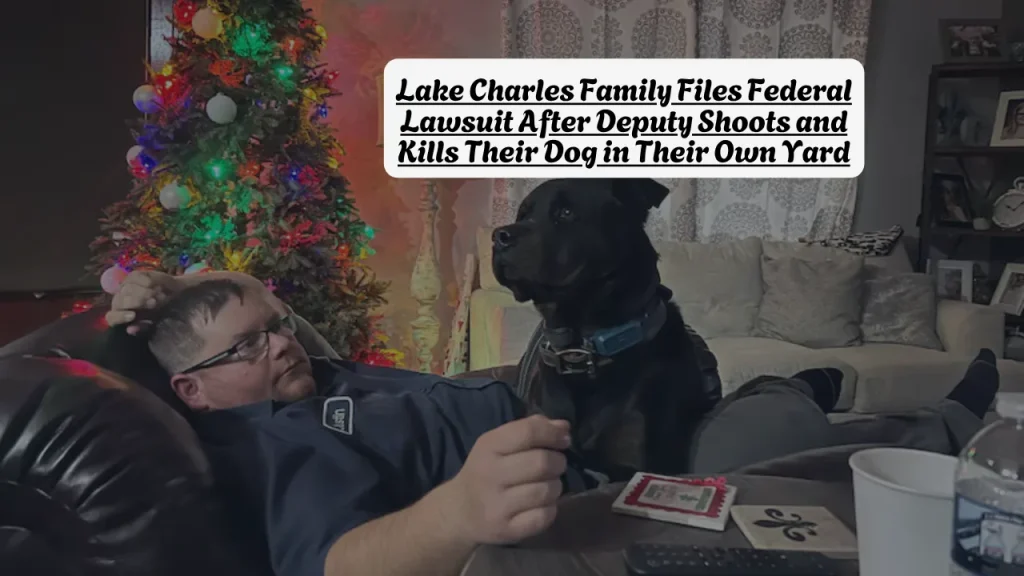
A Lake Charles family is taking the Calcasieu Parish Sheriff’s Office to federal court after a deputy allegedly drove onto their private driveway without justification and shot and killed their five-year-old Rottweiler. The lawsuit says what came next — a staged reenactment, cameras switched off, and the dog’s ashes mailed home in a box — deepened an already painful wound.
What Happened on August 1, 2025
Shamieh Law has filed a federal civil rights lawsuit against the Calcasieu Parish Sheriff’s Office, Sheriff Gary “Stitch” Guillory, and a Calcasieu Parish Sheriff’s Deputy after the deputy allegedly shot and killed the Granger family’s dog inside the Grangers’ own yard on August 1, 2025.
The complaint states that the deputy was dispatched to 637 Debra Lane on a neighbor’s traffic complaint. After observing no violation, he drove onto the Grangers’ private driveway, where Tank — a five-year-old Rottweiler with no history of aggression — was alone in his yard. According to the complaint, there was no justifiable cause to discharge a firearm. The deputy shot and killed him anyway.
Christine Granger came home to her house surrounded by sheriff’s units and was told that her dog was dead. Four days later, the Calcasieu Parish Sheriff’s Office returned Tank’s cremated remains to the family in a box with his name on it.
Body Cameras, Turned Off
The allegations do not stop at the shooting itself.
The complaint alleges that body camera footage shows the deputy reenacting the shooting with a fellow colleague, and that other cameras on scene were deliberately turned off.
When the Grangers requested footage through a public records request, the sheriff’s office denied it under a statute that the plaintiffs’ attorneys say plainly does not apply.
This combination — a killing on private property, a staged reenactment caught on camera, and a blocked public records request — forms the core of the family’s complaint that what happened was not an isolated error but a deliberate cover-up.
The Federal Lawsuit: What the Grangers Are Claiming
The suit asserts violations of the Fourth and Fourteenth Amendments under 42 U.S.C. § 1983, conversion, respondeat superior, negligent training and supervision, and intentional infliction of emotional distress. The Grangers seek compensatory and punitive damages, attorney’s fees, and a jury trial.
The complaint was filed on May 8, 2026, in the United States District Court for the Western District of Louisiana.
The Fourth Amendment protects Americans from unreasonable searches and seizures on their own property. Federal courts have long recognized that a pet dog is personal property — and that shooting a family’s dog without legal justification on private land can constitute an unlawful seizure under the Constitution.
Related article: Lawyers for Man Accused of Killing Charlie Kirk Tyler Robinson Ask to Seal Evidence and Close Parts of Upcoming Hearing
A Pattern, NoJust an Incident
The Grangers’ attorneys argue this goes beyond one deputy’s decision on one day.
Shamieh Law contends this is not an isolated failure — the suit alleges the Calcasieu Parish Sheriff’s Office, under Sheriff Guillory, has maintained a pattern of tolerating the use of deadly force against dogs while actively limiting accountability when it happens.
Attorney Ramez Shamieh, founder of Shamieh Law, said: “Tank was part of this family’s everyday life — their comfort, their home, their memories. In a matter of seconds, that was taken away forever. The Deputy came onto private property without lawful justification and killed him. What followed only deepened the wound: cameras turned off, a staged reenactment, legal excuses instead of accountability. This lawsuit is about more than a dog. It is about whether families can expect honesty and accountability from those entrusted with authority. The Grangers deserve justice, and we will fight to make sure they are heard.”
Why Shooting a Dog on Private Property Can Be a Civil Rights Violation
Under federal law, 42 U.S.C. § 1983 allows individuals to sue government officials who violate their constitutional rights while acting under color of state law. The Fourth Amendment’s protection against unreasonable seizures extends to personal property — and federal courts in multiple circuits have ruled that the unreasonable killing of a family pet constitutes a Fourth Amendment violation.
The key questions in a case like this are whether the officer had legal justification to be on the property in the first place, and whether the use of deadly force against the dog was objectively reasonable under the circumstances. The Grangers’ complaint argues both answers are no — the deputy had no valid reason to enter their driveway after finding no traffic violation, and Tank had no history of aggression that could justify the shooting.
Separately, a claim of negligent training and supervision targets the sheriff and the department directly, arguing that leadership created the conditions that allowed this to happen — and kept it from being properly investigated afterward.
This Case Is Part of a Broader Pattern Nationwide
The Grangers are not alone. Police shootings of family pets on private property have produced federal lawsuits — and significant settlements — across the country. In November 2025, the city of Sturgeon, Missouri agreed to a $500,000 settlement after a former officer shot a 12-year-old, 13-pound Shih Tzu that had wandered outside. Courts have consistently found that officers who enter private property and shoot non-threatening dogs without justification can face civil liability under the Fourth Amendment.
For more on how civil rights lawsuits against law enforcement work, see our related coverage of how to claim a lawsuit settlement — including how civil rights cases proceed from filing to potential payout.
Frequently Asked Questions
On what legal grounds is the lawsuit filed?
The suit asserts violations of the Fourth and Fourteenth Amendments under 42 U.S.C. § 1983, along with conversion, respondeat superior, negligent training and supervision, and intentional infliction of emotional distress.
Why is the Fourth Amendment relevant when a dog is shot?
Under established federal law, personal property — including a pet — is protected from unreasonable seizure under the Fourth Amendment. An officer who kills a family dog without legal justification can be held liable under federal civil rights law, especially when they enter private property without a warrant or lawful purpose.
Who are the defendants in this case?
The lawsuit names the Calcasieu Parish Sheriff’s Office, Sheriff Gary “Stitch” Guillory, and the deputy who fired the weapon.
What happened when the family asked for the body camera footage?
The sheriff’s office denied the family’s public records request under a statute that the plaintiffs’ attorneys argue does not apply to this situation.
Where was the lawsuit filed?
The complaint was filed on May 8, 2026, in the United States District Court for the Western District of Louisiana.
Prepared by the AllAboutLawyer.com Editorial Team and reviewed for factual accuracy against verified court filings and official sources on May 19, 2026. Last Updated: May 19, 2026
Disclaimer: This article is for general informational and educational purposes only and does not constitute legal advice. Laws vary by state and jurisdiction. For advice about your specific situation, consult a qualified attorney.
About the Author
Israr Ahmad is a legal content researcher with 4+ years of experience covering class action settlements and consumer rights cases. He has researched and published coverage of 2,500+ settlements using verified court records, settlement administrator filings, and government sources. Learn more about Israr.