
Lawyers for Man Accused of Killing Charlie Kirk Tyler Robinson Ask to Seal Evidence and Close Parts of Upcoming Hearing
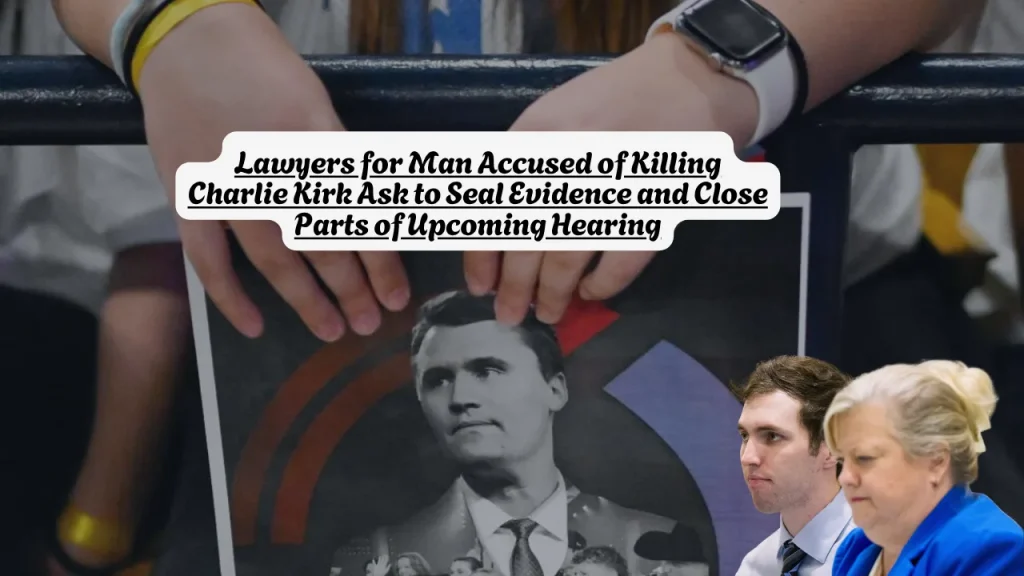
Defense attorneys for Tyler Robinson — the 22-year-old charged with murdering conservative political activist Charlie Kirk — appeared in a Utah court on Tuesday asking a judge to seal dozens of pieces of evidence and close portions of a major upcoming hearing. The motion comes after the judge had already rejected their earlier request to ban news cameras from the courtroom entirely.
What Happened on September 10, 2025
On September 10, 2025, Charlie Kirk was assassinated at Utah Valley University in Orem, Utah, while speaking at an outdoor campus debate organized by Turning Point USA, the conservative youth organization he co-founded and led. Kirk, aged 31, was shot in the neck with a single bullet by a gunman positioned on the roof of a building approximately 142 yards away. He was taken to a local hospital, where he was pronounced dead.
A manhunt ended the following day when Tyler James Robinson, a 22-year-old from Washington, Utah, surrendered to the local sheriff. Prosecutors charged Robinson with aggravated murder, felony discharge of a firearm, obstruction of justice, two counts of witness tampering, and commission of a violent offense in the presence of a child. Prosecutors announced they would seek the death penalty.
The Evidence Against Robinson
The prosecution’s case, as laid out in court documents, is built on multiple independent threads.
Authorities have said DNA consistent with Robinson’s was found on the trigger of the rifle used to kill Kirk, the fired cartridge casing, two unfired cartridges, and a towel used to wrap the rifle.
Prosecutors have said Robinson left a note for his romantic partner hidden under a keyboard that said, “I had the opportunity to take out Charlie Kirk and I’m going to take it.” They have also said he wrote in a text message about Kirk: “I had enough of his hatred. Some hate can’t be negotiated out.”
According to court filings, some of the exhibits prosecutors plan to present include records from the communications app Discord, text messages, written or recorded statements, videos of the shooting, and the note.
Why the Defense Is Asking to Seal Evidence
Tyler Robinson’s defense has argued that broadcasts of the proceedings create a media frenzy that often misrepresents him and could bias potential jurors. Defense attorneys have asked the judge to seal dozens of exhibits to “prevent infecting the potential jury pool,” according to a court document filed Monday.
The defense’s specific concern centers on the type of evidence prosecutors plan to introduce at the preliminary hearing — not necessarily at trial.
Deputy Utah County Attorney Chad Grunander said in court documents that some evidence they plan to present in July is “reliable hearsay” — statements made outside of court that are considered highly trustworthy. Such statements are typically allowed in preliminary hearings but not at trial, where standards are stricter. Robinson’s attorneys worry the statements will spread widely after the preliminary hearing, harm their client, and then not be admissible at a trial.
Legal analyst Randolph Rice, a Maryland-based attorney following the case, explained the strategy: “A preliminary hearing is not a trial, so prosecutors are often permitted to introduce certain evidence — hearsay statements, police summaries, or investigative details — that may never be admissible before the actual trial jury. The defense wants to limit public dissemination of that information to avoid tainting the future jury pool.”
Related article: DNOW Inc. Class Action Lawsuit, Did the Company Hide MRC Global’s ERP Problems Before the Stock Collapsed?
What the Preliminary Hearing Is — and Why It Matters
A preliminary hearing is not a trial. Its sole purpose is for a judge to determine whether prosecutors have enough evidence — probable cause — to send the case to trial. The standard of proof is lower than what a jury would require to convict.
The July hearing, scheduled for July 6–10, will mark the most significant public presentation of details to date in a case that has focused largely on issues of public access in its first eight months. During the hearing, prosecutors say they plan to introduce forensic analyses, surveillance video, recordings of witness statements, autopsy findings, and alleged messages from Robinson admitting to the crime.
Rice noted: “By requesting limits on cameras, public access, and the sealing of exhibits, the defense is attempting to preserve the defendant’s right to a fair and impartial trial and reduce the risk of appellate issues later in the case.”
Where the Judge and Prosecutors Stand
The judge has balanced competing interests throughout this case — protecting Robinson’s rights while keeping proceedings open to the public.
State District Judge Tony Graf has taken steps to protect Robinson’s rights in court, but he declined earlier this month to shut out cameras from the courtroom.
Prosecutors argue the preliminary hearing should remain open, but they agree that media should be restricted from viewing or copying some exhibits that could be used in a future trial. They disagree with sealing the evidence entirely, saying in a court filing: “There is nothing to suggest that the substance of the evidence is inadmissible.”
The defense’s effort to ban cameras stems in part from violations of a decorum order that occurred earlier in the case, including a pool videographer at a December hearing who picked up audio of conversations between Robinson and his lawyers, and a different videographer in January who captured close-up images of Robinson.
The Hearing Was Already Delayed Once
This is not the first procedural hurdle in the case.
The preliminary hearing was originally scheduled to begin May 18. Judge Graf postponed it after all four of Robinson’s attorneys told the court in April they felt unprepared to “render effective assistance of counsel” based on the discovery they had received up to that point. Graf acknowledged the dates were originally scheduled as “a goal post for the parties” and to reserve time on the court’s calendar.
To counter the defense’s request for delay tied to DNA evidence, prosecutors had offered to leave DNA evidence out of the hearing entirely, saying they had enough probable cause without it. Graf nonetheless agreed to the defense’s request for a postponement, moving the hearing from the week of May 18 to July 6–10.
The Victim’s Widow Wants the Case Open
Not everyone agrees the hearings should be restricted. Kirk’s widow, Erika Kirk, was designated as a victim representative by the court, which grants her better access to case information. She has pushed for the case to be open to the public, in part to cut down on what she has called conspiracy theories about her husband’s death. “We deserve to have cameras in there,” she told Fox News. “Why not be transparent?”
For related coverage on how criminal cases move from arrest to trial, and what rights defendants hold at each stage, see our guide on How To Claim A Lawsuit Settlement? Guide To Getting Paid — including how high-profile cases navigate public interest and fair trial protections simultaneously.
Frequently Asked Questions
What is Tyler Robinson charged with?
Robinson faces charges of aggravated murder, felony discharge of a firearm causing serious bodily injury, obstruction of justice, two counts of witness tampering, and commission of a violent offense in the presence of a child. Prosecutors are seeking the death penalty.
What is a preliminary hearing and why does it matter here?
A preliminary hearing is a court proceeding where a judge decides whether enough evidence exists to send a case to trial. It is not a verdict. The judge only needs to find probable cause — a much lower bar than proof beyond a reasonable doubt. The July 6–10 hearing in this case will be the first major public presentation of the prosecution’s evidence.
Why does the defense want to seal evidence shown at a preliminary hearing?
Some evidence admissible at a preliminary hearing — such as reliable hearsay — may not be admissible at trial. The defense argues that if such evidence spreads publicly before trial, it could taint the jury pool even if the same evidence is later excluded from the actual trial proceedings.
Has the judge ruled on the sealing request yet?
Defense attorneys made their case Tuesday in court. The judge had already rejected their request to ban cameras entirely. A ruling on sealing specific exhibits and closing portions of the hearing is pending.
When is the next major court date?
The preliminary hearing is scheduled for July 6–10, 2026, in Fourth District Court in Provo, Utah.
Prepared by the AllAboutLawyer.com Editorial Team and reviewed for factual accuracy against verified court filings and news sources on May 19, 2026. Last Updated: May 19, 2026
Disclaimer: This article is for general informational and educational purposes only and does not constitute legal advice. Laws vary by state and jurisdiction. For advice about your specific situation, consult a qualified attorney.
About the Author
Israr Ahmad is a legal content researcher with 4+ years of experience covering class action settlements and consumer rights cases. He has researched and published coverage of 2,500+ settlements using verified court records, settlement administrator filings, and government sources. Learn more about Israr.