
GoPro Tariff Refund Class Action, Buyers Say They Paid Higher Prices, but Cannot Claim the $20.2 Million Refund
GoPro faces a new putative class action alleging that customers paid higher prices after the camera maker raised prices to offset tariffs, but may see no benefit from the government’s later tariff refunds.
John Hogrell filed Hogrell v. GoPro, Inc. on October 9, 2026, in the U.S. District Court for the Northern District of California. The allegations are unproven, and no court has certified a class.
There is no settlement, no claim form, no official settlement website and no claim deadline for GoPro customers at this stage. Nobody can sign up for money from this case today.
Quick Facts: GoPro Tariff Refund Lawsuit
| Detail | Information |
| Case name | Hogrell v. GoPro, Inc. |
| Case number | 3:26-cv-11719 |
| Court | U.S. District Court, Northern District of California |
| Plaintiff | John Hogrell |
| Defendant | GoPro, Inc. |
| Plaintiffs’ counsel (per announcement) | Cotchett, Pitre & McCarthy, LLP |
| Complaint filed | October 9, 2026 |
| Main allegation | GoPro raised U.S. prices to account for tariffs and allegedly did not return the benefit of tariff refunds to buyers |
| Tariffs GoPro disclosed paying (IEEPA) | $20.2 million |
| Refund claims GoPro transferred to its lender | Approximately $19.4 million |
| Refunds GoPro reported receiving after June 30, 2026 | $17.9 million, including interest |
| Class certification | None. This is a putative class action |
| Official settlement website | None |
| Claim form | None |
| Claim deadline | None |
| Current status | Complaint stage. Check the docket for later filings |
What the Lawsuit Alleges
The case asks who should benefit when tariffs raise the cost of imported goods and the government later refunds those duties.
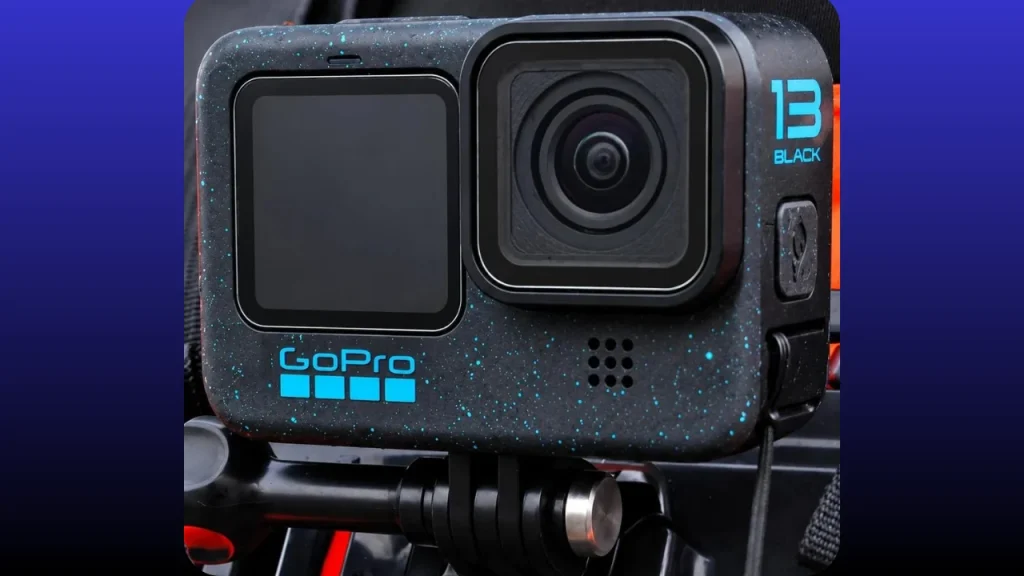
According to the plaintiffs’ attorneys’ announcement of October 13, 2026, GoPro told consumers on February 3, 2025, that it did not expect U.S. consumer prices to be materially affected by tariffs. The announcement alleges GoPro then raised U.S. prices on flagship cameras and other products. It cites the HERO13 Black, said to have risen from about $399 to $429.
The reported theory is that customers bore part of the tariff cost through higher prices and should not be left without a remedy now that the tariffs were held unlawful.
These statements describe the plaintiffs’ allegations, not findings by a judge. The docket entry and GoPro’s SEC disclosures were verified for this article, but the full complaint text was not retrieved from the court’s document system. The specific causes of action and the exact proposed class definition are therefore not stated here as verified facts. One outside report gives a class period of May 12, 2025 to February 20, 2026, but that has not been checked against the complaint.
What GoPro Disclosed in Its SEC Filing
GoPro’s filing for the quarter ended June 30, 2026 gives the financial context.
| Disclosure | Amount |
| Total IEEPA tariffs paid | $20.2 million |
| Refund claims transferred to lender | Approximately $19.4 million |
| Refunds approved and recorded in the second quarter | $18.9 million |
| Refunds received after June 30, 2026, including interest | $17.9 million |
These figures describe different accounting stages. They should not be added together, and they are not amounts owed to consumers.
The filing says GoPro transferred certain refund rights to its lender under an agreement dated February 19, 2026, that it would not hold rights to future proceeds from the transferred claims, and that related proceeds are to be remitted to the lender. Whether consumers can recover anything from GoPro is a separate question that this lawsuit raises. The SEC filing does not decide it.
Why the Supreme Court’s IEEPA Ruling Matters
The lawsuit follows the U.S. Supreme Court’s decision in Learning Resources, Inc. v. Trump (decided February 20, 2026), which held that the International Emergency Economic Powers Act, 50 U.S.C. § 1701 et seq., does not authorize the president to impose tariffs.
The ruling created a basis for importers to recover duties paid under the challenged orders. Customs refunds, including interest, run to the importer of record, the entity that paid the duties at the border. Under federal customs law, challenges to duties and refund disputes belong in the U.S. Court of International Trade (28 U.S.C. § 1581), and interest on refunds is governed by 19 U.S.C. § 1505.
Shoppers who paid higher retail prices cannot apply to Customs themselves. That gap between who paid the tariff, who received the refund and who bore the cost at checkout is the center of this dispute. The ruling does not automatically entitle any consumer to a refund.
Laws and Legal Theories Likely Involved
The full complaint was not retrieved, so the following explains the legal framework generally. It is not a statement of what the complaint pleads.
Federal class action rules
Federal Rule of Civil Procedure 23 controls whether a case can proceed as a class action. A proposed class must show numerosity, common questions, typical claims and adequate representation under Rule 23(a). Damages classes also must meet Rule 23(b)(3), which requires that common questions predominate and that a class action is the superior method. Any settlement needs court approval after notice to class members under Rule 23(e).
The Class Action Fairness Act (CAFA), 28 U.S.C. § 1332(d), gives federal courts jurisdiction over many larger multi-state class actions, which is why consumer cases like this are commonly filed in federal court.
California consumer and unjust enrichment claims
Because GoPro is based in California and the case is in a California federal court, claims of this kind often rely on California law, including:
- Unfair Competition Law (UCL), Cal. Bus. & Prof. Code § 17200 et seq., which covers unlawful, unfair or fraudulent business practices. The limitations period is generally four years (§ 17208).
- False Advertising Law (FAL), Cal. Bus. & Prof. Code § 17500 et seq., which covers untrue or misleading statements. A three-year period generally applies under Cal. Code Civ. Proc. § 338(a).
- Consumers Legal Remedies Act (CLRA), Cal. Civ. Code § 1750 et seq., which covers deceptive practices in consumer sales. Suits generally must start within three years (§ 1783), and a pre-suit notice letter is required for damages claims.
- Unjust enrichment / restitution, a theory that a defendant should not keep a benefit that fairness says belongs to someone else. Courts differ on whether it is a standalone claim, and California federal courts often treat it as a form of restitution.
Whether any of these fit the “tariff pass-through” theory is for the court to decide. Defendants commonly argue that price increases reflect many business factors, that buyers received what they paid for, and that no law requires a seller to share a refund it received.
Who Could Be Affected?
The case concerns people who bought GoPro products at prices allegedly raised to cover tariff costs. The proposed class definition must be checked against the complaint, and no consumer is a class member unless a class is certified.
If you bought a GoPro camera or accessory in 2025 or early 2026, keep:
- Receipts, invoices and order confirmation emails.
- The purchase date and product model.
- The price paid and any discounts.
- Screenshots or listings showing the price at the time of purchase.
Keeping records does not mean you have qualified for compensation.
Beware of Scams
No official GoPro tariff refund program exists. Be cautious of any website, text or email that asks for a fee, bank details, Social Security number or card information to “claim” a GoPro tariff refund. Legitimate class action notices come through the court-approved process after a settlement, and a real claim never requires paying to join. Suspected scams can be reported to the Federal Trade Commission.
What Happens Next?
The case is at an early stage based on the filings verified for this article. Typical next steps in a federal class action include:
- Service and response. GoPro is served and responds. Defendants often file a motion to dismiss under Rule 12(b)(6) challenging whether the complaint states a valid claim.
- Motion practice. The court may narrow or dismiss claims. Plaintiffs can often amend.
- Discovery. If claims survive, the parties exchange pricing, accounting and tariff-refund records.
- Class certification. Plaintiffs ask the court to certify a class under Rule 23.
- Settlement or trial. Any settlement needs court approval and notice. Only then would a claim form and deadline appear.
Cases like this often take a year or more to reach a certification ruling, and some end in dismissal or an individual settlement with no payment to the class.
Key Dates
| Date | Event |
| February 3, 2025 | Date plaintiffs’ attorneys say GoPro told consumers it did not expect material U.S. price effects from tariffs |
| February 20, 2026 | Supreme Court decides Learning Resources, Inc. v. Trump |
| February 19, 2026 | GoPro’s reported agreement transferring refund claims to its lender |
| After June 30, 2026 | GoPro receives $17.9 million in refunds, including interest, per its SEC filing |
| October 9, 2026 | Hogrell v. GoPro, Inc. filed |
| October 13, 2026 | Plaintiffs’ attorneys announce the case |
| Pending | GoPro’s response, motions, possible class certification |
Frequently Asked Questions
Is there a GoPro tariff refund settlement?
No. No settlement has been verified. The docket shows a complaint filed on October 9, 2026, not a settlement or payment program.
Can I file a claim form now?
No. There is no claim form, settlement administrator, official settlement website or deadline.
Did GoPro receive $20.2 million in tariff refunds?
Not exactly. GoPro disclosed paying $20.2 million in IEEPA tariffs, $18.9 million in approved refunds recorded in the second quarter and $17.9 million in refunds, including interest, received after June 30, 2026. These are different figures, and the transferred claims are to be remitted to the lender.
Why did GoPro transfer about $19.4 million in refund claims?
The SEC filing says it transferred certain refund rights to its lender under a February 19, 2026 agreement. Why it did so, and whether this affects consumers, are not answered by the filing.
Did GoPro admit it owes customers money?
No. Its SEC filings describe tariff payments and refunds but do not say consumers are owed compensation. No court has found GoPro liable.
Has a judge certified a class?
No certification order was found. Until one is issued, this is a putative class action.
Does the Supreme Court ruling give consumers a refund?
No. It addressed the president’s authority under IEEPA. Refunds go to importers of record, not shoppers.
How long do people have to sue over price increases?
It depends on the claim. California’s UCL generally allows four years, and the FAL and CLRA generally three, but the start date and any exceptions depend on the facts. A consumer considering a separate claim should speak to a lawyer.
What should GoPro buyers do now?
Keep purchase records, check the docket for developments, and wait for an official court-approved notice before relying on any eligibility rules or payment estimates.
Sources
- Federal court docket: Hogrell v. GoPro, Inc., No. 3:26-cv-11719 (N.D. Cal.) – https://dockets.justia.com/docket/california/candce/3%3A2026cv11719/480916 (plaintiff, defendant, filing date)
- GoPro, Inc. SEC quarterly filing for the period ended June 30, 2026 – https://www.sec.gov/Archives/edgar/data/1500435/000150043526000036/gpro-20260630.htm (tariffs paid, transferred claims, refunds received)
- Cotchett, Pitre & McCarthy, LLP announcement of October 13, 2026 (allegations about GoPro’s statements and price increases)
- U.S. Supreme Court: Learning Resources, Inc. v. Trump (February 20, 2026)
- Federal law: 50 U.S.C. § 1701 et seq. (IEEPA); 28 U.S.C. § 1332(d) (CAFA); 28 U.S.C. § 1581; 19 U.S.C. § 1505; Fed. R. Civ. P. 23 and 12(b)(6) – https://www.law.cornell.edu
- California law: Bus. & Prof. Code §§ 17200, 17208, 17500; Civil Code §§ 1750, 1783; Code of Civil Procedure § 338 – https://leginfo.legislature.ca.gov
Related reading: Walmart, Puma, Abercrombie & Fitch and Peloton Face Tariff Refund Class Action Lawsuits and US Gamers Sue Nintendo, Demanding That Tariff Refunds Be Passed Back to Consumers. Each case has its own parties, allegations and status, so eligibility in one does not carry over to another.
Disclaimer: This article reports allegations and public records for general information only. It is not legal advice. AllAboutLawyer.com is a legal information website, not a law firm. No court has found GoPro liable in this case.
About the Author
Israr Ahmad is a legal content researcher with 4+ years of experience covering class action settlements and consumer rights cases. He has researched and published coverage of 2,500+ settlements using verified court records, settlement administrator filings, and government sources. Learn more about Israr.