
YouTube Premium “Ad-Free” Lawsuit, Were You Affected? — Flemming v. Google, No. 4:26-cv-07182
If you pay for YouTube Premium and still sit through ads — you were not imagining it. In Flemming v. Google LLC and YouTube, LLC, No. 4:26-cv-07182, two subscribers say Premium’s “ad-free” and “no interruptions” promise is broken by sponsor segments and paid promotions baked into videos. The case was filed July 14, 2026, in federal court in San Francisco. Here’s what it means for the 125 million people who pay for Premium.
YouTube Premium Ad-Free Lawsuit — Key Facts
| Lawsuit Filed | July 14, 2026 |
| Defendant | Google LLC and YouTube, LLC (a wholly owned Google subsidiary) |
| Alleged Harm | Subscribers pay $15.99/month for an “ad-free,” “no interruptions” service but still see ads and creator-inserted sponsor segments |
| Law Alleged | California False Advertising Law, California Unfair Competition Law, California Consumers Legal Remedies Act, unjust enrichment |
| Who Is Affected | YouTube Premium subscribers — a proposed Nationwide Class and a California Class |
| Court & Case Number | U.S. District Court, Northern District of California — No. 4:26-cv-07182-ASK |
| Current Stage | Newly filed complaint. No motion to dismiss ruling, no class certification yet |
| Lead Plaintiff Deadline | N/A — this is a consumer class action, not a securities case |
| Settlement Status | No settlement. No claim form. This is day one of the case |
| Last Updated | August 12, 2026 |
Who Are Google and YouTube, and Why Are They Being Sued Over Premium Ads?
YouTube is owned by Google and makes most of its money selling ads on its free tier — $40.4 billion of it in 2025, according to the complaint. YouTube Premium is the $15.99-a-month escape hatch from that: sign-up pages promise “Ad-free” and “No interruptions” in bold type, and the FAQ says Premium is “all of YouTube… ad-free.” Plaintiffs say that promise doesn’t match what Premium subscribers actually see when creators embed paid sponsorships directly into their videos.
What Did Google and YouTube Do to Premium Subscribers?
The lawsuit’s two plaintiffs, William Flemming and Devin Rose, are California residents who’ve paid for Premium since 2019 and 2018. Flemming watches around six hours of YouTube a day and says he’s hit with ads “constantly” — in the week before filing, he counted interruptions from a budgeting app, several gaming apps, and a privacy service called Incogni.
Related article: Central Transport Sex Discrimination Settlement, Check If You Qualify — EEOC v. Central Transport LLC, No. 2:26-cv-02201-JJT
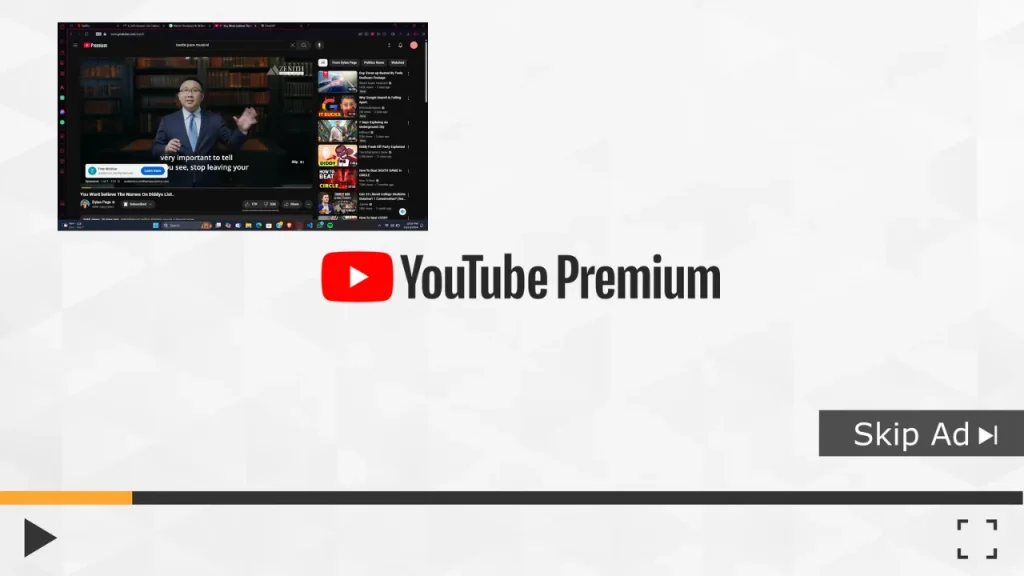
The complaint leans hardest on specific timestamps. A Theo Von podcast interview with actor Kevin James cuts away at the 23-minute mark for a three-minute Pepsi ad. A Kallmekris true-crime video pauses mid-story for a Surfshark VPN spot. A Markiplier gameplay video switches to a NordVPN ad just ten seconds in. The complaint sums up the core theory in four words: “this promise is hollow.”
The most interesting piece of evidence, though, is YouTube’s own pricing page. Premium Lite costs $7.99 a month and is marketed as making “most videos” ad-free — YouTube’s language, not the plaintiffs’. Full Premium costs twice that and promises “No ads,” period. The lawsuit argues that gap in YouTube’s own wording proves the company knows exactly how to describe a partial ad-free service — and chose different language for the tier people pay more for.
Are You Part of the YouTube Premium Ad-Free Lawsuit?
Here’s exactly how to know if this case includes you.
- Anyone who paid for a YouTube Premium subscription for one or more months believing it would be genuinely ad-free
- Subscribers who saw creator-inserted sponsor segments, branded promotions, or third-party ads while streaming on Premium
- People who chose Premium specifically over the cheaper Premium Lite tier because of its “no ads” promise
- Current and former Premium members within the applicable statute of limitations for California’s consumer protection laws
You likely do not qualify if you only ever used YouTube’s free tier or Premium Lite — both of those come with an acknowledged, disclosed amount of advertising, so they aren’t part of this “ad-free” claim.
YouTube Premium Subscribers Outside California — Are You Still Covered?
Yes. The complaint proposes two classes: a California Class and a Nationwide Class, so subscribers in any state can potentially be included, even though three of the four legal claims are built on California consumer protection statutes.
Not sure if you qualify for the YouTube Premium lawsuit? A free consultation with a consumer fraud attorney can help you understand your options while the case is still in its early stages.
What Are YouTube Premium Plaintiffs Asking the Court to Award?
The complaint asks for actual damages, restitution of subscription fees, punitive damages, and an order forcing Google to stop marketing Premium as “ad-free” until it actually is. No specific dollar figure per subscriber is stated in the complaint — that would come later, if the case survives and a class gets certified. No money yet. No claim form yet.
What Could YouTube Premium Subscribers Receive If This Case Settles?
Impossible to predict this early. Google hasn’t responded to the complaint, and no court has ruled on any of the claims. Consumer class actions like this one sometimes settle for a mix of cash and account credit, and sometimes get dismissed at the motion-to-dismiss stage before ever reaching that point. Anyone weighing whether to keep records of their own experience should talk to a consumer fraud attorney about what evidence actually holds up.
What Should YouTube Premium Subscribers Do Right Now?
- Understand there’s no certified class yet — nobody can file a claim or request a refund based on this lawsuit today.
- Save proof of your subscription: your billing history, sign-up date, and current monthly rate.
- Screen-record or screenshot any ads or sponsor segments you encounter while streaming on Premium, with the date and video title.
- Note that there’s no “lead plaintiff” deadline here like in a securities case — the clock that matters is California’s statute of limitations on consumer protection claims.
- Watch the docket. The case is Flemming v. Google LLC and YouTube, LLC, No. 4:26-cv-07182-ASK, in the Northern District of California.
- Ask a consumer fraud attorney whether your specific experience is worth pursuing separately if you don’t want to wait on the class process.
YouTube Premium Ad-Free Lawsuit — Full Timeline
| Milestone | Date |
| YouTube Premium launches at $11.99/month, marketed as ad-free | June 2018 |
| Plaintiff Devin Rose subscribes to Premium | 2018 |
| Plaintiff William Flemming subscribes to Premium | 2019 |
| Premium price rises to $13.99/month | 2023 |
| YouTube launches Premium Lite in the U.S. at $7.99/month, “most videos” ad-free | March 2025 |
| Premium price rises to $15.99/month | 2026 |
| Lawsuit filed | July 14, 2026 |
| Next scheduled hearing | UNVERIFIED — no hearing date publicly confirmed as of this writing |
| Expected resolution | UNVERIFIED — no ruling, settlement, or certification decision yet |
YouTube Premium — Frequently Asked Questions, No. 4:26-cv-07182
Is there a class action lawsuit against Google and YouTube for Premium ads right now?
Yes. Two California subscribers filed a proposed class action on July 14, 2026, alleging YouTube Premium’s “ad-free” and “no interruptions” marketing is false.
Do I need to do anything right now to be part of the YouTube Premium lawsuit?
No, and you can’t yet — there’s no certified class and no claim form. If a class is certified later, notice typically goes out to eligible subscribers automatically.
When will the YouTube Premium ad-free case settle?
There’s no timeline. The complaint was just filed, and Google hasn’t yet responded in court.
Can I file my own lawsuit against Google instead of joining the class?
Yes, subscribers can pursue individual claims, including in small claims court for smaller dollar amounts, instead of waiting on the class process.
How will I find out if the YouTube Premium lawsuit settles?
Court filings are public record in the Northern District of California, and any eventual settlement would typically include a formal notice process to class members.
What does “class certification” mean for the YouTube Premium case, and why does it matter?
Unlike a securities case with a lead-plaintiff deadline, this case has no public join-by date. Instead, a judge must first decide whether Flemming and Rose can represent the larger group before the case can move toward a broader resolution.
What specific laws does Google allegedly violate?
The complaint cites California’s False Advertising Law, California’s Unfair Competition Law, the Consumers Legal Remedies Act, and a separate unjust enrichment claim.
How much could YouTube Premium subscribers get if this case settles?
Unknown. The complaint seeks damages, restitution of subscription fees, and punitive damages, but no per-subscriber figure has been proposed at this early stage.
Sources Used in This YouTube Premium Article
- Class Action Complaint for Damages — Flemming et al. v. Google LLC and YouTube, LLC, No. 4:26-cv-07182-ASK, N.D. Cal., filed July 14, 2026 (via PACER/RECAP): https://storage.courtlistener.com/recap/gov.uscourts.cand.474239/gov.uscourts.cand.474239.1.0.pdf
- Weitz & Luxenberg, PC — official plaintiffs’ counsel press release: https://www.weitzlux.com/firm-news/youtube-class-action-lawsuit-filed/
- Law360 — “YouTube’s ‘Ad-Free’ Service Is ‘Littered With Ads,’ Suit Says”: https://www.law360.com/articles/2501111/youtube-s-ad-free-service-is-littered-with-ads-suit-says
Researched and written by Israr Ahmad, legal content researcher and founder of AllAboutLawyer.com. All facts verified against the original court complaint and official plaintiffs’ counsel statements on August 12, 2026. Last Updated: August 12, 2026.
This article is for informational purposes only and does not constitute legal advice. Laws vary by state and individual circumstances differ. For advice about your specific situation, consult a qualified attorney.
About the Author
Israr Ahmad is a legal content researcher with 4+ years of experience covering class action settlements and consumer rights cases. He has researched and published coverage of 2,500+ settlements using verified court records, settlement administrator filings, and government sources. Learn more about Israr.